Renewables and Hydrogen Drive Central Asia’s Energy Ambitions
January 17, 2026
Central Asia’s push into renewables and hydrogen is reshaping the region’s energy future and attracting strategic attention in Europe. Analysts at the European Council on Foreign Relations highlight that as the EU seeks to diversify away from Russian energy dependence and accelerate its green transition, Central Asian countries are emerging as key partners thanks to their abundant renewable potential, critical minerals, and growing clean‑energy cooperation with Europe.
photo: Sciencing
Fossil fuels and nuclear energy
While hydropower is the main energy source for Kyrgyzstan and Tajikistan, fossil fuels remain vital for Kazakhstan (mostly coal), Uzbekistan and Turkmenistan (mostly natural gas). With the EU accelerating efforts to reduce its dependence on Russian fossil fuels following Russia’s military operation against Ukraine, Central Asia has emerged as a promising partner in meeting the union’s energy needs.
The main EU programmes designed to achieve this are the REPower EU and the Roadmap, put forth by the European Commission. The REPowerEU programme, announced in May 2022, mobilises investment in renewable energy and infrastructure for gas and hydrogen, while accelerating the deployment of clean energy technologies across the Union. The Roadmap, announced in May and June 2025, outlines a coordinated and gradual phasing out of Russian oil, gas and uranium imports by all member states by the end of 2027. The strategy includes bans on new contracts as well as plans to diversify supplies. The relevant regulations have been approved by the European Parliament in late 2025 and are expected to be approved by the European Council early in 2026.
Following Russia’s invasion of Ukraine, the EU’s crude oil imports from Kazakhstan increased by 48%, positioning the country as the EU’s third largest supplier after the US and Norway. However, these imports rely heavily on pipelines or Baltic sea ports in Russia. In 2024, nearly 93% of Kazakhstan’s oil exports were transported via these routes.
Although Astana is uncomfortable with its level of dependence on Russian territory, it is interested in increasing transport via the Druzhba pipeline. In December 2025, the Kazakh company KazTransOil opened an office in Poland, crucial for facilitating the transit of Kazakh crude to the German refinery in Schwedt. This is the company’s first representative office in the EU and underscores Poland’s role as a transit point for raw materials. However, more important is Kazakhstan’s interest in increasing exports by tanker across the Caspian Sea and through Azerbaijan to reach European customers, which would bypass Russia.
Kazakhstan also accounts for 40% of global uranium production and is the leading provider for the EU’s nuclear energy sector, meeting 21% of the EU’s total uranium needs. There is potential for further cooperation in this area. Bulgaria and Finland are currently in discussions with Kazakhstan to increase uranium imports. Central and Eastern European countries that are currently planning large nuclear projects, such as Poland, could also become potential markets in the future.
Turkmenistan has the fifth-largest global reserves of natural gas, although most of it remains undeveloped. In 2024, 73% of all its gas exports went to China. As there are no pipelines connecting Turkmenistan to Europe bypassing Russia, it is currently not viable for the EU to tap into this potential.
photo: Pocket option
Critical raw materials
Central Asia is abundant in rare earth metals and critical raw materials essential for the EU’s energy transition. Kazakhstan in particular can supply 21 of 34 raw materials classified as critical by the EU, including several deemed strategic. Currently 19 of them are already extracted and processed in Kazakhstan. The country has significant potential to produce tungsten, a key component in renewable energy equipment, with estimated reserves of over 2 million tonnes of tungsten trioxide, which could account for half of the world’s total known reserves. Kazakhstan also controls 2% of the world’s copper reserves (11th largest globally) and accounts for 3.3% of global copper production. The country is also the second-largest producer of chromium.
Uzbekistan has significant reserves of 32 critical raw materials, including 2.4% of the world’s graphite reserves. It has reserves of lithium, rhenium, tellurium, germanium, tungsten and vanadium. Uzbekistan is currently a major producer of copper, uranium and silver, as well as contributing 3% to the world’s gold production.
According to the US Geological Survey, 384 rare earth metal deposits have been identified in Central Asia, with 160 located in Kazakhstan, 87 in Uzbekistan, 75 in Kyrgyzstan and 60 in Tajikistan. In Turkmenistan, while limited data availability prevents reliable assessment, some available studies indicate that it may have reserves of lithium, copper ores and rare earth elements.
Despite this potential, exports of critical raw materials from Central Asia to the EU are small. Of the 34 critical raw materials identified by the EU, only three are imported in significant quantities from Central Asia: 65% of the EU’s phosphorus comes from Kazakhstan, 54% of its antimony comes from Tajikistan and 36% of titanium metal from Kazakhstan.
These limitations can be explained by infrastructure constraints, such as bottlenecks at Caspian ports and high transit costs, as well as China’s dominance in processing. In 2024, China imported 70% of all the critical raw materials extracted in Central Asia. The situation is further complicated by Central Asia’s limited investment in modern extraction and processing technologies, and its partnerships in the sector with China and Russia. This creates a competitive and challenging environment for the EU.
Although the EU plans to develop its own mining projects for critical raw materials in Sweden and Portugal, the union will likely remain dependent on imports for a long time. Given its significant reliance on China for these materials, the EU needs to seek alternative sources of supply, with Central Asia representing a promising option.
photo: EcoMatcher
Renewable energy sources
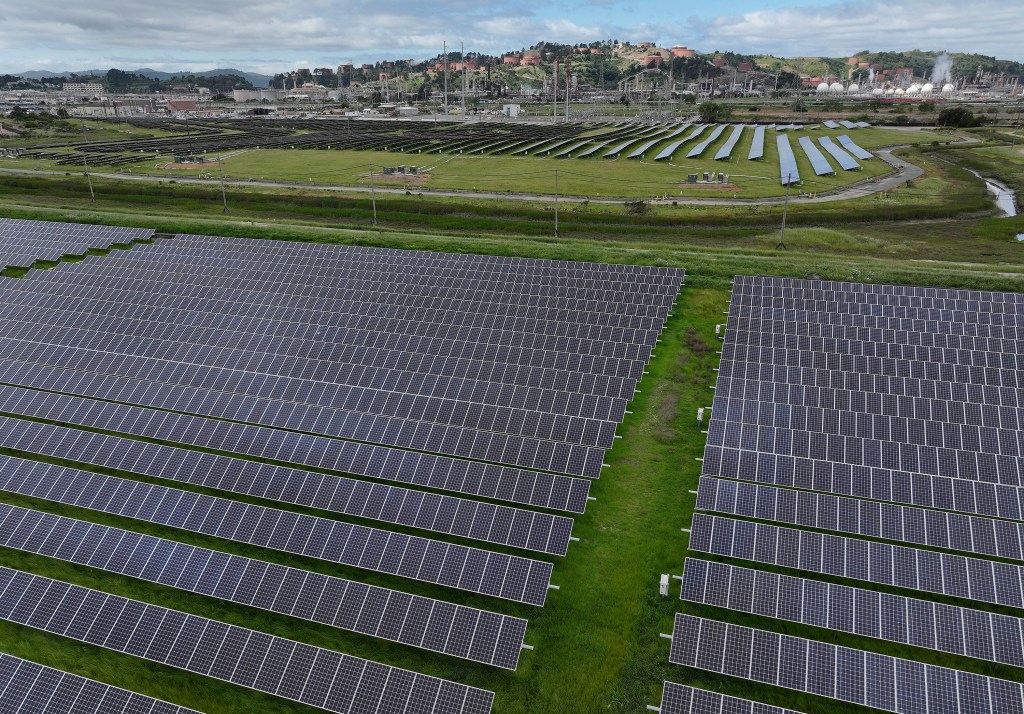
According to analyses by the International Renewable Energy Agency (IRENA), the UN and the World Bank, Central Asian nations have the potential not only to generate renewable energy for domestic consumption but also for export. Kazakhstan, Uzbekistan and Turkmenistan have the greatest potential for the development of solar, wind and geothermal energy. In contrast, Kyrgyzstan and Tajikistan are well-suited for hydropower. Tajikistan has only tapped into 5% of its hydropower potential, estimated at 527 billion kWh per year. This indicates substantial room for growth in the renewable sector.
Leaders of most countries in the region are keen on developing renewable energy sources. In 2019, Uzbekistan adopted a Green Economy Strategy for 2019-2030, aiming to increase the share of renewable energy sources in its energy mix to 40%, up from 13% in 2022. Kazakhstan aims to increase the share of renewable energy in electricity production to 50% by 2050. It also aims to achieve climate neutrality by 2060. In 2024, the president of Tajikistan, Emomali Rahmon, declared that 100% of the country’s electricity generation will come from renewables by 2032. In June 2025, Tajikistan presented its first-ever national Green Energy Roadmap, which includes the goal of net-zero carbon emissions by 2050.
Both Uzbekistan and Kazakhstan are working to export surplus clean energy to neighbouring markets, such as other Central Asian countries and Afghanistan, but also to more distant regions like the South Caucasus and Europe. They have begun implementing various projects to facilitate these exports, themost important of which is the Trans-Caspian Green Energy Corridor. This project will connect power grids in Kazakhstan and Uzbekistan to Azerbaijan via the Caspian Sea to export electricity to Türkiye and Europe.
The Trans-Caspian Green Energy Corridor will be developed by the Green Corridor Alliance, a Kazakh-Uzbek-Azerbaijani joint venture, and will be funded by the Asian Infrastructure Investment Bank. The project is the culmination of a strategic partnership agreement signed by the three countries during COP29 in 2024 in Baku. The plan is to begin electricity exports in 2032, initially at a volume of 4 gigawatt-hours and ultimately at 6 gigawatt-hours.
In December 2022, Azerbaijan, together with Georgia, Romania, Hungary and later Bulgaria, initiated a project to build a green electricity bridge across the Black Sea. Serbia and Moldova have also expressed interest in this initiative. Originally designed for Azerbaijan to export electricity to Europe, the project now has the potential to benefit Central Asian exports too. The parties have established the GECO (Green Energy Corridor) consortium and will seek to obtain Projects of Common/Mutual Interest (PCI/PMI) status in the EU, which gives projects priority for faster permits and access to funding.
By connecting the energy systems of Central Asia with those of Europe, projects such as the Caspian and Black Sea energy bridges are set to play a crucial role in integrating the energy systems of Central Asian countries as well as strengthening Europe’s energy security.
Another cross-border project aimed at producing clean electricity is the CASA-1000 (Central Asia-South Asia Electricity Transmission and Trade Project). This major regional infrastructure initiative is aimed at facilitating cross-border electricity trade between Central and South Asia. It is designed to transmit up to 1,300 megawatt of surplus hydropower from Kyrgyzstan and Tajikistan to energy-deficit markets in Afghanistan and Pakistan, primarily during peak summer months. As of 2025, construction in Kyrgyzstan and Tajikistan was largely complete, with the remaining components expected to be finalised and commercial operations to begin between 2026 and 2027. The project involves the development of high-voltage transmission lines and converter stations and is financed by a consortium of international development partners led by the World Bank. Beyond its technical scope, CASA-1000 is often cited as a test case for regional energy integration, infrastructure-led cooperation, and the monetisation of seasonal hydropower surpluses in Central Asia.
As for hydropower projects, the Kambarata-1 hydropower plant, in Kyrgyzstan, and the Rogun dam, in Tajikistan, besides expanding renewable generation capacity, have significant cross-border and external implications. Kambarata-1 is substantially supported by international financing, including the European Investment Bank. Upon completion, the project is expected to increase national electricity output, enhance energy security and strengthen Kyrgyzstan’s role within the unified Central Asian power grid, thereby enabling greater regional electricity exports. In Tajikistan, the Rogun Dam, one of the tallest dams in the world, is a central pillar of the country’s long-term energy policy. The project aims to generate large volumes of low-carbon electricity, supporting Tajikistan’s objective of achieving near-total reliance on renewable energy by 2032. Beyond domestic supply, Rogun significantly enhances Tajikistan’s potential as a regional electricity exporter, particularly in light of the emerging cross-border transmission initiatives linking Central and South Asia.
photo: solaris bus
Hydrogen
Central Asia has considerable opportunities for green hydrogen production, with several countries already initiating hydrogen projects with foreign partners. In 2025, Uzbekistan launched the region’s first green hydrogen production plant, aiming to produce 3,000 tonnes of green hydrogen per year. Saudi Arabia’s ACWA Power and China’s Donghua Engineering are involved in its implementation.
Currently, green hydrogen only plays a minor role in Kazakhstan’s industry, mainly in refineries and fertiliser production, but Astana is hoping to change this. Kazakhstan has the capacity to produce both green and the cleaner blue hydrogen. In April 2024, the Kazakh Ministry of Energy adopted the “Concept for the Development of Hydrogen until 2040”, which targets at least 50% of hydrogen production to be green by that year.
One of the most ambitious hydrogen initiatives in the region is Kazakhstan’s Hyrasia One, led by Swedish-German company Svevind Energy Group. This project aims to build renewable energy farms with a combined capacity of approximately 40 GW of wind and solar power, which will supply a 20 GW water electrolysis plant located on the Caspian coast. Once fully operational, targeted for around 2032, Hyrasia One is expected to produce up to 2 million tonnes of green hydrogen per year, or, after processing, up to 11 million tonnes of green ammonia annually.
As part of its low-carbon development strategy, Kazakhstan is also pursuing clean hydrogen pilot projects. One such initiative uses the laboratory unit at KMG Engineering’s Atyrau laboratory to produce green hydrogen. KMG Engineering is a subsidiary of the oil and gas company KazMunayGas (KMG). The project is being carried out in partnership with the Kazakh company Green Spark and uses a 200 kW solar power plant, with plans to install an electrolyser that will split ordinary water into oxygen and pure hydrogen. Another pilot project, launched in December 2025, is Kazakhstan’s first integrated green hydrogen production station, based on its own patents and engineering developments.
Search
RECENT PRESS RELEASES
Related Post