Satoshi-Cited Blockchain Pioneer Calls Bitcoin The ‘First Inning’, Warns CBDCs Pose ‘Asymmetric’ Power Risk
May 16, 2026
Stornetta said Satoshi built Bitcoin on the “early blockchain layer” co-developed by him, whose 1991 cryptographic timestamping paper later became foundational to blockchain technology.
- W. Scott Stornetta said during the Consensus conference that Bitcoin remains only the “first inning” of blockchain-based finance.
- He said Ethereum, stablecoins, and Bitcoin layer-2 networks marked the later stages of blockchain innovation beyond Bitcoin.
- Stornetta also warned that central bank digital currencies could create “asymmetric” power structures through centralized financial monitoring.
W. Scott Stornetta, a blockchain pioneer and one of the most-cited authors in Satoshi Nakamoto’s original Bitcoin (BTC) whitepaper, said during an interview at the Consensus 2026 that Bitcoin was the “first inning of the game” in the broader evolution of blockchain-based finance.
Speaking with David Lin, creator of The David Lin Report, Stornetta explained that Satoshi Nakamoto built Bitcoin on the “early blockchain layer” developed by him and Stuart Haber, describing the original effort as an attempt to create “something new that could only be done with cryptographic protocols.”
That foundational work was first laid out in their 1991 paper “How to Time-Stamp a Digital Document,” which won the 1992 Discover Awards, and is considered one of the most important papers in the development of cryptocurrencies. He further added that the foundational work he and Haber developed decades ago continues to underpin blockchain systems today by preserving the integrity of records linked across decentralized networks.
Stornetta described Bitcoin as the starting point of a much larger technological shift, comparing the development of blockchain systems to innings in a baseball game. “We feel like Bitcoin has been a very positive step forward, but it’s in no sense the endgame,” he said. “We look at Bitcoin as kind of a first inning of the game.”
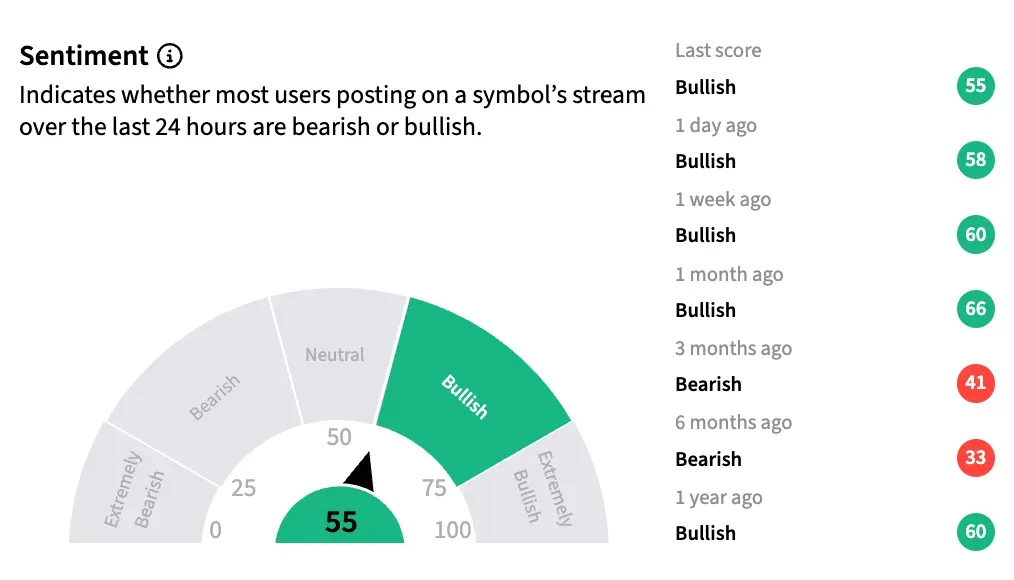
Bitcoin’s price was trading at $78,014, down by 3% during the past 24 hours. On Stocktwits, retail sentiment around BTC remained in the ‘bullish’ zone, while chatter stayed at ‘normal’ levels over the past day.
He also said that Ethereum (ETH) later expanded blockchain utility through smart contracts, while Bitcoin layer-2 networks and Ordinals introduced additional forms of functionality and indexing. Stornetta added that stablecoins may have pushed the crypto industry from the “third inning to the fourth inning,” calling them a “terrific example” of real-world value creation within blockchain networks.
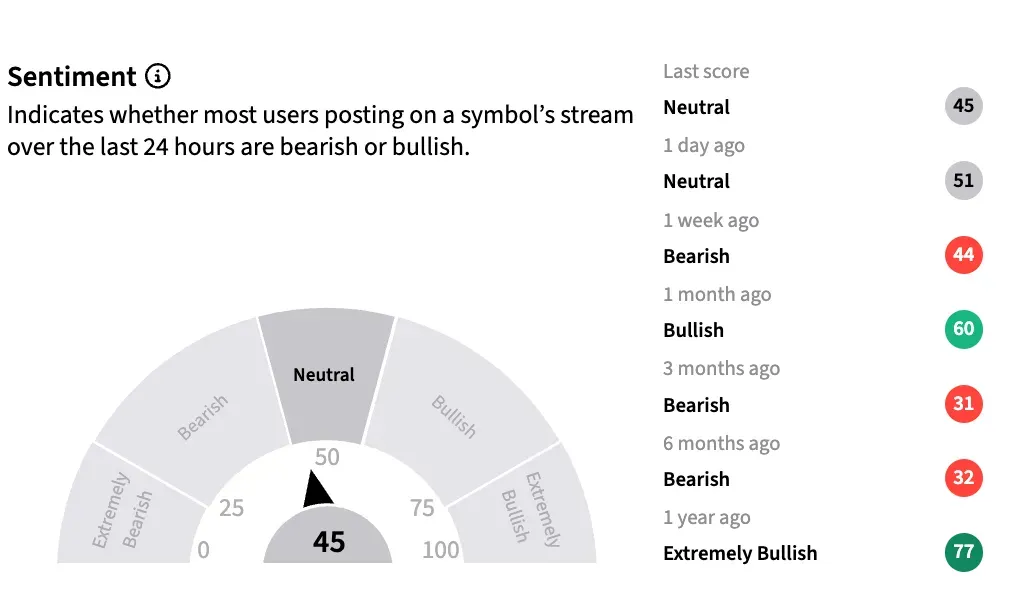
Ethereum’s price was also down over 3%, trading at $2,172 during the past 24 hours. On Stocktwits, the retail sentiment around ETH remained in the ‘neutral’ zone, while chatter stayed at ‘normal’ levels during the past day.
Stornetta also addressed central bank digital currencies (CBDCs), saying the larger concern was not transparency itself but the concentration of power created when financial activity can be monitored by a centralized authority. He argued that the issue becomes problematic when governments or centralized institutions gather information asymmetrically.
“If you were to ask me, is a CBDC that means the government can know everything about me but I don’t know reciprocally everything about the government a good thing? No, probably not,” he said.
His comments come as the global CBDC landscape has expanded rapidly. According to the Atlantic Council, 146 countries and currency unions, representing over 98% of global GDP, are currently exploring CBDCs, up from just 87 in May 2022.
Still, Stornetta said the risks stem more from centralized control than from the digital currency technology itself, adding that interoperable systems with balanced information access could reduce some of those concerns.
Stornetta’s criticism of CBDCs is not new. In 2021, he co-authored a report, “Central Bank Digital Currencies and a Euro for the Future,” that argued that future CBDC systems should preserve decentralization and privacy safeguards rather than concentrate financial oversight within centralized authorities.
Read also: Tom Lee Says ‘Boomer Moment’ Marks A Banking Revolution, Not A Market Top
For updates and corrections, email newsroom[at]stocktwits[dot]com.

Search
RECENT PRESS RELEASES
Related Post