SCC’s Bagot Urges Innovative Solutions, Collaboration at Energy & Environment Forum
June 1, 2026
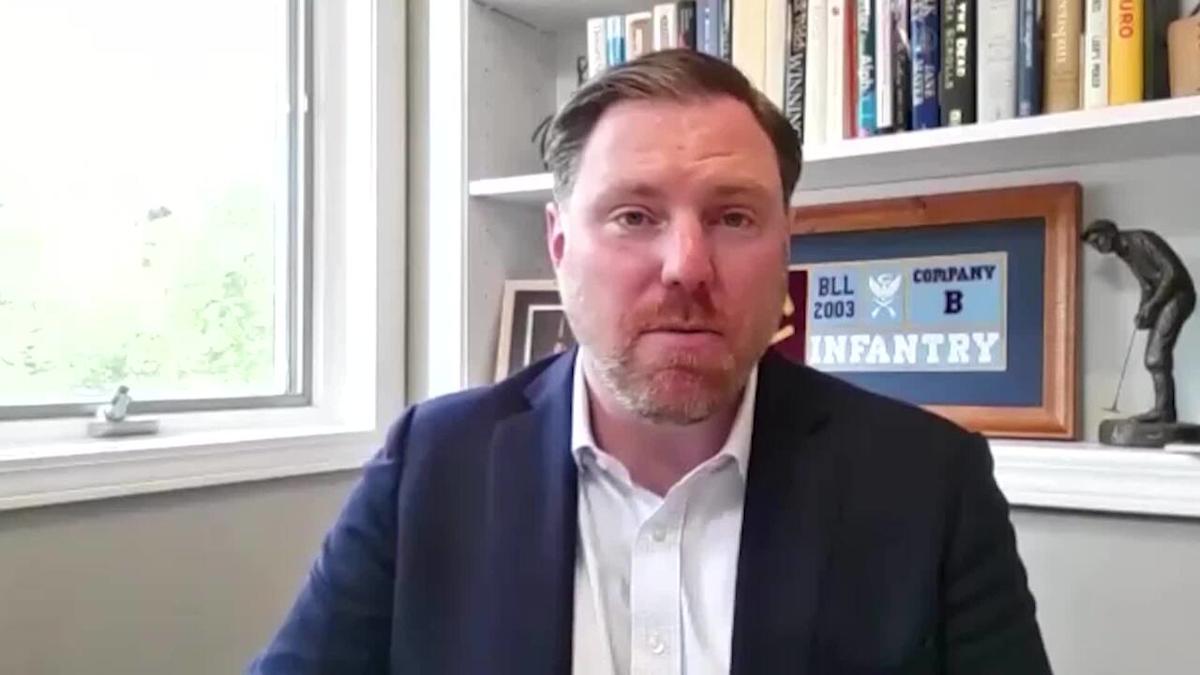
Addressing the growing demand for energy while mitigating impacts on communities will require innovation and collaboration, State Corporation Commission Chair Kelsey Bagot told Loudoun residents during a forum hosted by the county’s Environmental Commission on Saturday.
The Energy and Environment Forum is hosted by the commission annually and is designed to educate and engage residents in issues surrounding sustainability. This year’s event featured two panels of energy and environment experts who spoke on protecting natural resources while meeting energy needs and the impacts of those needs on community members.
That also was largely the topic of Bagot’s keynote.
Loudoun has the largest concentration of data centers in the world with roughly 53 million square feet and another 4 million square feet expected to be built in the coming years. But it is no longer the fastest-growing area for data center development as the industry spreads across the state and the country looking to keep up with demand.
The amount of growth that is coming is difficult to picture, Bagot said. Loudoun has six gigawatts of power demand from its existing data centers. Dominion Energy is planning for another 70 gigawatts of demand across its region, Bagot said.
“How that 70 gigawatts is realistic and implementable in a way that truly is in the public interest – that is that is the challenge that we have ahead of us. If this load is real, how do we ensure that it’s developed in a way that doesn’t impact the reliability of the grid, our environment, and the communities that we live in?” she said.
That puts Loudoun at the “epicenter” as the rest of the country watches to learn from Loudoun’s experiences, Bagot said.
“For better or worse, I think the entire country is looking at Virginia and specifically Loudoun County, Virginia, to see how we solve these challenges,” she said.
Bagot described the power grid as a puzzle that has been put together over the past 50 years. Pieces of that puzzle include infrastructure components, regulatory processes, oversight bodies and elected officials.
“Up until about maybe three, four years ago, we had a fairly strong secure puzzle that had been in place for a long time and made a whole lot of sense and really what we were doing was tinkering on the margins,” Bagot said.
The rapid growth of data centers has disrupted the entire puzzle—causing anxiety from the uncertainty of it all, she said, but also creating opportunities.
“The disruption also means we have a chance to take a look at that puzzle and maybe rebuild it better,” she said.
The energy landscape looks different than it did 20 years ago. There are new technologies including reconductoring, battery storage, rooftop solar, net metering and virtual power plants.
“Up until now it’s been very difficult, right?” Bagot said. “We’ve sort of been nibbling at the margins to try to find a way to implement those new technologies for the benefit of everybody … This disruption allows us to say, ‘this puzzle that we built 20 years ago, we get to rebuild with the knowledge of all these new technologies that we have.’ So, how can we build it to incentivize and better serve those new technologies, as opposed to trying to jam those new technologies into our existing puzzle?”
Rebuilding the puzzle to incorporate new technologies while ensuring communities are not negatively impacted will require change.
Historically, the SCC has operated as a reactionary body. Utilities present applications and the judges review and rule on them.
“I think for a long time that has served us very well, because it’s a cautious way of doing energy policy, or energy rate making. … But things are very dynamic now and changing very fast, and so one of the things that the SCC has spent a lot of time these last couple of years is sort of flipping the mirror on ourselves and saying, ‘how can we do better?’” Bagot said.
Regulatory bodies can leverage incentives for the data center industry to help answer that question.
“I think we miss an important piece of the puzzle when we think only of the challenges and not the opportunities,” she said.
Hardening the grid over the next 10 years will be very expensive, and data centers represent an opportunity to implement new technologies and spread costs over a wider range of users.
“If we can leverage the data centers coming to Virginia in order to accelerate our Virginia Clean Economy goals and ensure that the data centers are paying for their fair share of the generation that they’re causing, then that can put downward pressure on our individual consumer rates by spreading those costs over a larger range of kilowatt hours,” Bagot said.
The work also requires feedback from the community, she said.
“We need you all to bring us these important ideas, these novel ideas, because that’s how we make decisions – based on the record before us,” she said.
During the event, attendees also had the opportunity to visit local vendors who were there to share information and resources on existing county programs, environmental organizations and sustainability initiatives.
Search
RECENT PRESS RELEASES
Related Post