Scientists just unlocked a cheaper way to make clean hydrogen fuel
May 17, 2026
- Date:
- Source:
- Washington University in St. Louis
- Summary:
- Researchers have developed a durable new catalyst that produces clean hydrogen without relying on expensive platinum metals. The breakthrough could make renewable hydrogen fuel cheaper, more efficient, and easier to scale for real-world energy use.
FULL STORY
Renewable energy sources can cut harmful emissions, reduce reliance on fossil fuels, and improve efficiency. However, many clean energy technologies remain expensive because they depend on costly materials such as platinum group metals (PGM) and require efficient ways to store energy for later use.
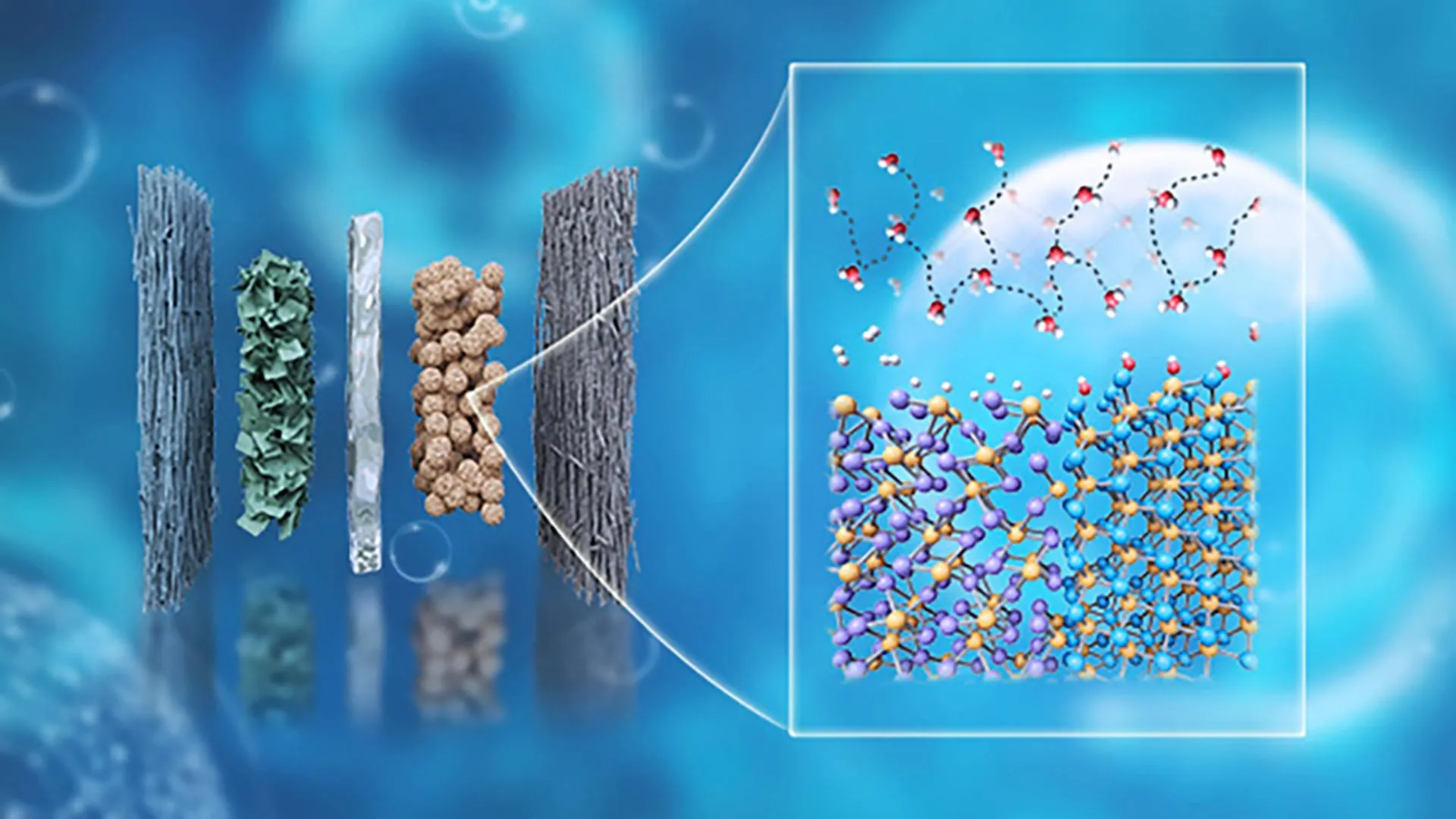
Researchers at Washington University in St. Louis are working on a possible solution. A team led by Gang Wu, professor of energy, environmental & chemical engineering in the McKelvey School of Engineering, has developed a new catalyst designed for an anion-exchange membrane water electrolyzer (AEMWE). This technology uses electricity from renewable sources to split water into hydrogen and oxygen, producing clean hydrogen fuel in the process.
New Platinum-Free Hydrogen Catalyst
Wu’s group focused on replacing expensive platinum-based materials commonly used in hydrogen production systems. Their approach uses renewable electricity generated from sunlight, wind, or water to power the separation of hydrogen from water molecules.
“Going from water to hydrogen is a very desirable way we are able to store energy for different applications,” Wu said. “Hydrogen itself can be used as an energy carrier and is useful for different chemical industries and manufacturing.”
To build the catalyst, the researchers combined rhenium phosphide (Re2P) and molybdenum phosphide (MoP). Together, the two materials created a highly effective composite that improved the hydrogen extraction process. The rhenium component helped hydrogen attach to and release from the catalyst surface, while the molybdenum sped up the splitting of water in the alkaline electrolyte.
Durable Performance for Clean Energy
The team paired the new catalyst with a nickel iron anode and found that the system performed better than a leading state-of-the-art cathode, including one based on PGM materials. According to Wu, the catalyst also operated for more than 1,000 hours at industry-level current densities of 1 and 2 amperes per square centimeter. That makes it one of the most durable platinum-free cathodes developed so far for anion-exchange membrane water electrolyzers.
“Our findings allowed us to rationalize the critical role of engineering the hydrogen-bond network at the catalyst/electrolyte interface in designing high-efficiency, low-cost AEMWEs,” Wu said. “Our catalyst showed the lowest resistance across the studied potential range, which suggests the fastest hydrogen adsorption kinetics among the studied catalysts. This newly achieved performance and durability metrics make our catalyst one of the most promising membrane electrode assemblies for practical anion-exchange membrane water electrolyzers.”
Potential for Large-Scale Hydrogen Production
Although the experiments were carried out at laboratory scale, the researchers plan to continue studying whether the technology can be expanded for industrial use.
The work was financially supported by G. Wu’s startup fund at Washington University in St. Louis.
Story Source:
Materials provided by Washington University in St. Louis. Original written by Beth Miller. Note: Content may be edited for style and length.
Journal Reference:
- Jiashun Liang, Yu Li, Chun-Wai Chang, Mingxuan Qiao, Zhenxing Feng, Chaochao Dun, Wan-Lu Li, Gang Wu. Designing a Dry Cathode via Hydrogen-Bond Network Regulation at Phosphide Heterostructure/Electrolyte Interfaces for Alkaline Water Electrolysis. Journal of the American Chemical Society, 2026; 148 (15): 16337 DOI: 10.1021/jacs.6c02768
Cite This Page:
Washington University in St. Louis. “Scientists just unlocked a cheaper way to make clean hydrogen fuel.” ScienceDaily. ScienceDaily, 18 May 2026. <www.sciencedaily.com
Washington University in St. Louis. (2026, May 18). Scientists just unlocked a cheaper way to make clean hydrogen fuel. ScienceDaily. Retrieved May 18, 2026 from www.sciencedaily.com
Washington University in St. Louis. “Scientists just unlocked a cheaper way to make clean hydrogen fuel.” ScienceDaily. www.sciencedaily.com
RELATED STORIES
Search
RECENT PRESS RELEASES
Related Post