Smart EV 2026 | Tao Hailong: Advancing JV 2.0 Transformation and New Energy Layout
April 15, 2026
Gasgoo Munich- Gasgoo reported on April 12 that at the 2026 Smart Electric Vehicle Development Forum, Tao Hailong, Party Committee Secretary and General Manager of SAIC Volkswagen, took the stage to address the industry’s most pressing questions. Amid the sweeping wave of intelligent electrification, Tao detailed the company’s “JV 2.0” strategy and its practical execution, unveiled the 2026 new-energy product roadmap, and underscored the joint venture’s confidence in navigating its transformation.
Tao noted that China’s automotive sector is undergoing a profound restructuring. While technology cycles are accelerating, concerns linger over safety risks, market saturation, and product homogeneity. The industry faces three core challenges: high-quality development, agile adaptation to change, and restoring the competitiveness of joint ventures. As China’s oldest passenger car joint venture, SAIC Volkswagen draws on four decades of Sino-German cooperation and experience weathering economic cycles. Through its JV 2.0 strategy, the company is answering the call of the times, shifting from merely “importing technology” to a fusion of “global wisdom and Chinese speed.”
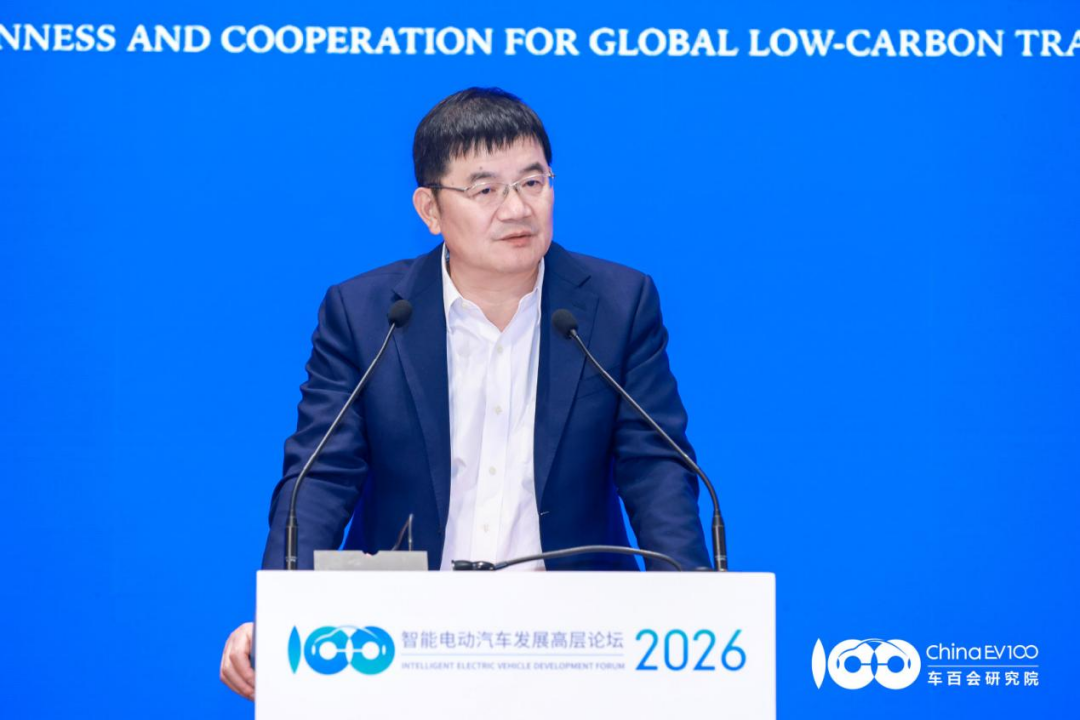
Tao Hailong, Party Committee Secretary and General Manager of SAIC Volkswagen Co., Ltd.
To tackle these industry challenges, Tao outlined a three-pronged solution. First, fortify the system and ecosystem by solidifying capabilities in R&D and manufacturing, breaking down corporate boundaries to deepen cooperation with supply chain partners, and achieving collaborative innovation through initiatives like “Supply Chain Open Days” and regular co-creation mechanisms. The ID. ERA 9X stands as a prime example of this collaboration. Second, strike a balance between in-house development and partnership. Tao advocated against low-level market saturation and price wars, arguing instead for a model that combines proprietary R&D with joint creation to realize a dual empowerment: “In China, For China” and “In China, For the World.” Third, balance innovation with reliability. By leveraging the heritage of a joint venture brand, the company seeks to balance global quality standards with deep insights into the local market, all while adhering to rigorous manufacturing and safety benchmarks.
Tao emphasized that SAIC Volkswagen holds the line on quality and safety. Every vehicle must clear more than 8,000 Volkswagen standards and endure over 2,500 rigorous tests. The ID. ERA 9X, for instance, has survived extreme testing through “two winters and two summers” and achieved a “four-zero” target in crash tests. Regarding product layout, the company plans to roll out seven new-energy models in 2026, including the ID. ERA 9X and the Audi E7X. As the debut strategic model under the JV 2.0 framework, the ID. ERA 9X features an EA211 engine as a range extender and has already kicked off pre-sales, drawing significant market interest.
Looking ahead, SAIC Volkswagen aims to dismantle corporate boundaries by aligning standards, R&D, and ecosystems. The goal is to drive deep integration between the automotive sector and industries like artificial intelligence and the Internet of Things, building a sustainable, closed-loop ecosystem. Tao stated that SAIC Volkswagen will leverage the JV 2.0 strategy to practice an “open-door” approach to vehicle development. By joining forces with industry partners, the company is committed to contributing to the high-quality development of China’s automotive industry.
Search
RECENT PRESS RELEASES
Related Post