Solar, wind, and EVs have knocked out a doomsday climate scenario
May 29, 2026
Thanks to the transition from fossil fuels to clean technologies, what used to be considered the worst-case climate change scenario now appears to be outside the realm of plausibility, climate scientists said in a recent study.
That study made headlines in May when President Donald Trump falsely claimed that climate scientists had admitted that their projections had been wrong, a claim akin to an anti-vaxxer gloating that the official end of the pandemic proved that COVID was never a problem.
And the study contained sobering news: The best-case climate scenario is close to slipping out of reach, and a business-as-usual scenario is still a very dangerous one, with high risks of widespread species extinctions, extreme heat-related illnesses and deaths, and expanding vector-borne diseases like malaria.
World makes progress on climate change
Scientists developed the worst-case climate change scenario known as RCP8.5 nearly 20 years ago.
A 2010 paper described RCP8.5 as representing the 90th percentile of plausible climate-warming emissions, cautioning that the RCPs “are neither forecasts nor policy recommendations, but were chosen to map a broad range of climate outcomes.” A 2011 paper summarizing RCP8.5 noted that this scenario envisioned a world with high population growth, slow improvements in energy efficiency, and a heavy reliance on fossil fuels, including a nearly tenfold increase in coal consumption.
Although the U.S. government under Trump favors high birth rates, has dismantled energy efficiency programs, and supports coal and other fossil fuels, policies implemented around the world over the past decade have shifted us away from the characteristics of RCP8.5, leading scientists to say it is now implausible.
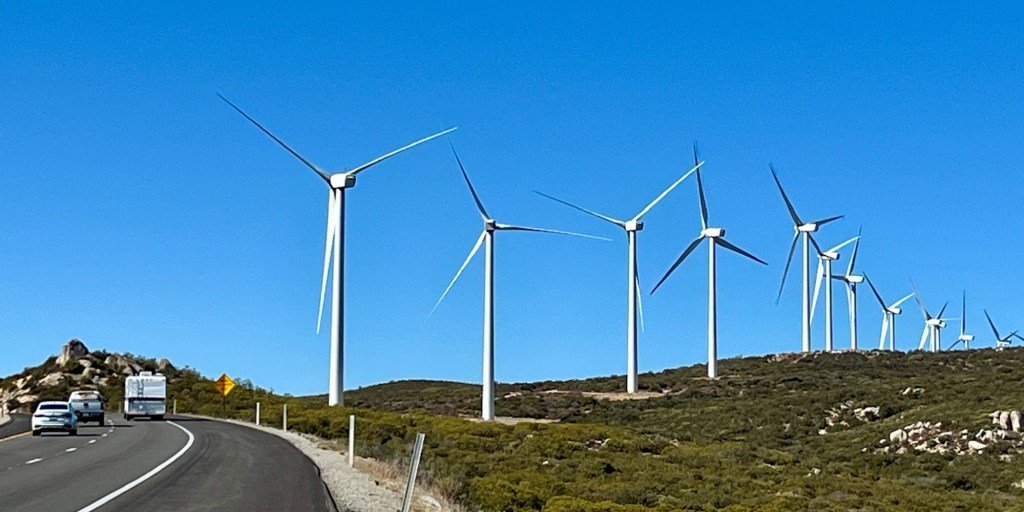
Spurred by the 2015 Paris Climate Agreement and dramatically falling costs of clean energy technologies, many countries have increasingly transitioned away from climate-warming fossil fuels. All global growth in electricity demand last year was met by clean sources – predominantly solar panels – European energy think tank Ember and the International Energy Agency recently reported.

Clean energy has gotten a boost from the Iran conflict, which spiked prices of fossil fuels and spurred many countries to accelerate their efforts to wean themselves off oil and natural gas. China’s exports of solar panels, batteries, and electric vehicles to many regions, including Southeast Asia and Latin America, have surged. And the International Energy Agency has said that the world has reached peak coal consumption.
Read: What the Iran conflict means for gas prices, clean energy, and the climate

New climate scenarios
Because the Intergovernmental Panel on Climate Change is heading into its next cycle of climate change reports, a group of scientists called the Scenario Model Intercomparison Project was tasked with establishing an updated set of emissions scenarios. In the new paper, they outline six new scenarios ranging from a best-case “very low emission scenario” to a worst-case “high-emission scenario.”
Their scenarios show that meeting the climate targets set in the 2015 Paris Agreement is becoming increasingly difficult as the years pass and global emissions continue to rise. A middle-of-the-road scenario involving continued climate policies would result in high risks of dangerous outcomes like extreme weather-related deaths and widespread species extinctions.
And a new worst-case scenario involving a Trump-style rollback of climate policies would likely result in catastrophic climate change.
The good, the bad, and the ugly
The new high-emission scenario envisions that many countries could weaken or abandon climate policies. The researchers’ description of this scenario may sound familiar to some Americans, suggesting that “a rollback of climate policies could result from a lack of public support for the energy transition. This could be related to, for instance, local opposition to building new wind farms or concerns about impacts on fossil industries related to jobs and national energy security.”
Climate scientists Zeke Hausfather, Glen Peters, and Piers Forster described this scenario as “a more Trumpian future where current policy is rolled back and clean energy deployment slows.”
In this scenario, atmospheric carbon dioxide concentrations rise from about 430 parts per million today to around 700 parts per million in 2100, when temperatures reach about 3.5°C above preindustrial levels, up from about 1.3°C today. That outcome would still likely represent a climate catastrophe, but it’s less severe than the 936 parts per million and nearly 5°C global warming that would have resulted from RCP8.5 by 2100.
The new medium-emission scenario and very-low emission scenario have fairly similar carbon dioxide and global warming trajectories to their previous counterparts, called RCP4.5 and RCP2.6, respectively.

The new medium-emission scenario envisions that climate policies continue at the current level. Climate pollution declines slightly into the middle of the century and then remains flat thereafter, resulting in an extremely dangerous 3°C global warming by 2100.
And the new very-low emission scenario illustrates the increasingly difficult challenge of meeting the Paris Agreement to limit global warming to “well below 2°C above preindustrial levels.” Achieving that goal would require rapid reductions in global climate pollution starting today, reaching net-zero emissions around 2050. The previous best-case scenario allowed for a more gradual emissions reduction, not approaching net zero until the 2070s, because there was more time left when it was developed.

Search
RECENT PRESS RELEASES
Related Post