SpaceX IPO: 5 Surprising Facts Just Revealed
June 1, 2026
As the S&P 500 and Nasdaq Composite continue to hit all-time highs, Elon Musk’s SpaceX will soon make its public debut in what is likely to be the biggest initial public offering (IPO) of all time.
It’s good timing, too. It seems the market has an appetite for IPOs at the moment. In its recent listing, Cerebras Systems stock began trading well above its IPO price, something Musk and early investors in SpaceX obviously hope to repeat.
With just weeks to go, the company has just filed its S-1 with the Securities and Exchange Commission (SEC), revealing key elements that investors need to consider.
Here are five things from the filing that stood out.
1. Musk’s control is nearly absolute under this share structure
SpaceX will go public with a dual-class share structure. Class A shares — the ones available to retail investors — get one vote each, while Class B shares — those held by Musk and other insiders — get 10 votes each.
Now, obviously, dual-class structures aren’t unique — Alphabet uses them, for instance — but what is unique, at least for a company of this size, is just how much control this structure (and the amount of shares Musk will hold) gives the company’s founder.
And SpaceX is going a step further by designating itself a “controlled company” under Nasdaq rules, which lets it skip certain requirements like having a majority-independent board or independent compensation and nominating committees. Musk will, for all intents and purposes, have near-total control of the company.
2. SpaceX’s financials reveal a tale of three companies
While certain figures had been reported, the S-1 revealed the state of the company’s finances.
The consolidated numbers show $18.7 billion in revenue for 2025 — quite a healthy figure — however, they also show a massive $2.6 billion operating loss.
Things get really interesting when you break it down by segment. Starlink is the company’s cash cow, generating $11.4 billion in revenue and $4.4 billion in operating income last year.
The face of the business, the space segment, posted a healthy $4.1 billion in revenue, but is still losing money, with a $657 million operating loss.
And the AI segment — xAI and X — brought in $3.2 billion in revenue against a staggering $6.4 billion operating loss.
3. The risk factors read like science fiction
S-1 filings include a risk factors section detailing what could go wrong. These tend to be boilerplate and not of too much interest. But SpaceX’s are of great interest.
That’s because in them, the company basically admits just how speculative an investment SpaceX is. Its growth initiatives are built largely on “unproven technologies or technologies that do not exist.”
The company says that timelines for things like orbital artificial intelligence compute, lunar manufacturing, and interplanetary cargo transport “may be difficult or impossible to determine.”
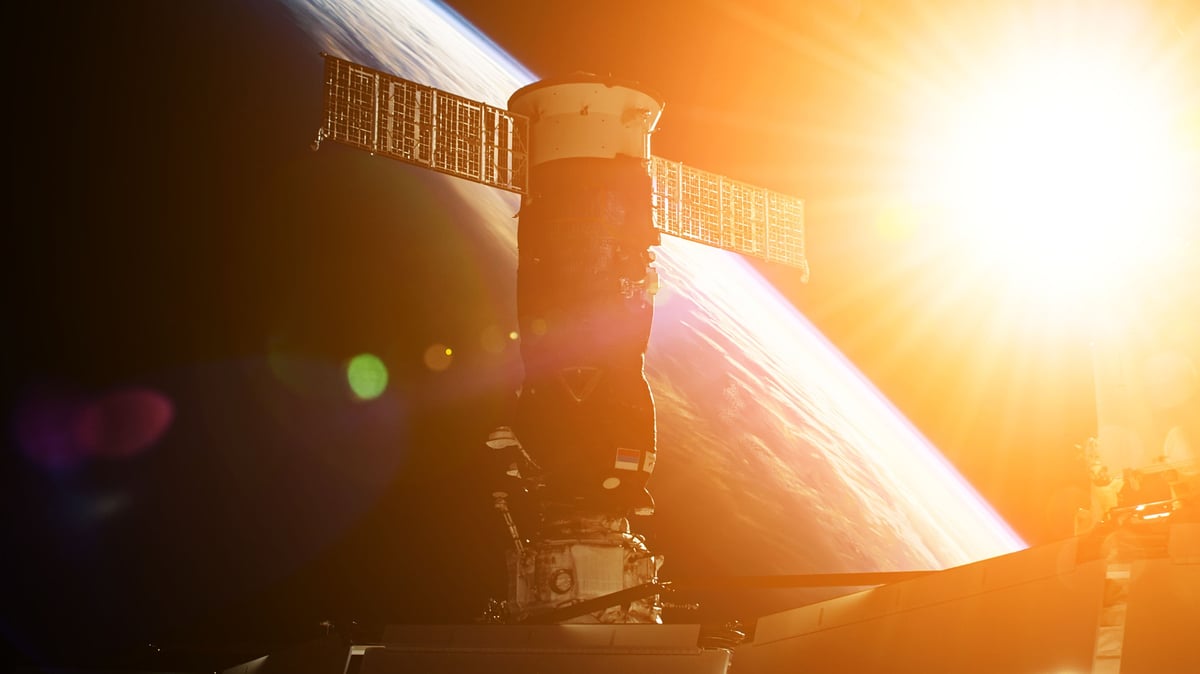
Image source: Getty Images.
4. The $28.5 trillion market opportunity needs context
In the S-1, SpaceX claims a total addressable market (TAM) of $28.5 trillion. That is an enormous number, and it’s obvious why it garnered so much attention.
But here’s the thing that most of the coverage has failed to mention: The company expects $26.5 trillion of that TAM to come from AI, leaving only $2 trillion for space launch and Starlink.
Think about that. The company may IPO at a valuation that equals the entire potential market for two out of three arms of its business. The segment that is burning cash at alarming rates while seriously lagging its competition is solely responsible for well over 90% of that total potential TAM.
5. Mars colony milestones are tied to Musk’s compensation
Certain performance-based equity awards for Musk are tied to milestones that include establishing a self-sustaining colony of 1 million people on Mars.
The gap between where human technology is today and a million-person Martian colony cannot be overstated. It’s a long leap.
Some will argue that this is a testament to the company’s ambition. I think it’s so disconnected from reality that it borders on parody.
You can draw whatever conclusion you want, but this is far from the only aspect of the company’s S-1 that reads like science fiction.
Search
RECENT PRESS RELEASES
Related Post