SpaceX Is Kicking Off IPO Mania — but It’s Also Reviving Stock-Split Euphoria
May 19, 2026
Arguably, the most anticipated initial public offering (IPO) in Wall Street history is almost here. Following a teaser from chipmaker Cerebras, whose shares effectively doubled from their IPO list price when trading commenced on May 14, Elon Musk’s SpaceX has accelerated its timeline to go public to June 12.
The conglomerate behind the Falcon 9 rocket, Starlink, artificial intelligence (AI) start-up xAI, and social media platform X hopes to raise up to $75 billion from its IPO and command a $1.75 trillion valuation. This would make SpaceX the eighth-largest public company on U.S. exchanges, immediately ahead of Musk’s other trillion-dollar company, Tesla.
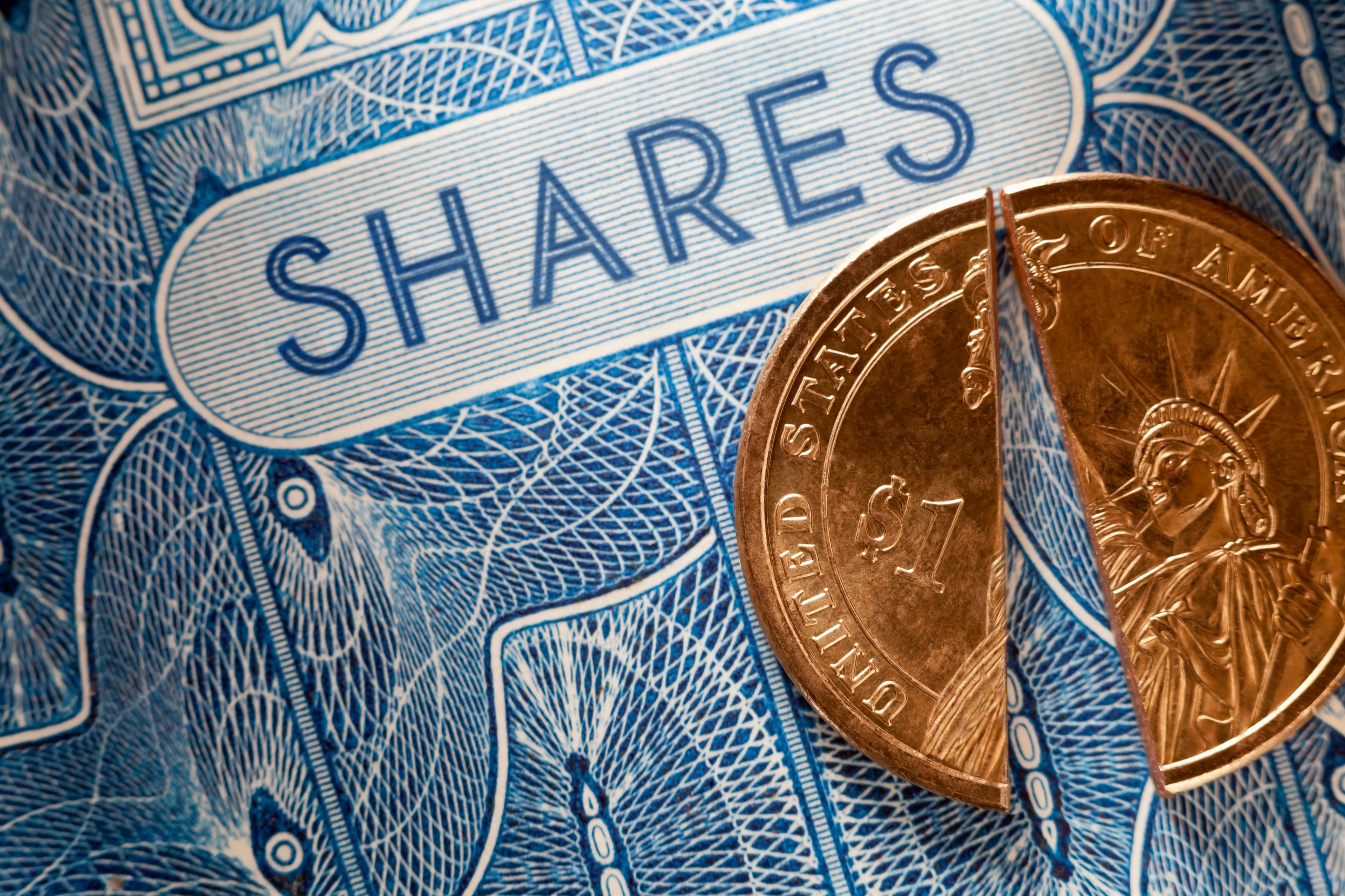
Image source: Getty Images.
But SpaceX isn’t just inspiring IPO mania — AI-driven large language model developers Anthropic and OpenAI are expected to follow in its footsteps later this year. It’s also reviving the stock-split euphoria that sent several high-profile stocks screaming higher over the last half-decade.
SpaceX is enacting a pre-IPO forward stock split
Among the many updates to SpaceX’s imminent IPO that hit the newswires late last week was a report that this AI and space economy titan would, with shareholder approval, conduct a 5-for-1 forward stock split.
A stock split is an event that allows a public (or private) company to cosmetically adjust its share price and outstanding share count. These changes are “cosmetic” in the sense that they don’t affect its market cap or underlying operating performance.
Forward stock splits are almost always about retail investor accessibility. Many brokerages today allow everyday investors to purchase fractional shares. But if your broker isn’t one of them, a company with a high share price might make it difficult for retail investors to participate in its growth story.
Completing a pre-IPO 5-for-1 stock split will increase SpaceX’s outstanding share count by 400% while concurrently reducing its share price by 80%. On a nominal basis, its shares will be more affordable for retail investors, who are expected to play a big role in the IPO process.
This is just the type of stock split that may spur other industry leaders to follow suit.

Image source: Getty Images.
Historical precedent will be put to the test
Statistically, since 1980, companies completing forward stock splits have handily outperformed the benchmark S&P 500 (^GSPC 0.07%) in the 12 months following their split announcement. But this historical precedent, highlighted by Bank of America Global Research, is about to be put to the test.
History also tells us that mega-IPOs struggle in the months after their debut. Except for Visa, which rallied 23% in the six months following its March 2008 IPO, most brand-name IPOs have initially flopped. Facebook (now Meta Platforms) lost 38% six months after its debut, while Saudi Aramco, the current largest-ever IPO until SpaceX goes public, lost 15% over the same period.
The emotional buzz from day one of a mega-IPO often fades, leaving investors disappointed after a couple of weeks.
Furthermore, SpaceX is likely trading at an astronomical price-to-sales (P/S) ratio that history has shown can’t be justified. P/S ratios above 30 have typically signaled the presence of a bubble, and SpaceX is expected to debut well above this arbitrary line in the sand.
Not even stock-split euphoria may be able to save SpaceX stock from disappointment after June 12.
Search
RECENT PRESS RELEASES
Related Post