SpaceX is starting to move on from the world’s most successful rocket
May 6, 2026
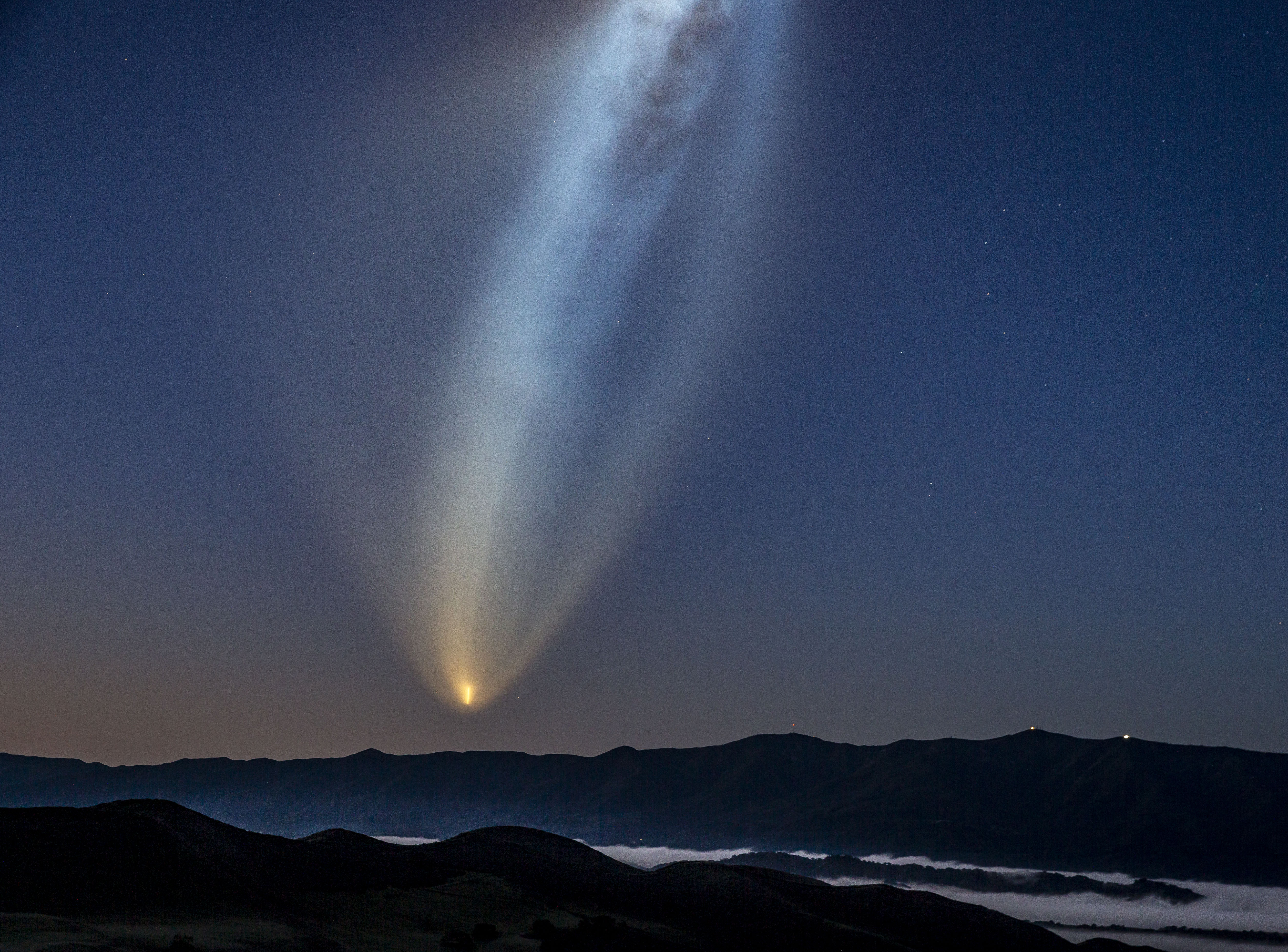
Vandenberg Space Force Base in California is set to become SpaceX’s busiest launch site—for now.
Credit:
George Rose/Getty Images
It is far too soon to mention retirement, but astute observers of the space industry have noticed SpaceX’s workhorse Falcon 9 rocket is not launching as often as it used to.
The decline is modest so far, and it does not signal any problem at SpaceX or with the Falcon 9. Rather, it is a manifestation of SpaceX’s eagerness to shift focus to the much larger Starship rocket, an enabler of what the company wants to do in space: missions to land on the Moon and Mars, orbital data centers, and next-gen Starlink.
Elon Musk’s SpaceX conducted 165 launches with the Falcon 9 rocket (no Falcon Heavy missions) last year, up from 134 Falcon 9 and Falcon Heavy launches in 2024 and 96 Falcon flights in 2023. The company plans “maybe 140, 145-ish” Falcon launches in 2026, SpaceX president Gwynne Shotwell told Time earlier this year. “This year we’ll still launch a lot, but not as much,” she said. “And then we’ll tail off our launches as Starship is coming online.”
Letting off the gas
We’re beginning to see what the long, slow tail-off will look like. The changes are most apparent at Cape Canaveral, Florida, where SpaceX has launched the lion’s share of its rockets. Until last December, SpaceX launched Falcon 9s with regularity from two pads on Florida’s Space Coast—one at NASA’s Kennedy Space Center and another a few miles to the south on military property at Cape Canaveral Space Force Station.
SpaceX is transitioning the site at Kennedy, known as Launch Complex-39A, to launch Starships. LC-39A is out of the rotation for Falcon 9 launches, although it remains available for occasional flights of the more powerful triple-core Falcon Heavy. SpaceX launched the first Falcon Heavy in a year and a half last week from LC-39A, and a handful more Falcon Heavy flights are on tap later this year.
Activity at SpaceX’s oldest launch site, Space Launch Complex-40 at Cape Canaveral, is also waning. Last month, SpaceX retired one of its two Florida-based seagoing landing platforms from service for future use as a transporter to ferry Starships and Super Heavy boosters from SpaceX’s factory in South Texas to Florida. SpaceX is constructing a second Starship factory at Kennedy Space Center, but officials want to begin Starship flights from Florida before the factory is operational.
“With 39A becoming a primarily Falcon Heavy and Starship pad, we don’t actually need two operational droneships on the East Coast to maintain our Falcon manifest,” wrote Kiko Dontchev, SpaceX’s vice president of launch, in a post on X last month. The other landing vessel in Florida can support a launch and recovery every four days, according to Dontchev, and some Falcon missions can return their boosters to land onshore.
But those four-day turnarounds are becoming rare at Cape Canaveral. Most SpaceX missions launch satellites for the company’s Starlink broadband constellation. The bulk of SpaceX’s Starlink missions will now depart from Vandenberg Space Force Base, California, where Falcon 9s can launch from the same pad as often as every three or four days. For now, the new norm at Cape Canaveral will average about one Falcon 9 launch per week, approximately the same as SpaceX’s launch cadence at the Florida spaceport in 2023.
The Falcon 9 is not going away anytime soon. The rocket that made SpaceX the world’s most successful space company will remain operational at least as long as the International Space Station. The retirement of the ISS, previously targeted for 2030, is now unlikely to occur before 2032. The Falcon 9 and Dragon capsule are the only US vehicles available to transport crews to and from the station. The Space Force will also rely on the Falcon 9 and Falcon Heavy into the 2030s.
However, SpaceX will put Starship to work as soon as possible by launching upgraded Starlink Internet satellites. Eventually, SpaceX aims to tap Starship to launch nodes for an orbital data center constellation, a project forged by SpaceX’s acquisition of xAI, another Elon Musk company. NASA and SpaceX will also require an untold number of refueling launches each time Starship lands astronauts on the Moon.
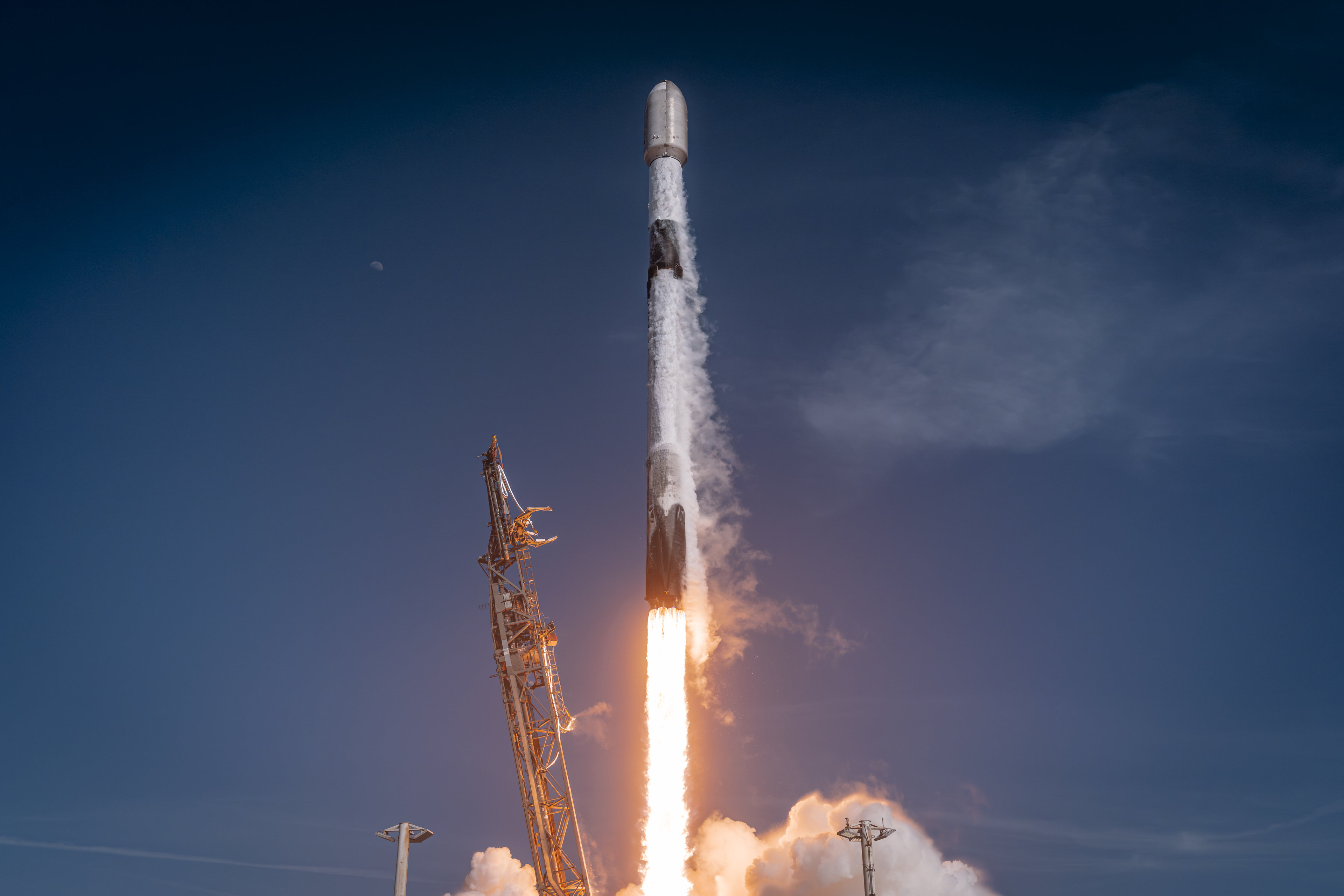
File photo of a Falcon 9 launch from Space Launch Complex 4-East at Vandenberg Space Force Base, California.
Credit:
SpaceX
All in at Vandenberg
SpaceX is launching more often than ever at Vandenberg, some 140 miles northwest of Los Angeles. More than half of all of SpaceX’s launches so far this year have lifted off from the California spaceport. Last year, it was less than 40 percent, and in 2024, it was one-third. Sources tell Ars this trend is expected to continue this year, putting Vandenberg on pace to become SpaceX’s busiest launch site. It’s a remarkable turnaround for the spaceport on the hillsides of California’s Central Coast. In 2020, Vandenberg hosted just a single space launch.
Vandenberg may overtake Florida’s Space Coast—combining NASA- and military-owned launch pads—in launch activity this year, depending on how often other companies like Blue Origin and United Launch Alliance fly their rockets. The last time Vandenberg launched more rockets than Cape Canaveral was in 1987 and 1988, during the grounding of NASA’s Space Shuttle fleet after the Challenger accident.
Nearly 180 rockets took off from the Florida and California spaceports last year, including satellite launches and long-range missile tests. While those numbers may plateau or slightly decline this year, the overall trend points upward. How quickly the launch rates rise will largely hinge on when SpaceX’s Starship becomes operational.
“We see those rates potentially tripling in the near term, the next five years,” said Col. James Horne, commander of Space Launch Delta 30 at Vandenberg, in a roundtable with reporters last month.
Col. Brian Chatman, commander of the military unit overseeing Cape Canaveral’s launch range, said the Space Force is preparing for as many as 500 launches per year from Florida’s Space Coast by 2036. The growth will require new construction, access to utilities, and increased reliance on automation at the military ranges, which are responsible for ensuring public safety during rocket launches.
SpaceX aims to routinely launch Starships from multiple launch pads in Florida and Texas (it has not announced plans for a Starship pad in California), and last month, the Space Force selected Blue Origin to build a brand new launch pad for its New Glenn rocket on an undeveloped site at Vandenberg. Stoke Space and Relativity Space are building launch sites at Cape Canaveral. The only other orbital-class spaceport on federal property is at Wallops Island, Virginia, where Rocket Lab, Northrop Grumman, and Firefly Aerospace plan to base their rockets.
This doesn’t count privately owned spaceports, like SpaceX’s Starbase in South Texas, which operate outside the Space Force’s jurisdiction.
Search
RECENT PRESS RELEASES
Related Post