SpaceX team wins Purdue’s first Neil Armstrong Space Prize for its reusable rocket system
April 23, 2026
This is a paid press release. Contact the press release distributor directly with any inquiries.

The 2026 Neil Armstrong Space Prize was announced Tuesday (April 21) at Purdue University, heralding the Falcon 9 Booster Landing Team as the inaugural laureate of the Neil Armstrong Space Prize
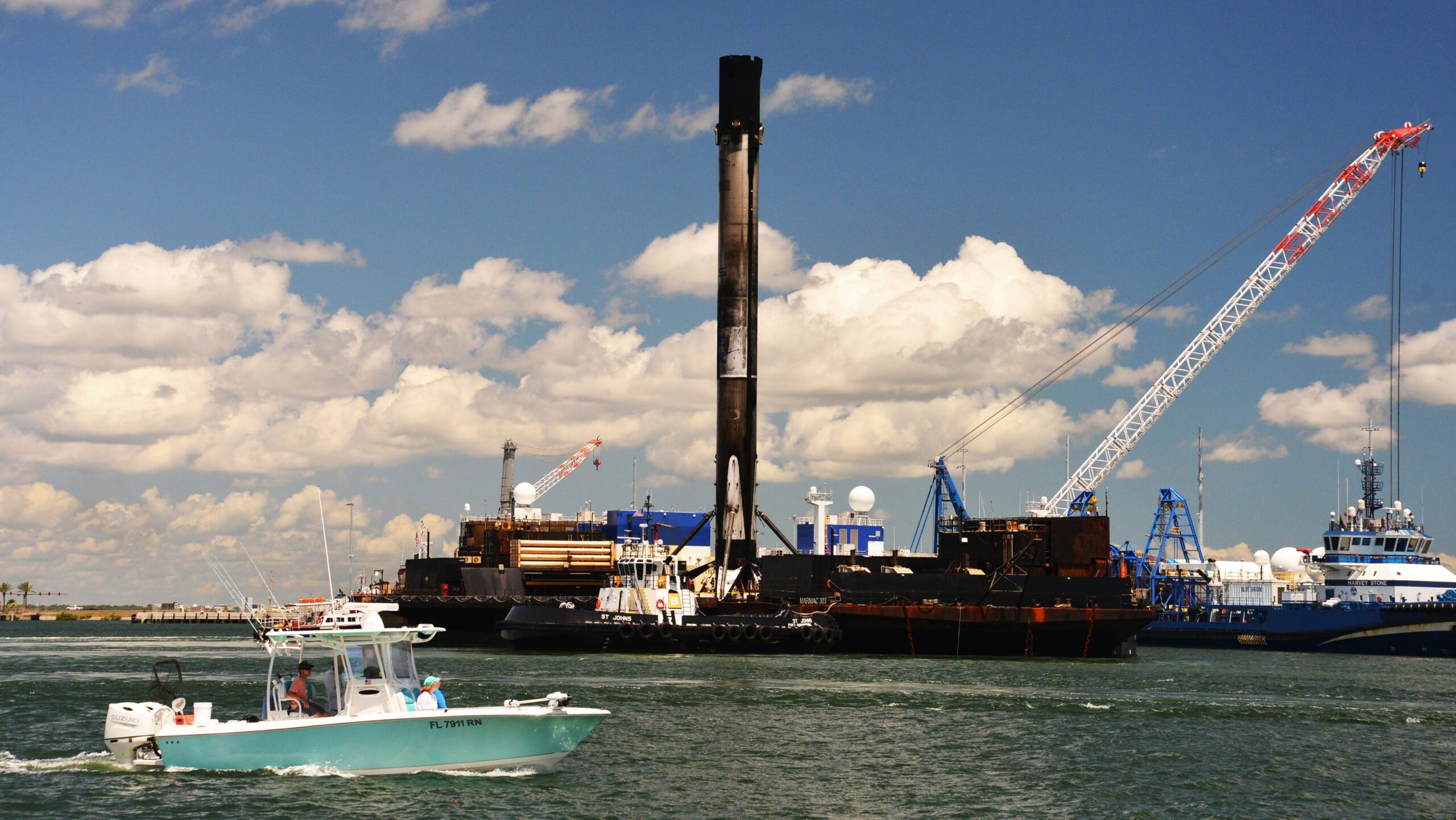
West Lafayette, IN, April 23, 2026 (GLOBE NEWSWIRE) — WEST LAFAYETTE, Ind. — The 2026 Neil Armstrong Space Prize was announced Tuesday (April 21) at Purdue University, heralding the Falcon 9 Booster Landing Team as the inaugural laureate of the Neil Armstrong Space Prize, for their cutting-edge work on the Falcon 9 reusable two-stage rocket system.
The team is the first recipient of the international prize recognizing excellence over the past 10 years in space discovery, innovation and human achievement. This transformative prize, which aspires to be a Nobel for space, leverages Purdue’s unparalleled space heritage, having produced numerous astronauts and pioneering aerospace education and research.
The five-member team was nominated for their work in developing the Falcon 9 vertical landing capability, fundamentally changing the launch vehicle landscape. The SpaceX recipients are:
-
Lars Blackmore, senior principal Mars landing engineer
-
Shana Diez, senior director, Starship reliability
-
Jon Edwards, senior vice president of Falcon and Dragon projects
-
Yoshiaki Kuwata, principal guidance, navigation and control engineer
-
Eduardo Velazquez, director, Crew Starship engineering
The selection of the research team for the honor was announced during an event in the Herman and Heddy Kurz Atrium at Purdue’s Neil Armstrong Hall of Engineering. Attendees at the announcement event watched via livestream as the Neil Armstrong Space Prize recipients were surprised by the news of receiving the award. Amit Kshatriya, NASA associate administrator, and other leaders participated in the event.
“Purdue alumnus Neil Armstrong took that small step and giant leap on the face of the moon in 1969,” Purdue President Mung Chiang said. “Now as the dawn of space economy and the new frontier of human space exploration inspire us all, the Neil Armstrong Space Prize will recognize the most impactful steps and leaps each year.”
Purdue President Mung Chiang welcomes faculty, staff and students to the announcement of the inaugural winners of the Neil Armstrong Space Prize, a transformative award that aspires to be a Nobel for space. (Purdue University photo/Kelsey Lefever)
The inaugural Neil Armstrong Space Prize will be formally awarded in September during a ceremony in Washington, D.C., aligning with the America250 celebration and connecting Purdue’s space leadership with this historic national milestone.
The eponymous award honors aerospace pioneer and Purdue graduate Neil Armstrong (BS aeronautical engineering ’55, honorary doctorate ’70), who led the team of three American astronauts who were the first to land on the moon on July 20, 1969.
Dan Dumbacher, chair of the Neil Armstrong Space Prize selection committee, said Falcon 9 last year had 164 launches with one booster being used more than 30 times.
“The reusability resulting from vertical landing has been key in reducing the cost of launching payloads,” Dumbacher said. “This team made it happen.”
The research team was chosen from a long list of impressive nominees.
“In the end, the deciding factor was what we felt like was the team’s impact to humanity,” said Dumbacher, a professor of engineering practice in Purdue’s School of Aeronautics and Astronautics. “Their work has had a very clear impact and a very visible impact.”
The SpaceX team was honored in the award’s Innovation category. Three categories of awards fall under the Neil Armstrong Space Prize, and each year one or more of these categories might be awarded:
-
Innovation — for space technologies that benefit humanity
-
Discovery — for breakthroughs that have most expanded the frontiers of human knowledge
-
Human Achievement — for pioneering accomplishment in space that most benefited humanity
Dumbacher said the Neil Armstrong Space Prize stretches internationally across the major areas of the modern space industry — including government, defense and commercial aspects — and the goals set by each area. Nominees were received in all three categories under the Space Prize. Dumbacher also wanted to thank BryceTech for its support to the process development.
Purdue faculty, staff and students watched Tuesday (April 21) as the inaugural winners of the Neil Armstrong Space Prize were announced. Receiving the honor was the Falcon 9 Booster Landing Team for SpaceX. (Purdue University photo/Kelsey Lefever)
Nominations received in 2025 were extensively reviewed and narrowed down to six finalists in January. The advisory committee is led by Kathleen Howell, Purdue’s Hsu Lo Distinguished Professor of Aeronautics and Astronautics; with Henry Yang, chancellor emeritus at the University of California, Santa Barbara; and the late George Smoot III, formerly of the University of California, Berkeley, and Lawrence Berkeley National Laboratory. The advisory committee joined Dumbacher and selection committee members Jim Free, an aerospace executive; Kathryn Lueders, a commercial space consultant and retired NASA Human Exploration and Space Operations associate administrator; Rob Meyerson, CEO and co-founder of Interlune Corp. and former president of Blue Origin; and Thomas Zurbuchen, a Swiss-American astrophysicist and ETH Zurich space director, to thoroughly revisit and discuss each nomination.
A final nominee recommendation was passed along to Chiang and Arvind Raman, the John A. Edwardson Dean of the College of Engineering, in March.
Purdue leads all public institutions of higher learning for the number of alumni who have entered public and commercial space programs. Academic, government and industrial partnerships — including with NASA research centers and leading space economy industries — serve as a university hallmark with collaborative efforts that have resulted in advances in hypersonics, advanced propulsion systems, in-space manufacturing, and lunar and planetary surface mobility, which are critical to space discovery, economic opportunity and global security.
Purdue will send five Boilermakers on a research journey into space aboard a Virgin Galactic suborbital flight, dubbed Purdue 1, in 2027. This groundbreaking flight will include teaching and real-time research on board, making Purdue the first university to operate in space.
Known as the Cradle of Astronauts, Purdue has 30 alumni who have flown in space or been selected as NASA astronaut candidates.
About Purdue University
Purdue University is a public research university leading with excellence at scale. Ranked among top 10 public universities in the United States, Purdue discovers, disseminates and deploys knowledge with a quality and at a scale second to none. More than 106,000 students study at Purdue across multiple campuses, locations and modalities, including more than 57,000 at our main campus locations in West Lafayette and Indianapolis. Committed to affordability and accessibility, Purdue’s main campus has frozen tuition 14 years in a row. See how Purdue never stops in the persistent pursuit of the next giant leap — including its integrated, comprehensive Indianapolis urban expansion; the Mitch Daniels School of Business; Purdue Computes; and the One Health initiative — at https://www.purdue.edu/president/strategic-initiatives.
Media contact: Brian Huchel, bhuchel@purdue.edu
Note to journalists:
Photos and video b-roll from the announcement is available on Google Drive.
CONTACT: Purdue University News Purdue University purduenews@purdue.edu
Terms and Privacy Policy
Search
RECENT PRESS RELEASES
Related Post