SpaceX to launch EchoStar XXV communications satellite
March 9, 2026
CAPE CANAVERAL SPACE FORCE STATION — SpaceX is aiming to launch the EchoStar XXV communications satellite during the overnight.
What You Need To Know
EchoStar XXV is a direct broad satellite that will provide service to DISH TV customers in all 50 states and Puerto Rico
SpaceX stated that its Falcon 9 rocket will send up the EchoStar XXV mission from Space Launch Complex 40 at Cape Canaveral Space Force Station.
The 149-minute launch window opens at 11:14 p.m. ET and is set to close at 1:43 a.m. ET, Tuesday.
The liftoff time is currently 11:19 p.m. ET.
The 45th Weather Squadron is calling for a 90% chance of good liftoff conditions, with the only worry being the cumulus cloud rule.
If the launch is scrubbed, the next attempt will be Tuesday.
Find out more about the weather criteria for a Falcon 9 launch.
Going into the black again
For Falcon 9’s first stage booster called B1085, it is another day at the office.
This booster has performed a lot of impressive missions, including two crewed ones and going to the moon.
- Crew-9 mission
- Starlink 6-77 mission
- Starlink 10-5 mission
- RRT-1
- Blue Ghost and HAKUTO-R
- Fram2 mission
- Starlink 6-93 mission
- SXM-10 mission
- Eumetsat MTG-S1 mission
- Starlink 10-20 mission
- Starlink 10-27 mission
- Starlink 6-94 mission
- Starlink 6-98 mission
After the stage separation, the first-stage rocket should land on the droneshipA Shortfall of Gravitas, which will be in the Atlantic Ocean.
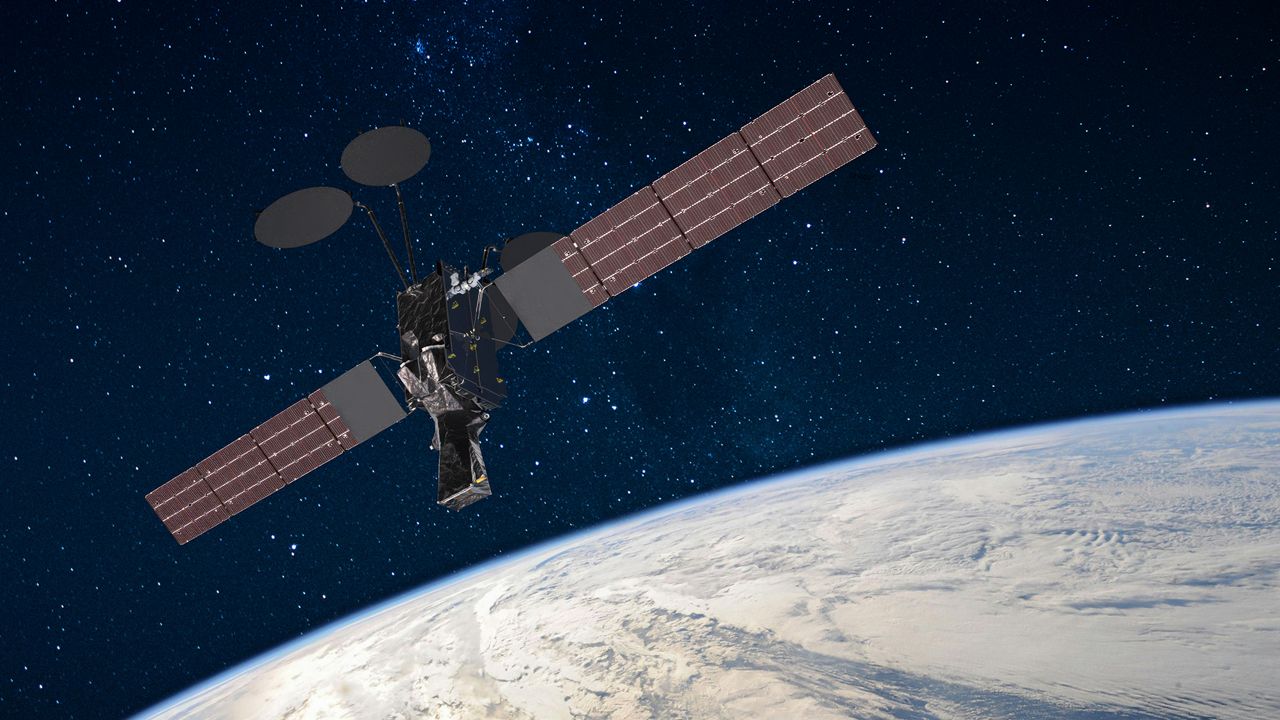
This is an artist’s rendering of the EchoStar XXV satellite. (EchoStar)
About the mission
EchoStar XXV is a direct broad satellite that will provide service to DISH TV customers in all 50 states and Puerto Rico, stated the EchoStar company.
It will be placed in a geosynchronous transfer orbit.
And this is a pretty big satellite, which was made by Intuitive Machines company Lanteris Space Systems.
“It is a massive spacecraft, weighing over 6,500 kg (14,330 pounds). At launch, it is roughly the size of a motorhome or small bus, with its solar arrays spanning over 100 feet when fully deployed into geostationary orbit,” a company’s spokesman stated.
Search
RECENT PRESS RELEASES
Related Post