SpaceX Will Be Even More Profitable After Its 2026 IPO
March 22, 2026
“Never let a good crisis go to waste.”
The phrase has been alternately attributed to everyone from Niccolo Machiavelli in 1513 to Winston Churchill in 1945 to… Rahm Emmanuel in 2008. But in 2026, it’s Elon Musk who’s putting the principle into practice at SpaceX.
Things are not going well for Musk’s rivals over at Boeing (BA 3.01%) and Lockheed Martin‘s (LMT 1.71%) joint venture, United Launch Alliance, you see. ULA has a new rocket, the Vulcan Centaur, that it hopes will replace its outgoing Atlas V. The problem is, Vulcan’s only been able to launch four times in the past two years — and during two of those launches, parts started falling off midflight!
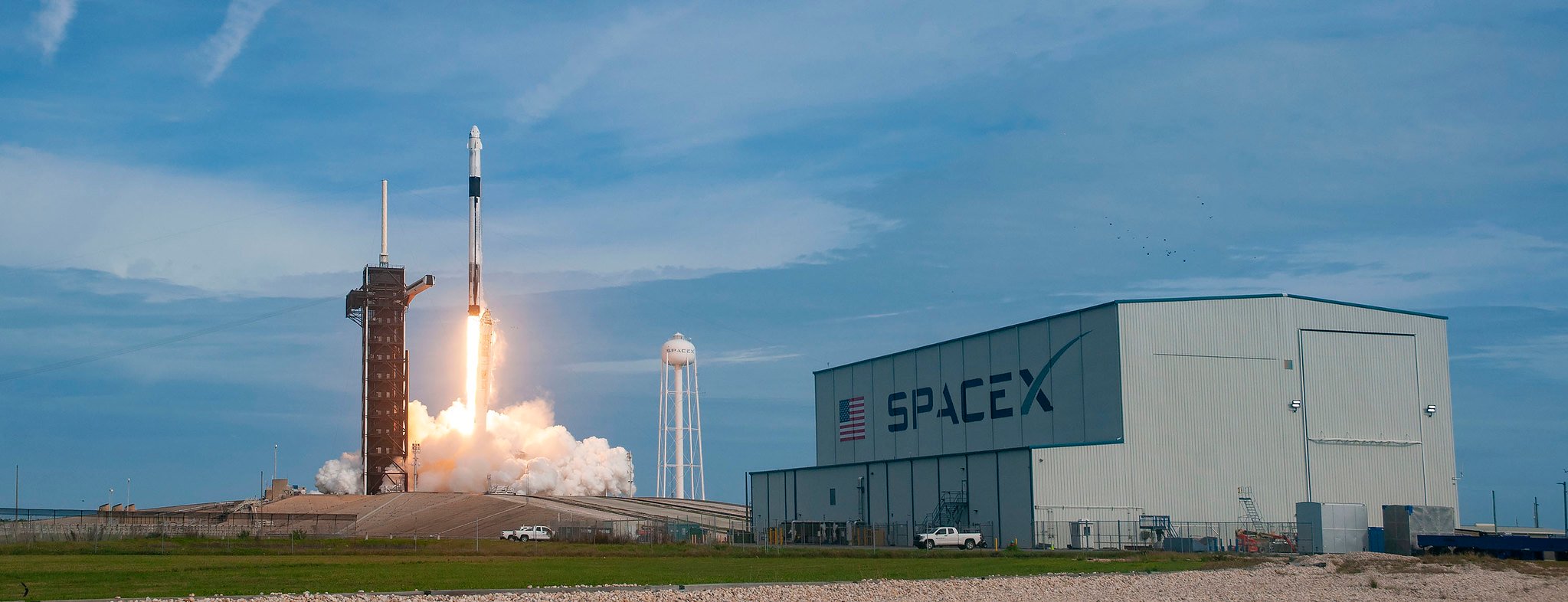
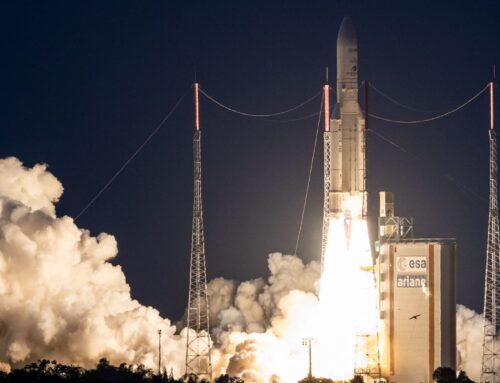
Image source: SpaceX.
Last month, the U.S. Space Force ordered Vulcan launches halted while ULA figures out a fix to its disintegrating-rockets problem, leaving the U.S. government with just one space company remaining with which to launch its satellites: SpaceX.
And how is SpaceX responding? Is it cheering ULA along and waiting patiently for its rival to right the ship and resume Vulcan launches so the two companies can compete on a level playing field?
No, it is not.
Instead, SpaceX is raising its prices on Falcon 9 launches… just months ahead of an expected $1.75 trillion IPO.
SpaceX raises prices — again
When SpaceX first began commercial launches of its new Falcon 9 rocket, its advertised price — $61.2 million — was the lowest in America and just a fraction of the $350 million and up that ULA was charging at the time.
SpaceX announced its first-ever price increase in 2016, raising its launch price (note: not its own cost to launch a rocket) to $62 million. SpaceX raised prices twice more over the next 10 years, first to $67 million in 2022, then to the strangely precise $69.75 million in 2024.
Sometime in the past few weeks, SpaceX upped that number to $74 million. We don’t know precisely when. SpaceX rarely brags about price increases. But according to historical snapshots of the company’s “capabilities and services” webpage from the internet “Wayback Machine,” as recently as Jan. 16, Falcon 9 launches still cost $69.75 million. By Feb. 4, that had changed to $74 million.
What this means to investors in the SpaceX IPO
SpaceX’s latest price increase has two big implications for investors. The most obvious is for investors in the upcoming SpaceX IPO, expected to take place in June or July.
At a $74 million per launch price but presumably the same internal launch cost, SpaceX is taking advantage of the near-term absence of competition from Vulcan to expand its profit margin on launches — just in time to boast about its growing profit margin as it shops its IPO to investors.
At the same time, SpaceX probably has little reason to worry it might lose market share by raising prices. Even if Vulcan were launching, its rumored launch price of $110 million means SpaceX continues to undercut its archrival on price. Overseas, the only other comparable competition SpaceX faces is from Arianespace and its Ariane 6 rocket — which also charges about $110 million per launch.
Raising its price thus costs SpaceX nothing but may win it a bigger valuation when it prices its IPO.

Lockheed Martin
Today’s Change
(-1.71%) $-10.93
Current Price
$626.58
What this means for space investors not buying the SpaceX IPO
Final point: Heavy-lift rockets like Falcon 9, Vulcan Centaur, and Ariane 6 constitute just one segment of the space launch market — the high end. Elsewhere in this industry, SpaceX faces competition from makers of smaller rockets such as Rocket Lab (RKLB 6.44%) with Electron and Firefly (FLY +1.13%) with Alpha.

Rocket Lab
Today’s Change
(-6.44%) $-4.63
Current Price
$67.30
Both launchers are currently capable of launching only small satellites to orbit, and to date, SpaceX has undercut them on launch price by bundling groups of small satellites aboard its Falcon 9 rockets and launching them to orbit en masse on ride-sharing “Transporter” missions. As Payload Space points out, SpaceX initially priced these launches aggressively, charging about $5,000 per kilogram of payload to orbit. SpaceX has raised prices over time; its latest price increase now has ride-sharing customers paying $7,000 per kg — a 40% increase over the past five years.
The move gives SpaceX’s smallsat-launching rivals a bit of breathing room. Still, as with its bigger competitors, SpaceX launches remain priced well below those of its small-rocket rivals, even after the price increase. For customers seeking the absolute lowest cost to orbit for their small satellites, SpaceX is at no risk of losing market share through its price hike. Once again, this is a move calculated to expand profit margins with little risk to revenue growth.
No wonder analysts, who expected SpaceX to IPO at a $1.5 trillion valuation just weeks ago, now think the SpaceX IPO could be worth $1.75 trillion.
Related Post