Stellantis: CEO warns Europe “it’s becoming very difficult to consider investing”
December 22, 2025
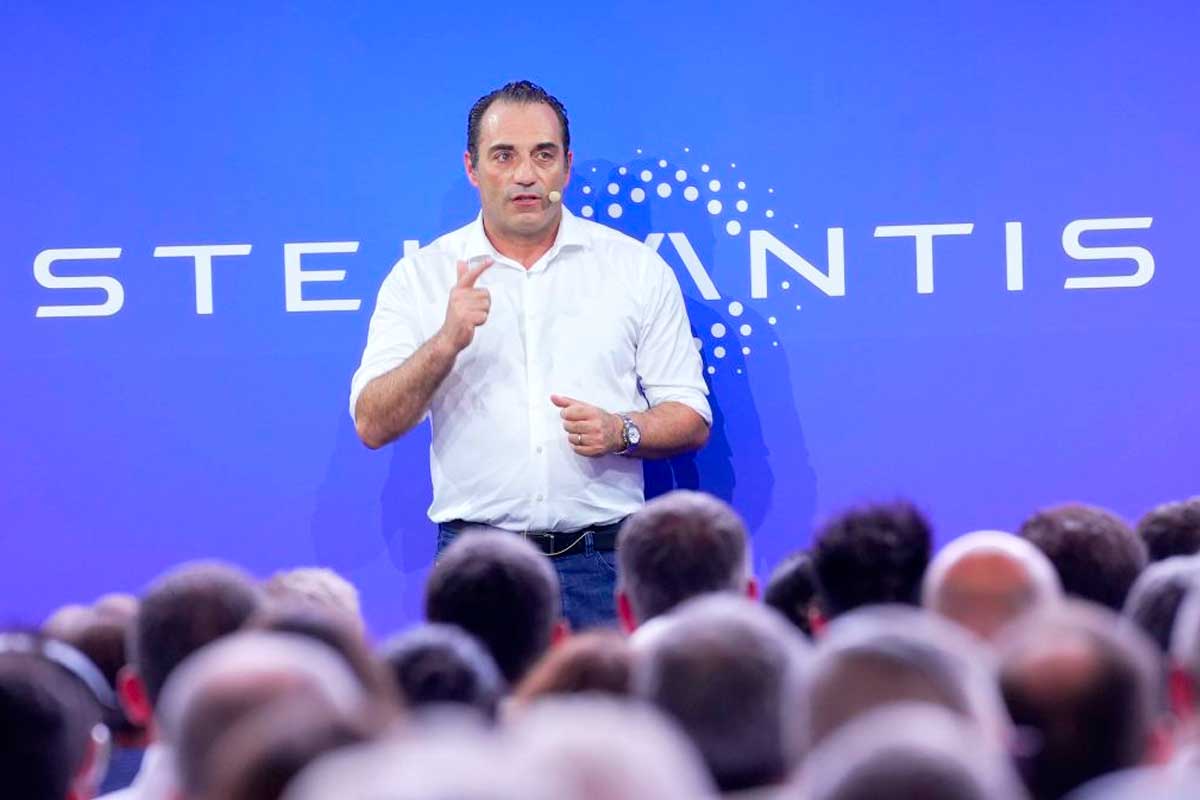
After announcing massive investments in the United States and South America, Stellantis is once again getting tough with Europe. This time, it’s no longer just a superficial analysis or a diplomatic message: the Group’s CEO, Antonio Filosa, openly warns that the Old Continent is falling off the automotive giant’s priority radar. The reason: a climate policy deemed confusing, costly and, above all, incapable of recreating growth.
In an interview with the serious Financial Times, the Italian-American executive doesn’t mince his words. Despite the announced easing of the ban on combustion engines in 2035, Stellantis believes that Brussels has not provided the necessary framework to revive the European automotive industry. Worse still: without growth, further investment becomes, in his view, almost unrealistic.
Last November, however, Antonio Filosa hinted at a positive scenario. If the European Union really did soften its climate trajectory, Stellantis was ready to multiply its investments on the continent. The announcement from Brussels in mid-December was therefore supposed to be a turning point. But on reading the final measures, the verdict is clear. “This package doesn’t do the job”, says the CEO. In his view, Europe has failed to present a “clear roadmap for growth”, a prerequisite for securing major industrial investments over the long term.
The move from zero emissions to a reduction of 90 % by 2035 is seen as a political signal, but largely insufficient in industrial terms. The numerous associated conditions – compensation via sustainable fuels or low-carbon steel – introduce a complexity and cost that Stellantis considers incompatible with mass-market automobiles.
The core of Filosa’s message can be summed up in one sentence: without growth, it becomes very difficult to consider investing more in Europe. And without additional investment, it’s impossible to build a solid supply chain capable of protecting jobs, competitiveness and even the continent’s industrial sovereignty. This reasoning underlies the Group’s recent choices. In just a few weeks, Stellantis announced more than $13 billion in the United States, followed by nearly €6 billion in Brazil. These are two regions where demand is dynamic, rules clearer and returns on investment more predictable. Conversely, Europe is increasingly seen as a market under stress, where the energy transition is progressing less rapidly than expected.
Antonio Filosa places particular emphasis on a point often neglected in public debate: commercial vehicles. In his view, European measures do not provide sufficient immediate support for their electrification, even though these models are essential to the real economy. Another major criticism is the risk of exploding costs. The carbon offsetting mechanisms envisaged could be out of reach for mainstream manufacturers, the very ones that equip the majority of European households. In the long term, Stellantis fears a transition that would exclude some consumers, due to the lack of genuinely accessible vehicles. Behind the environmental issue lies a major social and industrial challenge: preserving a mass automotive market, without turning it into a niche product reserved for the wealthiest.
The contrast with other parts of the world is striking. In the United States, the Trump administration’s climate shift has certainly led to losses in electric vehicles, but it has also boosted investment in hybrids and internal combustion engines. Stellantis has understood this, making North America a strategic pillar. In South America, the Group is banking on growth, technological flexibility and local hybrid solutions, as in Brazil. Here again, the approach is pragmatic: invest where the market exists and where the rules of the game are stable. Against this backdrop, Europe gives the impression of a hesitant continent, torn between climate ambitions and industrial reality, unable to reconcile the two.
While some automakers, such as Renault, welcome the European review, Stellantis’ views are echoed by a growing number of industry players. Germany, through its powerful automobile lobby, even speaks of “disastrous” measures. The message sent by Antonio Filosa is therefore clear: Europe is not doomed, but it is playing against the clock. Without rapid adjustments, industrial visibility and genuine support for growth, the continent risks becoming a secondary market for the world’s major groups.
Search
RECENT PRESS RELEASES
Related Post