Tesla AI6 chip delayed ~6 months as Samsung 2nm production slips
March 12, 2026
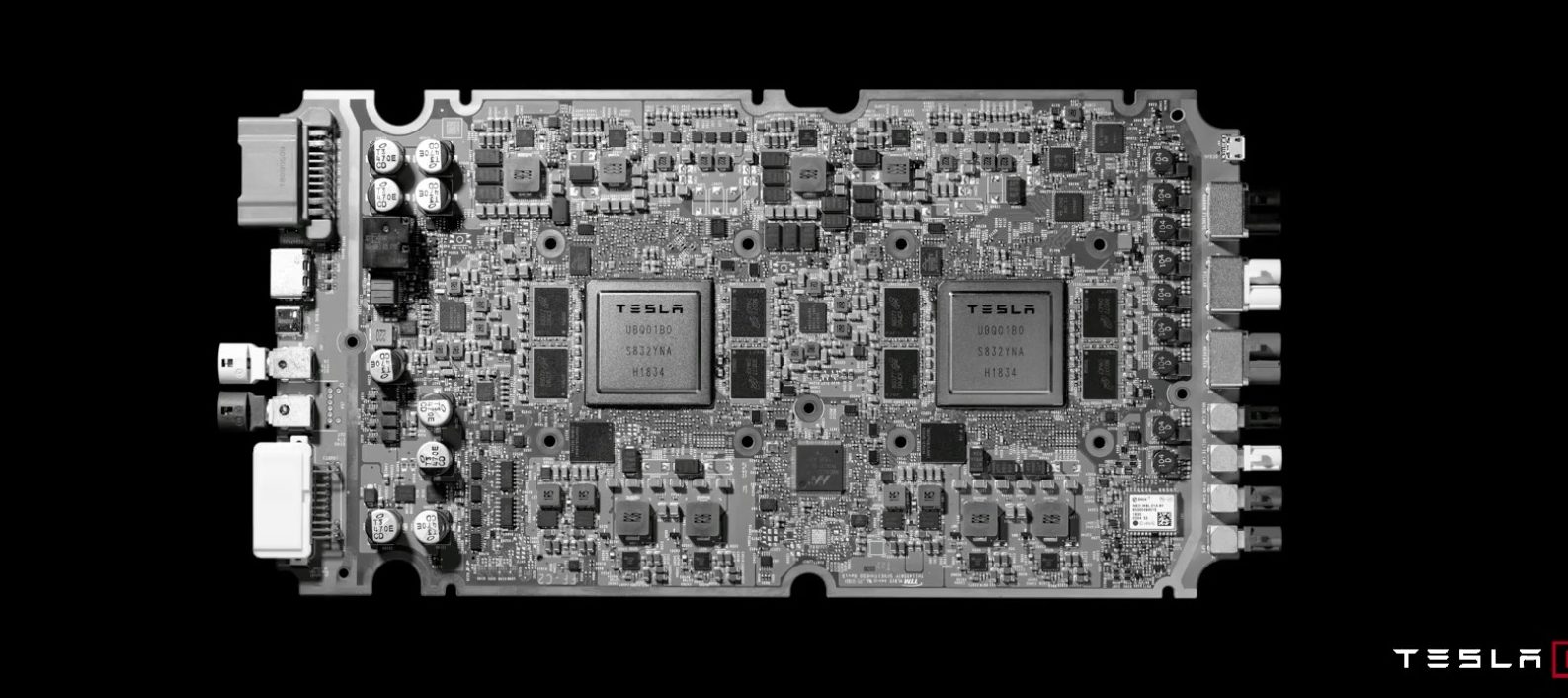
Tesla’s next-generation AI6 chi, the processor designed to power its autonomous vehicles, Optimus robots, and AI data center, has been delayed by approximately six months. The setback stems from Samsung’s 2-nanometer production line, where a postponed multi-project wafer (MPW) run is pushing the chip’s mass production timeline into late 2027.
The delay adds to a growing pattern of chip timeline slippage for Tesla, which is still waiting on its AI5 chip to reach volume production after Elon Musk said the design was “almost done” in January — six months after claiming it was “finished.”
According to a report from Korean trade publication The Elec, the MPW prototype run for Samsung’s 2nm process, originally slated for Apri, has been postponed by roughly six months. The delay affects not just Tesla but other Samsung 2nm foundry customers as well, including South Korean AI chip startup DeepX, which had planned to tape out its DX-M2 processor on the same process node.
DeepX’s DX-M2, an on-device generative AI chip capable of running models with up to 100 billion parameters at just 5 watts of power consumption, was originally set for mass production in the second quarter of 2027. That timeline has now shifted: quality testing won’t begin until at least Q3 2027, with full-scale sales expected in Q4 2027.
Advertisement – scroll for more content
The ripple effect illustrates a key vulnerability in Tesla’s semiconductor strategy. When Samsung’s foundry schedule slips, every customer on that process node feels the impact.
Tesla signed a massive $16.5 billion deal with Samsung last year to produce AI6 chips on the 2nm Gate-All-Around (GAA) process at Samsung’s Taylor, Texas fabrication facility. The contract runs through 2033 and initially secured roughly 16,000 wafer starts per month.
Tesla has since been in discussions to more than double that capacity to approximately 40,000 wafers per month — a sign of just how central the AI6 chip is to the company’s plans across self-driving vehicles, robotics, and AI infrastructure.
But none of that expansion matters if Samsung can’t get the 2nm process running on time. The AI6 chip is not expected to enter Tesla vehicles or robots before 2028, and this delay makes that timeline look increasingly tight.
It also compounds the problem Tesla already has further up its chip roadmap. The company delayed AI5 volume production to mid-2027, forcing the Cybercab to launch on current-generation AI4 hardware. Musk’s ambitious claims of a nine-month design cycle for successive chips — AI6, AI7, AI8, and beyond — look even less credible when the foundry partner building them can’t hit its own manufacturing milestones.
The 2nm delay is particularly significant for Samsung’s foundry division, which has been counting on Tesla’s AI6 contract as a cornerstone of its 2026 profitability targets. Samsung Foundry reportedly aims for 2 trillion won in profit this year, with Tesla AI6 production and high-bandwidth memory (HBM4) logic die manufacturing as key revenue drivers.
Samsung has struggled to keep pace with TSMC in advanced process nodes for years. The 2nm GAA process was supposed to be a turning point — a node where Samsung could demonstrate competitive yields and attract high-value customers. Tesla’s deal was a major validation of that strategy.
A six-month slip on the MPW run suggests Samsung still has yield or process maturity challenges to work through before 2nm is production-ready. For Tesla, the dual-foundry strategy — using both Samsung and TSMC — provides some insurance, but the AI6 chip is specifically allocated to Samsung’s 2nm process.
The pattern here is hard to ignore. Tesla keeps announcing aggressive chip timelines, and reality keeps pushing them back. AI5 was “finished” last July, then “almost done” in January, and won’t reach volume production until mid-2027. Now, AI6 is hitting delays before it even gets to the prototype stage.
We’re not surprised and to be fair, it’s not all of Tesla’s fault. Samsung’s 2nm process is genuinely cutting-edge technology, and getting yields to production-grade levels is one of the hardest engineering challenges in the semiconductor industry. TSMC has its own 2nm node (N2) ramping this year, and they are proceeding cautiously.
The real question is what this means for Tesla’s broader autonomous driving and robotics ambitions. The company has told investors it plans to spend over $20 billion in capital expenditures this year with AI infrastructure as a major focus. But in the world of hyperscallers, $20 billion in capex is a rounding error.
Tesla investors are betting on the company being hyper-efficient with its investments, but it’s a big bet.
The silicon that’s supposed to power next-generation autonomy and Optimus keeps slipping further out. At some point, the gap between Musk’s chip roadmap rhetoric and Samsung’s manufacturing reality becomes a material constraint on Tesla’s AI strategy. For now, AI4 has to carry more weight, for longer, than Tesla originally planned. As for AI5, it almost already feels old compared to AI6 and AI7 already deep in the roadmap.


Search
RECENT PRESS RELEASES
Related Post