THC Fee Increase in Texas Could Push Patients to the Black Market and Impact Local Busines
February 4, 2026
By Erika Gonzalez
Reporting Texas
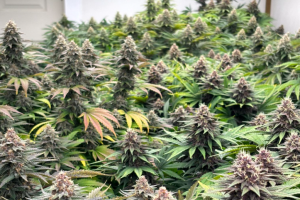
Cannabis growers like T&T Roots in East Texas say they cannot afford the new fees being proposed by the state of Texas. Photo courtesy of T&T Roots
Romana Monroe sat in her armchair, hands trembling as she recalled the trauma and pain she carried from serving in the U.S. Navy. She had tried to manage her post-traumatic stress disorder with alcohol, which escalated into alcohol abuse and harmed her physical and mental health.
Everything changed when her friend William took her to a doctor and later to a medical cannabis dispensary in Houston, where she began using THC gummies and tinctures through a veteran study for PTSD, starting with small doses and adjusting as needed.
“That day saved my life,” Monroe said.
Since then, she has stopped drinking and started a new chapter focused on community rebuilding. She now leads Texas Vets Wellness Alliance, an organization for veterans and trauma survivors.
Like Monroe, thousands of Texans rely on medical cannabis to relieve chronic pain, anxiety, or PTSD. At the end of September 2025, Texas had more than 135,000 registered patients, according to the Texas Department of State Health Services. The National Survey on Drug Use and Health estimates that around 4 million residents used cannabis for therapeutic purposes in the past year.
Access for these patients could change drastically. On Jan. 9, the Texas Department of State Health Services proposed raising licensing fees for the THC hemp industry. Retailers would pay $20,000 per location, up from $150, and manufacturers would pay $25,000 per facility, up from $250. State officials said the increase is meant to cover the costs of regulating the industry and ensuring product safety.
The proposal also calls for stricter lab testing, new product recall rules, updated THC limits that count all forms of THC, transport restrictions and raising the minimum age for purchasing the products to 21.
Monroe said these changes could make many products currently on the market noncompliant.
“If this changes, many people like me could be forced to look for options outside the regulated system,” Monroe said.

Romana Monroe, center with fellow veterans Freya Kelly and Kate Morgan, says THC therapies saved her life. Photo courtesy of Romana Monroe
“There’s no way to survive a hike like this”
The hemp industry in Texas includes more than 8,300 licensed retail locations, according to the Department of State Health Services. Business owners and trade associations expressed deep concerns about the economic viability of their operations, warning that the new fees could push many small businesses out of the market.
“When I saw it, I thought, this is going to shut us down completely. There’s no way to survive a hike like this,” said Scotty O’Neal, owner of a Houston dispensary.
The cost increase threatens not only family-owned businesses but also could reshape the market.
“For a business like ours, there’s no margin to absorb this level of fees,” said Luke Temple, owner of T&T Roots LLC, a family owned hemp farm in Pollok, in East Texas.
Both O’Neal and Temple warned that the market could consolidate around larger operators with enough capital, reducing product diversity and patient care.
Driving Consumers to the Black Market
Heather Fazio, director of the Texas Cannabis Policy Center, said access to regulated THC products is not just a business issue, but also a public health concern.
“Limiting access to legal products will push consumers to the black market, where there are no safety standards or lab testing,” Fazio said.
Monroe explained that regardless of whether her medications are legally available, she must find a way to obtain them.
“Cannabis helps keep me sane. It helps balance everything that’s out of control,” Monroe said.
Some operators in the sector also warned about the economic pressure businesses face.
“The stores that remain open will focus only on making money. Many times, they sell low-quality products imported from elsewhere, which could affect customers,” Temple said.
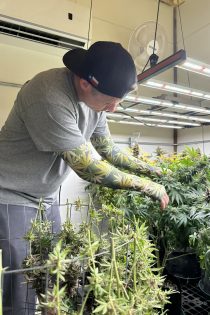
A worker tends to plants at T&T Roots in East Texas. Photo courtesy of T&T Roots
Changes in THC Testing
Currently, hemp products are tested for contaminants, THC levels and other cannabinoids by independent, state accredited laboratories hired by manufacturers, which is standard practice. Under current law, only Delta-9 THC, the compound in cannabis that produces a psychoactive effect, is counted toward the legal limit. The state now proposes to measure all forms of THC, not just Delta-9, and use that total to decide if a product stays within the law.
Fazio said this could remove hemp flowers that are currently safe, creating shortages for patients and reducing revenue for small businesses.
The Texas Cannabis Coalition supports some aspects of the proposal, such as age restrictions and lab testing, but warns that high licensing fees and THC limits could push responsible operators out of the market.
“We support age checks, lab testing, and clear labeling,” Fazio said, “but the problem comes when regulation becomes punitive and removes operators who follow the law.”
Regulation and the Future of the Market
Betsy Jones, director of policy and strategy at Texans for Safe and Drug-Free Youth, and other advocates for stricter rules see benefits in robust regulation that funds education, inspection, and enforcement, and protects youth and vulnerable consumers.
Public hearings on Texas hemp rules were held in early January. On Jan. 20, the Texas Alcoholic Beverage Commission finalized regulations for consumable hemp products, including a minimum age of 21 and ID checks.
The Department of State Health Services is still reviewing feedback on licensing fees and THC testing standards, while lawmakers and stakeholders debate how to balance safety, patient access, and small business viability.
Monroe criticized the proposed rules as overly harsh and not truly aimed at protecting patients, cautioning that the changes could threaten both small businesses and the broader medical cannabis community in Texas. She said that for people who rely on these treatments, the stakes go far beyond regulations or fees.
“For many of us, this isn’t optional care. It’s daily survival,” Monroe said.
Search
RECENT PRESS RELEASES
Related Post