The Worldfolio: Amano Aligns Automation, Workforce Systems and Environmental Solutions With Global Demand for Productivity and Sustainability
May 24, 2026
Interview conducted on February 27, 2026
In recent years, cross border regulations, procurement standards, and reporting requirements that extend across multinational supply chains have increasingly shaped corporate priorities around sustainability and carbon neutrality. In this environment, sustainability is no longer only a matter of corporate responsibility. It is becoming a baseline condition that markets expect companies to meet. This is particularly true in industries where operational efficiency, compliance, and reliability directly determine competitiveness. With that in mind, over the next three to five years, which factors do you believe will become the primary drivers of global demand for sustainability. Among regulations, procurement standards, energy constraints, and customer requirements, where do you expect the strongest structural demand to emerge across regions and sectors?
Speaking candidly from the perspective of our day to day business, the factor that ultimately drives direction is customer demand. What our customers need, where they are heading, and what they want us to deliver is the foundation of business. That is true not only for Amano, but for any company. We are not a company of enormous scale. We operate four business segments, but none of them is exceptionally large in absolute terms.
Historically, our strength has been listening closely to the customer and building leading share positions in niche markets. That has been our approach for many years, and it will not change. As a result, sustainability will increasingly become part of what we do, not as a separate initiative, but because customer expectations and requirements are moving in that direction. If we cannot develop products and solutions that reflect those expectations, then we are not truly meeting customer needs. That is how I see the relationship. Customer direction becomes the driver, and sustainability becomes integrated into product and solution development as a consequence.
To ensure we can distinguish your approach clearly, and because in many markets services are increasingly hard to differentiate on price alone, I would like to ask more directly. Are there any specific sustainability actions, investment priorities, or focus areas that stand out as particularly important for your company at this moment?
To be honest, there is not a single standout initiative that I would describe as especially unique. What matters most right now is steady, practical execution. For example, improving our facilities and equipment to be more energy efficient is now a basic expectation. We will continue to do what is necessary, even if it is not always easy, and then raise our targets gradually year by year.
In that sense, there is no one dramatic measure that suddenly changes everything. Sustainability requires consistent progress and concrete objectives. The best we can do is keep setting clear targets, make sure we achieve them, and then continue raising the bar over time.
Do you believe sustainability initiatives can create business advantages as well. If so, which of your business segments do you believe stands to benefit most from those advantages?
I do not think there is a single segment that benefits uniquely or disproportionately. The four businesses we operate all share a common role in addressing major constraints society is facing. In particular, there is severe labor shortage and increasing concern about energy constraints. Our businesses contribute solutions in areas such as labor saving, automation, and improving operational productivity.
Because those themes apply across all four segments, sustainability linked benefits are also spread across the entire company. In other words, it is not that one specific segment is the sustainability segment. The way we think about it, all our businesses are connected to solving today’s real world challenges.
In a previous interview I conducted with Mr. Oguro from a sustainability innovation group, one point that came up was that progress is not achieved only through a top down directive. It also requires a bottom up connection to social trends, daily operations, and employee engagement. Many companies are working to raise internal awareness through training and initiatives, but they also find it challenging as industry players to make sustainability feel directly relevant to the business. From your perspective, how do you connect sustainability to day to day business in a way that strengthens motivation and makes it feel tangible rather than abstract?
In many respects we face the same challenge as other companies. Sustainability can remain an abstract concept unless people see how it connects to their work and to the value we deliver to customers. For us, the most practical way to make that connection is to relate sustainability to the concrete problems we are solving, such as labor shortage, productivity improvement, and energy efficiency.
When sustainability is clearly linked to the products and solutions that customers value, it becomes easier for people to understand why it matters. That connection strengthens motivation because employees can see that sustainability is not separate from the business. It is part of how we remain competitive, how we earn customer trust, and how we contribute solutions that society needs.
I would like to move to the concept Amano uses to describe itself, as an engineer of time and air. You operate four business segments, including workforce and time systems, parking, environmental systems, and cleaning automation. You also face international competitors in each area. For example, in cloud based workforce systems there are global players such as UKG, and in parking there are major competitors such as Park24. Under the concept of being an engineer of time and air, you operate these four business domains as one company. In practical terms, what does the phrase engineer of time and air mean for Amano today, and what does it mean for how you develop and run the business?
The expression “engineers of time and air” was a concept we set forth during the three-year period of our Ninth Mid-Term Management Plan, which concludes in fiscal 2025. While our four business segments all originated from a common foundation, they have since evolved into distinct fields.
Our company began with time recorders, expanding the concept of “time” into areas such as workforce management, and later into parking systems. On the “air” side, we developed environmental equipment such as dust collectors, and further expanded into automated cleaning through the use of cleaning robots. Broadly speaking, these four businesses have grown by developing the two domains of “time” and “air.”
Over the years, what we have built is a consistent approach to business operations. While we still utilize distributor channels, our core strength has been a direct, integrated model. We design and manufacture in-house, propose solutions directly to customers, handle implementation and delivery, and provide maintenance ourselves. This end-to-end structure has been essential in earning customer trust.
Even as our business domains have diversified, we have applied this same model across all segments. As a result, we have established a stable customer base and long-term relationships. The term “engineer” reflects our commitment to staying close to our customers, listening carefully to their needs, and continuously refining solutions within focused yet critical areas. “Time” and “air” may be relatively specialized domains, but within them, we strive to achieve high reliability and deep trust.
Thank you. Now I would like to move to your business pillars and performance outlook. You have described a revenue mix roughly as follows: parking systems about 53 percent, information systems about 22 percent, environmental systems about 14 percent, and clean systems about 8 percent. Over the next three to five years, which segment do you believe has the greatest potential to drive margin expansion. What kind of progress or changes do you expect within that segment that could improve profitability?
Looking ahead, there are two areas we are particularly focused on.
The first is our information systems solutions, including workforce management. This has traditionally been a relatively high-margin business for us, and we aim to expand it further. Strengthening this segment through improved solutions and deeper customer relationships will be key to enhancing its value.
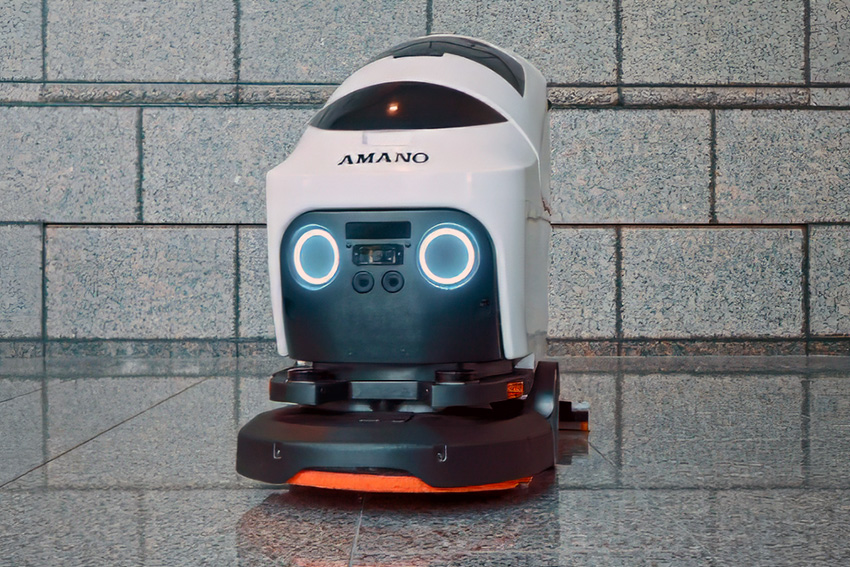
The second is our clean systems business. While it is currently the smallest segment in terms of scale, we are making significant investments in robotics and automation. By increasing the competitiveness of cleaning robots and related automated solutions, and accelerating their adoption, we see considerable potential for both scale expansion and improved profitability.
In terms of margin growth, therefore, our strategy is twofold: to further expand the high-margin workforce management business, while simultaneously scaling the clean systems segment into a more substantial and meaningful contributor through robotics and automation.
With overseas revenue representing approximately 48.5 percent of total sales, you already have a strong international mix. Over the next three to five years, how do you expect the revenue composition across these key segments to change. Are you considering adding any entirely new segments beyond the current four?
At this time, we do not have a new segment beyond the current four that we would describe as something entirely new or different. In the near term, we are focused on strengthening what we already operate.
In terms of how we want the business to evolve over the next five years, we want to expand workforce management further, because it has high profitability and strong potential. At the same time, we want to grow the clean systems business, where our current focus on robotics is intended to accelerate progress. Broadly speaking, those are the two businesses where we are placing the greatest expectations for growth.
For workforce management and clean systems, where do you want to drive growth. Do you expect the most room for expansion to be in Japan or overseas?
I believe the greatest room for growth is overseas. However, workforce management is not easy to expand globally because regulations and rules differ significantly by country. You cannot simply take a Japanese system and apply it directly in another market. Therefore, if we want to grow that business overseas, we need to consider mergers and acquisitions with local companies, and we need local expertise to align with each country’s regulatory environment. Without that, it is not realistic to expect rapid international expansion.
For cleaning robots, we also see global opportunity, but our first priority is to build a strong position in Japan. Establishing credibility and a track record domestically is important.
For parking and environmental systems, we also believe the growth potential is overseas, and in those areas as well we want to consider expansion more actively, including through mergers and acquisitions where that makes sense.
When you think about specific geographies, which countries are you targeting for expansion. In other words, where do you most want to strengthen the business next?
For workforce management, we currently have a subsidiary in France, and it is performing well. If possible, we would like to find one or two additional opportunities in Europe. That would be our preference.
For the parking business, South Korea is growing strongly. We already operate in Korea and Hong Kong, and we are also active in Malaysia. Looking ahead, we want to target further expansion in Southeast Asia, including Thailand, Vietnam, and the Philippines.
For the environmental business, the approach is somewhat different. Our primary targets are Japanese companies operating overseas. Many Japanese companies, including those in the automotive sector, have expanded abroad and need solutions such as dust collectors and powder transport systems. We have now established an initial foothold in India, and we want to focus on India going forward.
It is particularly interesting that the key drivers appear to differ by region. In the United States and Europe, parking and workforce management seem to be the core businesses, whereas in Asia, parking systems and environmental systems appear to be more prominent. Is this primarily driven by market demand, or is it the result of deliberate strategic decisions?
The most important point is that each market adopts different solutions at different times, depending on its specific needs and environment. Outside of Japan, we operate across three major regions: Europe, North America, and Asia. Ideally, we would like to expand all four of our business segments, as developed in Japan, across these regions and fill in the gaps within this matrix.
In reality, however, there are still gaps. In some regions, certain businesses are well established, while others are still in earlier stages of development. Our strategy is to gradually close these gaps over time and move toward a more balanced presence, where all four business segments are more broadly represented in each region.
You mentioned India, where you recently decided to establish a foothold. In India, what specific opportunities do you see in environmental systems and parking. What scope of business do you believe is realistic, and where do you see the strongest potential?
In India, there are already many Japanese companies operating, particularly in manufacturing and automotive. For those companies, there is strong demand for environmental related equipment such as dust collectors and powder transport systems. In addition, we have received interest and requests from some companies already operating locally, which helped us reach the point where we could finally establish a foothold. Even if we focus only on Japanese companies in India, the potential volume is meaningful. That is one major opportunity.
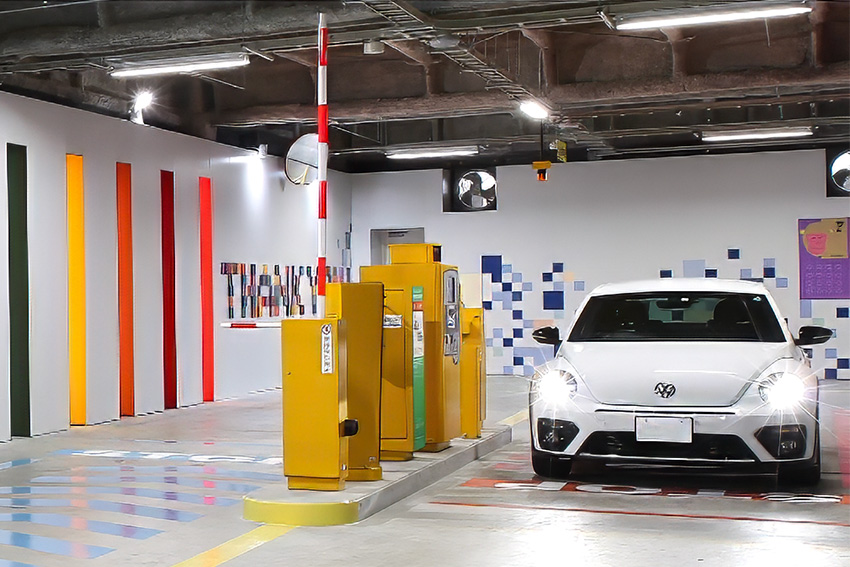
For parking, I believe it is still difficult to expand quickly in India. Parking systems tend to develop first in countries where the concept of paid parking is already widely established. In India, it will likely begin only in parts of major urban centers. For that reason, when I think about parking, I see markets such as Thailand and the Philippines as potentially earlier opportunities than India, depending on how infrastructure and paid parking adoption develop.
Turning to recent performance, one striking point we noted was your North American performance in the third quarter of fiscal 2025. If my research is correct, operating profit in North America increased by about 118 percent year on year, while revenue increased by about 2.9 percent. What specifically drove such a sharp increase in profitability?
The main reason is that our parking business in North America had been in a loss making position until the prior year. After many years, it finally returned to profitability.
If I recall correctly, it may have been the first time in roughly ten years that we achieved a black ink result there. When a business turns from a loss to a profit, the percentage change can look very large, which is why the number appears so dramatic.
Overseas revenue already represents about 48.5 percent of total sales, which is an impressive balance. Going forward, you have said you would like to increase the overseas ratio further. Do you have a specific numerical target for the overseas revenue share?
At this stage, I have an image of about 60 percent as a near term goal.
As part of your international strategy, you have mentioned the importance of mergers and acquisitions. In addition to M&A, are you also actively looking for partnerships or cooperative relationships as part of your expansion plan?
Yes, particularly in our environmental business, where progress with M&A has not been as smooth as we had hoped. For example, in North America, we are looking to strengthen our supply chain by identifying suitable suppliers and strategic partners, and by building collaborative relationships that can support the expansion of our environmental business.
In North America, you said the environmental business and collector related business are not yet very large. What are the main challenges that prevent expansion there?
One challenge is that bringing products from Japan into the United States is difficult. Building what you might call a Japan based export platform into the US market is not easy. At the same time, manufacturing in the United States also has challenges because labor costs are very high.
So the key is finding the right balance between what we can bring from Japan and what we can source locally. Unless we can optimize that combination, I do not believe we can expand the business in North America in a meaningful way. That is why we want to explore different approaches and partnerships.
I would like to ask a finance related question. For fiscal 2025, you have set targets of approximately 180 billion yen in revenue and 24.5 billion yen in operating profit. To achieve these numbers, what concrete actions or focus areas will be most important in the remaining period?
In the fourth quarter, there is only one month left, March. For Japanese companies, March is a particularly important month. Ultimately, it comes down to how much we can concentrate and execute during this final period. That is what will determine whether we can reach our targets.
Given that Amano already has a high overseas business ratio, how do you communicate your medium and long term strategy and your key initiatives to international investors? What channels or approaches do you use to ensure that overseas investors understand the company’s direction?
Across our three key regions—North America, Europe, and Asia—we conduct annual meetings by visiting each location in person. In addition, we participate in various events and forums within Japan.
Through these opportunities, we strive to deepen investors’ understanding of our business, our strategy, and the initiatives we are pursuing over the medium to long term.
Finally, our publication has more than 25 million readers across over 59 countries. Many are industry specialists, digital transformation experts, manufacturing professionals, and senior executives at multinational companies. If you had to communicate Amano’s defining characteristic to this global audience in a single phrase, what would it be?
I would say we are a customer oriented company. And in niche markets, we want to become the company that customers can rely on most. Internally, we often describe our goal as becoming a niche top company, meaning that we want to increase the number of areas where we hold the leading position.
Even within our four business segments, there are many smaller subsectors. In some of those areas we are already at the top, while in others we are not yet. In that sense, my intention is to increase the number of fields in which we are the most trusted leader.
So if I summarize it, I would describe Amano as a customer oriented specialist in niche markets, aiming to be the most reliable partner in each of the focused areas where we operate.
For more information, visit their website at: https://www.amano.co.jp/en
Search
RECENT PRESS RELEASES
Related Post