This Asian Stock Market Is up 75% This Year: ‘The Chip Boom Isn’t a Wall Street Story’
May 9, 2026
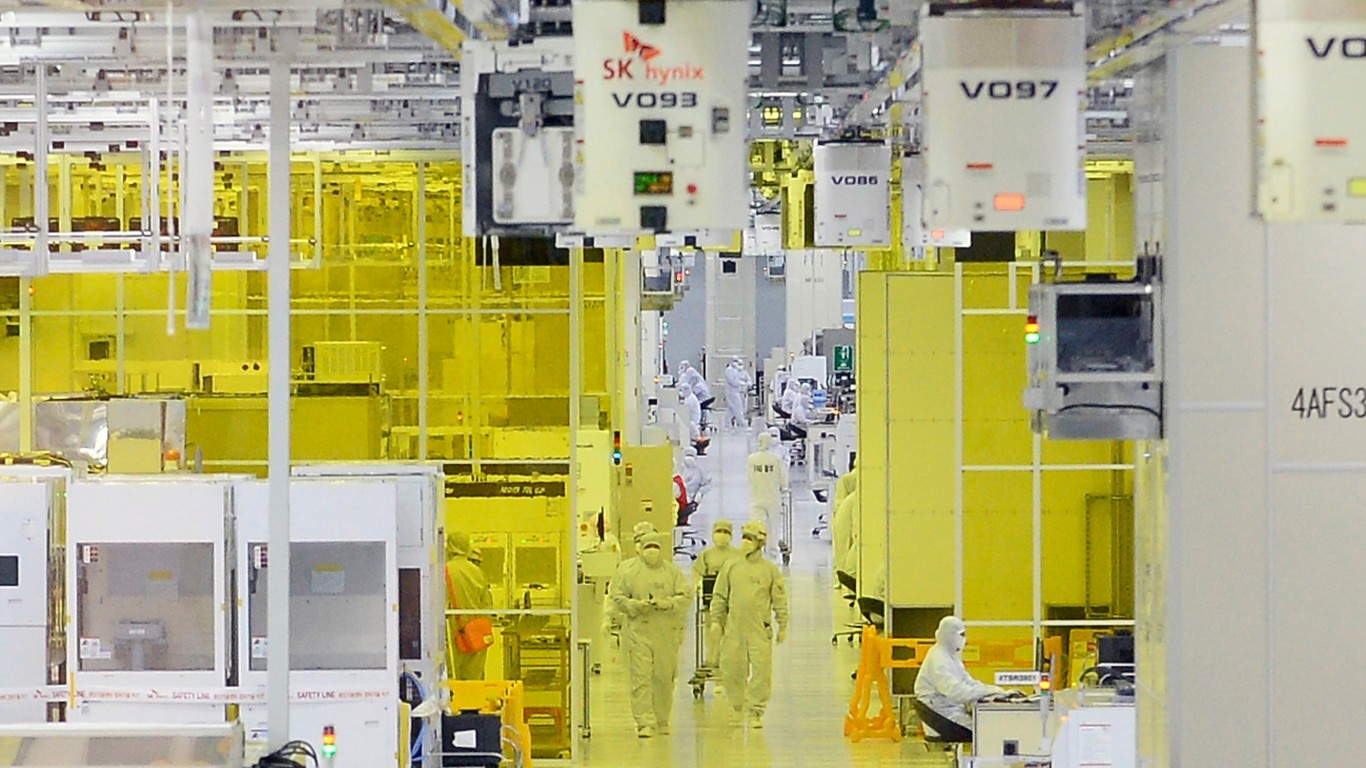
The AI semiconductor trade has a passport, and lately it has been stamped more often in Seoul than in San Jose. On a recent Reuters Morning Bid podcast segment titled Chip stock boom, the host pushed back on the assumption that the chip rally is a Wall Street phenomenon, pointing to Korea’s market surge as evidence of something bigger.
The framing from the host: “this is not solely a demand and an AI buildout and a chip demand from Wall Street or from the US. This is all around the world.” The host added that “the scramble for those hot stocks is more around in Asia certainly than it is on Wall Street itself.”
Korea Is Leading the Global Chip Trade
The numbers back the thesis. The iShares MSCI South Korea ETF (NYSEARCA:EWY | EWY Price Prediction) is up 87% year-to-date (YTD) through May 6, 2026, after delivering a 95% total return in 2025 that crowned it the world’s top-performing major equity market. For comparison, the iShares Semiconductor ETF (NASDAQ:SOXX) is up 68% YTD and the SPDR S&P Semiconductor ETF (NYSEARCA:XSD) is up 65% YTD.
That gap matters. US chip benchmarks are running hot, and Korea is still pulling ahead. The host noted Korea’s 75% surge was “led by two very big stocks,” without naming them on air. We will respect that gap. What is publicly disclosed by BlackRock is that the top two holdings in EWY together account for 45% of the fund, and that concentration is the engine behind the move, fueled by memory-chip pricing tied to AI infrastructure demand.
The U.S. Supply Chain Is Riding Along
Korea’s boom is part of a broader cycle. Wafer-fab equipment makers tied to Korean memory capex are participating in the same cycle. Applied Materials (NASDAQ:AMAT) shares are up 67% YTD, roughly in line with the broader chip ETFs. That is the “global story” in practice: Korean fabs order from US toolmakers, US hyperscalers buy Korean HBM, and the cycle compounds.
What Could Break the Trade
The flip side of concentration is fragility. Per CNBC analysis, “The U.S.-Iran conflict has highlighted a significant concentration risk in emerging markets, particularly within Asia, where ETFs are heavily weighted towards tech-dependent economies like China and South Korea.” EWY already showed that sensitivity, surging 8% on “Ceasefire Day” in April after losing ground during the conflict.
The Takeaway
If the AI trade were truly a Wall Street story, you would expect US chip indexes to be the runaway leaders. Instead, Korea’s broad market is outpacing US chip benchmarks by a meaningful margin in 2026. Investors anchoring exclusively to US megacap chipmakers and the SOXX may be measuring half of the trade. The other half trades while New York sleeps.
Search
RECENT PRESS RELEASES
Related Post