Top 4 Green AI Stocks to Watch in 2026 as AI Reshapes Climate and Energy Solutions
January 2, 2026
Artificial intelligence (AI) is changing how many industries work. It now plays a growing role in climate and energy solutions. Companies are using AI to cut emissions, reduce energy waste, and improve how clean energy systems operate. This has created a new group of firms often called “Green AI” companies.
These businesses combine advanced computing with sustainability goals. They attract investors who want growth, but also want a positive environmental impact.
AI is expected to play a major role in cutting emissions and improving energy efficiency over the next decade. According to the International Energy Agency (IEA) and industry reports:
-
AI could deliver over 40% of the emissions reductions needed by 2040 when applied across energy, transport, and industry sectors.
-
Data center electricity demand driven by AI is projected to more than double by 2030, reaching roughly 945 terawatt‑hours (TWh) — similar to the annual electricity use of Japan.The
- Global Green AI software market is valued at $15B and is projected to reach $98B by 2030.
-
Global economic impact of AI could reach $15 trillion by 2030, with a significant share coming from applications that improve sustainability and energy efficiency.
In short, AI is transforming industries. Companies that combine AI with sustainable practices are becoming market leaders. Firms investing in AI for energy efficiency and climate monitoring not only help the environment but also position themselves for long-term growth as the world moves toward cleaner energy systems.
By 2026, AI, cloud computing, and clean energy technologies will create major investment opportunities. Within this trend, four Green AI stocks stand out for their innovation, financial strength, and commitment to a greener future.
Microsoft (MSFT): Green AI at Global Scale
Microsoft is one of the largest technology companies in the world. It is also a leader in using AI to support climate goals. Its cloud services, software platforms, and data centers give it a strong position in Green AI.
The company has committed to becoming carbon negative by 2030. This means it plans to remove more carbon from the atmosphere than it emits. AI plays a key role in this effort. Microsoft uses AI to track energy use across its global data center network. These systems help balance workloads, improve cooling, and reduce wasted electricity.

Microsoft also runs the AI for Earth program. This program supports groups that use AI to study forests, water systems, climate risks, and natural disasters. These projects help governments and researchers better understand environmental changes.
In short, the tech giant leverages AI for these green reasons:
- Uses AI to monitor and optimize energy use across global data centers and offices.
- AI-powered workload balancing and cooling systems reduce electricity consumption.
- AI for Earth program applies AI to track forests, water resources, and climate hazards.
- Helps achieve carbon-negative operations by 2030.
- AI tools support sustainability for both Microsoft and thousands of enterprise customers.

Microsoft’s financial position is very strong. In 2025, its market value was above $2.8 trillion. Annual revenue reached about $220 billion, with operating margins close to 36%. This scale allows the company to invest heavily in AI and sustainability without hurting profits.
Microsoft stands out because of its reach. Its AI tools affect not only its own operations, but also thousands of companies that use its cloud and software services. This makes it a central player in the Green AI stocks space.
SEE MORE on MICROSOFT:
Alphabet (GOOGL): AI Efficiency for Energy-Heavy Systems
Alphabet, the parent company of Google, is another major force in the Green AI stocks market. It runs one of the world’s largest digital infrastructures. This includes search engines, cloud platforms, and data centers that use large amounts of electricity.
Google has been carbon neutral since 2007. It now aims to operate on 24/7 carbon-free energy by 2030. AI is a core tool in reaching this goal.

Machine learning systems help Google predict energy demand and manage renewable power supply. AI also controls data center cooling, which reduces electricity use and operating costs.
These efficiency gains are important because data centers are growing fast. As AI usage increases, energy demand rises. Alphabet’s approach shows how AI can help control this growth instead of making emissions worse:
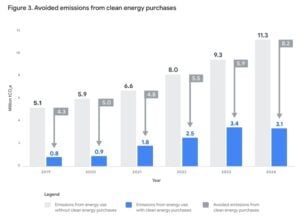
- AI predicts energy demand and optimizes data center cooling systems, cutting electricity use.
- Supports Google’s goal of 24/7 carbon-free energy by 2030.
- Uses AI to forecast renewable energy output for its grid and operations.
- AI-driven efficiency reduces operational costs while lowering carbon footprint.
- AI projects extend to climate research, including forest monitoring and renewable energy planning.
Alphabet’s financial strength supports its long-term plans. In 2025, the company reported about $320 billion in revenue and had a market value near $1.8 trillion. Growth in cloud computing and AI services continues to drive earnings.
For investors, Alphabet offers a mix of scale and discipline. Its Green AI efforts are built into everyday operations. They are not side projects, showing how environmental goals can align with cost savings and strong financial results.
- SEE MORE on GOOGLE:
Stem, Inc. (STEM): Smarter Batteries for Clean Energy
This is a public company that builds software and services to make energy storage systems smarter and more efficient. Its main product, Athena, uses AI and machine learning to monitor data from solar panels, batteries, and electric systems in real time. Athena predicts when to store energy and when to use it, helping customers maximize savings and reduce fossil fuel reliance.

Stem operates in more than 50 countries and manages energy for thousands of sites, including utilities and large commercial clients. By 2025, its AI had run over 31 million hours and managed hundreds of thousands (500K+) of energy devices worldwide.
Stem trades on the NYSE under STEM. While smaller than some global tech giants, the company has grown steadily as businesses and utilities adopt energy storage.
Revenue comes primarily from AI-driven energy management services and system deployments, and ongoing expansion into new markets continues to strengthen its financial position.
Stem’s technology allows customers to optimize renewable energy use and provides measurable operational benefits, making it a compelling public-market Green AI stock.
Stem’s AI and emissions impact include:
- AI decides the best times to store or use energy to reduce fossil fuel reliance.
- Helps businesses and utilities lower electricity costs and carbon emissions.
- Supports renewable energy growth by making grids more reliable.
- Integrates solar, storage, and EV charging for efficient energy management.
Itron, Inc. (ITRN): AI for Smarter Electric Grids
Itron is a publicly traded company providing technology to utility companies worldwide. Its products include smart meters, sensors, and data software that track electricity, gas, and water usage in real time. The company’s platforms allow utility operators to quickly spot inefficiencies and make informed decisions.
In 2025, Itron partnered with Microsoft to bring generative AI tools into its systems, enabling operators to ask natural language questions and get instant insights. This improves grid reliability and helps integrate renewable energy sources such as wind, solar, and storage.
Financially, Itron, trading on Nasdaq as ITRN, generates roughly $2 billion in annual revenue. Its global customer base spans electric, gas, and water utilities, and the company continues to expand its AI-enabled offerings to enhance grid performance.
Revenue growth is supported by widespread adoption of smart meters and grid software. Furthermore, there is increasing demand for tools that make renewable energy integration more efficient.
The company has the following green AI impact:
- AI predicts energy demand to reduce waste and losses.
- Supports integration of renewable energy and storage into grids.
- Speeds up decision-making for utilities, reducing operational delays.
- Makes energy data accessible for faster, more efficient grid management.
Why Green AI Companies Matter Now
Green AI companies show how software and data can support climate goals. They do not replace renewable energy or clean infrastructure. Instead, they make these systems work better.
Several factors explain why these companies matter in the energy transition:
- Energy efficiency: AI helps reduce waste and improve system performance.
- Emissions tracking: Better data allows companies to manage carbon risks.
- Scalability: Software tools can be rolled out quickly across regions.
- Cost benefits: Many solutions save money while cutting emissions.
These strengths make green AI stocks appealing to both technology-focused and sustainability-focused investors.
What to Watch in 2026 and Beyond
The green AI market is still developing. Several trends will shape its future. More companies want tools that lower energy costs and emissions. Data centers, in particular, are under pressure to become more efficient.
Government policies also matter. Climate disclosure rules and clean tech incentives can speed up adoption. At the same time, growing AI workloads increase electricity demand. This makes efficiency tools even more valuable.
Together, these forces support long-term growth for green AI solutions. Market estimates project it can reach up to $129 billion by 2034.

Green AI’s Role in the Climate-Tech Landscape
Green AI is becoming a key part of climate technology. Microsoft and Alphabet apply AI on a global scale. Stem uses AI to optimize energy storage and clean power systems. Meanwhile, Itron helps utilities run smarter grids and integrate renewable energy efficiently.
Each company plays a different role. Together, they show how AI can support a cleaner and more efficient economy. For investors, green AI stocks offer exposure to climate solutions without relying only on energy production assets.
Search
RECENT PRESS RELEASES
Related Post