Top exec exits Ford. What’s next.
April 17, 2026
Tech chief Doug Field puts protege Alan Clarke in charge
The text made me laugh.
One of my favorite industry analysts wrote, “In case you care … Mark Field is leaving Ford. Has always been a job hopper.”
I do care. Anyone who follows Ford Motor Co. should care.
Doug Field is the top tech executive who oversees electric vehicles, digital design and software. (Note: Mark Fields was ousted as Ford CEO in 2017. People in the industry have swapped the names Mark Fields and Doug Field. It’s maddening. I’ve done it myself. )
And, no, Doug Field isn’t a job hopper.
The assessment illustrates Midwest vs Silicon Valley perspective.
So I thought I’d take a minute to weigh in — because smart, insightful people have strong opinions about the fact that tech executives based on the Pacific Coast are snapped up by legacy automakers Ford and General Motors, then quickly leave.
Thing is, Field is not that guy.
He stayed with Ford for nearly five years, an eternity in tech.
Anyone who lives or works in (or near) Silicon Valley — as I have — sees constant job movement. Staying anywhere for very long usually suggests a lack of ambition, a lack of curiosity, a desire to get comfortable, disinterest in opportunity or innovation.
What’s often viewed as “job-hopping” in Michigan is considered standard protocol in the New Economy, for better or worse. While staying at one company for a decade or two (or three) can bring institutional knowledge and efficiency, it may lead to complacency and workplace decisions that placate bosses rather than challenge them.
The average tenure in the tech sector is 2 to 3 years, according to Centum Search, a Boston-based executive search firm that focuses on technology, software engineering, and startup talent.
In the Midwest, the idea of failure is a topic to be avoided. In Silicon Valley, potential investors ask founders of startup companies which of their projects have failed and why, because early investors don’t want a first fail on their watch.
Apple CEO Steve Jobs famously viewed failure as part of innovation because mistakes teach lessons. So fail fast and keep moving. But always keep moving.
Great engineers, bunny slippers welcome
Field held key positions at Apple, Tesla and Segway.
When Ford revealed on Wednesday, April 15, Field’s plan to leave, it came as no surprise to me.
In recent years, people inside the Glass House have wondered privately if Field might someday become CEO of the company founded in 1903.
On his LinkedIn page, he wrote, “I am looking for great engineers, designers and leaders to help change the course of the auto industry … We need talent, passion, and curiosity, not just years of experience. Irreverence to convention, hierarchy and bureaucracy is encouraged. We’re looking for people with an infinite capacity to not know what can’t be done. Bunny slippers welcome.”
I often saw Field in jeans and tennis shoes, no matter the time of day or event or venue. He has been known to work 80 to 90 hours a week. His former boss, Tesla CEO Elon Musk, has a reputation for sleeping on couches, on floors and under desks in the workplace to maintain momentum and (in theory) inspire workers.
Field, like all top tech execs, wanted an A game team at Ford. He didn’t see much value in A- or B+ or B or C folks. Top talent creates products that change the world.
Field came to Dearborn to lead a revolution.
Narrative disruption
His successes included the all-electric Puma compact crossover and Capri sports coupe for Ford Europe. He led a digital architecture transition that began with Lincoln vehicles and is evolving to include the F-150 and Super Duty pickup trucks.
Then everything changed.
The market for electric vehicles failed to grow at the rate projected by analysts. Tax incentives went away. Elected officials campaigned against the clean energy, then pulled the plug on infrastructure that supported the pivot to electrification.
The EV market withered. The industry re-assessed. Major projects were killed.
We will see the impact of Field’s most high-profile project in late 2026 or early 2027.
I’ll get to that in a minute.
What led to this
Doug Field, 61, is proof you can go home again.
His hiring at Ford in 2021 was viewed as a huge coup by The Los Angeles Times, Bloomberg and Jim Cramer, host of “Mad Money” on CNBC.
At the time, Jim Farley had been CEO less than a year. Recruiting someone with Field’s credentials signaled the automaker’s commitment to electric vehicles and, most importantly, a competitive future.
Few people know that Field had an established relationship with Ford before he became a tech star. He joined the company just after graduating from Purdue University, where he earned a mechanical engineering degree. His storied career began as a Ford development engineer, a job he held for six years, according to his bio. After joining Ford, he earned graduate degrees in business and engineering from the Massachusetts Institute of Technology.
Field would launch consumer products that changed our lives — working as vice president of design, chief technology officer, senior vice president of engineering and special projects director.
He was at Segway when the company introduced the two-wheeled electric scooter used for tours, security and policing — leaving for Apple after nine years. He worked eight years at Apple (during two stints), and five years at Tesla. Before working with Steve Jobs and Elon Musk, Field was chief engineer for the IBOT program at DEKA Research, where he developed a wheelchair that could climb stairs and curbs.
He has consistently focused on consumer products that change everyday life.

Looking back, looking ahead
When I asked sources at Ford about Field’s departure, they sounded resigned to the fact that transition is a reality in 2026. Talent comes and goes, including people they like who make significant contributions. It’s a sign of the times. Field gave Ford plenty of notice, sources said.
Field has said he wants to give back to a world that has given him so much.
In 2025, he earned a $15.3 million annual compensation package at Ford, according to the earnings report filed with the Securities and Exchange Commission.
Now everyone is watching to see what he chooses to do in his next phase of life.
He has burned no bridges. He advanced key areas he targeted when he arrived in 2021.
“I think the auto industry is in a period of profound change,” Field told reporters after Ford announced his hiring. “Electrification, software and connected vehicles and autonomy are going to change everything.”
His prediction was spot on.
“There’s no company with a better history in this industry than Ford Motor Co.,” Field said at the time. “After meeting and talking to Jim (Farley) and other leadership at Ford, I became convinced that not only was the history here but there was a deep desire to really change and embrace these technologies and sort of build the best of both worlds, where the scale and history of Ford can be combined with a completely new set of approaches in the product and in the experiences and in the connection.”
Then Field recruited the man who would become his successor.
Now everything tech is in the hands of his protege, Alan Clarke.
Who steps into the spotlight
Clarke, who is 40 now, came to Ford in 2022 after 12 years at Tesla.
He worked as a design engineer and director of new programs during a period of impressive growth at the electric car company, working on the Model S, and Model X and Model 3, Roadster and Cybertruck.

“When I was at Tesla, I worked on Model 3 under Doug and I worked on Model X under him, as well. And certainly one of the things I learned is, the way he would set up a team, the way he would create roles and responsibilities, the way he would sort of create interactions within the team to get the best ideas to come out and then down select them into things that we would want to ship, left a really big imprint on my mind and it certainly was one of the densest times of learning in my whole career. So, that’s like, alright, I’m going to pick up the phone when Doug calls …” Clarke said in February 2026 on The Inevitable podcast by MotorTrend.
First call, no luck. Then a win.
When Field went to Apple, he called Clarke twice. Clarke wanted to know if the Apple project was going to move forward for sure. Detail was vague and hush-hush and may have involved an Apple car project. “Everyone is so tightlipped. I had no idea what they were working on.”
Clarke didn’t think Apple sounded like a good fit. Field stayed in touch.
“When Doug went to Ford, I think some people said, ‘Well, Doug’s going to be an adviser at Ford,’” Clarke said on the podcast “But I know Doug well enough that I think he’s taking on something really hard, really meaningful, something he thinks is really important. He called. He said, ‘This is what we’re doing. We have these ideas, let’s chat about it.’”
A new bet
Field told Clarke, “I think we need help. We need to do things differently in EVs.”
Field suggested creating an architecture team at Ford, which is what Clarke was doing at Tesla. “So, I thought, ‘I think I am capable of that. I think I can go find really smart people that want to do it with me,’” Clarke said on the podcast.
Now Clarke is vice president of advanced development projects at Ford, where he’ll lead the California-based Advanced Electric Vehicle Development team created to design and bring to market a more efficient and affordable EV program.
Its debut product, a midsize pickup with a pricetag of about $30,000, is meant to fulfill demand of younger consumers who simply can’t afford new cars. Chinese carmakers have launched affordable EVs designed to capture young buyers and they’re already destined for Canada.
An uncertain future
Veteran industry analysis John McElroy, Emmy-winning host of “Autoline After Hours” podcast and webcast, told The Detroit Free Press in 2021, “GM, Ford and Chrysler face an existential threat. If they don’t figure out how to compete in the electric market, they’re going to go out of business.”
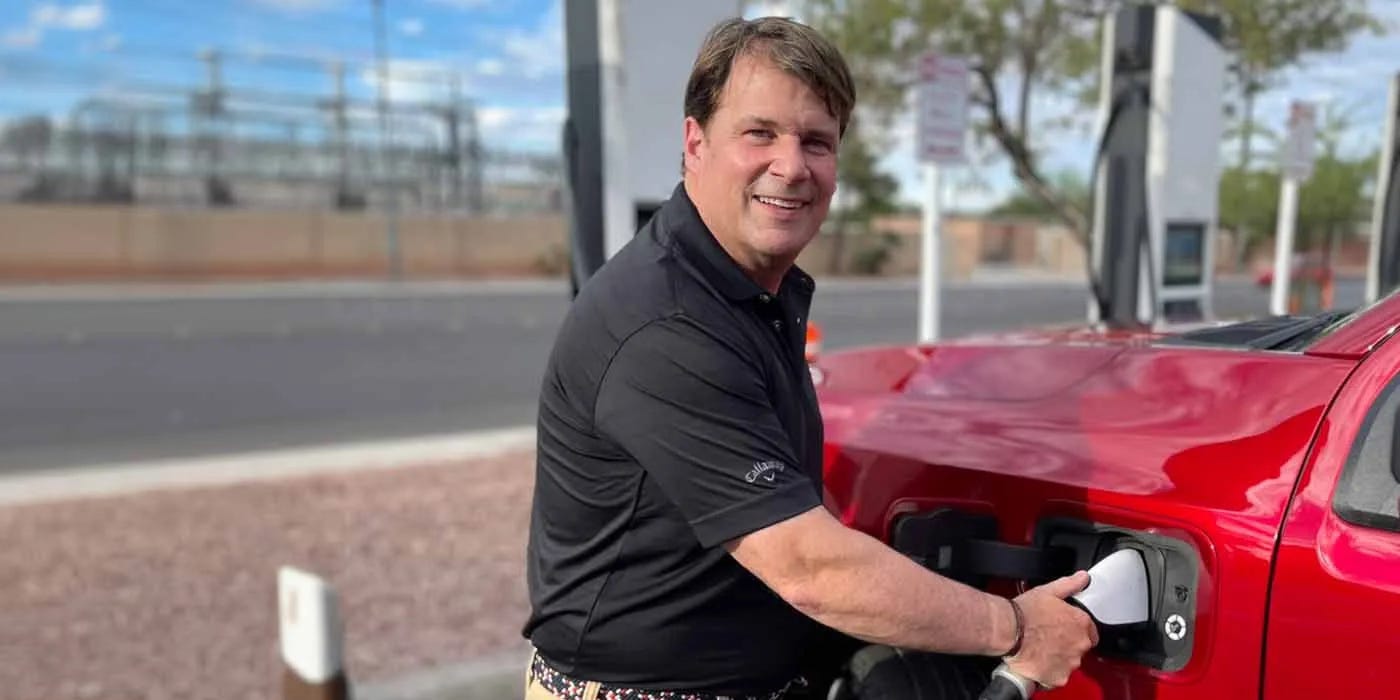
On Wednesday, April 15, during a media call, Farley told reporters (according to a transcript obtained by Shifting Gears), “We have a lot more work to do but we feel like we’re on the path to get to fully competitive with, you know, Toyota and the Chinese … We’ve made a ton of progress on our technology platforms, both electrification and partial electrification, and software capability … Doug has been an invaluable partners to me as a CEO and he has built a world-class team at Ford.”
In coming weeks, Field will transition everything to Clarke.
“Some people are cash motivated, some people are power motivated. I am change motivated,” Clarke said in February. “I want stories to tell my grandkids. I want to make a meaningful impact in something you can touch, feel.”
More:
Jeopardy! spotlights Ford engineer
Gen Z car buyers targeted by China’s sleek Zeekr with insane pricing
What happens in Vegas does NOT stay in Vegas: Living at House of Journalists
Why she went from pastry chef to Rivian
Losing in court, Uber fights to change laws
I’m honored to be part of The Iowa Writers’ Collaborative — sort of a Heartland version of the New York Times, featuring political analysis, features and news. Check it out.
Search
RECENT PRESS RELEASES
Related Post