Trump’s EPA Focus: Delay, Rescind, Dismantle Environmental and Health Protections
December 19, 2025
Over the past year, environmental experts who have dedicated their lives to public service have watched the partisan, unilateral destruction of the agency they once helped run.
“What’s happening at the EPA right now is not business as usual,” said Marc Boom, senior director of public affairs for the Environmental Protection Network (EPN), a group of former U.S. Environmental Protection Agency employees, at a press briefing on Tuesday. “It’s a serial shutdown of the agency’s ability to protect public health.”
Boom and other former EPA staff working with EPN, founded in 2017 to counter deregulatory actions under the first Trump administration, held a briefing to outline what’s at stake for communities across the country if Congress approves drastic cuts in the agency’s budget as part of next year’s appropriations bill.
The Trump administration proposed slashing the EPA’s $9 billion budget by 55 percent, but Congress is considering less drastic cuts as part of the Interior, Environment and Related Agencies Appropriations Act.
As lawmakers consider the agency’s budget in the coming weeks, EPN experts said, they face a stark choice: protect Americans from environmental harms or leave them without a watchdog when pollution or chemical accidents occur.
Though both chambers proposed cuts, EPN praised the Senate’s bipartisan proposal as more responsible.
The Senate would reduce the agency’s budget by about 5 percent, while maintaining critical capacity for science, health and safety. It would halt the administration’s steps to close the agency’s Office of Research and Development (ORD); protect funding to states for clean water and sewage projects, brownfields restoration and other programs; and direct the agency to maintain core functions.
The House’s proposed 23 percent cut would slash enforcement funding, hobble critical scientific research capacity and eliminate more than 60 percent of state funding that communities rely on to keep their drinking water safe, Boom said.
“Passing the Senate approach would send a clear message that the serial shutdown of EPA must be reined in, that congressional intent must be followed, and that Americans still expect guardians on the job protecting their health and safety,” said Boom, who as a senior advisor at EPA helped launch a pilot program to support communities transitioning from fossil fuel economies.
As of Thursday night, however, the bipartisan Senate spending deal appeared in jeopardy, after Colorado Democrats urged Congress to stop the administration’s efforts to close the nation’s premier climate research center and maintain its funding, according to reporting in The Hill.
And the threat to the EPA in the House bill remains.
Dismantling the EPA will leave Americans more exposed to environmental hazards, said Boom. “That’s more exposure to toxic chemicals that raise cancer risk, more dirty air that worsens asthma and lung disease, more threats to reproductive health and child development.”
The attack on the EPA’s capacity started on President Donald Trump’s first day in office, when he revoked several executive orders issued under the previous administration to strengthen environmental, public health and climate regulations, justifying the actions as necessary to “unleash” American energy.
Trump directed the head of every U.S. agency to “suspend, revise or rescind all agency actions identified as unduly burdensome.”
Within weeks, EPA Administrator Lee Zeldin vowed that the agency under his leadership would “aggressively pursue an agenda powering the Great American Comeback.”
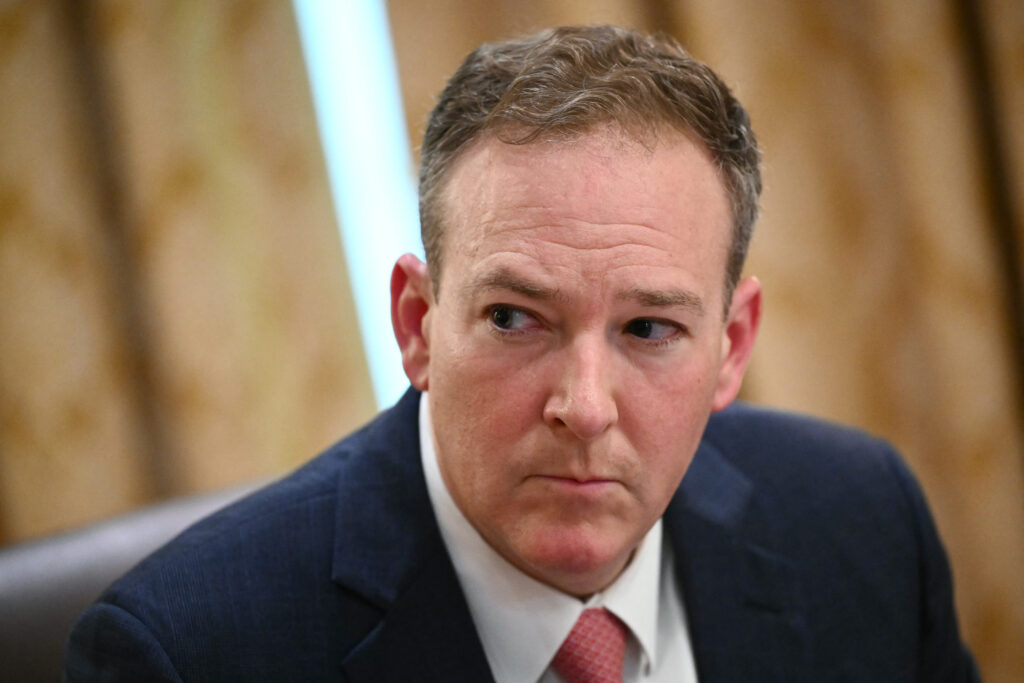
In March, Zeldin pledged to cut 65 percent of the agency’s total spending. Toward that end, he canceled $20 billion in already allocated Greenhouse Gas Reduction Fund grants and nearly $2 billion in grants designed to improve air and water quality and extreme weather resilience. Zeldin called the roughly 400 terminated grants worth $1.7 billion—authorized by Congress to protect clean air and water and facilitate investments in affordable clean energy—“wasteful federal spending.”
The terminated funding included a $21 million climate resilience grant to the heavily industrialized town of Richmond, California. The EPA canceled the grant, the awardees learned, because the agency classified it as taking part in or promoting environmental justice or diversity, equity and inclusion. Yet the grant was designed to be geographic and had nothing to do with DEI or environmental justice. At the same time, Zeldin offered regulated industries a “pass to pollute” that they could garner by simply sending an email to request an exemption from the Clean Air Act.
In July, Zeldin announced an additional $750 million in savings from “reductions in force” staffing cuts as part of its “comprehensive restructuring efforts.” The cuts targeted ORD, the agency’s scientific research arm, and slashed the positions of more than 3,700 employees as part of an explicit campaign to put civil servants “in trauma,” Boom said, referring to a speech Office of Management and Budget Director Russell Vought made before Trump’s reelection.
“When inspectors, scientists and engineers disappear, corporate interests will go unchallenged, polluters get passes and communities pay the price,” Boom said. “When EPA steps back, pollution moves forward.”
Nonprofits, tribes, local governments and state attorneys general have filed multiple lawsuits against the Trump administration, alleging that it violated federal law and the Constitution by terminating congressionally allocated funds and firing civil servants without cause.
EPA has the resources needed to accomplish the agency’s core mission of protecting human health and the environment, fulfill all statutory obligations and make the best-informed decisions based on the gold standard of science, Brigit Hirsch, EPA press secretary, said in a statement.
“EPA will be an exceptional steward of taxpayer resources and will be better able to deliver on its core mission of protecting human health and the environment while powering the ‘Great American Comeback,’” Hirsch said.
Over the past year, political appointees have sidelined experts and, critics contend, the law to roll back limits on toxic air, water and chemical pollution, set about reorganizing and dismantling ORD, which helps the EPA follow its mission to craft regulations using the “best available scientific information,” and forced out thousands of career staff.
The House bill would make these and any other actions taken by the Trump administration the new baseline, said Jeremy Symons, an EPN senior advisor who was a climate policy advisor at EPA. “It puts Congress’ mark on eliminating almost 4,000 positions at EPA and the reorganizations that Zeldin has called for, including eliminating the Office of Research and Development.”
It took several years for the EPA to rebuild staff reductions made during the first Trump administration, said Zealan Hoover, a former senior advisor to EPA Administrator Michael Regan during the Biden administration.
“The major difference this time around is that the administration has so aggressively gone after and pushed out career staff in positions that were historically insulated from political cycles,” said Hoover, who hired several thousand new staff members to implement Biden’s Inflation Reduction Act and Bipartisan Infrastructure Law programs. The fact that good people are being pushed out and norms broken will harm the ability of a future EPA team to attract the very best scientists and public servants, he said.
The removal of thousands of career staff who have devoted their lives to public service means the incalculable loss of institutional knowledge about the science and law underpinning environmental protections in the country.
“We’re seeing something we’ve never seen before,” said Symons. “This is the first time in EPA’s history of 55 years that we’ve seen a reckless unilateral, partisan attempt to reshape the administration, where Congress has not done its job of passing bipartisan appropriations and holding the administration accountable.”
There’s always been a change in policy focus when a new administration comes in, Symons added. “But there’s a big difference between shifting policy focus and the wholesale demolition that’s happened here that’s been based only on a single elected politician.”
Defunding the EPA at the federal level deprives states of critical funding as well as the expertise and logistical support they need to implement programs that safeguard communities from lead, PFAS, pesticides and other toxic substances that contaminate the air and drinking water.
“Congress has a critical opportunity right now, in the coming weeks, to put a giant stop sign on the attempts to dismantle and modify EPA,” said Jennifer Orme-Zavaleta, who spent 40 years at the EPA and was a top ORD science advisor and administrator.
“Science is really foundational to EPA in its ability to achieve its mission, and now it’s at risk,” Orme-Zavaleta said.
EPA’s current political leadership has defended closing ORD by saying that it will shift lab and research capabilities to its program offices, she said.
But eliminating ORD jeopardizes scientific integrity by eliminating the firewall between independent science and policy, opening the door to political interference and bias to support desired policy outcomes, Orme-Zavaleta said. “Dismantling EPA’s Office of Research and Development would devastate the agency’s ability to protect us from legacy pollution and emerging threats,” she said.
Congress now has the first real opportunity to put some checks on the serial shutdown of the nation’s environmental watchdog, Boom said, “and to reaffirm that Americans still expect EPA to do its job.”
About This Story
Perhaps you noticed: This story, like all the news we publish, is free to read. That’s because Inside Climate News is a 501c3 nonprofit organization. We do not charge a subscription fee, lock our news behind a paywall, or clutter our website with ads. We make our news on climate and the environment freely available to you and anyone who wants it.
That’s not all. We also share our news for free with scores of other media organizations around the country. Many of them can’t afford to do environmental journalism of their own. We’ve built bureaus from coast to coast to report local stories, collaborate with local newsrooms and co-publish articles so that this vital work is shared as widely as possible.
Two of us launched ICN in 2007. Six years later we earned a Pulitzer Prize for National Reporting, and now we run the oldest and largest dedicated climate newsroom in the nation. We tell the story in all its complexity. We hold polluters accountable. We expose environmental injustice. We debunk misinformation. We scrutinize solutions and inspire action.
Donations from readers like you fund every aspect of what we do. If you don’t already, will you support our ongoing work, our reporting on the biggest crisis facing our planet, and help us reach even more readers in more places?
Please take a moment to make a tax-deductible donation. Every one of them makes a difference.
Thank you,

Liza Gross
Reporter, California
Liza Gross is a reporter for Inside Climate News based in Northern California. She is the author of The Science Writers’ Investigative Reporting Handbook and a contributor to The Science Writers’ Handbook, both funded by National Association of Science Writers’ Peggy Girshman Idea Grants. She has long covered science, conservation, agriculture, public and environmental health and justice with a focus on the misuse of science for private gain. Prior to joining ICN, she worked as a part-time magazine editor for the open-access journal PLOS Biology, a reporter for the Food & Environment Reporting Network and produced freelance stories for numerous national outlets, including The New York Times, The Washington Post, Discover and Mother Jones. Her work has won awards from the Association of Health Care Journalists, American Society of Journalists and Authors, Society of Professional Journalists NorCal and Association of Food Journalists.
Search
RECENT PRESS RELEASES
Related Post