UM Center for Practical Ethics hosts faculty panel on cannabis laws
April 28, 2026
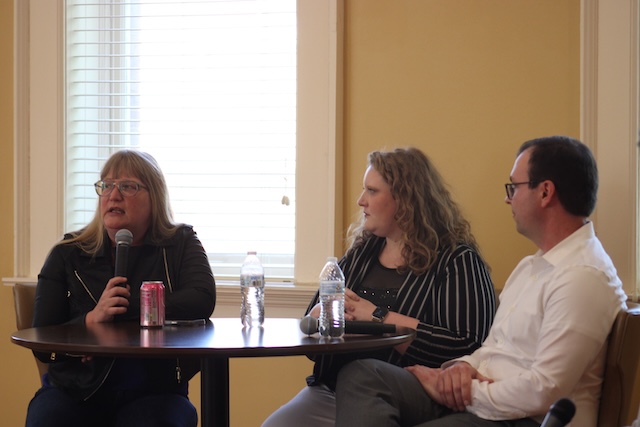
The University of Mississippi Center for Practical Ethics hosted a faculty panel about legislation for cannabis through Compass, the center’s affiliated registered student organization, on Monday, April 20. This faculty panel was part of the program’s regular Monday meeting.
Kate Centellas, associate professor of anthropology in the Croft Institute for International Studies, was one of the faculty members on the panel. She spoke about the negative effects of the “War on Drugs” on community relations and the economy.
“I think one of the big issues I’ve seen, especially since working in Latin America, is the tremendous impact the ‘war on drugs’ has had on people who are the poorest and least resource-able to deal with the effects of plants being dredged out of the ground,” Centellas said.
On April 23, the U.S. Department of Justice and Drug Enforcement Administration issued an executive order rescheduling certain cannabis products from Schedule I to Schedule III.
Program Manager for the National Center for Cannabis Research & Education Callie Anyon-Draine explained how federal drug classification works.
“The United States currently classifies drugs on a set of schedules from one to five. The lower the number on the scale is, the government considers the potential for substance abuse to be higher and the potential for medicinal use to be lower,” Anyon-Draine said.
The rescheduling will allow for greater research use while still maintaining strict federal controls for cannabis.
Centellas believes that banning drugs has had negative effects on the environment. She also does not believe that prohibition is an effective way to prevent drug use.
“I don’t know where you draw the line,” Centellas said. “These classifications of certain substances as drugs were invented by humans at a particular point in time, and the banning of many sorts of drugs and substances has led to tremendous environmental, social and human costs across the globe without being particularly successful.”
Director of the William Magee Center for Alcohol and Other Drugs (AOD) and Wellness Education Nicholas McAfee highlighted concerns about the legalization of cannabis in some states, especially due to the lack of sufficient research into the drug.
“I think what concerns me about legalization on the medical side is that we have very poor data to suggest some of the things that have been accepted as fact — for example, that people with chronic pain will feel better after cannabis treatments,” McAfee said. “There’s no good evidence for that. In fact, there’s quite good evidence that it will induce quite a few negative side effects in most people who use it.”
Cadi Pannell, a freshman English and philosophy double major from Saltillo, Miss., appreciated the panel’s discussion.
“I’m very curious about it because my parents have medical marijuana cards, and I learned a lot about the subject today,” Pannell said.
Reflecting on the event, Nathan Oakes, director of education and student programs at the Center for Practical Ethics, said that this panel meeting exemplified his organization’s mission.
“We try to get faculty who are experts in a certain field with different perspectives, and that’s usually pretty difficult, but we were able to manage that today,” Oakes said. “It’s about showing people that you can disagree in a respectful and knowledgeable way, and I believe we accomplished that.”
Tags: cannabismarijuanaNational Center for Cannabis Research & EducationU.S. Department of Justice and Drug Enforcement AdministrationUM Center for Practical EthicsWar on DrugsWilliam Magee Center
Search
RECENT PRESS RELEASES
Related Post