Venice Marco Polo Airport’s road to net zero: designing a renewable energy future
January 21, 2026
Ahead of his participation in IAR’s Energy Revolution webinar, Davide Bassano, Director of Sustainability at Gruppo SAVE shares how Venice Marco Polo Airport will eliminate scope 1 and 2 emissions by 2030 and become one of the largest renewable energy platforms in the metropolitan area.
c: Gruppo SAVE
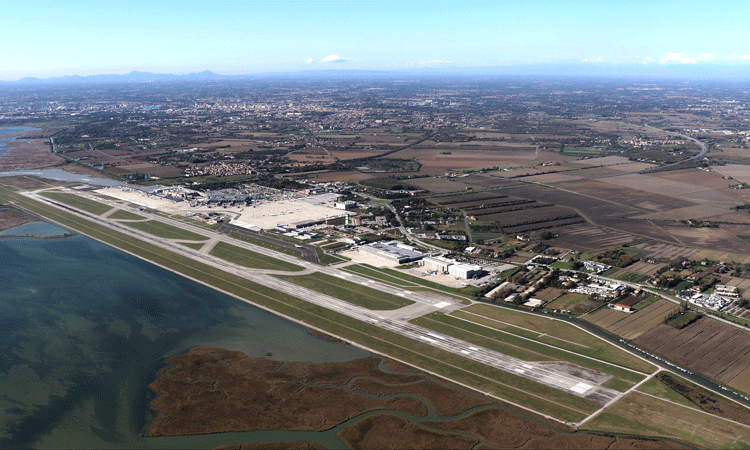
Venice Marco Polo Airport’s Energy Transition Masterplan outlines a pathway to eliminate Scope 1 and 2 emissions by 2030. Through careful evaluation of technical solutions and respect for the lagoon’s fragile environment, it aims to become a regional hub for clean, shared energy.
A transition rooted in territorial awareness
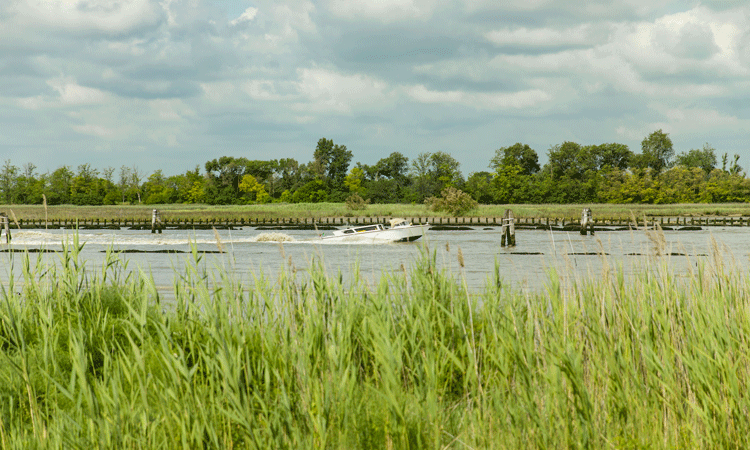
Venice Marco Polo Airport operates in one of the most delicate and symbolically charged territories in the world. Situated at the edge of a lagoon recognised as UNESCO World Heritage, the airport’s surroundings are shaped by a fine balance between water and land, an ecosystem vulnerable to climate change, subsidence, hydrological stress and anthropogenic pressure. Any transformation of this area must account not only for operational efficiency but for the intrinsic value of a landscape rich in ecological, agricultural, social and cultural meanings.
By 2029, the airport will eliminate all Scope 1 and 2 emissions, avoiding nearly 200,000 tonnes of CO2 over the 15‑year planning horizon.
It is precisely within this complexity that the Energy Transition Masterplan takes form. Rather than pursuing a single technological fix, the airport has conducted a wide‑ranging, methodical exploration of all available energy solutions, conventional, innovative, emerging and hybrid, assessing their impacts, feasibility and coherence with the site’s constraints. This approach recognises that in such a sensitive environment, the path to decarbonisation must be designed with the territory, not against it.
Searching for the right technical solutions
The Masterplan did not begin with pre-selected technologies, but with a broad-spectrum investigation into every possible means of producing, storing and managing renewable energy at the scale required by a modern intercontinental airport. Photovoltaics, agrivoltaics, geothermal systems, heat‑pumps, hydrogen production, thermal recovery, offshore wind, solar thermal fields, lake and river heat exchange, high‑enthalpy geothermal and fuel cells were all examined. Some were discarded because of environmental incompatibility, others because of territorial or landscape constraints, others because they provided poor energy returns or required irreversible modification of the fragile subsoil.
What emerges from this extensive assessment is a coherent and territorially respectful mix of solutions that favour lightness over intrusion, multi‑functionality over land occupation, and reversible technologies over those that would permanently alter the lagoon’s delicate environmental balance. The chosen technologies (agrivoltaics, building‑integrated photovoltaics, geothermal fields, heat pumps and targeted hydrogen applications) fit harmoniously within the ecological, social and regulatory constraints that define the airport’s context.
c: Gruppo SAVE
Agrivoltaics: an innovative dialogue between energy and landscape
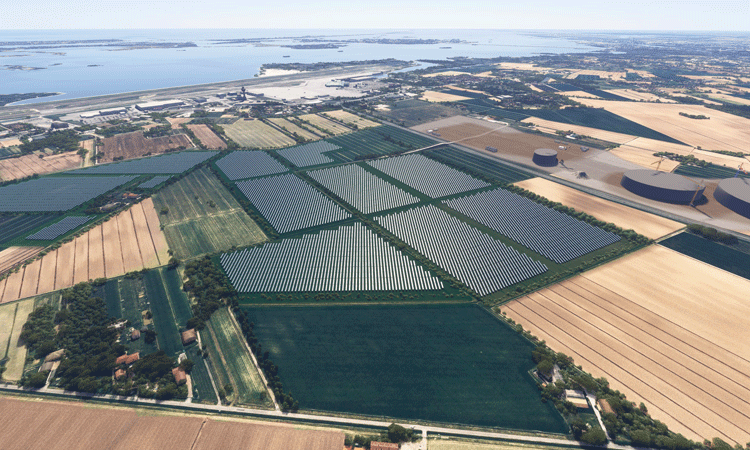
The agrivoltaic system proposed for the area of Ca’ Bolzan is perhaps the most emblematic expression of this philosophy. Rather than covering valuable agricultural land with conventional ground‑mounted panels, the airport has embraced a dual‑use solution capable of producing large amounts of renewable energy while preserving the agricultural identity of the area. Panels are elevated above the fields, allowing crops to grow, livestock to graze, and biodiversity to flourish beneath them. Farmers can continue cultivating the land, preserving income and heritage, while the shading effect can reduce water consumption — an added value in a region increasingly affected by climate instability.
This approach transforms the airport from a land consumer into a land steward. In an environment marked by UNESCO constraints, hydrological vulnerability and visual sensitivity, agrivoltaics offers a non-invasive, culturally coherent and environmentally compatible strategy, proving that renewable energy infrastructure can become an ally to the territory rather than a threat. With over 49 MWp of capacity across 68 hectares, the system becomes a flagship of responsible innovation and a new reference point for airports worldwide.
c: Gruppo SAVE
Environmental vulnerability
Every technical choice reflects the reality that Venice and its airport sit on soft soils, in a flood‑prone landscape with strict limitations on excavation, deep drilling, visual intrusion and large‑scale land alteration. High‑enthalpy geothermal systems were excluded because deep drilling could interact negatively with subsidence risks. Offshore wind and floating photovoltaics were incompatible with the lagoon’s environmental norms and navigation constraints. River‑water heat exchange was evaluated but dismissed due to insufficient flow and the ecological fragility of the Dese. Even hydrogen, though promising for the long term, was integrated only modestly to avoid oversized infrastructures with uncertain efficiency and high territorial impact.
This process highlights a central lesson: energy transition in fragile territories cannot rely on technological maximalism but on territorial intelligence. The solutions chosen, geothermal at shallow depth, reversible heat pumps, rooftop PV and agrivoltaics, are the ones most capable of delivering high performance with low environmental disturbance, maintaining the reversible and adaptable character required in dynamic, vulnerable ecosystems.
Towards an airport that produces more than it consumes
Venice Marco Polo Airport can evolve from a major energy consumer into a regional energy producer, a renewable energy hub able not only to meet its own needs but potentially to support surrounding communities in the future.
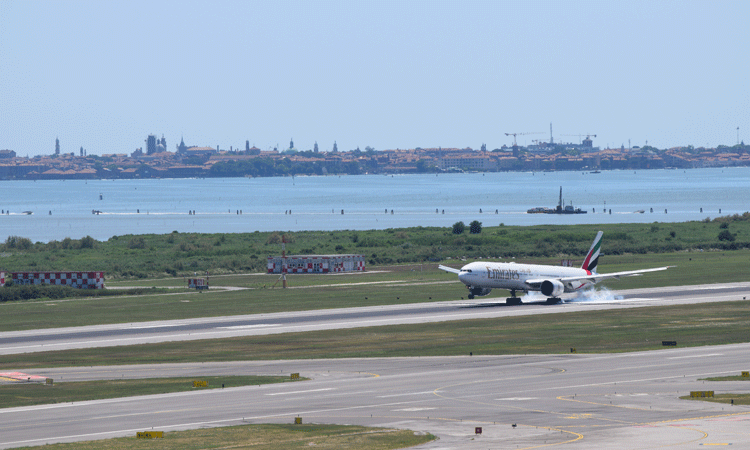
A particularly forward‑looking thread in the Masterplan is the idea that Venice Marco Polo Airport can evolve from a major energy consumer into a regional energy producer, a renewable energy hub able not only to meet its own needs but potentially to support surrounding communities in the future. With more than 75 MWp of combined photovoltaic capacity, complemented by 130 MWh of storage, geothermal generation and high‑efficiency heat pumps, the airport is poised to become one of the largest renewable energy platforms in the metropolitan area.
Over time, as renewable production grows and fossil‑based systems are dismantled, the airport could supply green electricity to adjacent villages, mobility infrastructures, logistics operators or public facilities. In an area where energy security is increasingly challenged by climate impacts and geopolitical pressures, this capability becomes not only an environmental asset but a strategic contribution to regional resilience.
c: Gruppo SAVE
A net zero vision with shared territorial benefits
By 2029, the airport will eliminate all Scope 1 and 2 emissions, avoiding nearly 200,000 tonnes of CO2 over the 15‑year planning horizon. But the Masterplan’s ambition extends far beyond emissions accounting. Its greatest contribution lies in showing how a major infrastructure can decarbonise while protecting the identity of its landscape, respecting ecological fragility, supporting local agriculture and offering long‑term value to surrounding communities.
Through its detailed study of technologies, deep awareness of environmental constraints and forward‑looking energy strategy, Venice Marco Polo Airport positions itself as a pioneering model for airports worldwide, demonstrating that the energy transition, when approached with sensitivity and intelligence, can strengthen both ecosystems and communities rather than compromise them.
 Davide Bassano is a Sustainability Executive with over 20 years of international experience in ESG governance, decarbonisation and transformation across complex operational environments. As Director of Sustainability at Gruppo SAVE, he leads the sustainability vision for multiple airports in the environmentally and regulatory sensitive Venetian context, steering the organisation toward a Net Zero 2030 goal while embedding sustainability into strategy, operations and governance.
Combining engineering expertise with strategic leadership, Davide has delivered major renewable‑energy initiatives — including a landmark 68 MW agrivoltaic project — and advanced circular waste and energy systems that reduce emissions and landfill dependency. His work also spans climate‑adaptation planning, worker‑protection frameworks, and the integration of hydrogen and smart‑system technologies.
A strong advocate for cultural transformation, he promotes a sustainability mindset from boardroom to shop floor and represents the group in international sustainability forums and multi‑stakeholder coalitions. His mission is to turn sustainability into a strategic advantage for resilient, low‑carbon, future‑ready organisations.
Search
RECENT PRESS RELEASES
Related Post