Virginia Regulators Approve First New Gas Plant Since Passage of Clean Economy Act
December 5, 2025
Dominion Energy’s proposal for a $1.47 billion natural gas plant in Chesterfield County aimed at meeting rising energy demands across the state has been approved by the State Corporation Commission.
The Chesterfield Energy Reliability Center, or CERC, still must be evaluated for an air permit by the Virginia Department of Environmental Quality. That decision is expected later this month.
The SCC, which regulates Virginia’s utilities, issued a decision Nov. 25 to approve the first of several gas plants Dominion has proposed in the past two years. Those plants—reliant on fossil fuels—are being considered despite provisions in the Virginia Clean Economy Act (VCEA) that encouraged the Richmond-based energy company to move toward renewable energy sources and shutter some carbon-emitting plants by 2045.
The regulators, in a 27-page decision, said they could not deny that times were changing—and the increasing demands in the state from power-hungry data centers played into the review of Dominion’s request. The plant under review is to come online in 2029.
Get Inside Clean Energy
Today’s Climate
Tuesdays
A once-a-week digest of the most pressing climate-related news, written by Kiley Price and released every Tuesday.
Get Today’s Climate
Breaking News
Don’t miss a beat. Get a daily email of our original, groundbreaking stories written by our national network of award-winning reporters.
Get Breaking News
ICN Sunday Morning
Go behind the scenes with executive editor Vernon Loeb and ICN reporters as they discuss one of the week’s top stories.
Get ICN Sunday Morning
Justice & Health
A digest of stories on the inequalities that worsen the impacts of climate change on vulnerable communities.
Get Justice & Health
“We cannot … ignore the substantial evidence in this case of the Company’s near-term need for new generation resources; that renewable resource alternatives are not suitable to meet that need; and the imminent reliability threat absent the CERC Project,” wrote the three SCC judges, who are appointed by lawmakers.
“We conclude that a resource of this type is needed at this time to address the reliability threat facing Dominion and its customers.”
Virginia has emerged as the data center capital of the world in recent years. In 2020, the year that the VCEA went into force, energy demands in the state were expected to modestly increase. But in the past year, demand spurred by data center growth has risen dramatically. In 2025, summer demand for all customers peaked at just under 24 gigawatts.
Dominion CEO Bob Blue said in an Oct. 31 meeting with shareholders that data center contracts now being finalized could require 47 gigawatts over the next four to seven years.
Dominion, in its application to the SSC, raised concerns about the reliability of renewables and proposed the Chesterfield gas plant to ensure the grid’s operations at peak times, a provision allowed under the state’s clean energy act.
The 944 megawatt natural gas plant would consist of four combustion turbines, located at the site of a former coal unit at the Chesterfield Power Station. Four coal-fired units there were retired by June 2023 and that year Dominion proposed to build a gas-fueled “peaker plant” that would complement two gas-fired units that remain on site.
The peaker plant is meant to boost capacity during high demand times. Dominion said the new plant will offer the grid a quick-reaction capability to dispatch electricity within 10 to 15 minutes.
Dominion’s added reliance on natural gas dents the momentum toward clean energy sources, critics have said. But Dominion and the regional grid operator PJM Interconnection have long been leery of renewable projects—notably solar and wind power—and have repeatedly promoted fossil fuel use in tandem with renewable sources.
Community members, including environmental and ratepayer advocates, have been roundly critical of Dominion’s plans and said the energy company has exaggerated the risks of renewables.
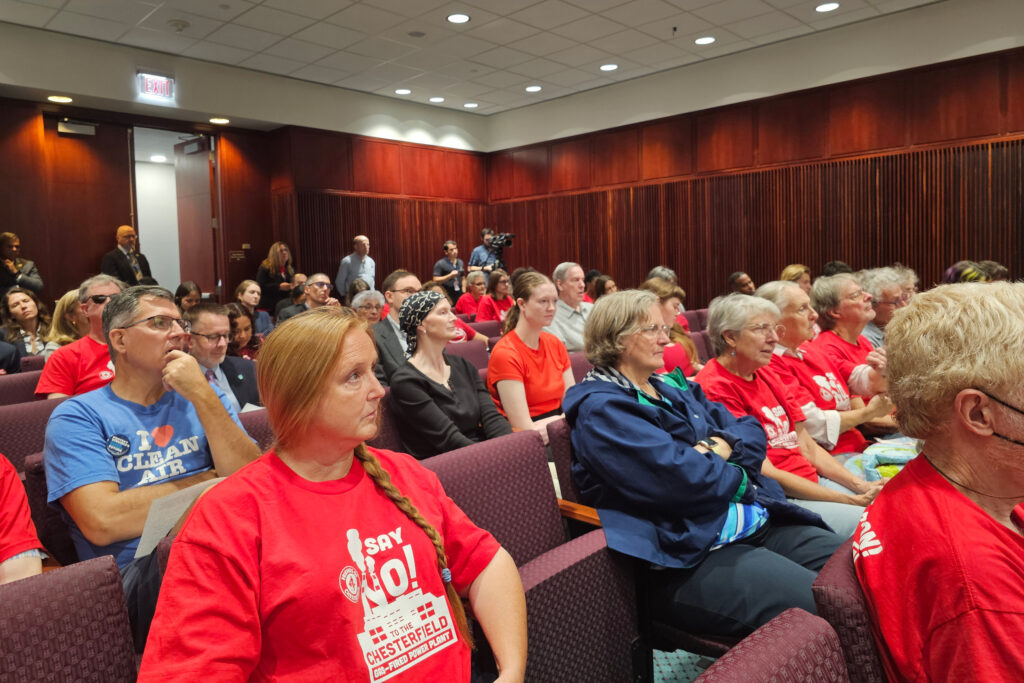
Under the VCEA, Dominion has the right, based on peak demand risks, to ask for the SCC to allow carbon-emitting plants to remain past scheduled retirements as well as to build new fossil-fuel powered plants if that technology is proven to be better than alternatives.
The SCC regulators agreed with Dominion’s rationale regarding its CERC request.
“As [Dominion] transitions its fleet of generating resources in accordance with the VCEA, additional dispatchable generation is needed to complement renewable resources and stabilize the grid,” the judges panel wrote. “The CERC Project addresses this need.”
Dominion has been slow to include small renewable projects from private developers, said opponents of the CERC plan. They have also been critical of local land or zoning decisions regarding solar proposals that caused delays. They also question whether all the data center proposals will actually be built.
Local residents as well as elected officials have been critical of the regional grid’s role in encouraging renewable projects. PJM Interconnection, a pivotal grid operator that serves 13 states and the District of Columbia, has been blamed by lawmakers for delays in approving requests from energy suppliers that want to connect to the grid.
PJM also was targeted last month in a formal complaint to the Federal Energy Regulatory Commission. The Independent Market Monitor for PJM said that the grid operator was “proposing to allow the interconnection of large new data center loads that it cannot serve reliably” and the expanded demand will lead to blackouts.
Adding data centers without reliable power supply “is not consistent with the basic responsibility of PJM to maintain a reliable grid and is therefore not just and reasonable, the complaint said.
Critics of PJM said the grid operator bears responsibility, in part, for the rising cost of electricity. The price of electricity in PJM’s capacity market, which is used during extreme peak scenarios, has soared over the past couple years.
The SCC regulators took note of the increasing demand and the cost increases.
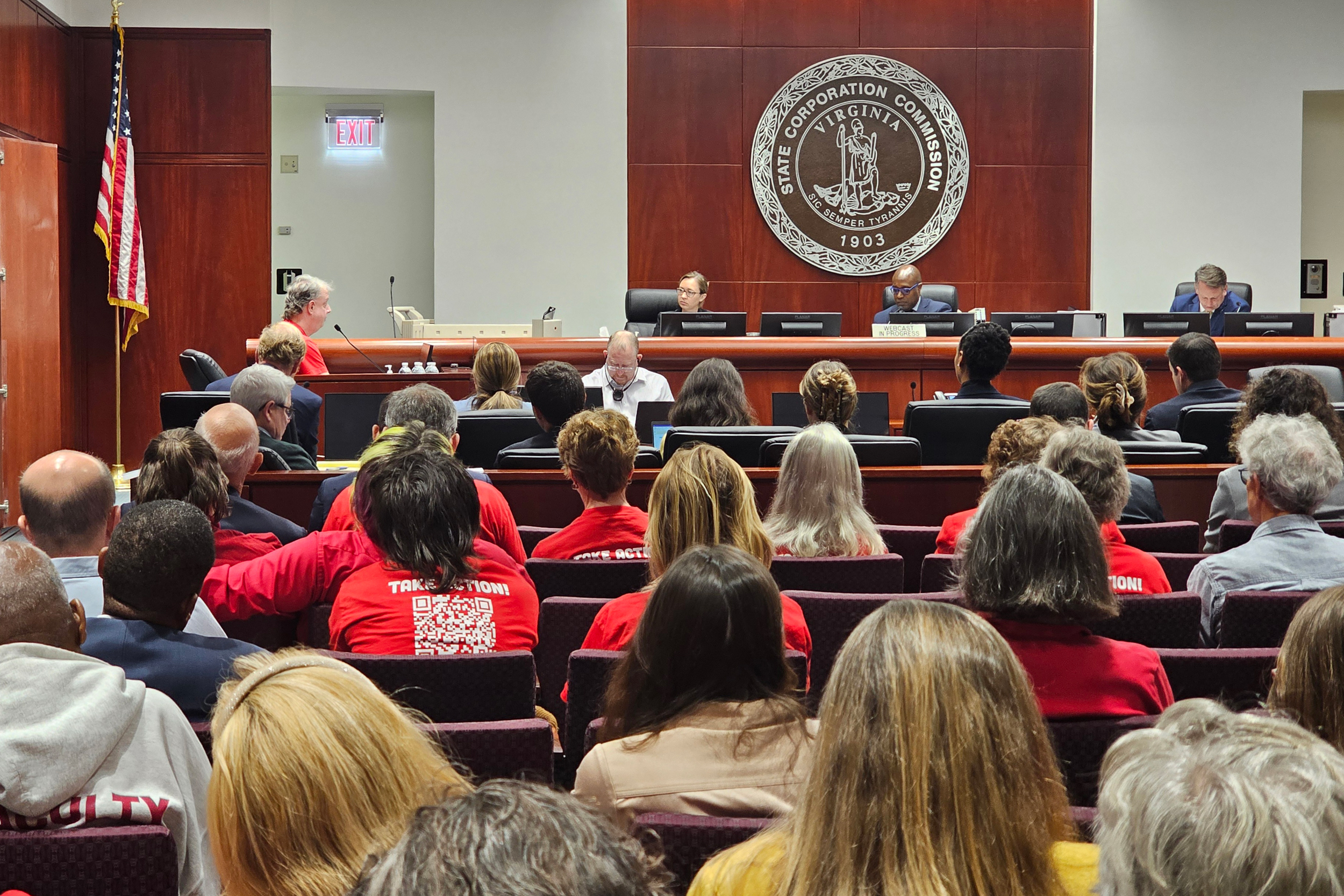
“Recent occurrences in the regional capacity market clearly indicate that there are very real and significant pressures in meeting the near- and medium-term anticipated loads,” the SCC decision said.
Critics had pushed Dominion to add a battery storage device that could be charged by some of the new gas units. The commissioners did not address the battery storage possibility. Their decision noted the existing gas infrastructure and that Dominion could reassign the retired coal unit’s rights to send electricity to the grid to its new gas plant. The rights transfer would “allow for ease and speed of interconnection” to the grid, the regulators said.
In a statement, Dominion said the SCC approval is “good news for our customers, Virginia’s economy and the reliability of the grid.”
“As part of our all of the above energy strategy, it will ensure our region has the reliable power we need to continue growing and thriving,” spokesperson Jeremy Slayton said in an email. “We look forward to concluding the Virginia Department of Environmental Quality’s permitting process this month and getting to work on this important project next year.”
Community members said the fight over the peaker plant is not finished.
This story is funded by readers like you.
Our nonprofit newsroom provides award-winning climate coverage free of charge and advertising. We rely on donations from readers like you to keep going. Please donate now to support our work.
“To say we’re disappointed is an understatement,” said Nicole Martin, the local NAACP president in Chesterfield, adding that the “decision puts Dominion’s profits over the health and wellbeing of those living in fenceline communities in Chesterfield and beyond. I’m proud of the coalition we’ve built here and we don’t plan to back away from this fight.”
Environmental and community advocates said Dominion failed to meet energy savings targets, but the SCC discounted that claim in its decision. ”We do not read into” the “requirement that the Company must meet the statutory energy savings goals,” the regulators’ statement said.
Opponents criticized Dominion’s bid process in evaluating which technology could best meet the growing electricity needs, and they raised concerns that clean technologies were not treated fairly in the process. They also pointed to a study from the nonprofit Chesapeake Bay Foundation that raised concerns about whether pollutants from the plant would affect air and waterways.
Walton Shepherd, Virginia director and senior attorney at the Natural Resources Defense Council, said the SCC missed an opportunity to propel clean energy possibilities and to find some cost savings through renewable sources.
“The commission could have held Dominion’s feet to the fire in meeting the load growth challenge with a truly modern and clean grid but instead it just took Virginia back in time,” Shepherd said in an email.
Emma Clancy, a staff attorney with the Southern Environmental Law Center, argued against the project before the SCC by citing related health costs and rate hikes. “Everyone knows this is a step backwards, a step in the wrong direction, even Dominion,” she said in a press release. The decision “ignores sound science and cheaper alternatives and leaves Virginians to pay the health and dollar costs of resources that serve Dominion’s new data customers.”
Virginia has been eager for data center expansion to bolster its economy. But some politicians expressed frustration with the SCC’s decision and raised concerns about the state’s pursuit of clean energy alternatives.
State Del. Rip Sullivan, who sponsored the VCEA, said he wants any changes to the law to speed the transition to renewables, including increasing battery development. Any softening of VCEA requirements is “a no-go for me,” said Sullivan, who represents Fairfax County.
Brennan Gilmore, executive director of the nonprofit Clean Virginia, said in a press release that the SCC decision should prompt elected officials to re-examine the clean energy law and “better align these rules with the interests of all Virginians.”
Del. Michael Webert, who represents parts of rural northwestern Virginia around Fauquier County, is among Republican lawmakers who support the construction of gas plants. The proposed data centers are coming, he said in an interview, and the state has to figure out how to provide enough energy to power them.
“Democrats, I think, are going to have to come to grips: Either they’re going to regulate the data centers so that they stop building, (and) so that we don’t need that energy, or we’re going to have to build this magical energy,” Webert said.
The VCEA has admirable goals, he said, but “those goals need to be adjusted to ensure that we maintain the quality of life for our constituents, the reliability of the grid and then lastly, the affordability.”
About This Story
Perhaps you noticed: This story, like all the news we publish, is free to read. That’s because Inside Climate News is a 501c3 nonprofit organization. We do not charge a subscription fee, lock our news behind a paywall, or clutter our website with ads. We make our news on climate and the environment freely available to you and anyone who wants it.
That’s not all. We also share our news for free with scores of other media organizations around the country. Many of them can’t afford to do environmental journalism of their own. We’ve built bureaus from coast to coast to report local stories, collaborate with local newsrooms and co-publish articles so that this vital work is shared as widely as possible.
Two of us launched ICN in 2007. Six years later we earned a Pulitzer Prize for National Reporting, and now we run the oldest and largest dedicated climate newsroom in the nation. We tell the story in all its complexity. We hold polluters accountable. We expose environmental injustice. We debunk misinformation. We scrutinize solutions and inspire action.
Donations from readers like you fund every aspect of what we do. If you don’t already, will you support our ongoing work, our reporting on the biggest crisis facing our planet, and help us reach even more readers in more places?
Please take a moment to make a tax-deductible donation. Every one of them makes a difference.
Thank you,

Charles Paullin
Virginia Correspondent
Charles Paullin is a Richmond, Virginia-based reporter focusing on energy and environment issues. He’s won several awards for his previous work covering state policy with the Virginia Mercury and local news with the Northern Virginia Daily in the Northern Shenandoah Valley. His first reporting gig was with the New Britain Herald in Connecticut, a couple years after attending the University of Hartford, where he first studied sports journalism.
Search
RECENT PRESS RELEASES
Related Post