Warren Buffett Wrapped Up His Illustrious Investing Career by Selling 50% of His Bank of America Stake and Piling Around $1.2 Billion Into This Scorching-Hot Oil Stock
March 13, 2026
On Dec. 31, billionaire Warren Buffett’s illustrious investing career came to a close. Following six decades that saw Berkshire Hathaway (BRKA 0.46%)(BRKB 0.38%) transform into a trillion-dollar business, the 95-year-old Oracle of Omaha officially handed the baton to his successor, Greg Abel.
But just because Buffett telegraphed his retirement eight months in advance, it doesn’t mean he stopped positioning the company that he, and now-late right-hand man Charlie Munger, had built for future success.
Leading up to his retirement, Warren Buffett meaningfully slashed Berkshire’s stake in Bank of America (BAC 2.87%) and, conservatively, piled around $1.2 billion in his final quarter as CEO into an integrated oil and gas stock that’s soared since the year began.
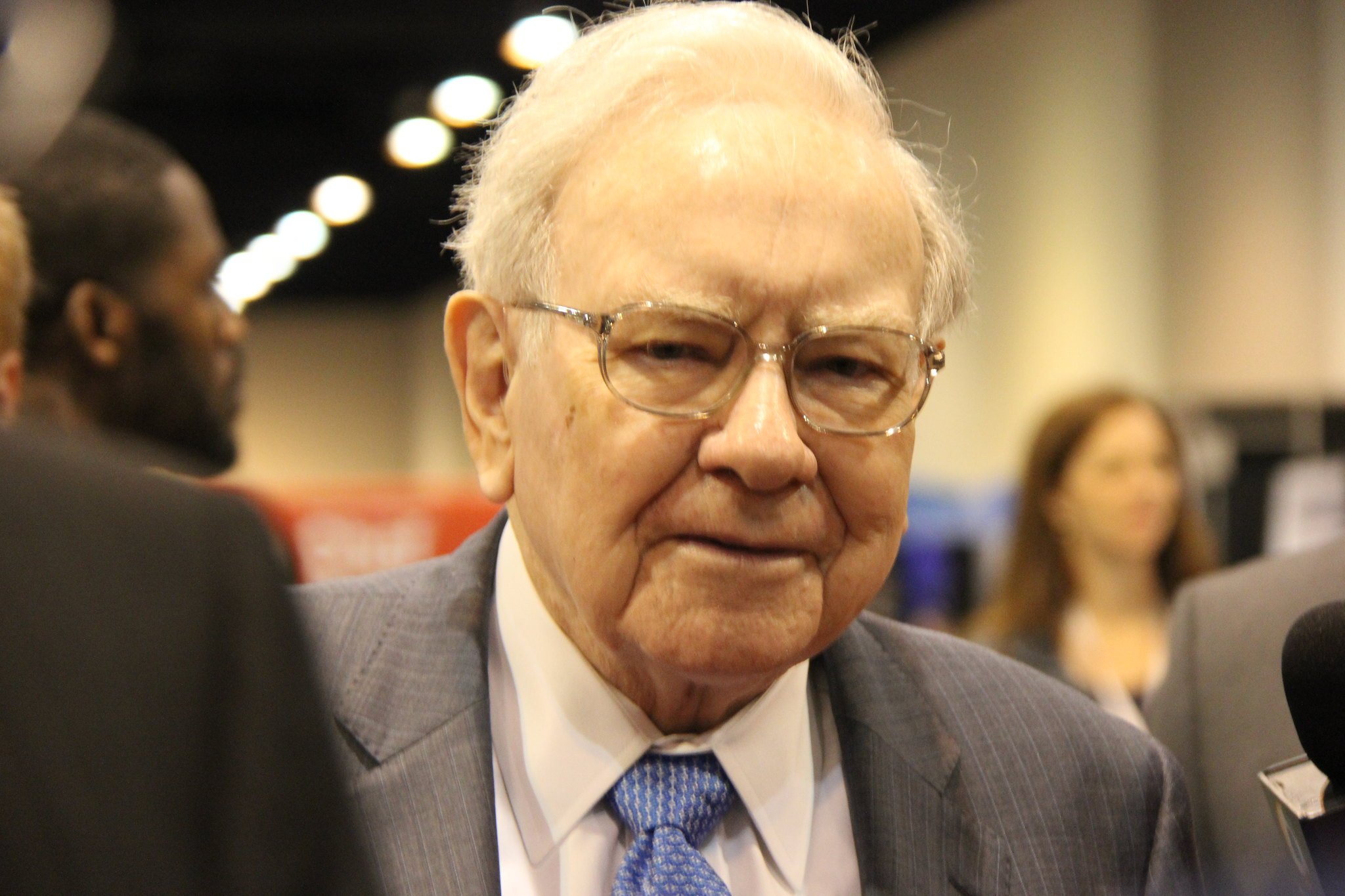
Warren Buffett retired as Berkshire Hathaway’s CEO on Dec. 31, 2025. Image source: The Motley Fool.
Warren Buffett slashed his stake in Bank of America by half
Although investors have historically paid close attention to the stocks Berkshire’s now-former billionaire boss was buying, the truth is that he was a persistent net seller of stocks leading into his retirement. For 13 consecutive quarters (Oct. 1, 2022 – Dec. 31, 2025), the Oracle of Omaha sold more stock than he purchased, to the cumulative tune of approximately $187 billion.
With the exception of Apple, no core holding of Berkshire Hathaway was pared down more aggressively than Bank of America, which is commonly known as “BofA.” Between the midpoint of 2024 and the end of 2025, Buffett sold 515,556,072 shares of BofA, equating to roughly 50% of Berkshire’s once 1.03-billion-share stake in the money-center goliath.
Profit-taking likely explains one reason for this persistent selling. In the summer of 2017, Buffett exercised 700 million warrants for BofA common stock at just $7.14 per share. During the fourth quarter of 2025, Bank of America stock primarily vacillated between $50 and $56 per share.
But profit-taking probably isn’t the entire story.

Bank of America
Today’s Change
(-2.87%) $-1.39
Current Price
$47.13
Among U.S. money-center banks, BofA is the most sensitive to interest rate shifts. When the Federal Reserve aggressively raised interest rates from March 2022 to July 2023 to tame the highest inflation rate in four decades, it was Bank of America that benefited the most. However, with the nation’s central bank firmly in a rate-easing cycle, these same dynamics are now reversed. As the Fed lowers interest rates, BofA’s interest income could decline at a faster pace than its peers.
Another catalyst that may have encouraged Warren Buffett to send over 515 million shares of Bank of America to the chopping block is its valuation. While Berkshire’s investing legend was known to bend one of his unwritten investing rules from time to time, he was unwavering when it came to valuation. If Buffett didn’t believe he was getting a stake in a wonderful company at a fair price, he simply didn’t buy.
When Berkshire Hathaway initially invested in the preferred stock of BofA in August 2011, its common shares were trading at a 62% discount to book value. During the fourth quarter of 2025, Bank of America topped a 40% premium to its book value. The value proposition that attracted Buffett to BofA for so long appears to be gone.

Image source: Getty Images.
Berkshire’s now-former billionaire boss made a $1.2 billion wager on Chevron
Although the Oracle of Omaha was a net seller of equities for more than three years leading into his retirement, this doesn’t mean value was nonexistent.
During the fourth quarter, Berkshire Hathaway’s Form 13F shows 8,091,570 shares of integrated oil and gas titan Chevron (CVX +2.90%) were added. While we don’t know the purchase price of these shares, eyeballing Chevron’s average quarterly share price puts the cost basis at around $1.2 billion.
Thus far, this is looking like a genius final chess move. Shares of Chevron have gained 25% year to date, through the closing bell on March 6, translating into an unrealized profit of approximately $300 million.
There’s little question that the Iran war is a catalyst for oil stocks. Iran’s closure of the Strait of Hormuz — through which approximately 20% of global petroleum liquids flow daily — is tightening crude oil supply and driving a parabolic move in oil prices. Drilling is the bread-and-butter operating segment for Chevron in terms of margins.

Chevron
Today’s Change
(2.90%) $5.56
Current Price
$197.35
However, Berkshire’s investing legend likely wasn’t thinking about a geopolitical event when boosting his company’s stake in Chevron. Rather, it’s the company’s integrated operating model that often attracts investors.
In addition to highly profitable drilling operations, Chevron oversees transmission pipelines, chemical plants, and refineries. These midstream and downstream operations act as hedges against a significant decline in oil and/or natural gas.
The stability of Chevron’s operating cash flow has allowed the company to offer a hearty capital-return program. It’s increased its base annual dividend for 39 consecutive years, and is certainly no stranger to repurchasing its stock. Companies with steady or growing net income that can lower their outstanding share count through buybacks can expect a corresponding boost in earnings per share.
Even though energy hasn’t played a particularly large role in Berkshire Hathaway’s portfolio over several decades, Buffett recognizes that Chevron provides necessary goods and services. He was always a fan of businesses with sustainable moats — and especially appreciated when they offered meaningful capital-return programs.
Search
RECENT PRESS RELEASES