We finally got to drive the Aptera solar electric car
June 17, 2026
After a very long wait, Aptera’s solar car is finally rolling and ready for journalist drives. So we headed down to San Diego to check out how development is going on this unique solar electric vehicle.
If you’ve been around the EV industry for a while, you’ve probably heard plenty about Aptera.
Based in California in sunny San Diego county, Aptera is a startup hoping to make a hyper-efficient solar electric vehicle.
But it’s been hoping for a long time. A really long time.
Advertisement – scroll for more content
In fact, I’ve been driving electric vehicles since 2009, which I’d say is rather early in the technology’s lifespan. And yet, the idea behind Aptera is older even than my involvement in this industry.
The company was founded all the way back in 2005. At least, its original incarnation was. At the time, they were trying to make a 300+ mile per gallon gas-powered vehicle. Then the company folded, restarted, folded again, and restarted again in 2019, with its original founders back at the head.
In this incarnation, Aptera ditched the gas engine and went fully electric, and covered the car with solar cells.
Normally, solar cells on a car are a bit of a gimmick. Cars are generally too big, heavy, and inefficient for solar to make a meaningful difference in energy usage.
That’s why experimental solar vehicles, like those you’d see at solar car competitions like the Electrek Formula Sun Grand Prix (yes, Electrek, that’s us!), really don’t look anything like a car. They’re small, ultralight, use narrow tires, and have big flat surfaces and extreme aerodynamic designs.
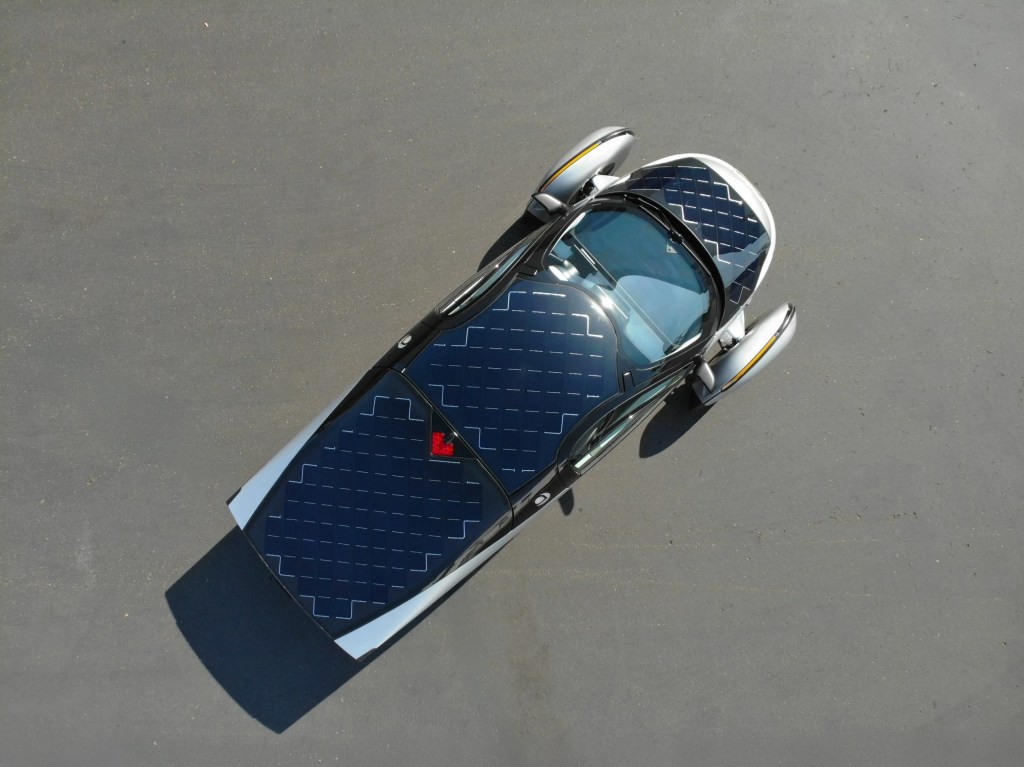
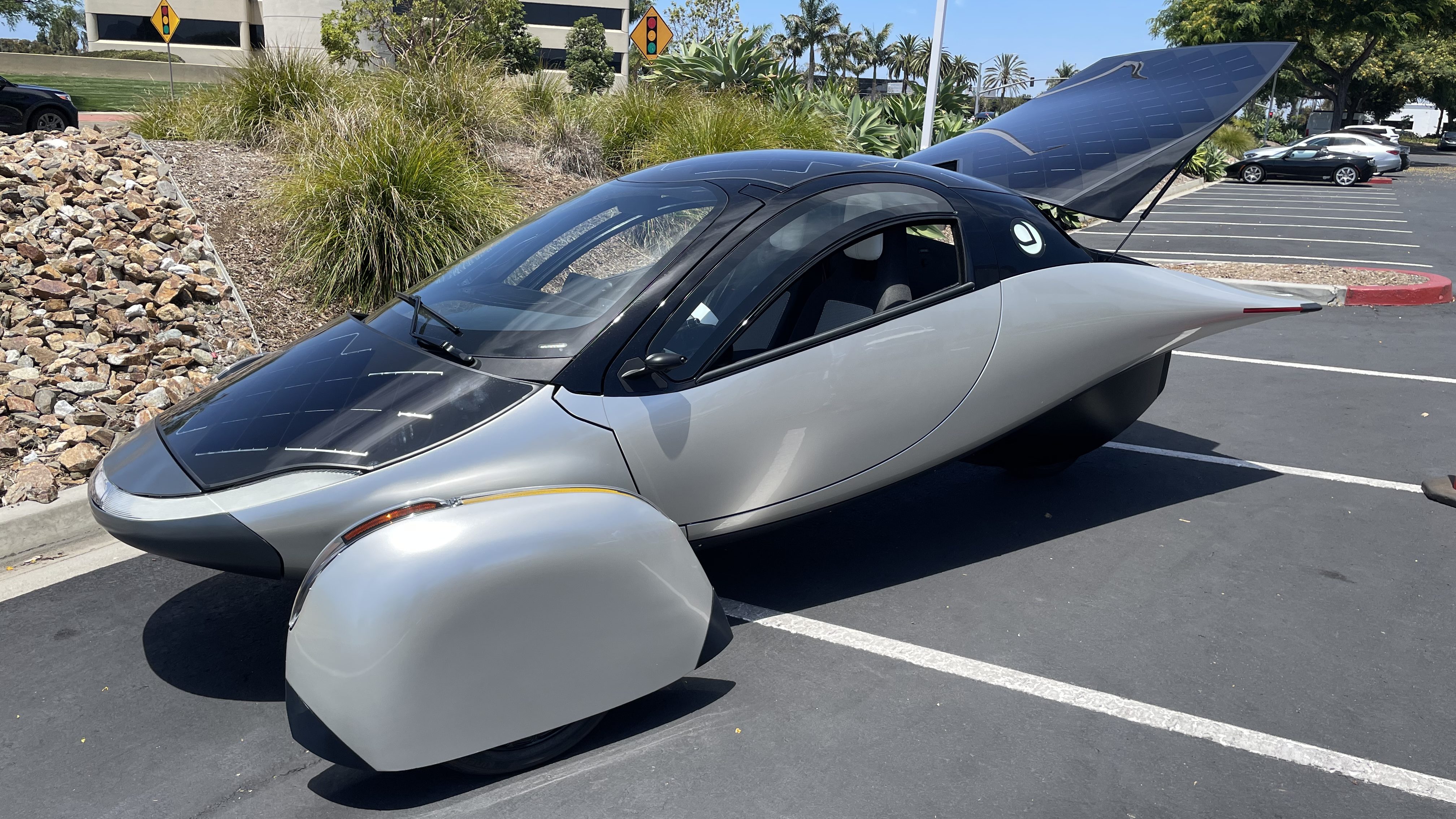
That’s why, in order to make solar work on an EV, you really need to rethink what a car is, and how a car looks. Which is what Aptera has done, with a super aerodynamic shape that looks, well, somewhere inbetween those solar racers and what we traditionally think of as a car.
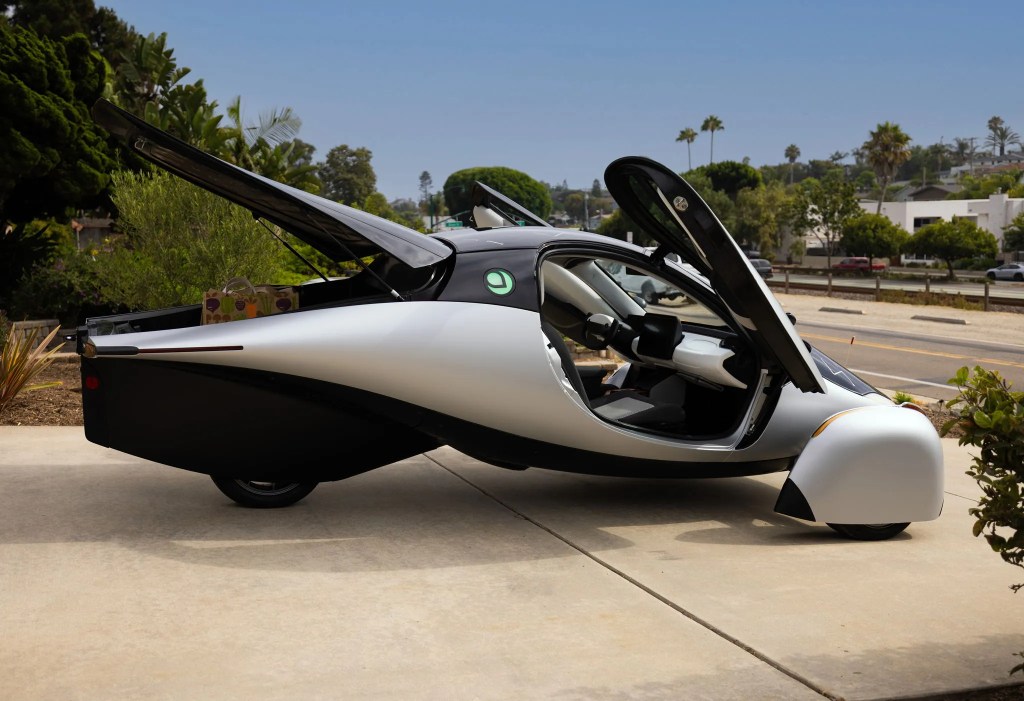
This does mean it’s not quite what you’d expect out of a car. It has two seats rather than four, as the tapered end couldn’t fit more people. It has a very long cargo area, but not a tall one. It has three wheels to reduce aerodynamic disturbance at the rear of the vehicle, and covered front wheel pods for the same reason.
And it took a lot of interesting engineering to get to this point, like multiple iterations on a unique suspension design and changes to motors, wiring, wheel pods, the charging system, and so on. All in service of making a car more efficient in ways that “normal” cars never really have to think of.
All that talk about engineering is interesting, and I can (and will, in another article about Aptera’s factory) go on about it forever. But what’s more important is that the car is now in a driveable state, with the first validation prototype completed in March. So since it’s driveable… how about we go for a drive?
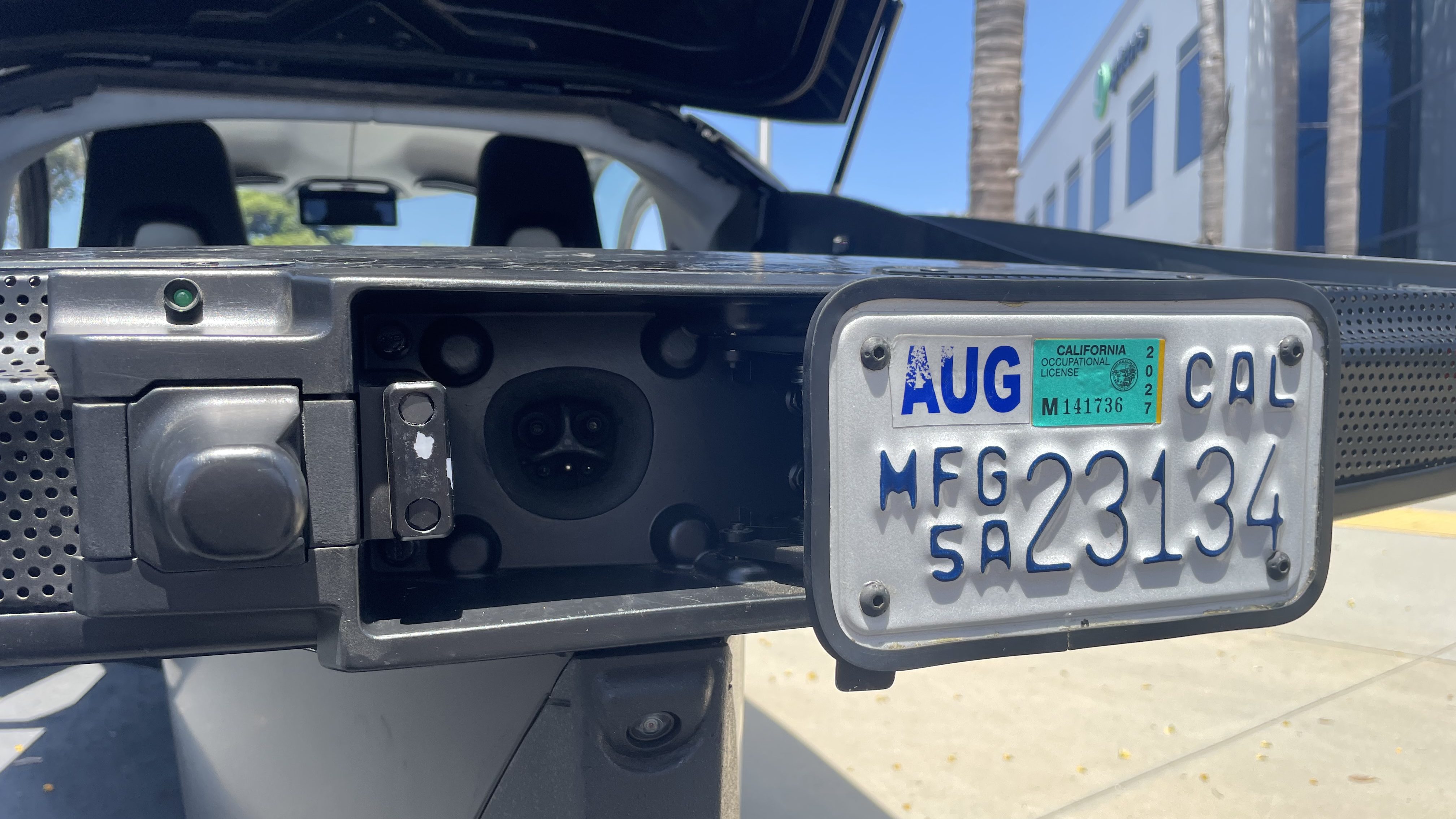
We headed down to Aptera’s facility in San Diego county for a chat and a tour (which we’ll be writing up separately), and also to see and drive the newest version of Aptera’s prototype.
The car is still a prototype – some things are still being iterated upon, some suppliers are being switched, and some capabilities aren’t turned on. We didn’t have speakers or regenerative braking, for example, and there’s still a drivetrain tuning issue (specifically at 4mph) and some NVH (noise, vibration and harshness) work to do.
But it runs, has most of the same parts and layout as we’d expect to see out of a finalized version, and gives us a general idea of what the experience and vehicle dynamics will be like. So let’s dive in.
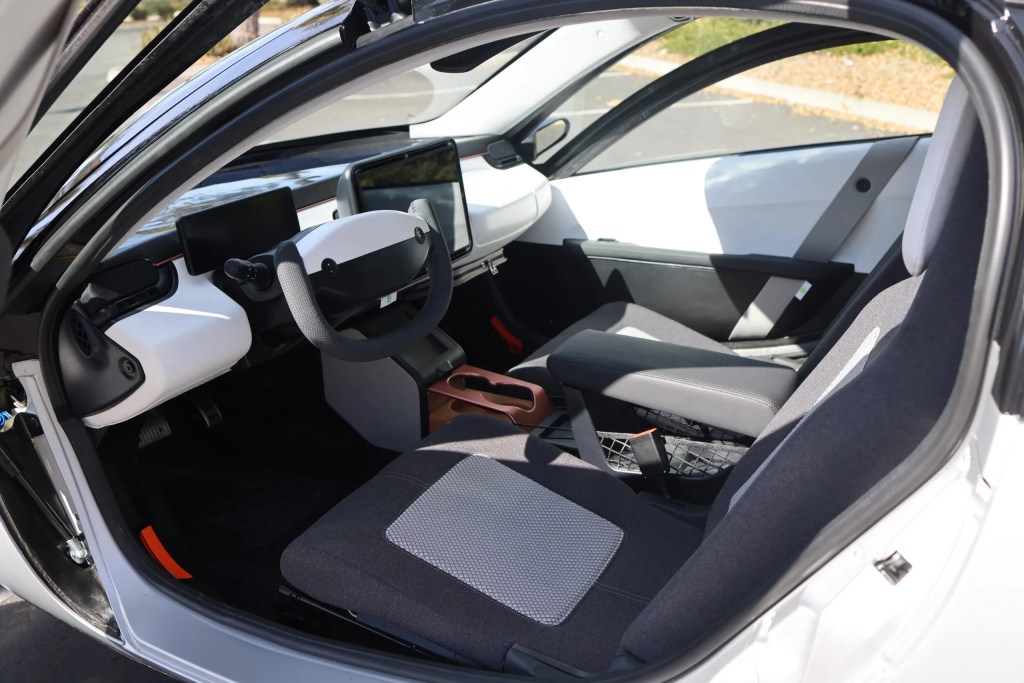
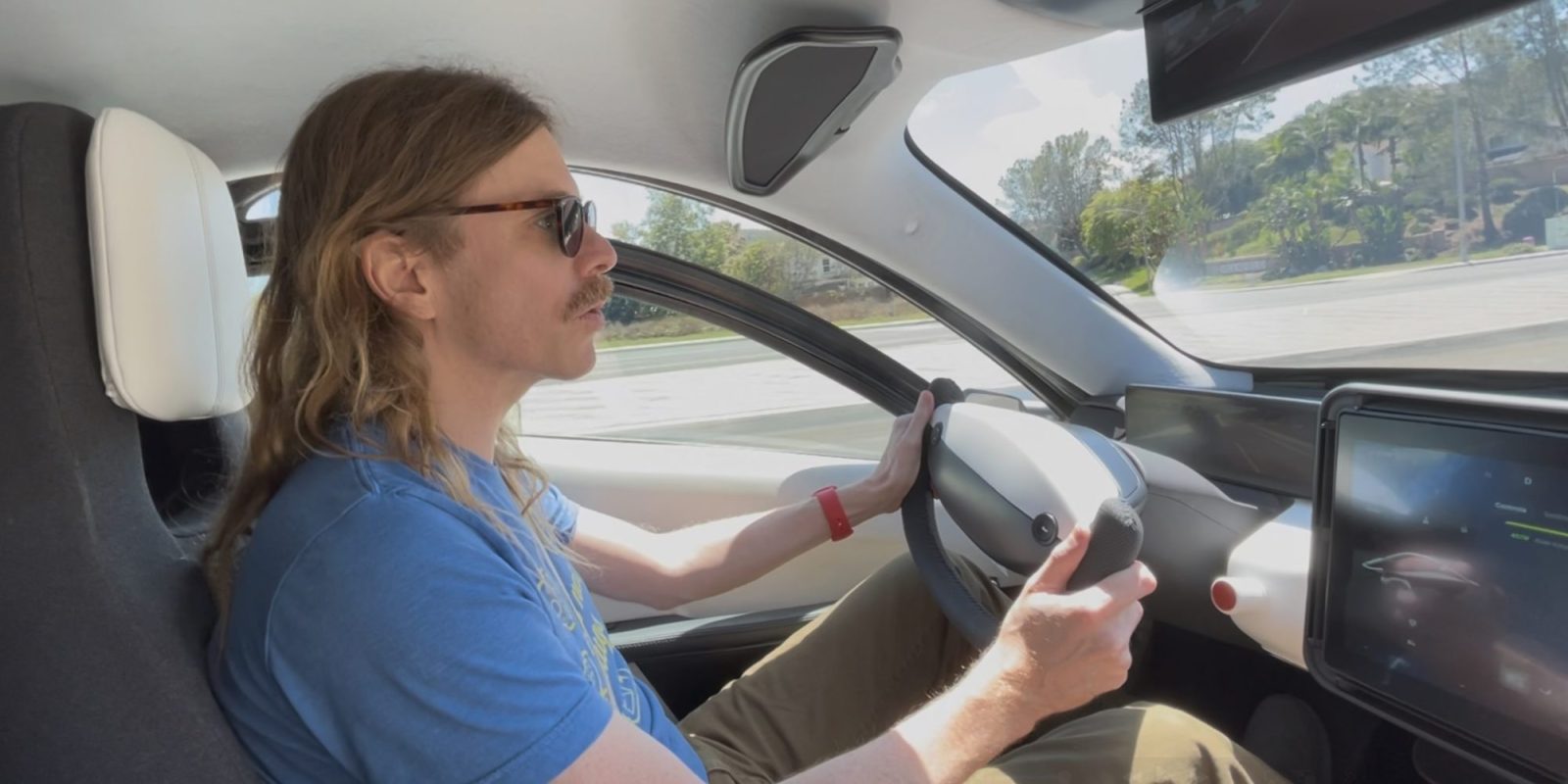
The first thing that greets you (behind the cool butterfly doors) is a relatively small cockpit… and you can see the whole thing in the photo above. There’s plenty of shoulder room, though headroom leaves a bit to be desired (I’m 6′ tall). The seat can be slid forward and backward, and the seat back can be tilted, both with manual controls.
It’s definitely a different seating position than most cars, so if you don’t have a low-slung sportscar (like I do…), it might take a bit of getting used to. The “dead pedal” footrest is a little close if you ask me. The yoke-style steering wheel – which I don’t normally like, but was actually quite satisfied with here – only moves up/down with a manual control, a telescoping wheel would have been nice to offer more positioning options.
Despite the small cockpit, the Aptera actually has an extremely long trunk. It’s not very tall, but can easily store long objects – some 2x4s, a surfboard (shortboard only), or a bag of golf clubs. Heck, I even managed to lay down in it, though I did have to lay a little diagonally (I’m 6′ tall).
Laying down in the trunk opens up the possibility of camping, and Aptera has floated the idea of a tent attachment. Given the car has solar built in, you could power HVAC or even some camping equipment (some sort of V2L capability is planned, but we couldn’t get many specifics on that).
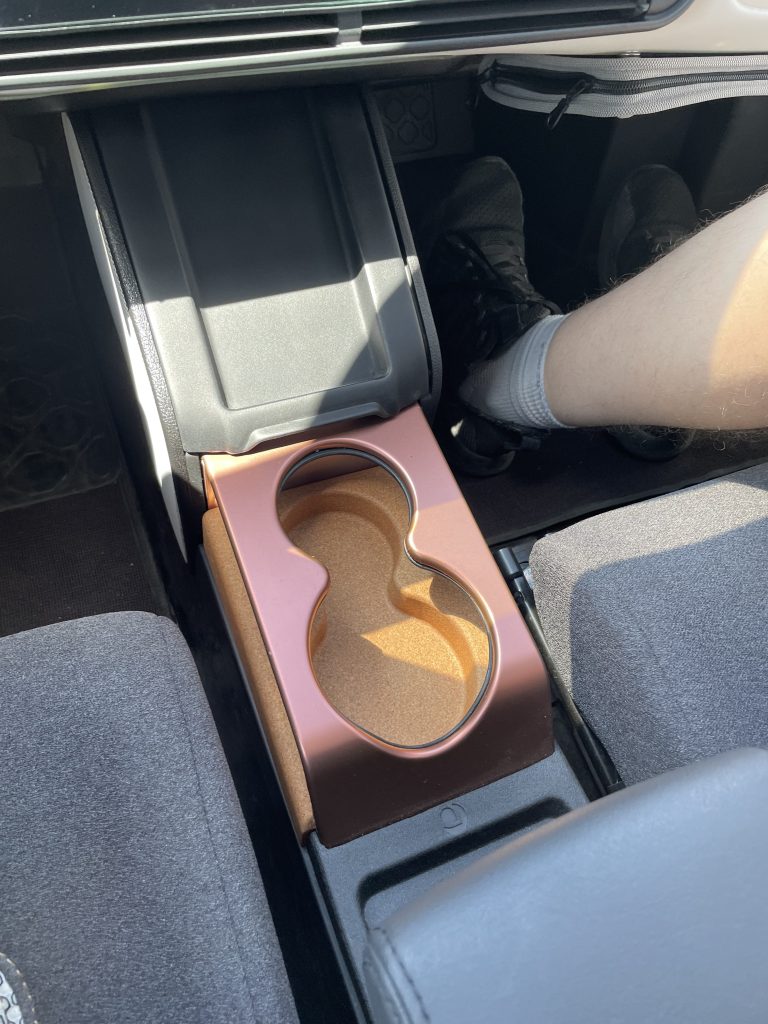
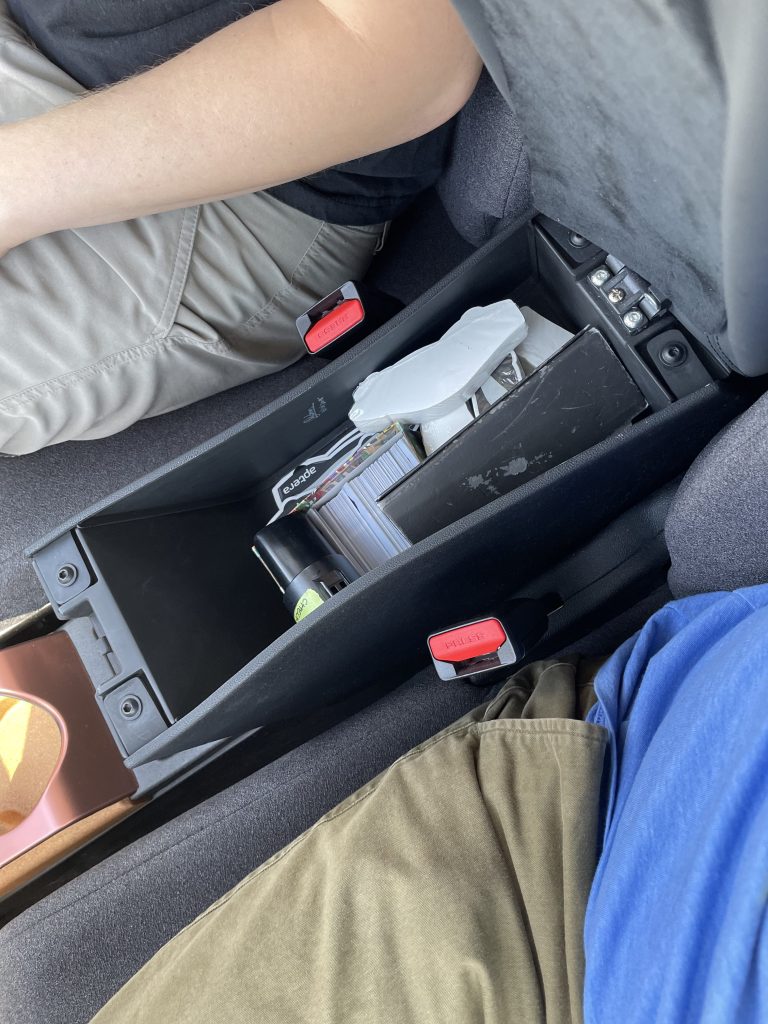
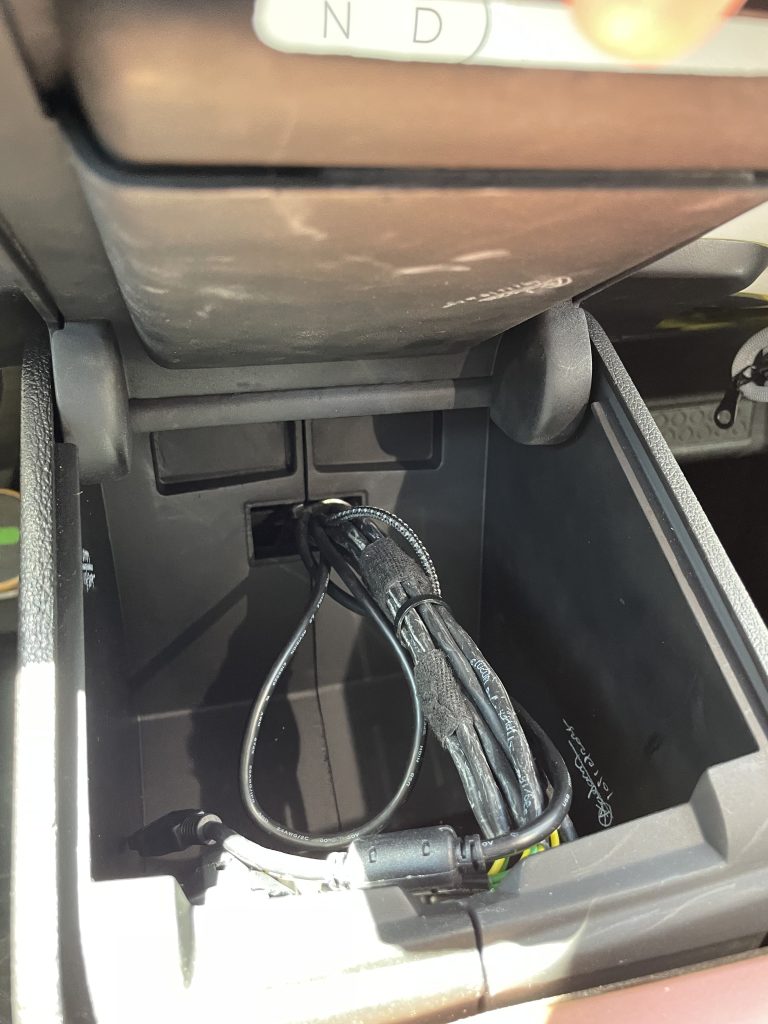
There is also some interior storage in the cockpit. Two different-sized cupholders, a closed center console, another small cubby (which will have USB-C connectivity, but is currently filled with diagnostic cables on the prototype), and a small zip-bag under the passenger side dash, in place of a glove box, for documents like registration or owner’s manual.
Controls are handled almost entirely through a central iPad-like touchscreen. The only physical controls are the legally required button for hazard lights and thumb buttons on the steering wheel, the right button honks the horn and the left button controls stereo volume (the prototype I drove did not have a working stereo).
While many decry the lack of physical controls these days, I didn’t find it to be a problem here. The screen is simple and responsive, and you’ll probably keep it on the same main “page” of controls all the time. Since the car has fewer tech features, it also has fewer settings, which allows for a simpler interface. (Though Aptera will have over-the-air update capability, and says CarPlay/Android Auto support will come eventually, and will fill the bottom-right segment of the screen)
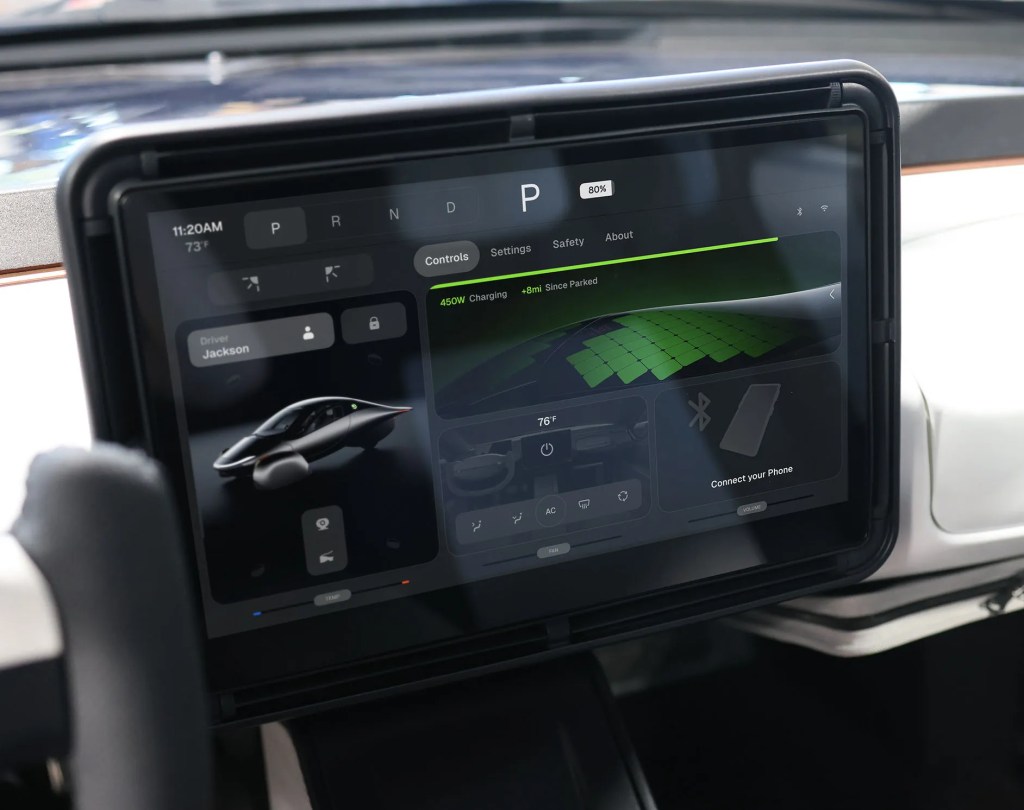
The few controls you’ll use are easy to access, with three sliders across the bottom of the screen for temp, fan speed and volume. The screen even controls the windows – to lower a window, you swipe down on the left or right side of the car graphic; to raise it, you swipe up. It feels very cool.
Two other displays live in the car, both functioning as mirror replacements. The rear and side view mirrors are both handled by cameras, with the rear view display sitting where it normally does high on the windshield, and the side view is in a driver display above the steering wheel (these displays are currently very hard to see with polarized sunglasses on, but Aptera is aware and this should be an easy fix).
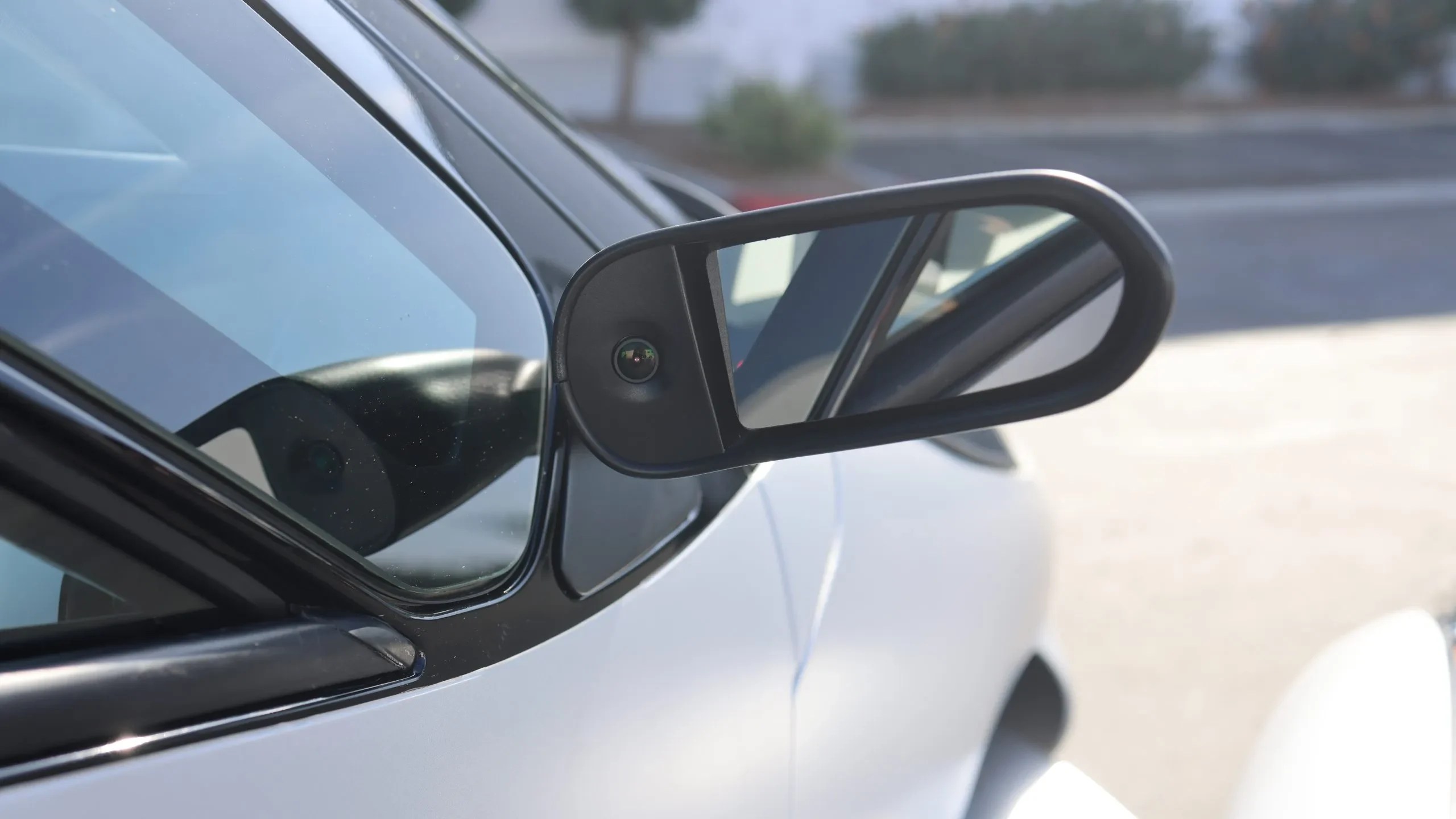
The Aptera ships with physical side view mirrors, but they’re genuinely useless and actually intended to be removed after delivery, with cameras handling everything – since it’s technically registered as a “motorcycle,” this is allowed.
The cameras do help a lot, but they’re also necessary – there’s no rear window to look through and the side windows are partially blocked by the large structural/aerodynamic bar running across them.
Our drive experience was about 40 minutes long on wide roads in the commercial area around Aptera’s headquarters. More than a test drive, but not enough for an entirely full review.
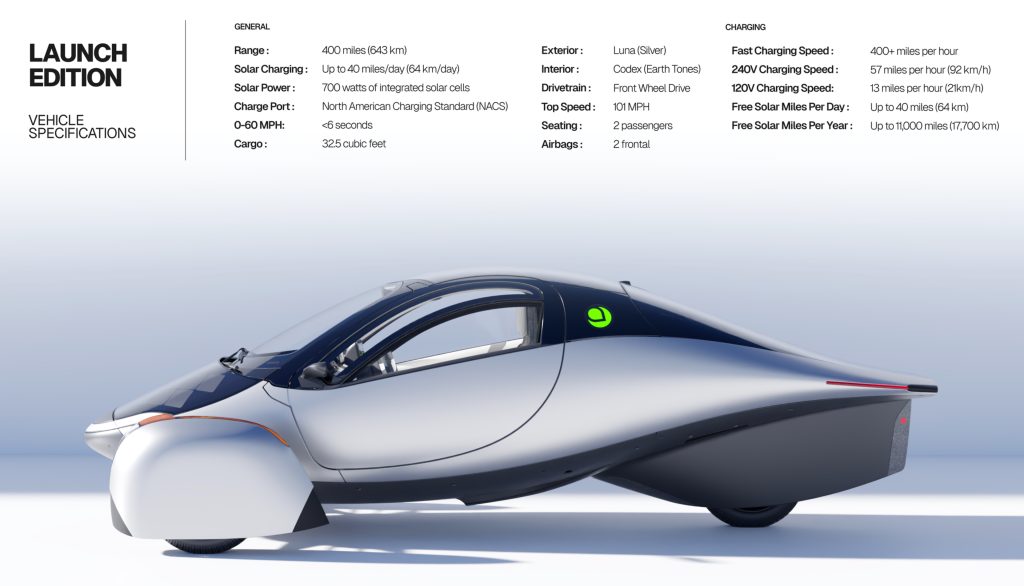
The car feels peppy enough, but isn’t particularly powerful (we don’t have horsepower numbers, but it should be somewhere in the ~200hp range). 0-60 is a bit under 6 seconds, which is frankly more than enough for practical purposes but won’t win you any races. Front-wheel drive and a torquey electric motor means it’s easy to give it a little wheelspin, though I didn’t feel much torque steer.
The throttle is reasonably responsive, though since regenerative braking wasn’t active, it was hard to test what the eventual one-pedal driving capability might feel like.
Three wheels does make handling feel a little different, especially since the front two wheel pods lead to a very wide front track – so you might want to take turns a little wider as you get used to the car’s width. But the car actually does feel surprisingly planted for such a unique configuration, perhaps because it’s so low-slung.
HVAC was strong enough to keep two people comfortable on a warm SoCal day, and the cockpit is small enough that it cools down quickly. The HVAC is channeled mostly through vents around the screen, which is an interesting idea, though the louvers to aim the air are a bit chintzy.
But one issue with the HVAC system is that the compressor is poorly isolated from the chassis, causing a lot of vibration, and a good amount of noise echoing from the cavernous rear trunk, when it’s turned on.
Which brings up probably the biggest downside of the drive: it still needs a lot of work on Noise, Vibrations and Harshness (NVH).
I like a firm suspension, but this could stand to be loosened up a bit. Some components need better isolation, even if it costs a little more or adds a little more weight (the car is only 2,200lbs, after all, in seeking maximum efficiency). And everything needs to be tightened up a bit, as there were a good amount of squeaks and rattles.
But these are common issues to find in validation, and NVH is one of the last steps in vehicle development anyway. Aptera said it’s working on these things, and also has an idea for isolating the cabin from the trunk, which could help both with noise and HVAC efficiency.
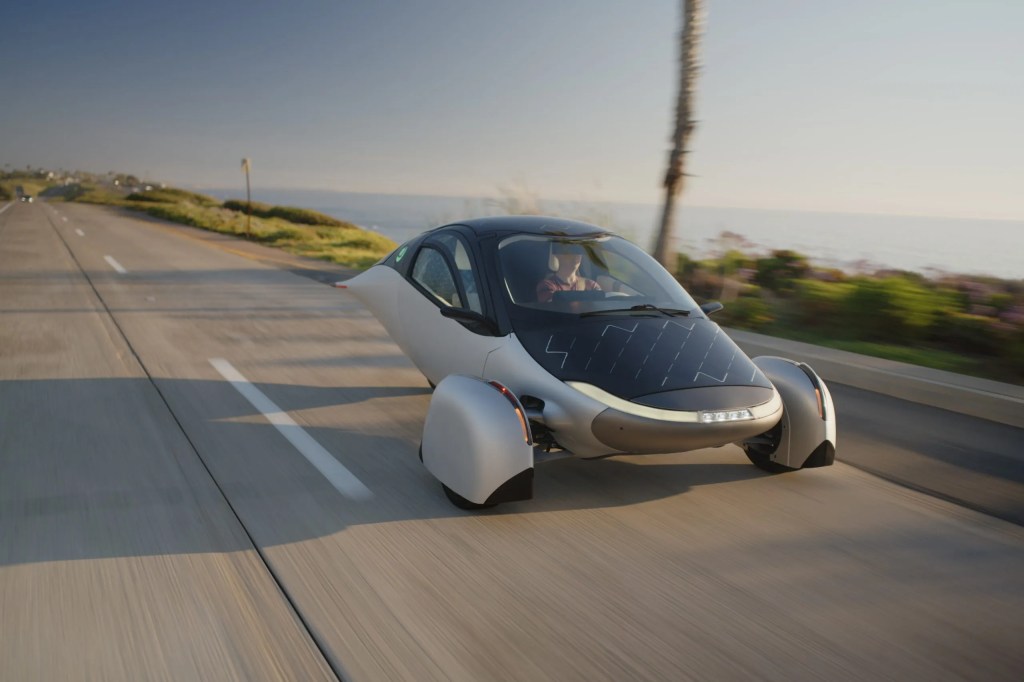
That said, there’s a certain amount of harshness that can’t be removed. To keep weight down (and safety up), the car makes heavy use of sheet molded carbon fiber. But carbon fiber transfers vibration and noise very well, which means the car will be inherently harsher as a result. It was a little less noisy than a carbon tub car usually is, because the outboard wheels didn’t kick as many bits of asphalt up into the car’s body (unlike the Tesla Roadster I drove down in).
So in short: I’m impressed with the progress, they do actually have a working vehicle, and it does something no other vehicle does (i.e. adds significant solar power). But it still needs polishing.
The thing is, Aptera has raised somewhere on the order of $150 million. That’s a lot of money, but to put a car on the road, that’s not much at all. It usually takes more like a billion dollars to start from nothing and get a car on the road. Validating the car as a “motorcycle” helps to keep those costs down, but the process is still enormously costly.
So, now we’ve at least had a taste of what the Aptera is like in its current form. But there is still work to be done, and questions to answer.
The next question is: when will we see the final form? And can Aptera make it there at all? We’ll examine that in a future article about our factory tour.
Aptera is taking reservations now for $100 a pop. If you want to get in line, you can use our Aptera Referral Link for $30 off the refundable reservation fee.
If you *don’t* have solar on your car, you can always charge your electric vehicle at home using rooftop solar panels. Find a reliable and competitively priced solar installer near you on EnergySage, for free. They have pre-vetted installers competing for your business, ensuring high-quality solutions and 20-30% savings. It’s free, with no sales calls until you choose an installer. Compare personalized solar quotes online and receive guidance from unbiased Energy Advisers. Get started here. – ad*


Search
RECENT PRESS RELEASES
Related Post