Weekend Reading | SpaceX Races Toward the Largest IPO in History! Musk Aims to Exchange Three ‘Chess Pieces’ for $75 Billion
March 28, 2026
Source: Tencent Technology
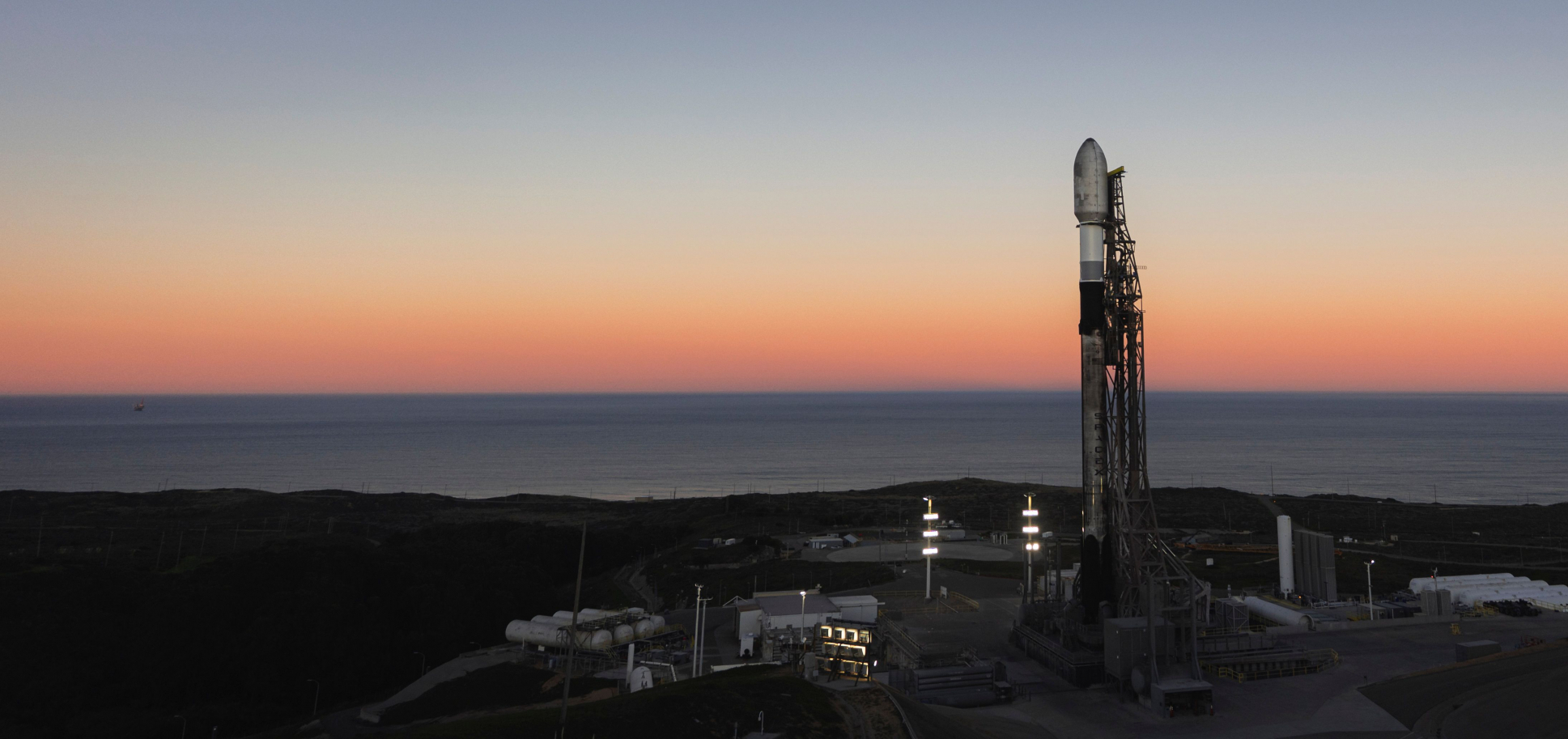
The Information recently disclosed a significant piece of news: SpaceX plans to submit its confidential IPO prospectus as early as this week, targeting an official listing by June this year.
This not only signals the impending birth of the largest public listing in U.S. stock market history but also unveils a ‘chain of strategies’ Elon Musk has been meticulously laying out over the past six months.
 Prior to the submission of this prospectus, he had quietly transformed SpaceX into a behemoth valued at $1.25 trillion through the acquisition of AI companies, strategic positioning in semiconductor manufacturing, and the reconfiguration of the mobile communications ecosystem.
01. Retail Investors Take Center Stage
The most striking aspect of this IPO lies in its staggering scale.
Advisors involved in the preparation predict that SpaceX’s fundraising target could exceed USD 75 billion, surpassing earlier rumors of USD 50 billion and even outpacing the total amount raised by all new U.S. listings in 2025.
However, unlike conventional IPOs, Musk strongly advocates for giving individual investors more influence. In a standard U.S. IPO process, retail investors typically receive only 10% of the allocation, but SpaceX may reserve over 20% of shares for ordinary investors, potentially allowing them to subscribe directly through platforms like Robinhood.
This move by Musk clearly reflects lessons learned from Tesla — he has garnered substantial support from retail investors on many of Tesla’s key projects.
Additionally, SpaceX intends to ‘abolish’ the standard six-month lock-up period, replacing it with a new mechanism to prevent existing shareholders from collectively cashing out upon expiration, which could cause share price volatility.
Although Goldman Sachs, Morgan Stanley, and other top-tier investment banks have not been formally appointed yet, they have already begun preparing for this ‘Musk-style’ non-standard procedure.
If SpaceX doesn’t go public soon, its funds will be completely exhausted.
One possible reason for Elon Musk’s urgency to list the company in June is that SpaceX’s financial situation has become precarious.
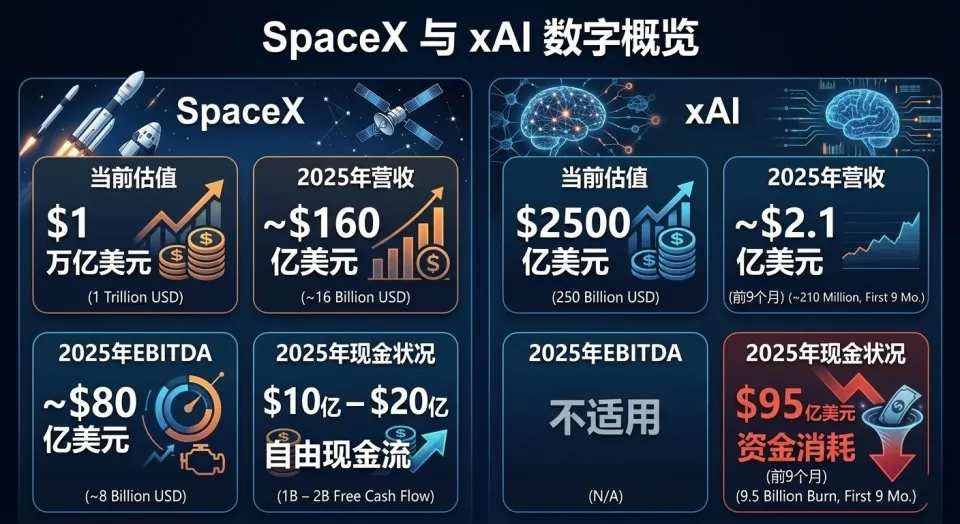
According to Reuters, citing sources familiar with the matter, SpaceX generated revenue of $15 billion to $16 billion last year, with an EBITDA profit of approximately $8 billion and free cash flow of about $2 billion.
However, following the acquisition of Elon Musk’s artificial intelligence company xAI for $250 billion in February 2026, SpaceX’s financial position has gradually tightened.
xAI resembles a bottomless money pit that consumes vast amounts of capital.
According to informed sources, for most of 2025, xAI burned through about $1 billion per month, mainly on data center construction and chip procurement. In just the first nine months of 2025, it spent $9.5 billion despite generating only $210 million in revenue.
With the integration of X platform (formerly Twitter), SpaceX now more closely resembles an artificial intelligence laboratory with an ancillary rocket launch business. Although X’s subscription service barely reached $1 billion in annual revenue, SpaceX’s financial statements are likely to remain in deficit due to xAI’s heavy investments in computing power for the foreseeable future.
To support its massive computing needs, xAI is raising funds through various creative means to purchase NVIDIA chips, even taking on the $12.5 billion debt left over from Musk’s acquisition of Twitter.
By bundling several private projects under his portfolio, Musk is attempting to convince investors that combining AI models like Grok with space-based data centers represents a more explosive business opportunity than merely selling satellite broadband services.
The integration of xAI and SpaceX achieves a ‘mutual resolution’—xAI gains continuous financial support via the SpaceX platform, while SpaceX benefits from xAI’s ‘space computing power’ vision by securing additional commercial launch contracts. Both entities mutually reinforce each other.
Lu Yi, a partner at Brilliant Phoenix Al, the private equity firm that has successively invested in SpaceX, Neuralink, Anthropic, and xAI, stated: ‘The most direct and urgent motivation for SpaceX to go public should be to address xAI’s extreme cash-burning problem.’
03, Delays and Growth Bottlenecks
Almost all of SpaceX’s grand visions, including Elon Musk’s long-cherished plans for the Moon and Mars, hinge on the Starship product. However, the development of Starship has been delayed for several years.
As early as 2019, SpaceX optimistically predicted that it would be ready for commercial use by 2021, but this has yet to materialize.
The delay in Starship’s commercial operations has triggered a series of chain reactions. SpaceX’s next-generation mobile internet satellites are waiting for Starship to deploy them, and the planned orbital data centers are also designed to be sent into space by Starship. Even NASA’s 2028 lunar landing goal is at risk of being delayed due to the lag in Starship’s lander development.
Meanwhile, Jeff Bezos’ Blue Origin is hot on its heels, developing competing lunar landers.
In an effort to accelerate progress, SpaceX President Gwynne Shotwell personally committed in early March to another test flight within the coming weeks. However, the failure of the “Version Three” prototype on the launch pad in Texas had already raised some doubts in the market.
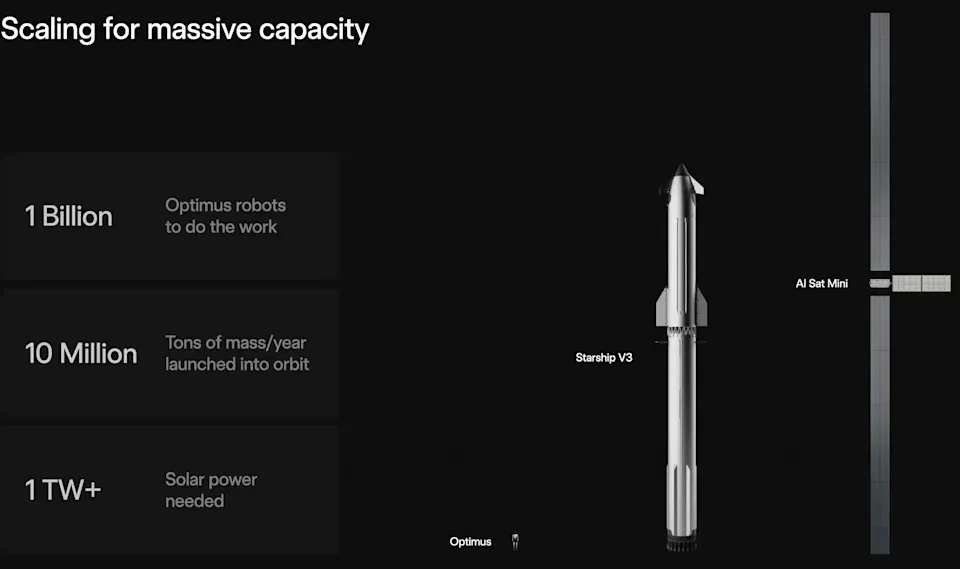
It can be said that every additional day of delay for Starship increases the risk of SpaceX’s valuation bubble bursting.
During the pre-IPO sprint phase, SpaceX’s main revenue source, the Starlink satellite business, is also facing growth bottlenecks.
Although the number of global users has exceeded 10 million, urban residents in large cities are more accustomed to wired broadband. As a result, Starlink is being forced to cut prices in Europe and the U.S., while attempting to integrate into T-Mobile’s mobile phone packages.
In a more aggressive move, Elon Musk is spending nearly $20 billion to acquire spectrum from EchoStar, aiming to enable direct video calls on mobile phones in signal-dead zones via satellites. This has sparked significant controversy within the industry, with many executives questioning whether ordinary users would be willing to pay extra for this service.
Moreover, Apple’s stance remains ambiguous, as it has been reluctant to reach a core agreement with Starlink due to pricing disagreements.
Whether this high-investment, slow-return mobile business can create a competitive moat like rocket launches is a crucial question investors must address before the IPO.
04, Terafab Adds Value to the IPO
To comprehensively address the bottleneck issue of ‘chip production capacity,’ Elon Musk recently unveiled a joint venture plan named ‘Terafab’ at the Texas Gigafactory.
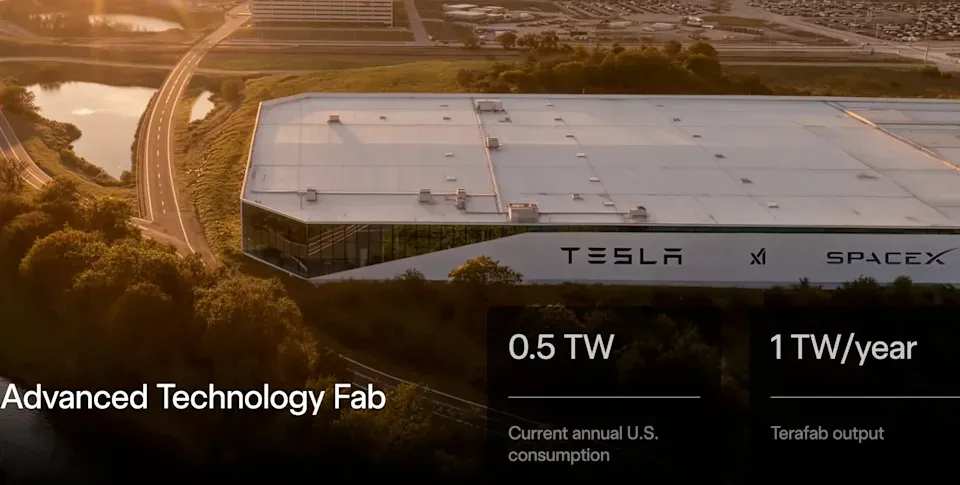
This ambitious project integrates chip design, manufacturing, and packaging, with the goal of producing 2-nanometer chips capable of supporting the annual operation of 100 million Optimus robots and space data centers. The initial cost is estimated to be between $20 billion and $25 billion.
Although Elon Musk claims that this move is due to Taiwan Semiconductor’s slow capacity expansion, analysts generally regard it as a ‘formidable task,’ given his lack of semiconductor manufacturing experience and the fact that the factory will not begin production until at least 2028.
Stacy Rasgon, senior semiconductor analyst at Bernstein, remarked, ‘Because it’s Elon Musk, I wouldn’t dismiss it outright. But I suspect this might be even harder than sending rockets to Mars.’
At the technical and supply chain levels, advanced lithography machines are almost entirely reliant on ASML in the Netherlands, with delivery cycles lasting one to two years. New customers often face even longer waits. Moreover, the differences among logic chips, memory chips, and advanced packaging processes are substantial, and integrating all three within a single factory would exponentially increase system complexity.
However, this vision undoubtedly adds a new narrative to the IPO: SpaceX is no longer just transporting cargo; it is building its own silicon-based brain.
05, The ‘All-Chinese Team’ Disbands
At the peak moment when the company was approaching a trillion-dollar valuation, subtle cracks began to appear in SpaceX’s internal management.
In the first quarter of 2026, xAI’s founding team underwent significant turmoil, with several key Chinese members leaving, including Tony Wu, head of the reasoning team, Jimmy Ba, proposer of the Adam optimization algorithm, and core architect Greg Yang. Now, only two remain on the job.
In early February, Elon Musk announced a major restructuring of xAI, dividing its operations into four core segments: the Grok chatbot and voice products, programming, Imagine video products, and the ‘Macrohard’ digital intelligent agent project.
Another factor behind the restructuring was Musk’s dissatisfaction with the engineering progress. According to insiders, he had repeatedly expressed frustration that the construction of data centers failed to provide a lasting competitive advantage for its AI models, which directly prompted the reorganization.
The departure of nearly all co-founders has forced Musk to ‘rebuild from the ground up’ the AI team and attempt to develop a project called ‘virtual employees’ to replace some human labor.
For incoming public investors, how Elon Musk balances his attention between Tesla, SpaceX, and xAI, as well as the complex web of internal interest transfers, will come under intense scrutiny as the IPO proceeds.
As the June listing deadline approaches, this largest-ever IPO—whether it serves as the Noah’s Ark to Mars or accelerates the bursting of the AI bubble—will soon reveal its answer.
Editor/Rice
Search
RECENT PRESS RELEASES
Related Post