What The 5-Minute EV Recharge Means For The Automotive Industry
March 17, 2026
There’s no doubt that charging time is one of the biggest obstacles for car owners when considering the purchase of an EV. Many people would rather not spend 30 minutes or so in an interstate service area waiting to complete the remainder of the journey. And range anxiety is still a big deal, meaning that some will always err on the side of caution. The EV industry in general certainly understands those challenges, and experts are feverishly working away in the background in search of a breakthrough.


The potential good news is that this industry-saving technology appears to be on the horizon, with the concept of five-minute flash charging currently debuting in China. And should this five-minute goal turn into reality via BYD and others, it may attack the last big psychological barrier that’s keeping many drivers from going electric at all.
Five-Minute Charging And The Realities
|
2026 BYD Han L |
|
|---|---|
|
Motor |
Permanent‑magnet synchronous electric motor |
|
Transmission |
Single‑speed automatic reduction gear |
|
Drivetrain |
Rear-wheel drive |
|
Power |
680–1,086 hp (top trim) |
|
Torque |
310 lb-ft |
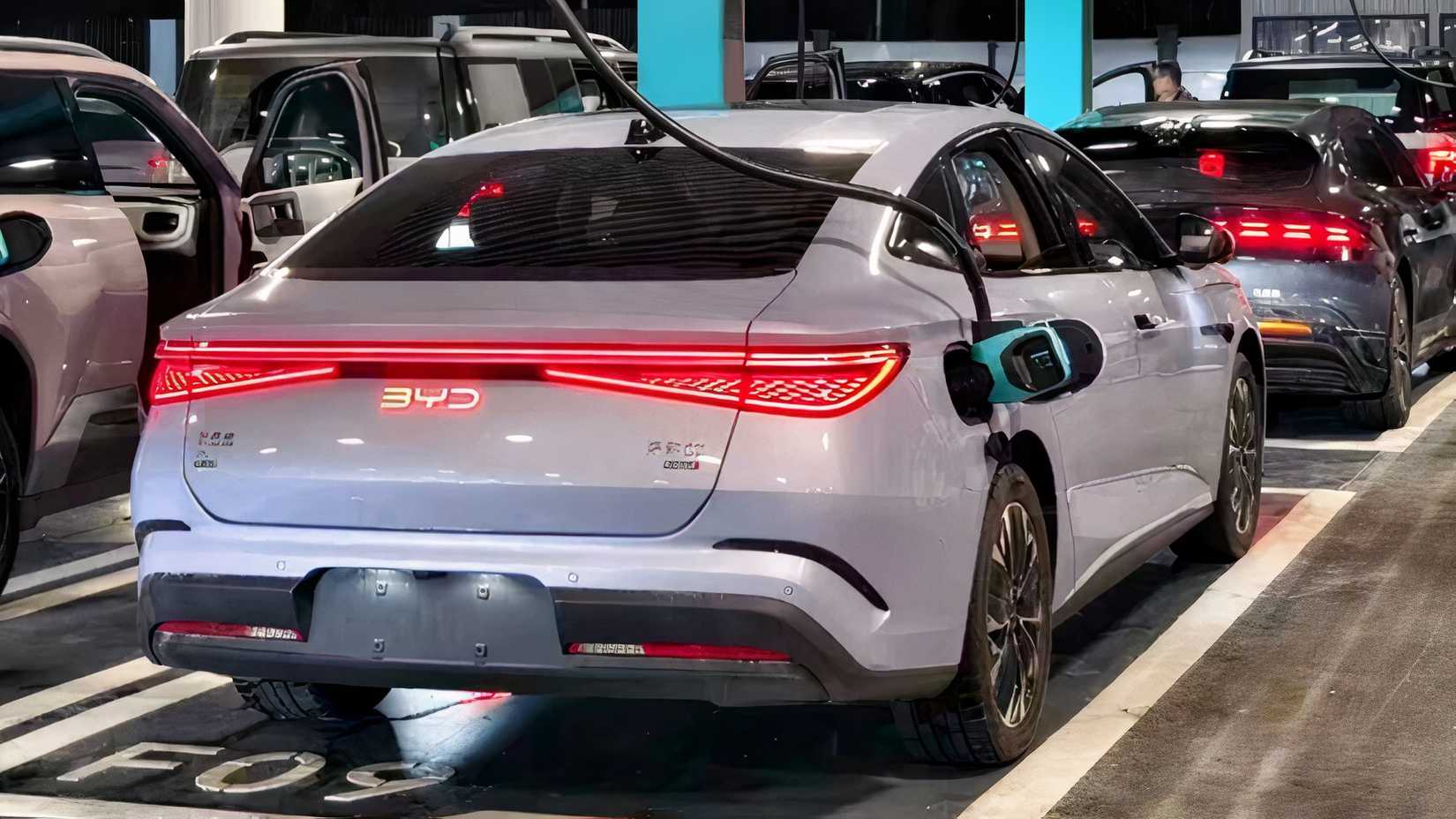
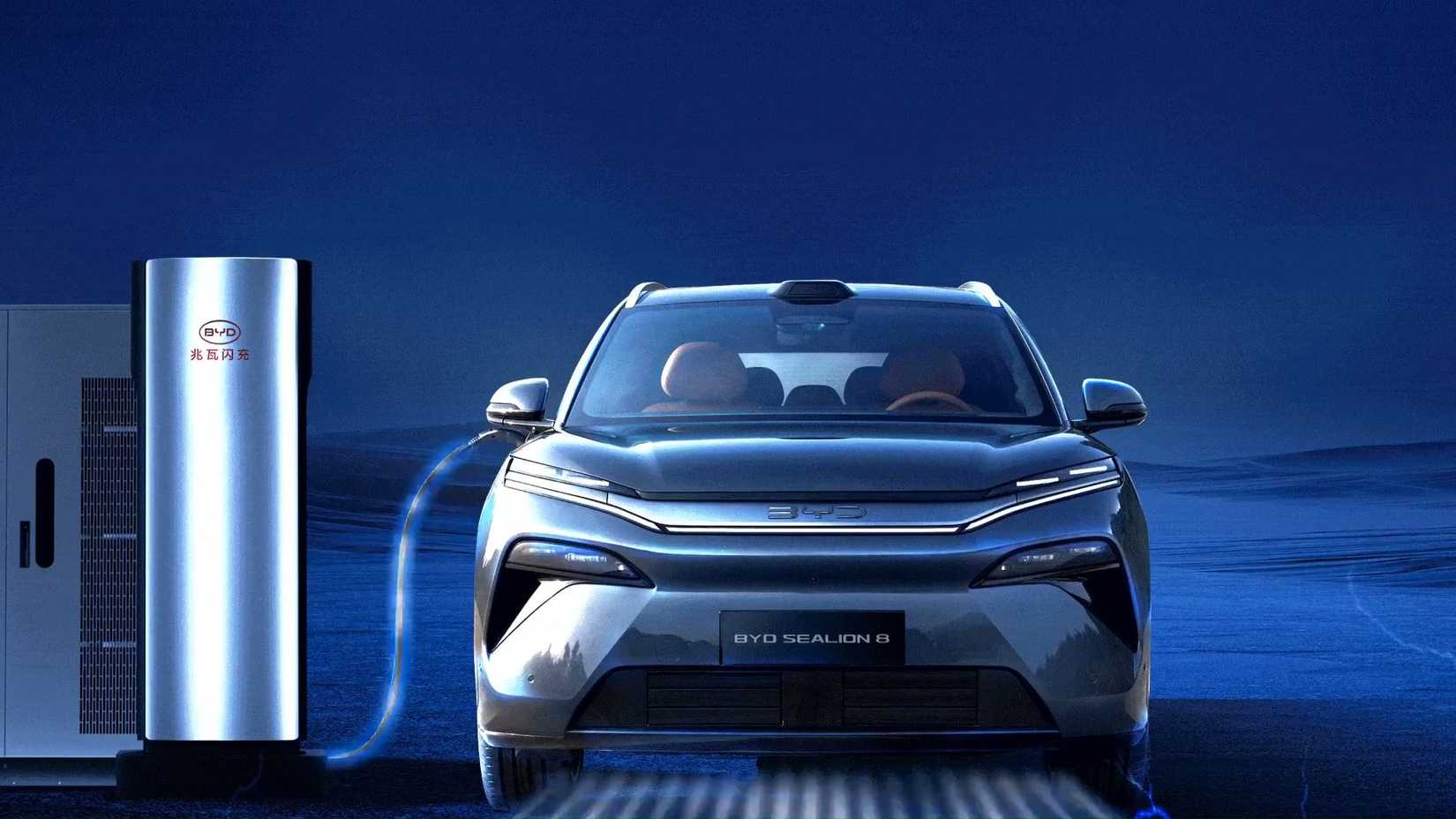
Chinese automaker BYD is championing its megawatt flash charging system that it says can push up to 1,000 kW into a compatible EV sitting on its Super e-Platform. A Han L sedan that had the new Flash Charging Battery is now able to add around 250 miles (around 400 kilometers) of range within around five minutes, and if that’s the case, it’s roughly the equivalent of filling up a gas tank in five to eight minutes.
Also in China, battery suppliers are making strides. The CATL second-generation Shenxing superfast charging battery has a peak charging rate of over 1.3 MW and can add over 323 miles of range in roughly five minutes. Both of these breakthroughs are in the early stages and there’s no sign of this technology arriving in the US anytime soon, but these companies clearly believe that a five-minute charge is possible in the real world when the vehicle has the right battery electronics and charger.
What This Could Mean For Your Daily Life
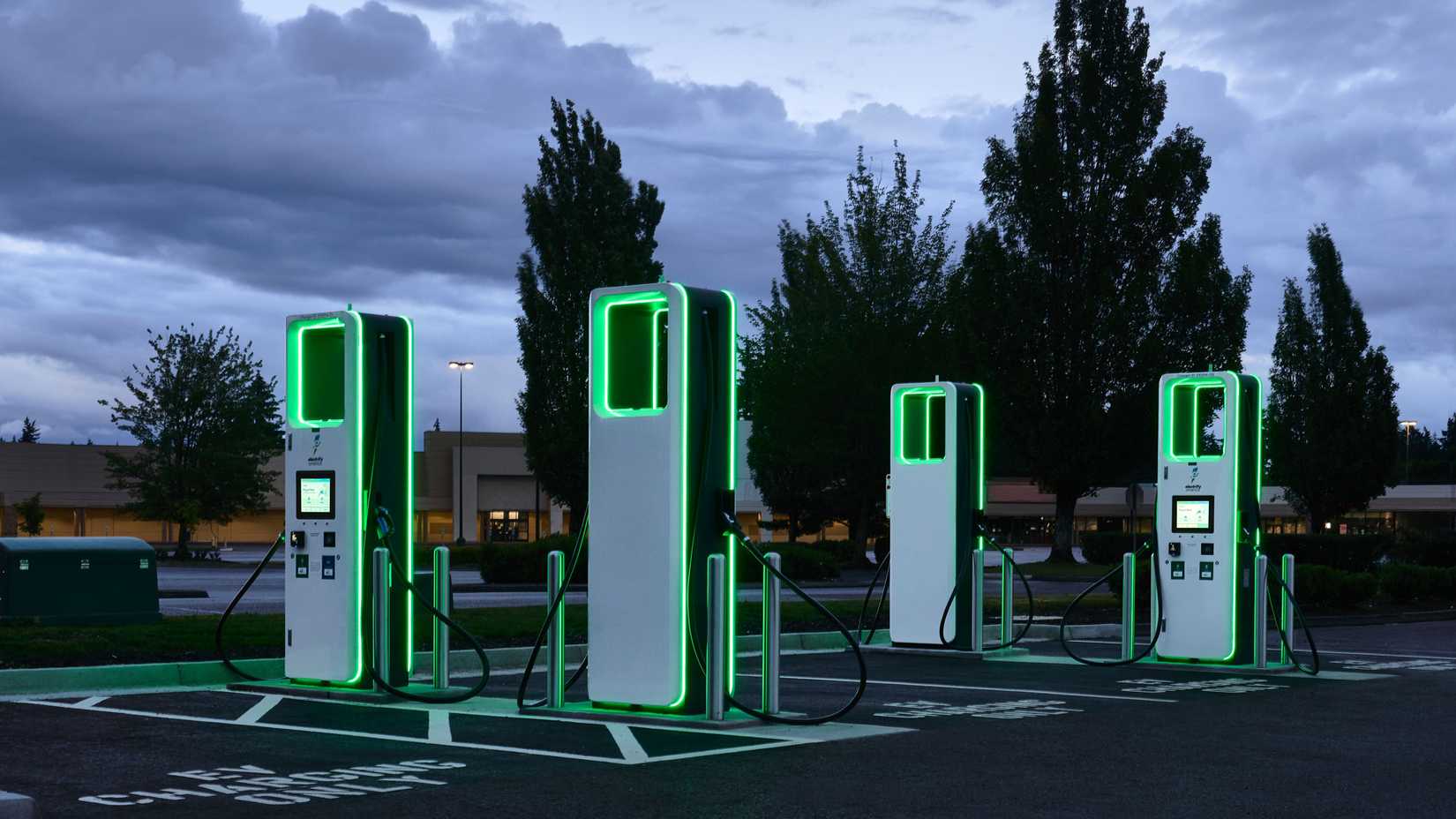
EV owners in the US can take advantage of fast charging capabilities now, which means that many can often go from around 10% to 80% through a high-power public charger in between 20 and 30 minutes. These capabilities are more evident in newer EVs and especially those that use 800-volt systems. And while this is certainly an improvement over the early days, it’s mostly okay if you’re able to properly schedule a road trip. However, it’s less fine if your schedule is packed and you’re doing lots of shorter trips in an urban environment and five-minute charging would certainly change the mental math here.

EVs That Charge As Fast As Gassing Up Are Finally Here
Well, only if you’re in China.
With a five-minute capability in the picture, you wouldn’t have to worry about obsessively charging your vehicle overnight and could even treat your EV more like a gas car. Perhaps you’d only need to schedule a full recharge once per week and take advantage of a new megawatt class station nearby. For those who hate having to deal with crowded service station cafés, this breakthrough could be the answer to their prayers. They may no longer have to sit for half an hour or more drinking a lukewarm cup of coffee and could be a long way down the interstate instead, in the same amount of time.
The Technology Under the Skin
Up until this point, it has been difficult to push the required amount of energy into a car without cooking the battery. Any improvements require a far more capable battery, high-voltage electrical system, and an industrial-strength charger. BYD’s Super e-Platform runs at about 1,000 V and the company is also using specially designed flash charging batteries that have low internal resistance. These batteries can accept extremely high currents without degrading or overheating too quickly, which solves part of the problem. The chargers themselves can also deliver around 1 MW using dual DC plugs and advanced cooling. They also appear to rely on built-in energy storage that smooths out the load on the grid.

The Quickest Charging EVs You Can Buy In 2025
These cars will see you spending the least amount of time at the fast charger.
Over at CATL, the company’s second-gen Shenxing battery follows the same idea but with a nuance. This company uses a lithium-iron phosphate pack for ultra-fast charging that exhibits a peak charge rate near 12C and more than 1.3 MW of potential charging power available. The rate of 12C means that you can theoretically fully charge the pack in one-12th of an hour in perfect conditions, which, of course, equates to around five minutes.
Five-Minute Charging Could Reshape The Industry
If these Chinese companies are able to perfect their approach, it could have ripple effects across the entire industry. Now companies might be able to fit smaller batteries to keep their cars lighter and cheaper and the new fast charging capability could deal with any buyer anxiety. Future EVs could be far more efficient with charging speeds that are no longer an obstacle to the majority.
This could also lead to a wholesale redesign of gas stations and rest stops. At the moment, station owners favor rows of gas pumps nearest to the convenience store outlet and tend to push high-power public chargers into the back corner. If it only takes you around five minutes to charge, then these facilities could add more megawatt chargers instead and bring everything to the front and center.
Of course, utility companies would have to take a long and hard look at these developments, as after all, when you turn on a 1 MW charger, it’s just like turning on several dozen typical homes at once. BYD seems to tackle that issue with on-site energy storage, where it charges big underground batteries slowly from the grid. But there may be some kind of compromise in the future involving smarter management of when and how the energy flows.

China Wants To Make EV Battery Fires A Thing Of The Past
Like leaded gasoline or carburetors.
The Fine Print
At the moment, this technology only seems to exist in a very specific set of circumstances. In other words, you need to have the right car, the right battery, and the right charger in place before you can properly tackle any charging speed. For example, BYD relies on its Han L, sitting on the Super e-Platform, and has a dedicated megawatt-class flash charger that the company has built specifically for the demo. And widespread adoption would require significant changes to charging infrastructure too, as U.S. public chargers typically top out around 350 kW, nowhere near the megawatt capability required. These headline-making five-minute speeds also seem to be sensitive to conditions. BYD says that its achievements relied on ideal temperatures and starting states of charge, while CATL points to slower charging times at lower temperatures.
Much will also depend on the health of the battery as fast charging seems to put a great deal of stress on cells, with megawatt charging pushing everything to the extreme. Savvy owners will certainly want to know about long-term degradation. If they’re keeping a new EV for a decade, will the pack be anywhere near as efficient down the road? Don’t forget that cost is certain to be a big factor, especially if you have to integrate energy storage into the picture. Charging on the road can be expensive as it is, and you can easily imagine very high per kilowatt-hour pricing at some of these ultra-fast stations, especially in the early days.
What This Could Mean For US Shoppers In The Next Decade
You’re very unlikely to see a five-minute recharge sticker on a new EV any time soon when you’re shopping in the US, and many people will be keeping a close eye on these early megawatt systems in China before making any assumptions. There’s a long way to go to set standards, perfect hardware, and plan grid upgrades, but nevertheless, technology does seem to be pushing today’s cars towards much faster charging.
Some companies do already claim a 10–80% charging window, which is closer to 15–20 minutes of time in some of their high-end models. But there’s no doubt that five-minute charging could be a psychological tipping point. People will quickly realize that this thing can charge as fast as they can pump their gas and that shifts any remaining objections over to price, branding, and style. And it could be the moment that electric vehicle proponents have been looking for as a way to finally convert many of those die-hard gasoline drivers.
Search
RECENT PRESS RELEASES
Related Post