Why Did Car Brands Ditch Traditional Door Handles?
May 3, 2026
Trends perpetuate the automotive industry in so many ways, for better, worse, or worst. Today’s trends fall into any one of those categories — everything from excessive minimalism, touchscreen dashboards replacing traditional knobs, the rise and fall (and, weirdly, resurrection) of the manual transmission, and more. Automotive design has always followed what’s trendy, whether we like it or not, and one common trend we see today is the hidden door handle. There are two main flavors this comes in: Flush door handles, like the ones on Tesla models, or door handles hidden in obscure places, like the rear door on newer Prius models.
Believe it or not, this trend may be on the verge of dying out, thanks to China’s move to ban hidden door handles, after failures resulted in passengers getting trapped in their own cars. Rejoice, those of us lying on the ground like Squidward chanting, “Future…” We may one day see the return of an actual, mechanical means to open up the car that doesn’t require a motorized door and/or electronic connection to function.
But why did this become a thing in the first place? Some sources will point to aerodynamics, and it’s true — door handles break up the car’s lines, albeit subtly, edging out that extra few miles of range from EVs and hybrids. It quickly became a trendy design choice even on gas-powered cars, and being honest with ourselves, that’s ultimately what it is these days. Whether that’s a good or bad thing is a matter of debate; in any case, here’s how door handles evolved to this point.
The technology behind hidden door handles
 Madeline Cuccio / SlashGear
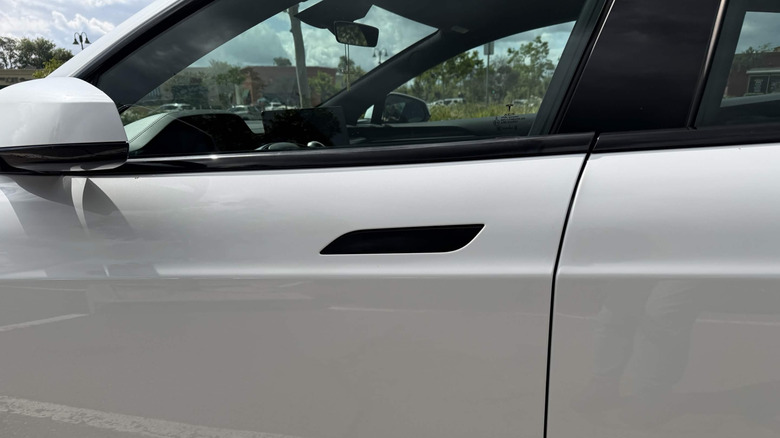
First thing’s first: We must define a hidden door handle. This seems like a bit of a no-brainer, but think about it — many cars throughout the years have had flush door handles. In fact, the first car to ever use flush, pop-out door handles was the 1947 Cisitalia 202. Many styles came into popular fashion since then that fulfilled the same general thing: Pull-up door handles embedded in the door, squeeze handles, the finger handle of the original Miata, latch-style handles of AMCs, and more. All of these minimally disturbed airflow by sinking into the car, as opposed to sticking out.
The specific handle we’re addressing here is the one Tesla popularized, which is the hidden handle that unfolds via pushing a button or a portion of the handle itself. It’s a somewhat bizarre process when you think about it, but it’s certainly not uncommon for automakers to experiment with weird door handle designs. Of course, it’s not without its flaws; Tesla door handles are particularly bad in icy conditions, for example, but it does still provide an inherent aerodynamic advantage because it’s so sleek and flush against the door. It’s actually almost identical to the door handles of a Mercedes 300SL Gullwing, of all things.
Many cars today utilize these types of handles, or handles which recede into the body but feature no actual latch — like the rear doors of the 2023- Toyota Prius. These doors are operated by an electrical switch with a manual button release, with the gap placed at the rear of the door pillar. And, like many other types, these have been problematic in the past.
Why they’re implemented (and why they might go away)
 Bilal Photos/Getty Images
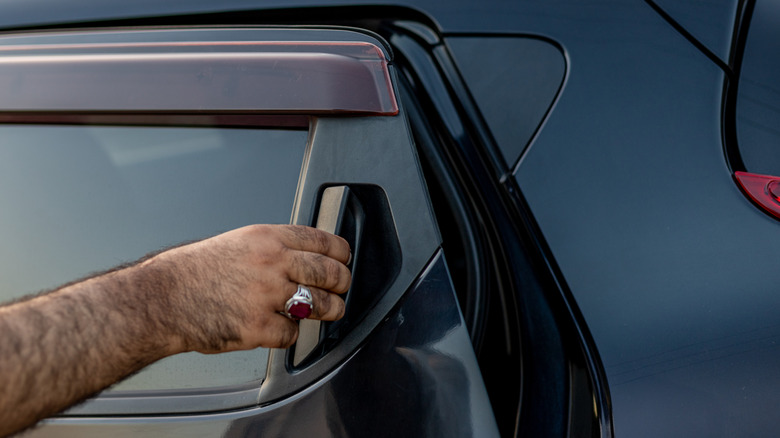
Aesthetics — it’s for the aesthetics. Okay, it’s also for the fuel economy. As mentioned before, protruding door handles disturb airflow. Imagine you’re drawing a line down the side of the car; this line represents the air. A door handle will separate that line from the body, leaving a space behind it, similar to a rear wing, albeit far less pronounced. This creates a pressure differential, which produces drag.
Door handles are relatively small and sleek, so it’s not like they produce a mountain of drag. But when you’re building a car specifically for fuel economy, every ounce of weight savings and panel that’s streamlined will benefit. It may be a minor improvement, but it still represents potentially dozens or hundreds of miles over the course of months or years, respectively.
This general philosophy is likely what initially drove Tesla to producing its current range with these door handles, and the flush door handle grew into a trend from there, lending a more sci-fi and minimalistic look to cars in the same way as LED headlights. The main difference is that it’s way more difficult to fit your car with hidden door handles versus LED bulbs, though the latter comes with caveats you should know anyway.
China’s upcoming policy could permanently alter these iconic handles, however; the country’s new policy mandates a mechanical handle that can function without power. Owing to China as being a global leader in automotive sales and development, and Tesla, among other automakers, adhering to this mandate, these door handles may soon become a thing of the past on new cars.
Search
RECENT PRESS RELEASES
Related Post