Why Falling Rocket Launch Costs Are Getting Investors Excited About Space
April 11, 2026
The Artemis II mission around the Moon and back was successful. In fact, by the time you’re reading this, the four astronauts that made the trip could be back on the ground. With this one in the books, NASA intends to continue sending rockets up, laying the groundwork for an eventual lunar base.
To curious and cost-conscious investors, this plan begs the question: What does it cost to send anything into space?
The answer depends on when you’re talking about. The Atlas rocket used for the Mercury program cost on the order of $15,000 (inflation adjusted) per pound of payload, according to numbers from CSIS Aerospace Security. The advent of the Space Shuttle actually raised that per-launch cost to about $30,000 per pound, although the reusable spacecraft dramatically lowered the net cost of maintaining an accessible launch program. Indeed, for years the Space Shuttle was the only reliably available option for putting bigger, heavier satellites into low Earth orbit.
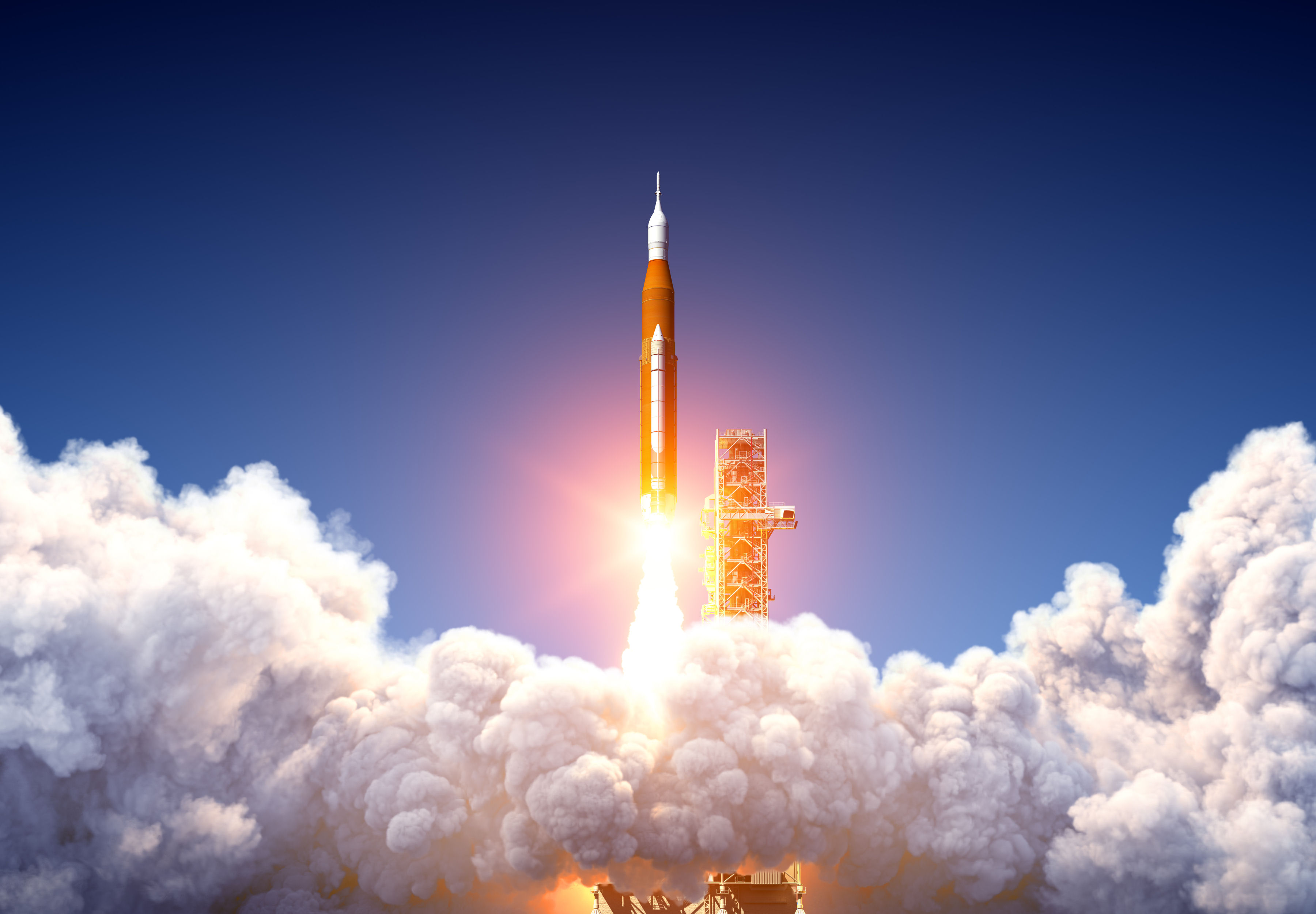
Image source: Getty Images.
As could have been expected, over time, new materials, fuels, and know-how were developed. By 2008, then-nascent SpaceX‘s reusable Falcon 1 became the first privately developed heavy-lifting rocket capable of putting satellites into orbit at a cost of just under $6,000 per pound. Since then, Falcon Heavy’s per-pound launch price has been pared back to around $1,000, although CEO Elon Musk suggests this cost could be lowered by at least a little more.
A sampling of winners
The upshot is obvious: Things that were once just too cost prohibitive are now quite affordable. That’s creating investment opportunities in companies capitalizing on this newly affordable option to put satellites into orbit.
Case in point: AST SpaceMobile (ASTS +3.59%). This company is deploying a network of low-Earth-orbit satellites that offer mobile broadband internet access from space rather than requiring proximity to a cellphone tower. It’s got six commercial satellites in orbit right now but plans on having as many as 60 deployed by the end of the year. Verizon and Canada’s Telus are already lined up as customers.
Intuitive Machines (LUNR +7.46%) is another beneficiary of ever-cheaper launch costs. This company’s tech is required to maintain communications with personnel traveling to — or staying on — the moon, but the company has also figured out how to effectively get heavy cargo loads from Earth to the Moon’s surface. It just needs to hitch a ride there. (So far, it’s leaned heavily on SpaceX’s Falcon rockets.)

Intuitive Machines
Today’s Change
(7.46%) $1.64
Current Price
$23.61
Then there’s Rocket Lab (RKLB +1.95%), which not only makes a number of components used in satellites, but using the same advancements that have allowed SpaceX to privatize the launch business, also makes its own rockets. Its so-called Electron rocket capable of carrying a payload of up to 660 pounds into orbit has now been launched 85 times, while its bigger medium-lift Neutron rocket is expected to begin making its first flights before the end of this year at a price that should be competitive with SpaceX’s.
This is just a sampling of the cost-effective industry’s winners, of course.
Perhaps more important to interested investors, now that putting anything into orbit is affordable, industry research outfit Imarc expects the global space launch service to grow at an average annual pace of nearly 15% through 2034. That’s a fantastic opportunity.
Search
RECENT PRESS RELEASES
Related Post