Why Nvidia, Not Alphabet, Is the Best Artificial Intelligence (AI) Stock to Own for the Expected $1.75 Trillion SpaceX IPO
April 28, 2026
As SpaceX moves closer toward its landmark initial public offering (IPO), two members of the “Magnificent Seven” stand to witness sharply divergent outcomes.
Alphabet‘s (GOOGL 0.15%) (GOOG 0.28%) early investment in SpaceX is poised to deliver a generous paper gain, while Nvidia (NVDA 1.59%) is quietly positioned to secure sustained growth from the very hardware and artificial intelligence (AI) infrastructure that the company must scale following its public listing.
Let’s explore how both AI giants are connected with SpaceX and assess which one is better positioned for the space race in the long run.

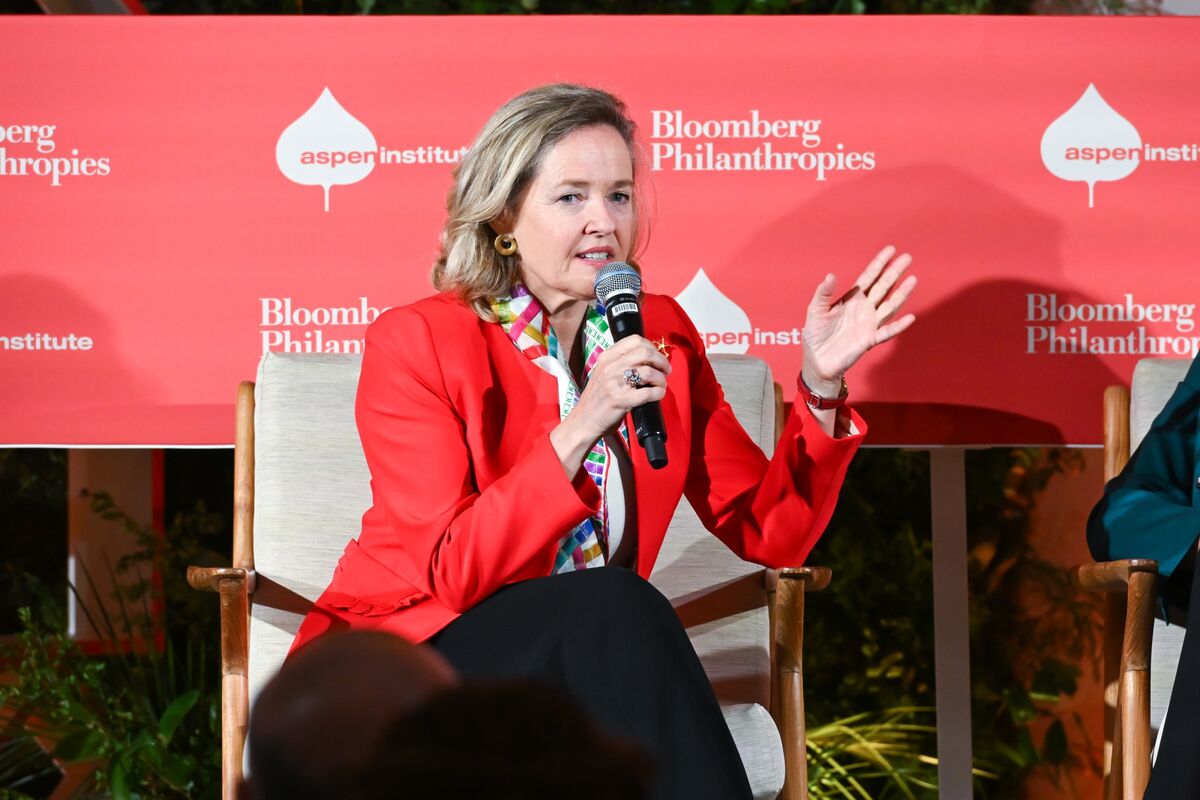
Image source: Getty Images.
Alphabet’s potential $100 billion windfall from the SpaceX IPO
SpaceX is on track for an IPO sometime later in 2026, with reports suggesting a June debut. According to filings, the SpaceX IPO could approach a valuation of $1.75 trillion or higher, with the potential to raise $75 billion in fresh capital.
Some investors have noted that Alphabet could recognize significant upside from its 2015 investment in SpaceX when Google and Fidelity committed roughly $1 billion at a $12 billion valuation. That position, now diluted to a roughly 6% equity stake, could generate more than $100 billion in gains at the anticipated IPO price range.
While that’s impressive, I see the payoff as purely financial — a balance sheet boost with no immediate recurring revenue or operational integrations into Alphabet’s cloud or AI businesses.

Alphabet
Today’s Change
(-0.15%) $-0.52
Current Price
$349.82
Nvidia has a space computing platform that no one talks about
While its Blackwell and Vera Rubin GPU architectures get all the attention, Nvidia also builds hardware for space exploration. In March, the company unveiled its Space Computing initiative — introducing the IGX Thor and Jetson Orin platforms engineered specifically for orbital environments.
These energy-efficient platforms deliver AI inference, image sensing, and accelerated data processing — capabilities purpose-built for edge computing in orbit to support geospatial intelligence, autonomous systems operations, and space-based data centers.
While these services are not yet deployed at production scale, the platforms represent Nvidia’s deliberate push into compact AI silicon that matches the demands of low-Earth orbit.
These developments directly complement Nvidia’s already proven integrations inside the SpaceX ecosystem. Grok, the AI model developed by xAI — which was acquired by SpaceX — is trained on Nvidia GPU clusters. This relationship gives Nvidia a natural path to further embed itself across SpaceX’s AI infrastructure.
Furthermore, Elon Musk himself recently stated that both SpaceX and xAI will continue ordering Nvidia chips at scale for the foreseeable future despite in-house designs being explored. In my eyes, this public commitment sets the stage for tens of billions in new funds from the IPO being deployed across compute infrastructure, orbital AI clusters, and expanded xAI capabilities — all areas Nvidia is seeking to disrupt.
Why Nvidia stock is a no-brainer buy right now before the SpaceX IPO
SpaceX’s post-IPO war chest could create an interesting effect: An established customer with deep technical expertise raises capital and then allocates a portion of these funds toward the very hardware and systems Nvidia already develops and supplies for advancing space exploration.
By contrast, Alphabet does not directly offer the depth of comparable operational advantages to SpaceX right away. Nvidia, on the other hand, is already embedded in SpaceX and positioned to expand in the years ahead. Investors who invest in Nvidia stock before the SpaceX IPO essentially buy clear, leveraged exposure to the hardware ripple effects that could turn SpaceX’s public listing into one of Nvidia’s next growth catalysts beyond data centers.
Search
RECENT PRESS RELEASES
Related Post