Why your energy bills are higher than ever
January 27, 2026
Support WBUR
Opinion

As someone who’s been writing about climate change and energy for 10 years, I get questions. An old friend texted me this week, asking, “Is it true that the state’s climate change laws have sent my energy bills sky high?” My answer was, “Yes. And no.”
Conservative critics aren’t wrong. Gas and electric bills are up, and the costs related to climate policy have contributed to the increase. In a recent poll reported in the Boston Globe, 21% said utilities were the single biggest strain on their household budget. A contentious bill written by Rep. Mark Cusack, now being hammered out in the legislature, is intended to provide some relief. The governor’s recent announcement of state-funded reductions on gas and electric bills in February and March is a band-aid on a structural problem.
As things stand now, ratepayers bear the cost of the transition to clean energy on top of the cost to prop up the aging gas system. The choice policymakers face is to invest in the former or accept the Sisyphean burden of the latter.
Policy watchdogs have taken aim at state-funded renewable energy programs. A white paper published by the conservative Fiscal Alliance Foundation in November 2025 makes the case that policy charges — not the gas itself or its delivery — are to blame for the high cost of energy. If you take a close look at your gas and electric bills, you’ll see fees for the Renewable Portfolio Standard and the Regional Greenhouse Gas Initiative, as well as surcharges for Mass Save. It all adds up. According to an analysis by State Sen. Will Brownsberger, a modest household in Boston with gas heat could pay around $700 a year in climate and efficiency charges across both utility bills. Ouch.
As things stand now, ratepayers bear the cost of the transition to clean energy on top of the cost to prop up the aging gas system.
So, would dialing back our climate policies result in lower utility bills? Sure, that’s arithmetic. But the policy charges on your bill work to reduce the state’s overreliance on natural gas. Failing to do that has serious downsides.
The extent to which gas dominates our energy mix determines how much your bill fluctuates when some rogue petrostate is invaded or decides to stop drilling. Since the 1970s, wars, pandemics, and financial crashes have caused fossil fuel prices to spike every few years. In the wake of Russia’s invasion of Ukraine, the Department of Public Utilities (DPU) ordered the utilities to reduce supply charges that skyrocketed due to the war. We will inevitably see this kind of market turbulence again in the coming years.
New England’s current exposure to commodity prices is amplified by its dependence on gas for both home heating and power generation. The U.S. Energy Information Administration forecasts gas prices for power generation rising about 40% in today’s dollars by 2040. So if we continue to rely heavily on natural gas, there’s no relief in sight.
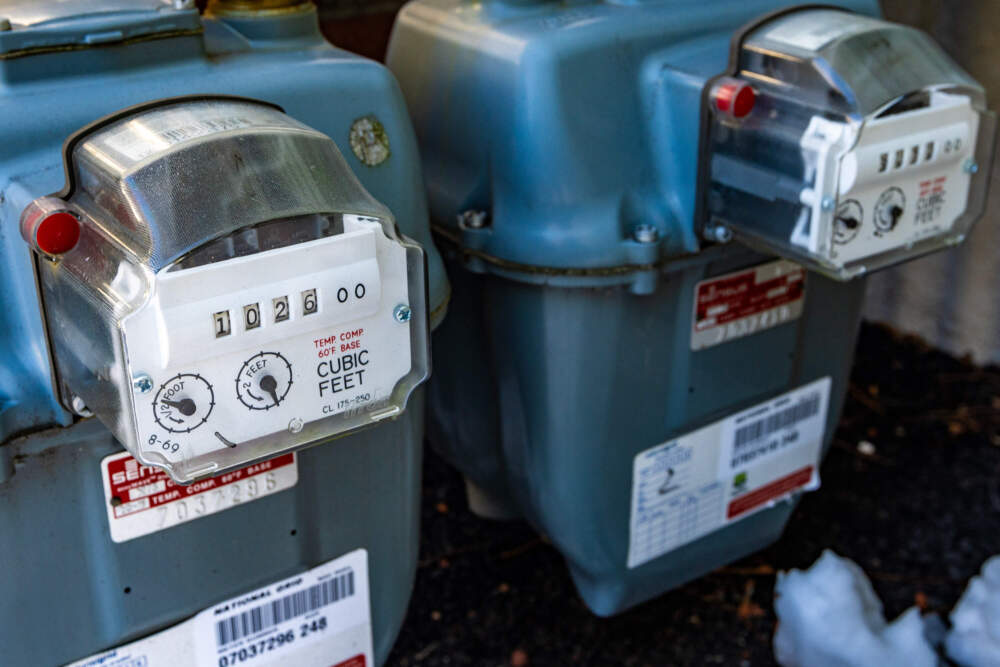
Staying the course with gas would also mean shelling out to keep the infrastructure working. Under the 2014 Gas Leaks Act, utilities submit annual Gas System Enhancement Plans (GSEP) for maintaining their pipelines. According to the DPU, there are over 4,000 miles of leak-prone pipe in the system. Every time a utility replaces a gas pipe, it locks in 40 years of cost recovery. In other words, they pass on the cost of maintenance to you, the ratepayer.
Although Attorney General Andrea Campbell took measures in 2025 to rein in the charge to fund GSEP, the utilities still profit handsomely from infrastructure spending — the state promises a 7-9% return to incentivize maintenance. Dorie Seavey of The Future of Heat Initiative writes, “GSEP translates into lifetime bill payments of more than $31,000 per gas customer.” She points out that the costs of gas pipeline repair and replacement over the lifetime of the program are equivalent to two Big Digs.
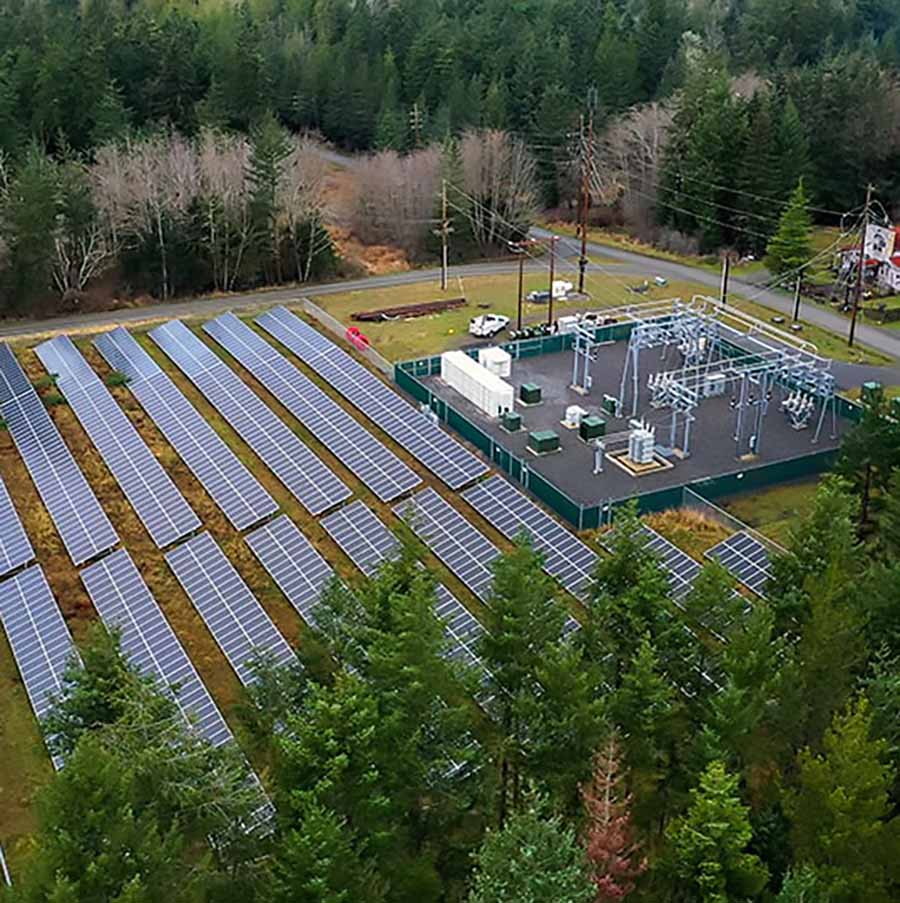
Supporting renewable energy also requires spending — grid upgrades to accommodate the distributed nature of solar power; battery storage systems to mitigate intermittency; and marine facilities to support offshore wind. But if the state fails to invest in a renewable transition, it will lock in ever-higher utility bills and commit to an endless cycle of “patch and pray.”
From a public policy perspective, the charges tacked onto your bill pay off. Economist Dorie Seavey argues that every dollar spent on Mass Save returns $2.76 in benefits. And a small fee on your electric bill funds the Massachusetts Clean Energy Center, which has nurtured a healthy green tech industry that employs 115,000 people. Ratepayers are bolstering the future economy.
Still, the public is impatiently waiting for the Legislature, the governor, and the DPU to make meaningful reforms to reduce utility bills. Mass Save, even with all the worthwhile benefits it delivers, should not be a sacred cow — it spent $155 million on marketing between 2019 and 2023. The Legislature could shift some of these program costs off the utility bill and into the state’s capital budget, where they can be funded more progressively.
Ratepayers can’t indefinitely bear the cost of both the current and future energy models. Decommissioning sections of the gas network will require coordinated, neighborhood-scale electrification — like the geothermal pilot in Framingham — not just individual homeowners switching to heat pumps. The state’s Office of Energy Transformation should focus on system-wide restructuring to reduce the ongoing maintenance burden caused by leaking distribution lines.
So, yes, climate policy is causing real ratepayer pain right now. And so is our reliance on natural gas. One path forward accelerates the retirement of gas pipelines and leads to a homegrown energy system that requires upfront investment but carries predictable pricing, economic stimulus and zero carbon emissions. Another locks in a gas-centric energy economy with pricing tethered to geopolitical chaos, onerous maintenance costs and a failure to meet our mandated climate goals.
Lawmakers and regulators should focus less on tinkering with climate programs and more on shrinking a gas system that has become a money pit. That’s where the genuine savings are.
Search
RECENT PRESS RELEASES
Related Post