XRP Price: XRP Flips BNB to Become the Fourth-Largest Crypto — Can It Catch Ethereum Next?
April 17, 2026
XRP (CRYPTO: XRP) initially reclaimed the number four spot in global crypto rankings in mid-March, overtaking BNB with a market cap of around $93 billion before the two assets traded places again. BNB reclaimed fourth briefly on March 23, reaching an $85.9 billion market cap versus XRP’s $85 billion, but the gap between the two remained under $1 billion.
As of today, XRP is back at number four with a market cap of roughly $91 billion, rallying 10% to reach $1.50. The ranking battle with BNB is still on, but for now, XRP holds the edge, and the more interesting question is what comes next as the XRP price surges.
How XRP Flipped BNB, and Why It’s Sticking
For most of the past three years, XRP and BNB have traded the number four spot back and forth. XRP grabbed it in early 2025, lost it, then grabbed it again in July when it hit a 2025 cycle high of $3.65, only to slide back as the broader market corrected through late 2025 and into early 2026.
The flip in March felt different, as that time, there were actual structural reasons behind it. On March 17, 2026, the SEC and CFTC issued joint guidance explicitly classifying XRP as a digital commodity. The practical effect was immediate: banks, hedge funds, and asset managers that had avoided XRP over the security question could now hold and trade it under the same commodity framework they already use for assets like gold and oil.
XRP spiked to $1.60 on March 17 with trading volume surging roughly 250%, breaking out of the $1.35-to-$1.45 range. But the rally didn’t last as the Fed held rates the following day and raised its inflation forecast, dragging the entire crypto market down as a result. Then BNB briefly reclaimed fourth place on March 23 with an $85.9 billion market cap compared with XRP’s $85 billion, but the gap remained razor-thin, and XRP has now pulled back ahead.
What Could Get XRP Closer to Ethereum?
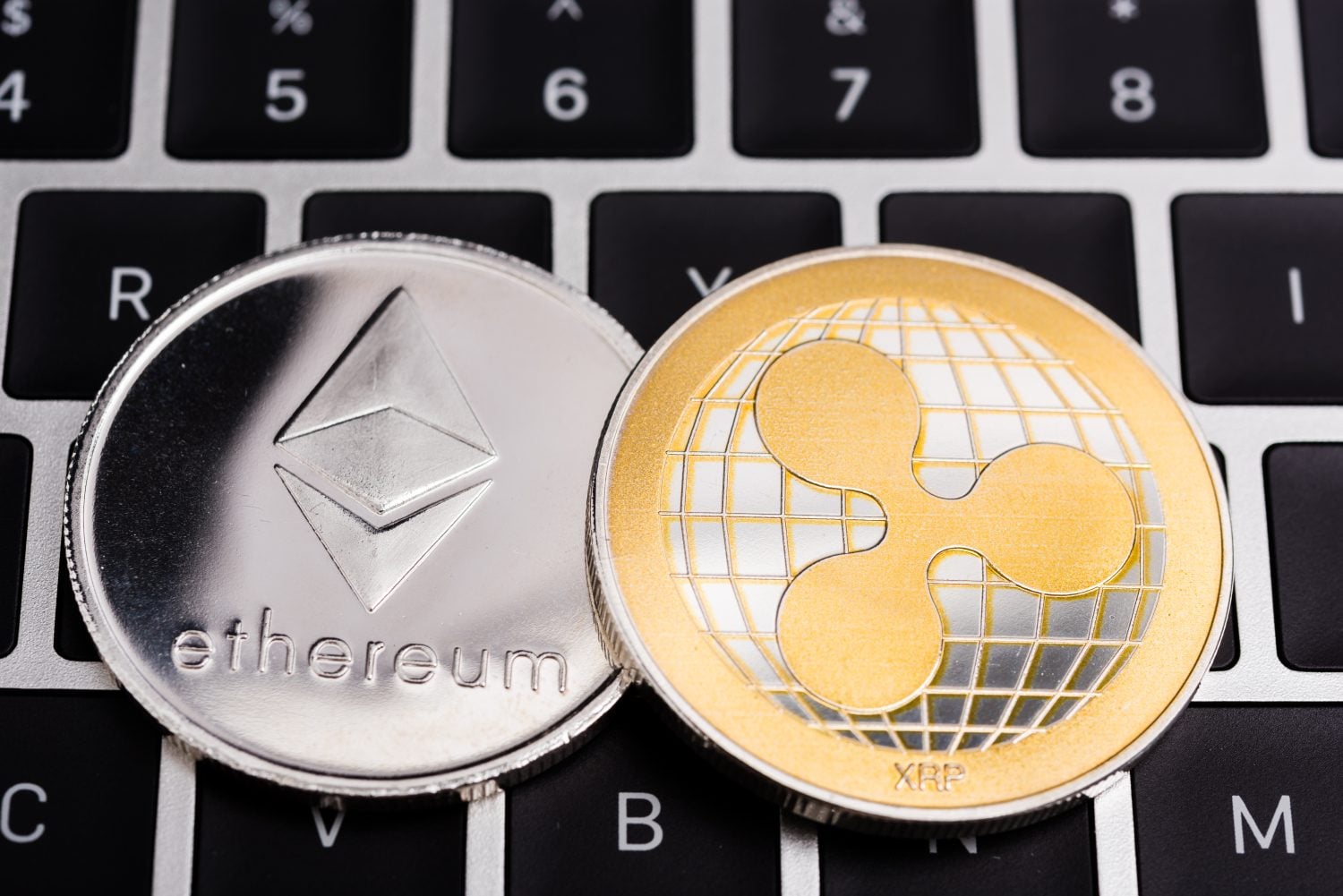
XRP’s ranking battle with BNB is essentially won for now, and the more interesting question is if XRP can close a gap three times larger and challenge Ethereum. Here are three key factors that could give XRP a shot at achieving such a feat.
The CLARITY Act
The CLARITY Act passed the House in July 2025 and is now targeting a Senate Banking Committee markup in the final two weeks of April. This is XRP’s biggest catalyst and could shape its price action for the rest of the year. The March commodity classification was a major step, but it was an interpretive release, which meant a future administration could revisit it.
This means the CLARITY Act is what will make XRP’s regulatory status permanent. So, if it passes, it’ll give institutions the legal certainty they need to commit large capital to XRP. That alone could be a huge catalyst for XRP to close the gap on Ethereum in the global crypto rankings.
XRP ETF Institutional Adoption
There are currently six XRP ETFs in the U.S., but the breakdown of who holds them tells you a lot about where the upside is. Right now, roughly 84% of XRP ETF assets are held by retail investors, so only about 16% coming from institutions.
Bitcoin’s ETFs flipped that ratio within their first year, and the BTC price went from $40,000 pre-ETF to $126,000 during the ETF growth period. If institutional money starts flowing into XRP ETFs at scale—which the CLARITY Act would help unlock—the price impact could mirror that of Bitcoin. If that happens XRP could reach a market cap that could rival Ethereum.
Real-World Payment Adoption
Regulation and ETFs can bring capital to XRP, but closing a gap as large as the one with Ethereum also needs real demand for the token itself. That’s where Ripple’s On-Demand Liquidity (ODL) service comes in
ODL uses XRP as a bridge asset to settle cross-border payments in seconds without either side needing to hold pre-funded accounts in the destination currency. Every ODL transaction means someone is buying XRP on one end and selling it on the other, which creates organic volume that doesn’t depend on speculation.
Ripple has been expanding ODL corridors and signing new partners throughout 2025 and in 2026. The more payments that flow through XRP instead of traditional banking rails, the more consistent buying pressure builds under the price. If ODL volume scales from its current levels into the tens of billions annually, the demand could push XRP’s market cap closer to Ethereum’s.
Can XRP Flip Ethereum This Year?
With XRP at $1.50 and a market cap of $91 billion, matching Ethereum’s current $295 billion valuation would require XRP to reach roughly $4.79—a 219% move from today’s price. That’s not impossible for XRP across a full cycle, but it’s a big ask in a single year that has already seen the token fall over 40% from its January high of $2.42.
Catching Ethereum this year would need a near-perfect combination of the CLARITY Act passing, a macro recovery driving ETF inflows to multi-billion levels, and Ethereum continuing to trade below its prior highs. That’s a lot to line up at once. What’s more realistic for 2026 is XRP reaching $3.00-$4.00 to double in market cap—reaching roughly halfway to Ethereum.
Search
RECENT PRESS RELEASES
Related Post