Year in Review: Trump 2.0 and the Environment
December 30, 2025
So much has happened this year. It seems that every day there is a new headline that is just as dramatic and important as the last. With the constant buzz of news, it’s easy to forget how much the Trump administration has shaped climate policy in the U.S. and around the world. From leaving the Paris Climate Agreement on day one to the administration’s most recent dismantling of the National Center for Atmospheric Research, climate science and the environment have taken a hit under Donald Trump’s presidency.
January: Trump’s First Executive Orders
Trump’s second first day as president of the United States was January 20, 2025. Promising to sign 100 executive orders on his first day, he ultimately signed 26. In those 26 executive orders, Trump began his environmental damage.
An executive order (EO) is a statement by the president that instructs federal agencies on how to implement and enforce laws. While they are not laws themselves, they indicate to Congress which laws to prioritize. Many presidents use executive orders to rescind orders issued by previous presidents.
President Trump reversed many of former President Joe Biden’s climate-focused orders, including the creation of clean energy task forces and the Climate Change Support Office, the “30 by 30” conservation initiative, and federal efforts to improve sustainable, climate-resilient infrastructure in the U.S. In an order titled “Putting America First in International Environmental Agreements,” Trump pulled the U.S. out of the Paris Climate Agreement and revoked the International Climate Finance Plan.
He also signed orders expanding fossil fuel use and exploration, “Unleashing American Energy” and “Unleashing Alaska’s Extraordinary Resource Potential,” as well as an order “Declaring a National Energy Emergency,” which states that inadequate energy production in the U.S. is an “unusual and extraordinary threat.” He notably excludes wind and solar power from the order’s definition of “energy,” highlighting the construction of pipelines and the leasing of land for oil and gas production.
In the first two weeks of his presidency, the Trump administration scrubbed thousands of data pages from government websites, many of which related to climate change. The Environmental Protection Agency (EPA) website lost all references to climate change on its homepage.

February: Paper Straws, Layoffs, and the National Energy Dominance Council
Trump began February in a battle with paper straws. On February 10, he signed an EO stating that the government will exclusively use plastic straws. He banned the use of paper straws in federal buildings, saying that they “don’t work.”
On February 14, Trump signed an order establishing the National Energy Dominance Council to enhance energy security. The council aims to expand the production and use of oil, gas, coal, and other critical resources, excluding wind and solar.
Throughout the month, the EPA dismissed over 400 employees and froze funds for federally approved projects. Democratic Senator Ed Markey from Massachusetts said:
“Thousands of EPA projects worth tens of billions of dollars have been illegally shut down, shut off, and shut out of funding in red and blue states alike.”
Government websites continued to scrub mentions of climate change. On February 19, the Federal Emergency Management Agency (FEMA) sent a memo titled “Recovery Guidance for Terminology Changes.” The memo included 10 instances of “climate change terminology to remove,” including “global warming,” “net-zero,” and “changing climate.”
March: The Trump Administration Cuts Emissions Regulations
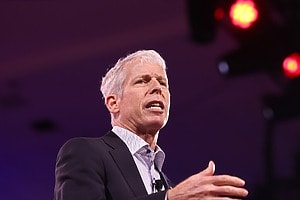
March was a difficult month for climate regulations in the United States. Chris Wright, Trump’s energy secretary, kicked off the month by saying that climate change is “a side-effect of building the modern world” and encouraging the world to use more fossil fuels.
Trump concluded the month by stating that automobile emissions do not affect the environment. When Trump announced tentative plans to relax pollution limits on vehicles, he claimed that it wouldn’t “mean a damn bit of difference to the environment.” With these sentiments as bookends to the month, it makes sense that regulations took a hit.
The EPA Administrator, Lee Zeldin, announced 31 deregulation actions on March 12. Among these actions, the EPA halted enforcement of pollution regulations at energy facilities, including the Greenhouse Gas Reporting Program and the Mercury and Air Toxics Standards. They also attacked the Biden-Harris Administration Risk Management Program, which required facilities to develop risk management plans for handling hazardous chemicals.
On March 27, the Securities and Exchange Commission (SEC) voted to end rules requiring companies to disclose greenhouse gas emissions and climate risks. “The goal of today’s Commission action and notification to the court is to cease the Commission’s involvement in the defense of the costly and unnecessarily intrusive climate change disclosure rules,” said Acting SEC Chairman Mark T. Uyeda.
In late March, Trump signed an executive order titled “Immediate Expansion of American Timber Production.” The order opened up crucial habitats and conservation areas for logging. He also called for expansion in mining, signing “Immediate Measures To Increase American Mineral Production.”
April: Trump’s 100 Days and 145 Actions
April 29 marked Trump’s 100th day in office and 145 climate rollbacks. In his first few months as president, Trump launched more actions against the environment than he did during his entire first term.
Earlier in the month, he signed an executive order to revive the American coal industry. The order highlighted Trump’s desire for strong energy security and AI competitiveness. He also lifted air pollution restrictions on coal plants, hoping to avoid closures and increase production and use.
Trump went on to attack state climate laws. He signed an executive order titled “Protecting American Energy From State Overreach,” which claimed that specific state laws undermined federal efforts for energy dominance.
Then on April 9, the administration canceled funding for the U.S. Global Change Research Program. The program is key to publishing the National Climate Assessment, a comprehensive guide to climate change.
May: An End to Climate Justice
May began with the Trump administration cutting the EPA’s Energy Star program, which highlighted the energy efficiency of home appliances.
Additionally, the National Oceanic and Atmospheric Administration (NOAA) ceased updates to its billion-dollar disaster tracker. The administration claimed that the tracker caused climate anxiety as the dramatic increase in disasters highlighted human-caused climate change.
On May 26, the Trump administration announced cuts to a Biden-era guidance on greenhouse gases. The guidance required new energy projects to consider environmental justice and climate policies.

June: “Drill, Baby, Drill”
The Department of the Interior encouraged more mining throughout the United States by rolling back mining standards. Following the day-one executive order to unleash Alaska’s energy potential, the Trump administration began moving forward with opening Alaska to mining.
On June 11, the government signed an agreement with JERA Co., Inc., a Japanese energy company, to sell liquified natural gas (LNG). The U.S. promised to supply JERA with 5.5 million tons of LNG annually.
July: Climate Science Denied
The U.S. Department of Energy released a 140-page report denying climate science on July 29. Fact-checkers found that the report contained more than 100 false or misleading claims, prompting more than 85 scientists to issue a rebuttal.
Earlier in the month, Trump signed an EO claiming that “green” energy hinders national security and compromises the grid. In the order, he encouraged federal agencies to phase out subsidies for wind, solar, and other forms of renewable energy.
August: Wind and Solar Tax Credits Eliminated
The Department of the Interior made moves to limit wind and solar projects. U.S. Secretary of the Interior Doug Burgum said:
“Gargantuan, unreliable, intermittent energy projects hold America back from achieving U.S. Energy Dominance.”
The EPA cancelled the Biden-era “Solar for All” program, which aimed to provide low-income families with access to solar energy. The $7 billion grant was intended to provide low-cost, clean energy to over 900,000 households.
Early in the month, the administration also asked NASA to decommission two climate satellites that provide information about carbon dioxide. Farmers rely heavily on these satellites, which also provide data on crop health.
In an ongoing effort to remove information from public view, the EPA ceased updating its “Supply Chain Greenhouse Gas Emissions Factors” database.
September: Trump Calls Climate Change a “Con Job”
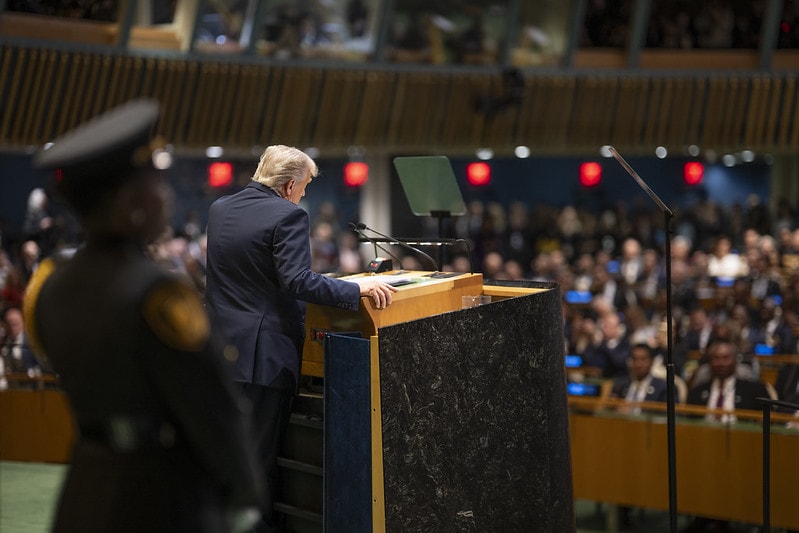
Trump spoke at the United Nations on September 23, calling climate change a hoax. He said that climate change was the “greatest con job ever perpetrated on the world” and admonished countries that had adopted renewable energy sources.
At the Energy Department’s Office of Energy Efficiency and Renewable Energy, “climate change,” “green,” and “decarbonization” were added to a list of words to avoid. The list already included words such as “sustainability,” “carbon footprint,” and “tax breaks/subsidies.” The list is a growing part of Trump’s efforts to downplay and ignore the realities of climate change.
October: Government Shut Down, Pollutants Scale Up
While the government was shut down in October, work continued in the fossil fuel sector. The Department of the Interior opened over 250,000 acres of land in Nebraska and Wyoming to oil drilling, and the Bureau of Land Management approved a copper mine expansion in Utah.
Trump removed another Biden-era air pollution rule that imposed stricter rules on pollution from copper smelters, curbing pollutants such as mercury, lead, and arsenic. Trump rolled back this rule in an effort to increase copper production and promote American mineral security.
November: No to COP30, Yes to Forever Chemicals
The U.S. government notably refused to attend COP30 in Brazil this year. The absence of any high-ranking officials caused climate negotiations to stall and climate finance plans to fall short
Meanwhile, the EPA released a proposal concerning perfluoroalkyl and polyfluoroalkyl substances (PFAS). The proposal aimed to roll back Biden’s reporting requirements. The EPA administrator, Zeldin, claimed that removing these “regulatory burdens” would boost the economy.
December: Trump Suspends Wind Energy Projects
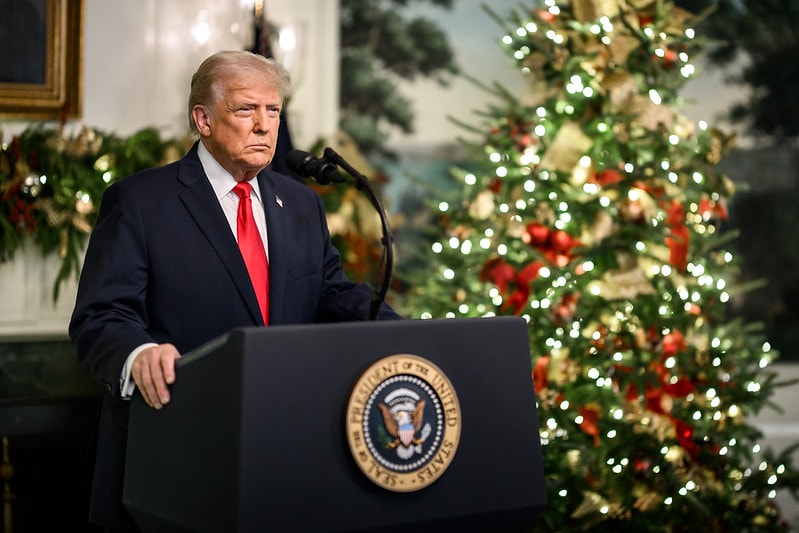
The Trump administration suspended five offshore wind projects on the East Coast, claiming national security risks. The move comes after a Massachusetts judge blocked Trump’s executive order restricting wind energy. Judge Patti Saris said that halting wind farms violates U.S. law.
In addition, the administration defunded the National Center for Atmospheric Research (NCAR) in Boulder, Colorado. NCAR is a critical climate science research center that develops and maintains research tools used by scientists worldwide.
In December, President Trump also announced a rollback of fuel efficiency requirements under his “Freedom Means Affordable Cars” initiative. Experts claim that the idea that these rollbacks will save consumers money is “highly speculative.”
Related Articles
Here is a list of articles selected by our Editorial Board that have gained significant interest from the public:
The Good News
There are some silver linings among the climate chaos brought on by the current administration. The New York Times wrote in October that renewable energy was “booming” despite the administration’s efforts to slow renewables.
On May 30, the Council on Environmental Quality (CEQ) announced the Permitting Technology Action Plan. The plan should speed up and modernize environmental reviews and the permitting processes for new projects in the U.S., increasing transparency and reducing delays.
After the Energy Department terminated $7.6 million in clean energy grants, an internal watchdog began investigating the move. Many Democrats welcome this investigation, as many have claimed that funding cuts will increase electricity bills, threaten thousands of jobs, and hinder progress.
Individual states have increased clean energy efforts. Maine established the Department of Energy Resources, Oregon launched a heat pump rebate program, and Nevada is expanding solar access. New York Governor Kathy Hochul
Judges, environmental groups, and climate activists must continue to challenge the Trump administration’s policies and cuts. The climate will continue to change regardless of whether we choose to recognize it or ignore it.
Editor’s Note: The opinions expressed here by the authors are their own, not those of impakter.com — In the Cover Photo: US President Donald Trump delivers remarks at the McDonald’s Impact Summit at the Westin D.C. in Washington, D.C., Nov. 17, 2025. Cover Photo Credit: The White House / Daniel Torok.
Tags: Climate ChangeDonald TrumpEnvironmentexecutive ordersRegulationsTrumpUnited States
Search
RECENT PRESS RELEASES
Related Post