Shell’s CEO Says the Oil Market Is Short 1 Billion Barrels and Getting Worse. Here’s What Investors Should Do Now.
May 8, 2026
The war with Iran has created a massive disruption to global oil supplies. Persian Gulf oil production has tumbled 57% from its pre-war level due to the closure of the Strait of Hormuz. This supply disruption has really added up.
According to Shell (SHEL 0.32%) CEO Wael Sawan, the world is facing a nearly 1-billion-barrel supply shortage that is worsening by the day. Here’s a look at what that means and what investors should do about the growing oil supply crisis.
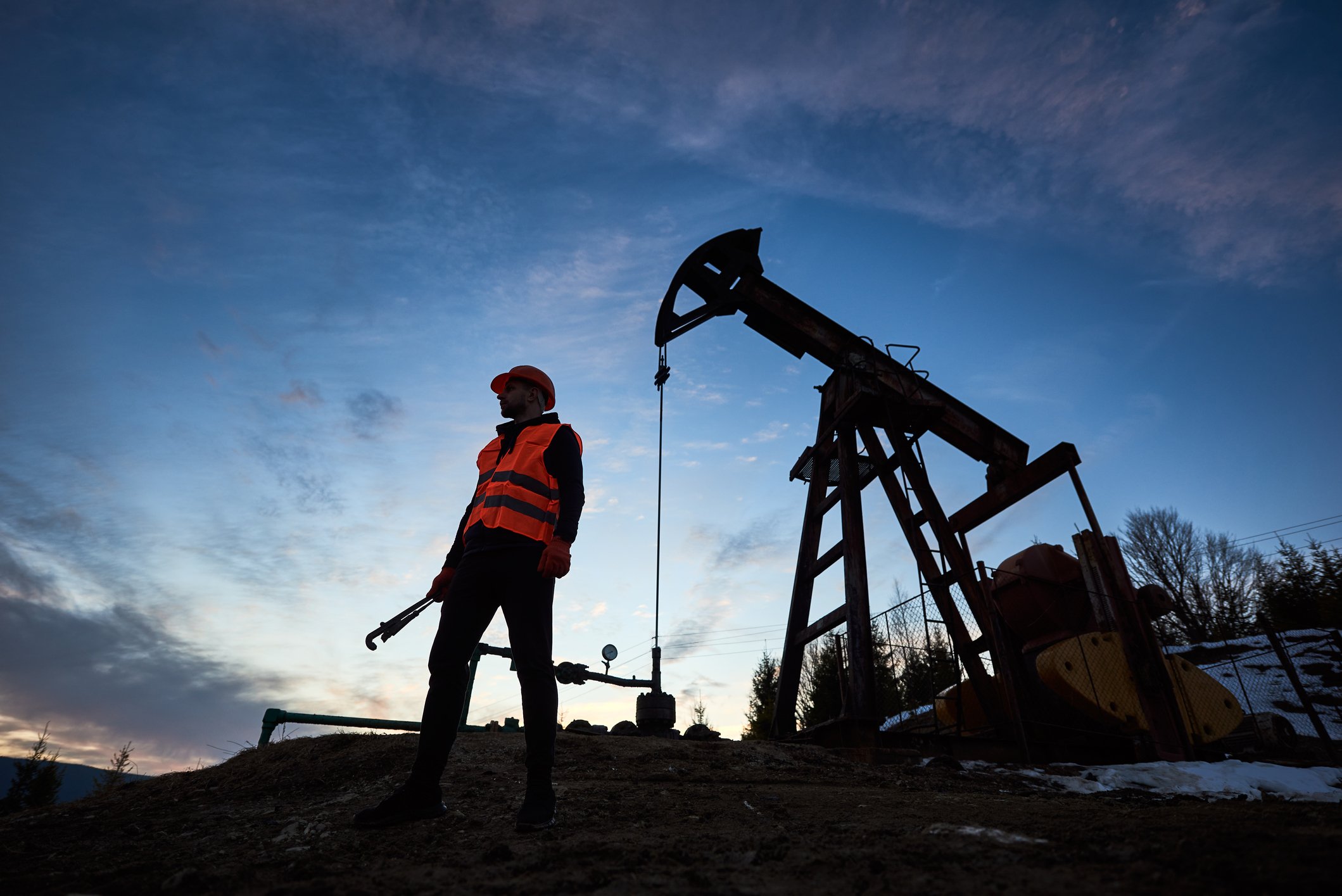
Image source: Getty Images.
The long road ahead
The global economy consumes about 100 million barrels of oil each day. The oil industry is currently falling well short of that need due to the war with Iran and the continued closure of the Strait of Hormuz. It’s currently bridging the gap by burning through oil stockpiles at a record pace of 11 million to 12 million barrels per day, according to Goldman Sachs’ estimate.
Even if there’s a peace deal today and the Strait of Hormuz immediately reopens, Persian Gulf supply won’t return to normal overnight. Oil producers in the Middle East had to shut in wells as above-ground storage reached capacity. According to S&P Global, it could take up to seven months to restart most of those wells, as they require gas or water injections to repressurize.
This situation led Shell CEO Wael Sawan to make some pointed comments on the company’s recent first-quarter conference call. He stated, “The hard facts are we have dug ourselves a hole of close to a billion barrels of crude shortage at the moment, either because of locked-in barrels or unproduced barrels.” “And of course,” he continued, “that hole is deepening every single day, so the journey back will be a long one.” The world will continue to draw down oil inventory until Persian Gulf supplies normalize. Then it will need to start rebuilding inventory levels to prevent a future oil supply shock, which could take many more months.

Shell Plc
Today’s Change
(-0.32%) $-0.27
Current Price
$83.97
Expect oil prices to remain higher for longer
The global oil market faces a long road to recovery. Goldman Sachs modeled several oil price scenarios based on when the Strait of Hormuz reopens and Persian Gulf production normalizes. Its base case is that flows fully recover by the end of June, with only 500,000 barrels of oil per day remaining offline due to restart issues. Under that scenario, oil would fall to below $90 a barrel by the end of this year and to closer to $80 by the end of 2027. Meanwhile, more adverse scenarios could keep crude prices in the triple digits well into next year. Before the war, Goldman Sachs expected oil to be around $60 by the end of this year.
Given the 1 billion barrel (and growing) supply shortfall, investors should brace for the likelihood that higher oil prices will stick around for at least the rest of this year. There’s significant upside risk to oil prices if the war with Iran reignites. There’s also the growing possibility of fuel shortages later this year, especially in import-reliant Asian and European markets. Higher oil prices will likely remain a headwind for heavy fuel consumers (e.g., airlines and shipping companies). As such, investors might want to avoid transportation stocks.
While higher oil prices will hurt oil consumers, they’ll remain a boon for oil stocks. For example, U.S. oil and gas giant ConocoPhillips (COP 0.95%) initially expected to generate less than $20 billion in operating cash flow this year, assuming crude would average around $60 a barrel. However, it would produce about $25 billion in cash if oil averages $80 this year and even more if it’s higher. The company currently plans to reinvest up to $500 million of this incremental cash flow to drill more wells this year. The remaining windfall will help strengthen its balance sheet and enable it to repurchase more shares. Higher oil prices for longer should give oil stocks the fuel to deliver strong returns this year.
A massive and growing shortfall
The oil supply gap has grown to around 1 billion barrels and will continue to expand the longer the Strait of Hormuz remains closed. As a result, oil prices will likely remain high for the rest of this year and potentially well into 2027. The best way to prepare your portfolio for this increasingly likely outcome is to reduce your exposure to energy-intensive industries and increase your allocation to oil stocks.
Search
RECENT PRESS RELEASES
Related Post