Advisors Urge Caution on SpaceX IPO for Retail Buyers
April 29, 2026
Advisors Urge Caution on SpaceX IPO for Retail Buyers

6 Min Read
Mario Tama/Getty Images News/Getty Images
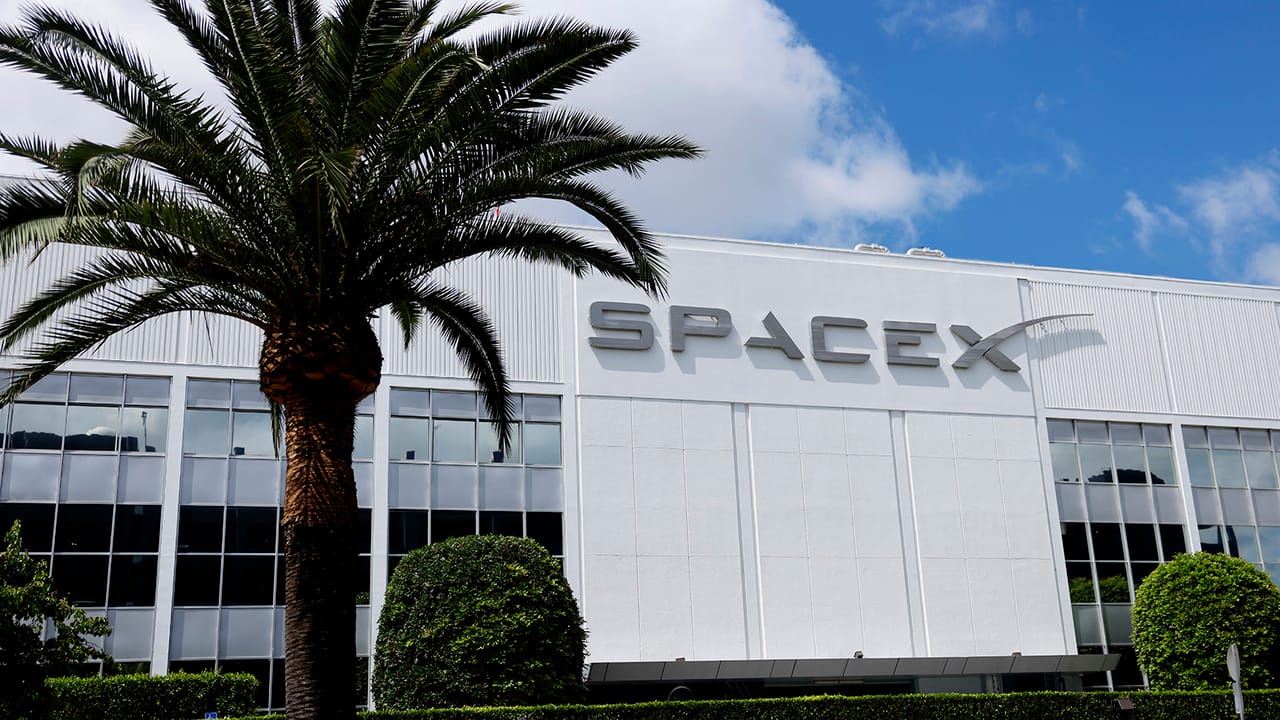
While buzz is building around SpaceX’s planned initial public offering, financial advisors are cautioning clients against trying to time access to the shares before or immediately after the launch.
Even with a proliferation of ways some investors can access early shares, most advisors suggest that long-term retail clients are better off waiting until after the launch and the initial burst of market enthusiasm fizzles out, predicting that early inflated share prices will inevitably fall back to earth, offering a more palatable entry point.
On April 1, SpaceX filed paperwork with the SEC for the IPO, currently planned for June. The company estimates its market valuation is between $1.75 trillion and $2 trillion—implying a sky-high revenue multiple of over 100 times.
According to Matthew Parenti, partner at Chicago-based Private Vista, clients with a higher appetite for riskier investments have started inquiring about the upcoming IPO. Likewise, Jennifer Horton, executive vice president at Franklin, Tenn.-based CapWealth, said her firm has been getting more calls about potential SpaceX opportunities.
“There’s been a lot of questions about it—it’s usually from clients who really like Elon Musk because they’ve already bought into him,” said Horton.
However, advisors warn that opportunities to invest directly in SpaceX are limited and come with drawbacks.
For instance, the timing of the company’s offering suggests it may not deliver the same kind of valuation growth in the public market compared to other tech giants like Meta, Alphabet, Amazon or Apple.
Firms that are part of the so-called Magnificent Seven (large cap growth companies that dominate market-cap-weighted stock indices) all went public when they were much younger firms, noted Parenti, meaning much of their early and rapid valuation growth occurred in the public markets.
That’s not true with SpaceX. If its IPO goes through in June, the company will be 24 years old. By contrast, Apple was 4 years old when it went public. Amazon was 3 years old, and Meta 6.
“People look at SpaceX and think of the trajectory of Apple, Amazon and Google, and think that SpaceX would have the same one,” Parenti said. “But it’s a much more mature company. It would be good to temper one’s expectations about returns over the long term.”
In addition, SpaceX’s proposed valuation of almost $2 trillion “feels insane,” said Horton. “They had $15 billion in revenue. I think it could be really volatile.” Private markets data firm PitchBook, which is owned by Morningstar, puts SpaceX’s fair value at somewhere between $1.1 trillion and $1.7 trillion.
While the proposed valuation is not completely irrational, according to a March note from Morningstar, SpaceX faces substantial risks. One of these is “governance risk surrounding Elon Musk”—the CEO controls 79% of the company’s votes and has a history of negatively affecting Tesla stock in an outsized way.
Another involves potential challenges surrounding integrating xAI, SpaceX’s recently acquired AI subsidiary, into the broader firm. “The IPO narrative also includes two highly aspirational capital deployment targets: data centers in space and Moonbase Alpha, a self-sustaining lunar city,” Morningstar researchers wrote.
“It’s a fascinating opportunity because it’s one of the most widely anticipated IPOs in recent memory,” said David Busch, co-CIO of Trojan Wealth, a Scottsdale, Ariz.-based RIA. “So, there should be a lot of news coverage and a lot of price action early on. But I would just caution investors to think about the different mechanics when an IPO occurs.”
Ways to Invest
For determined investors, there are ways to access the stock. The company announced that it will earmark up to 30% of its shares for retail investors, with a roadshow scheduled for June 8.
Pre-IPO, investors can potentially allocate money to SpaceX by investing in venture capital funds that hold stakes in the company, according to Busch. However, that route is typically limited to those holding accredited or qualified purchaser status and would not be an option for less affluent investors.
Trading of privately held SpaceX shares is also happening through secondary market liquidity platforms, including Forge Global and Hive, noted Shmuel Maya, founder and managing director at the Aventura, Fla.-based RIA Aventura Private Wealth. Last March, Aventura invested in a special purpose vehicle that holds SpaceX for accredited investors.
The valuation in the secondary market is slightly below the expected IPO price—somewhere around $1.25 trillion, according to Maya—though still above the lower end of PitchBook’s fair price estimate.
According to Morningstar, there are also at least two interval funds and one tender offer fund with direct exposure to SpaceX, all with fairly low investment minimums.
For example, Baron Partners Fund and Ark Venture Fund have minimum investments of $500 to $2,000. SpaceX represents about 32% of Baron Partners Fund’s assets and 17% of the Ark Venture Fund assets.
Even there, for mass affluent clients, “I think the window has closed because the valuation is high,” Maya said.
“I would probably tell people to wait [at least a month] until after the IPO, so you are not stuck with a lock-up period, it’s more liquid once it has become public,” he said. “SpaceX is so widely sought after, I can’t say whether it will dip or not. But from past experience, a lot of IPOs tend to dip as they go public, and investors can purchase it then.”
In addition, investors would have to consider those funds’ limited liquidity and the fact that they hold multiple companies, all of which will impact their ultimate returns, warned Parenti. “This is not a pure SpaceX play.”
There are also at least 16 mutual funds and four ETFs with exposure to SpaceX, according to Morningstar data. But given the capitalization-weighted nature of market indices and the rules around when companies get added to them, index-based ETFs may be forced to buy post-IPO shares at elevated prices, not based on the firm’s fundamentals.
For example, recent changes to the rules governing the Nasdaq 100 Index, scheduled to take effect next week, would see SpaceX join the index only three weeks into trading. FTSE Russell and S&P 500 are currently considering similar fast-entry admissions for large companies. Typically, indexes wait at least 3 months before including a new firm. Early entry is likely to lead to unusual trading activity in the weeks immediately after the IPO, according to Morningstar.
The advisors Wealth Management spoke to had almost uniform advice for retail investors eager to invest in SpaceX: Wait until the IPO goes through and the lock-up period for early investors to sell their shares is over to get a sense of where the stock price will ultimately settle, then buy during a dip.
Busch also proposed skipping direct SpaceX exposure altogether and investing in other companies that will benefit from space commercialization—aerospace suppliers, satellite manufacturers, semiconductor firms, defense contractors and telecom firms.
“So, you will essentially end up owning the infrastructure ecosystem around SpaceX. vs. chasing the headline IPO,” he said.
About the Author
Search
RECENT PRESS RELEASES
Related Post