ByteDance bringing Doubao AI to car cabins in new tech rivalry
April 16, 2026
- ByteDance is developing a deeply customized smart cabin solution based on its Doubao AI model, working closely with automaker Seres.
- In the new battlefield of automotive AI cabins, ByteDance is in direct confrontation with Alibaba.
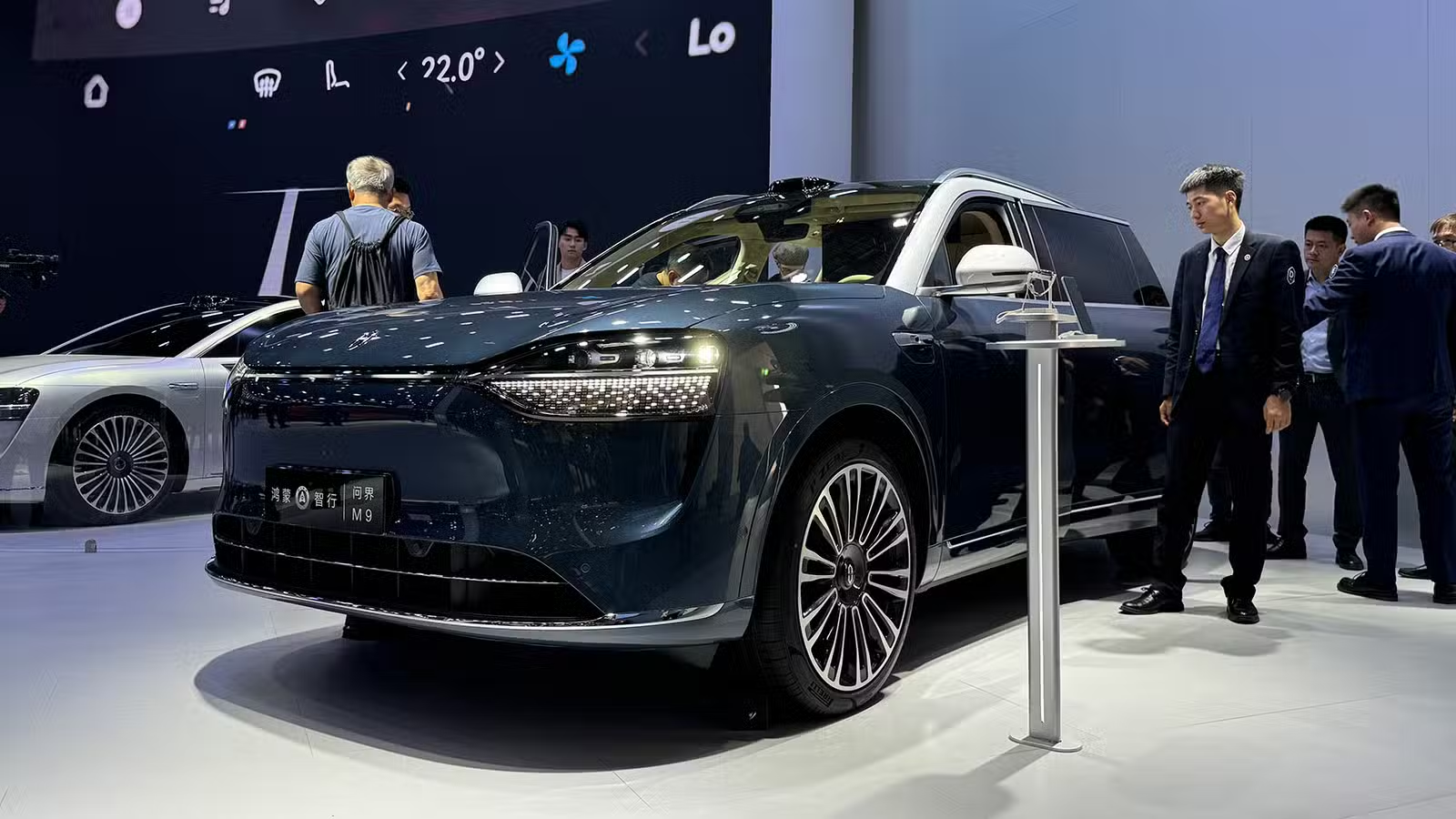
ByteDance is bringing its Doubao AI (artificial intelligence) capabilities to car cabins, as competition in the automotive industry spills over into new areas.
The Chinese tech giant is intensively developing a deeply customized smart cabin solution based on the Doubao AI large language model, having formed a cross-departmental task force to advance the project, according to a report by local media 36Kr on Thursday.
The move is not for building cars, but rather to reshape the interaction logic of smart cabins through Doubao, the report noted.
This marks the diffusion of Doubao’s product paradigm from smartphones to the automotive industry. Previously, ByteDance attracted widespread attention in the mobile device sector with its deeply customized Doubao phone.
In the new battlefield of automotive AI cabins, ByteDance is going head-to-head with Alibaba, whose Tongyi Qwen large model is also rapidly entering the cabin agent market.
Doubao’s chosen core partner is Seres, which has invested over 100 million yuan ($14.7 million) in development fees for the project and provided the vehicle platform.
The two parties have broken the conventional model of cloud access by deploying a massive model with around 30 billion parameters on the vehicle side. This model handles full-domain perception capabilities, including vision, voice, and environment.
To run this unprecedentedly large model on the vehicle, Doubao customized chips from Nvidia. They are using memory-optimized Thor Z chips deployed in the form of an external computing power box, according to 36Kr.
Meanwhile, Alibaba’s Qwen is choosing a different technological path. Qwen is primarily promoting an on-device model with about 4 billion parameters, deeply tied to Qualcomm’s 8797 automotive-grade chip platform.
Alibaba’s AI capabilities have already begun translating into actual car selling points in the market.
SAIC Motor’s EV division, IM Motors, kicked off pre-sales for its all-new IM LS8 model on March 26, which deeply integrates the Qwen large model.
The model, with a starting price of 259,800 yuan, is equipped with a super agent and will officially go on sale later today. The underlying intelligent system provides the vehicle with advanced natural language understanding and complex logical reasoning capabilities.
The trend of large models entering car cabins was initially driven significantly by Tesla. After Elon Musk brought the Grok AI assistant to vehicles, its natural language interaction experience achieved a generational leap.
With the introduction of end-to-end speech technology, voice interaction latency has been drastically reduced. This provides the technical foundation and timing for the automotive industry to explore super agents for cabin interaction.
Beyond the automotive sector, ByteDance is also accelerating the deployment of AI-native systems on smartphones. The company is currently in talks with smartphone maker Honor regarding deep cooperation on the Doubao phone, according to a report by CnTechPost earlier this month.
($1 = 6.8183 yuan)
Search
RECENT PRESS RELEASES
Related Post