Cannabis Linked to Lower Weight And Reduced Diabetes Risk in Mouse Study
May 18, 2026
After decades of stigma, researchers are studying cannabis and its compounds like never before.
As regulations and restrictions ease in many parts of the world, including the US, this controversial plant and its ancient health claims are finally being put to the test.
For many years now, scientists have noticed that some cannabis users tend to have lower body weight and a reduced risk of developing type 2 diabetes compared to those who don’t use cannabis.
That is somewhat unexpected, as cannabis is known to trigger the ‘munchies’, or an appetite for food, in those who use the drug.
Now, researchers at the University of California, Riverside (UCR) think they may have an explanation for this paradox.
In lab experiments, the team chronically exposed obese adult mice to pure THC, the main psychoactive compound in cannabis, or a whole-plant extract with the same level of THC.
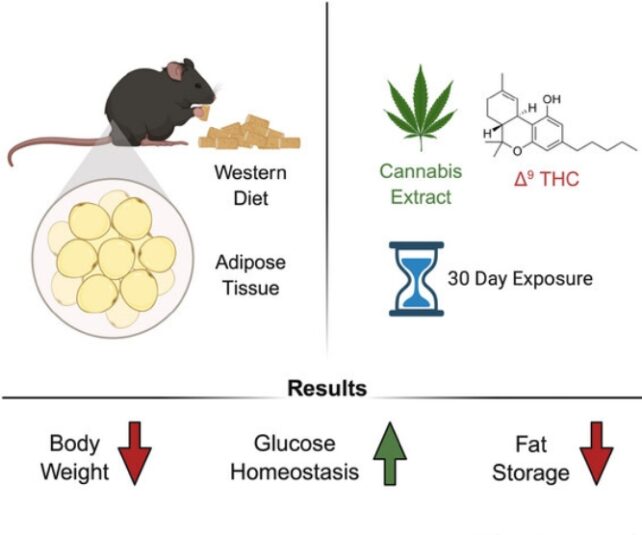
THC is psychoactive because it has an effect on the central nervous system. It is thought to be the compound that leads to the ‘munchies’, tricking the brain into feeling hungry.
Mice were fed a western-style diet high in fat and sugar for 60 days. The THC treatment began 30 days into this diet.
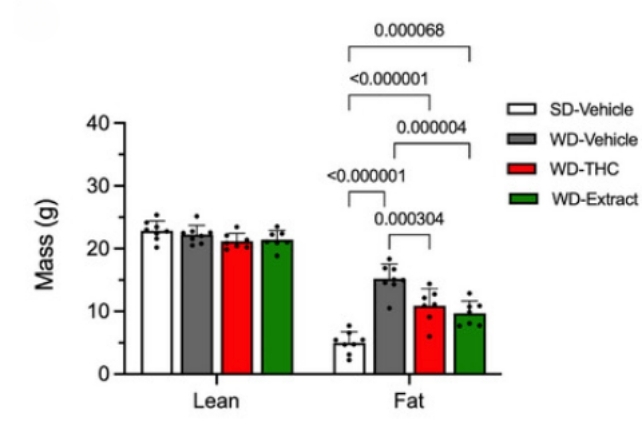
Both groups of mice treated with THC showed weight loss when cannabis was introduced, while those not treated continued gaining weight.
They also had lower body fat composition by the end of the experiment than mice on the western diet who didn’t receive cannabis, despite similar food intake.
But only the mice given the full-plant extract showed significant metabolic changes, such as improved glucose tolerance.
THC on its own did not achieve this outcome.
“This suggests that THC alone is not responsible for the metabolic benefits associated with cannabis use,” says biomedical scientist Nicholas DiPatrizio, who directs the UCR Center for Cannabinoid Research.
“Other compounds in the plant appear to play a critical role.”
In other words, THC might make a person feel hungrier, but the results seen in mice indicate other compounds in the plant may specifically affect glucose metabolism.

To be clear, DiPatrizio is not suggesting that people use cannabis to manage their weight or diabetes. We simply do not have the clinical evidence to support that.
But “clinicians, researchers, and policymakers should stay tuned and pay attention to this space,” DiPatrizio says.
There is still so much we need to learn, and thousands of new studies are published every year.
Cannabis research has accelerated in recent years. One peer-reviewed analysis found that from 2000 to 2017, PubMed-listed cannabis publications increased 4.5-fold, while medical cannabis publications increased almost 9-fold.
The entire cannabis plant contains hundreds of different cannabinoids, terpenes, flavonoids, and other phytochemicals, which could have medicinal properties.
These compounds may even interact with each other to achieve certain outcomes. Yet they are often studied in isolation.
Most research to date has focused on just two main players: THC and CBD. But other compounds, like CBG, show great promise and are headed for clinical trials.
This is a relatively new field of research, however, so any emerging data should be taken with a grain of salt.
“Dissecting the relative contribution of individual phytocannabinoids will be an important direction for future studies,” argue UCR researchers.
“The chemical composition of different cannabis strains could have differential effects on metabolic parameters.”
In obese mice, for instance, some recent studies have found that CBG (cannabigerol), sometimes known as the ‘mother of all cannabinoids‘, can improve blood sugar control, reduce liver fat, and lower blood lipid levels.
What’s more, CBG seems to achieve these metabolic results almost entirely outside of classical cannabinoid receptors in the liver and gut.

Related: Cannabis Compounds May Reverse Fatty Liver Disease, Study Suggests
In other words, there may be a whole other mechanism by which these compounds affect mammalian health that has yet to be discovered.
The effects may not always be positive, either. If cannabis exposure occurs too early in life, for instance, there’s a chance it may disrupt the body’s natural fat storage in risky ways.
Perhaps that is why rodent pups exposed to THC show reduced birth weights.
“We need evidence-based approaches to fully understand both the risks and potential benefits of cannabis and its components,” DiPatrizio says.
The study was published in The Journal of Physiology.
Search
RECENT PRESS RELEASES
Related Post