Congress Proposes a $130 a Year Fee on Electric Vehicles
May 19, 2026
Current conditions: A raging brushfire in the suburbs north of Los Angeles has forced more than 23,000 Californians to evacuate • The Guayanese capital of Georgetown, newly awash in offshore oil money, is also set to be drenched by thunderstorms through next week • Temperatures in Washington, D.C., are nearing triple digits today.
THE TOP FIVE
1. Congress proposes a $130 per year fee on electric vehicles
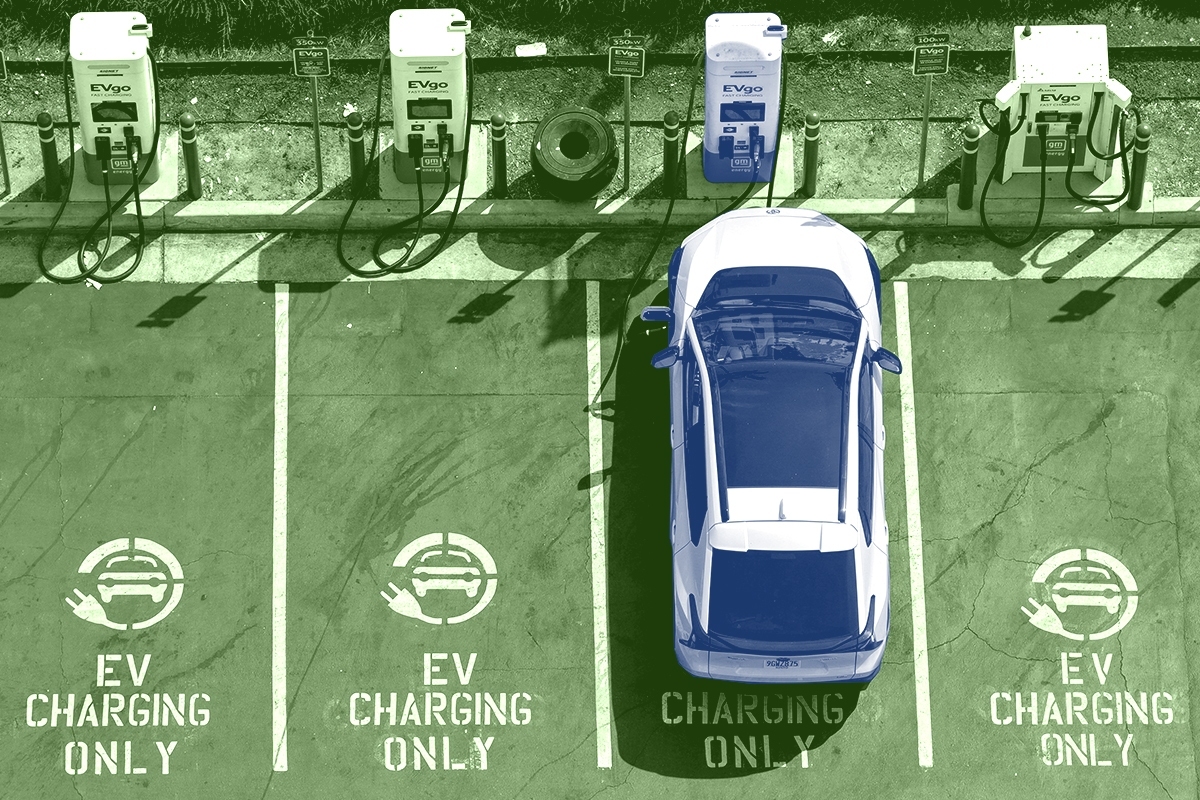
A bipartisan budget deal to fund roads, railways, and bridges for the next five years would also slap a $130 per year fee on drivers registering electric vehicles, with a $35 fee for plug-in hybrids. Late Sunday, lawmakers on the House Transportation and Infrastructure Committee released the text of the 1,000-page bill. Roughly a sixth of the way through the legislation is a measure directing the Federal Highway Administration to impose the annual fees on battery-electric and plug-in hybrid vehicles — and to withhold federal funding from any state that fails to comply with the rule. If passed, the fees would take effect at the end of September 2027. The fees — which increase to $150 and $50, respectively, after a decade — are designed to reinforce the Highway Trust Fund, which has traditionally been financed through gasoline taxes. In a statement, Representative Sam Graves, a Missouri Republican and the committee’s chairman, said the legislation “ensures that electric vehicle owners begin paying their fair share for the use of our roads.” But Albert Gore, the executive director of the Zero Emission Transportation Association, called the proposal “simply a punitive tax that would disproportionately impact adopters of electric vehicles, with no meaningful impact on” maintaining the fund. “Drivers of gas-powered vehicles pay approximately $73 to $89 in federal gas tax each year,” Gore said. “The proposed fee would charge an unfair premium on EV drivers, at a time when all Americans are looking for ways to save money.”
The Department of Justice, meanwhile, is preparing to weigh in on whether Elon Musk’s artificial intelligence company, xAI, is operating an illegal gas electrical plant to power its data center in Southaven, Mississippi. Last month, the NAACP and the Southern Environmental Law Center accused xAI of operating 27 gas turbines without pollution controls or Clean Air permits at the server farm, known as Colossus 2. Last week, the groups asked the federal court for a preliminary injunction to stop pollution from what E&E News described as “tractor-trailer-sized generators.” In response, the Justice Department cited President Donald Trump’s support for AI and said it was “evaluating possible intervention or amicus participation in this lawsuit.” It’s not the only agency riding in to aid Musk and his ilk. As I told you last week, the Environmental Protection Agency just proposed a new rule that would allow data centers and power plants to begin construction without air permits.
2. EPA proposes repealing limits on ‘forever chemicals’ in drinking water
The Environmental Protection Agency has proposed two separate rules to delay and rescind drinking water limits on four “forever chemicals,” the class of cancer-causing compounds that spread in water and accumulate in the human body. The rules, as The Guardian noted, “must go through an approval process that can take several years, and almost certainly will be challenged in court.” Over the past decade, perfluoroalkyl and polyfluoroalkyl substances, known as PFAS, were discovered to be pervasive in the drinking water of some 176 million Americans. The chemicals — which are linked to kidney cancer, immune system suppression, and developmental delays in infants — are estimated to be in nearly 99% of Americans’ blood. In 2024, the Biden administration established limits on six substances, as Heatmap’s Jeva Lange reported at the time. But the Trump administration will now ax protections for four of the substances and provide companies with an extra two years to comply with rules on the other two. The move, The New York Times reported, has already “sparked fury within the Make America Healthy Again movement, a diverse group of anti-vaccine activists, wellness influencers and others who make up a key part” of Trump’s base.
3. The U.S. holds talks with India about exporting nuclear reactors
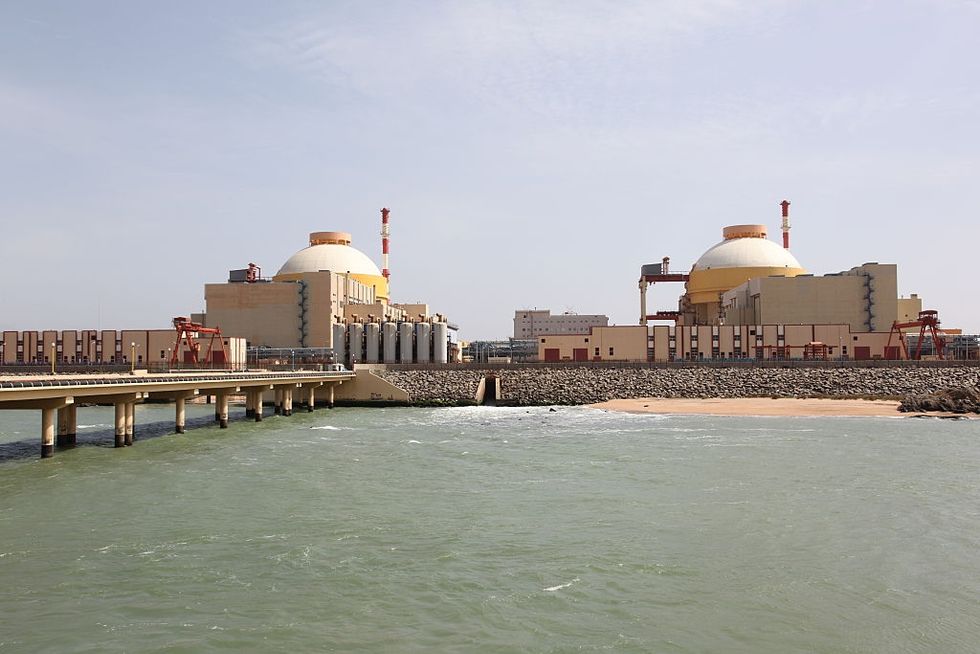
India was once a forbidden prize for nuclear exporters. The world’s most populous nation, its metropoles choked by coal smog, operates two dozen commercial nuclear reactors — and wants more. But until earlier this year, the country was hamstrung by the haunting memory of Union Carbide’s 1984 accident at its Bhopal plant, where a leak killed thousands of Indians and the American chemical giant avoided any serious liability. To prevent a similar dynamic in the nuclear sector, New Delhi passed a law in 2010 that put developers on the hook for any accidents. The statute effectively banned American, European, or East Asian companies from attempting to build any reactors, lest they risk bankruptcy; only Russia’s state-owned nuclear company was willing to sell its wares on the subcontinent. In December, as I told you at the time, the Indian parliament passed legislation to reform the liability law and welcome more foreign developers into its market. Already, as I reported in a scoop for Heatmap last month, a Chicago-based fuel startup is making moves to sell its product in India.
Fast forward to this week: On Monday, a high-level delegation of U.S. industry officials flew to New Delhi to meet with Indian science minister Jitendra Singh and discuss “private investment opportunities” to export small modular reactors and other American nuclear technology, NucNet reported.
Sign up to receive Heatmap AM in your inbox every morning:
4. Ford’s new energy business nabs its first major deal
Ford Energy, the wholly owned battery storage business forged out of Ford Motor’s electric vehicle efforts, has landed its first big deal. On Monday, the company announced a five-year framework agreement with French utility giant EDF’s North American renewables division to design battery storage systems for the multinational. As part of the deal, EDF will buy up to 4 gigawatt-hours of battery blocks per year, totaling up to 20 gigawatt-hours by the end of the contract. The first deliveries are expected in 2028. Lisa Drake, Ford Energy’s president, said the deal “validates the market’s need for” a battery storage supplier “that combines industrial-scale manufacturing discipline with full lifecycle accountability.” In a statement, EDF said Ford’s “commitment to domestic manufacturing and its rigorous approach to traceability and lifecycle support align with the standards we hold across our portfolio.”
5. Anglo American strikes $4 billion deal to sell Australian coal business
Last August, I told you that Anglo American’s deal to sell the U.S. giant Peabody Energy its Australian coal business for $3.8 billion collapsed. Well, nine months later, the London-based mining behemoth has found a new buyer for the same price. On Monday, the Financial Times reported that Anglo American would sell the Australian coal mining operations to Dhilmar, a little-known and privately held company that was formed out of some Canadian mining assets and incorporated in London in 2024. The value of the deal? $3.88 billion. The agreement, which faces years of arbitration, closes what the newspaper called “a difficult chapter for Anglo” after last year’s sale to Peabody fell apart following an explosion at one of the mines included in the deal.
THE KICKER
India isn’t the only country getting its act together on new nuclear plants. On Monday, Sweden’s next-generation reactor champion, the startup Blykalla, submitted the first-ever application to regulators in Stockholm to build the nation’s first commercial advanced nuclear reactor park two hours north of the capital. The 330-megawatt facility would include six lead-cooled units Blykalla called “advanced modular reactors,” or AMRs. “This application is a historic first for Sweden,” Blykalla CEO Jacob Stedman said in a statement. “We’re not just planning an advanced reactor park — we’re building Sweden’s energy future and putting the country at the forefront of the global nuclear power renaissance.”
Search
RECENT PRESS RELEASES
Related Post