Corporate courage: how cross-sector talent is powering renewables innovation
June 10, 2026
Supported by:

When Lynne McIntosh-Grieve was a young engineer working for Rolls-Royce, she made a bit of a name for herself “as something of a ‘fixer’”: someone who could go into companies in the supply chain and “problem-solve – look at their processes and understand what was going wrong, or what might work better”.
Among other places, this took her to India: a “fantastic experience”, but quite an eye-opener, for both her and the plant she was visiting. “I was really young, you know, and I looked quite different to the people that were typically walking round the factory. I’m a six foot tall blonde Scots lassie, so that was interesting for the staff there!”
Confounding expectations, in other words, which has been something of a theme: not just for McIntosh-Grieve, but for the way in which renewable energy has flourished thanks to workers transitioning into the sector from a range of other industries. It’s a much-needed transition, too. According to the UK’s National Grid, by 2050 the workforce employed in delivering net zero will need to number around 400,000, of which 260,000 will be new roles.
So there are some serious skill shortages to be overcome. That sounds like a stretch, but people like McIntosh-Grieve prove it’s far from impossible.
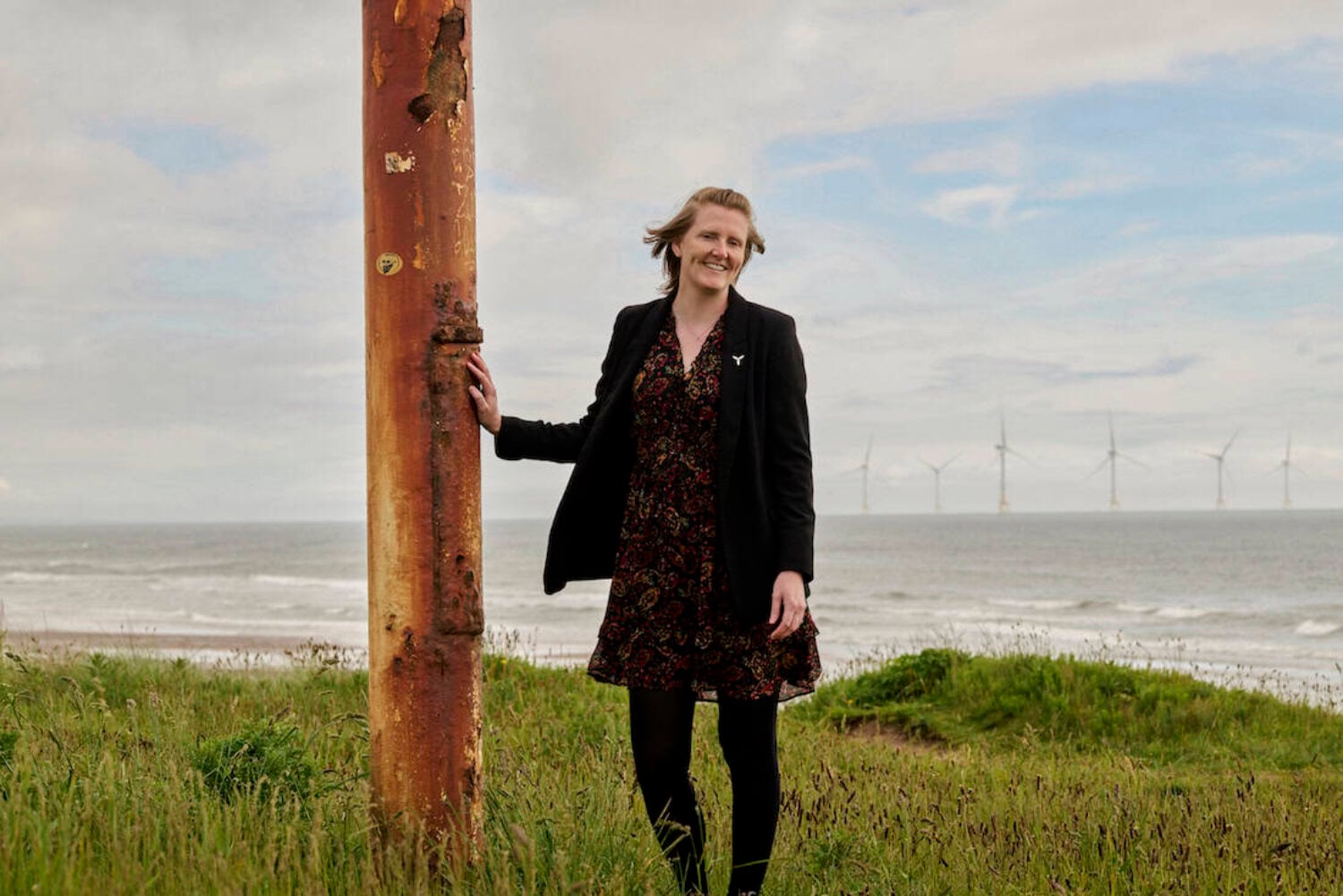
Lynne McIntosh-Grieve, head of programme delivery at the Offshore Wind Growth Partnership, on the Aberdeenshire coast
She was born and grew up in Clydebank, outside Glasgow: once a thriving industrial town, home to the “good old Singer sewing machines and the John Brown shipyards”. But by the time she came on the scene in the late 80s, it was deindustrialising fast, and job prospects for its young people seemed slim at best.
Nonetheless, buoyed by “fantastic teachers, who really championed their pupils to aim high”, she won a place at the University of Strathclyde for a master’s in mechanical engineering. Academic life, though, wasn’t entirely her cup of tea. “I liked things that were hands-on. I liked the physical aspect of making things work, putting them together, taking them apart and putting them together again, and the university environment [doesn’t always provide] that type of experience. It was quite difficult to see what you might end up doing in real life.”
So when one day in the common room, she saw a flyer advertising a summer placement at Rolls–Royce, she jumped at the chance. Invited to an assessment at the company’s Derby engineering base, she looked around at the other candidates and felt “really nervous. There were a lot from more ‘esteemed’ backgrounds, from the Oxfords and Cambridges of this world. I was one of the only females there, I spoke and sounded different to everyone else. I stood out like a sore thumb, basically.”
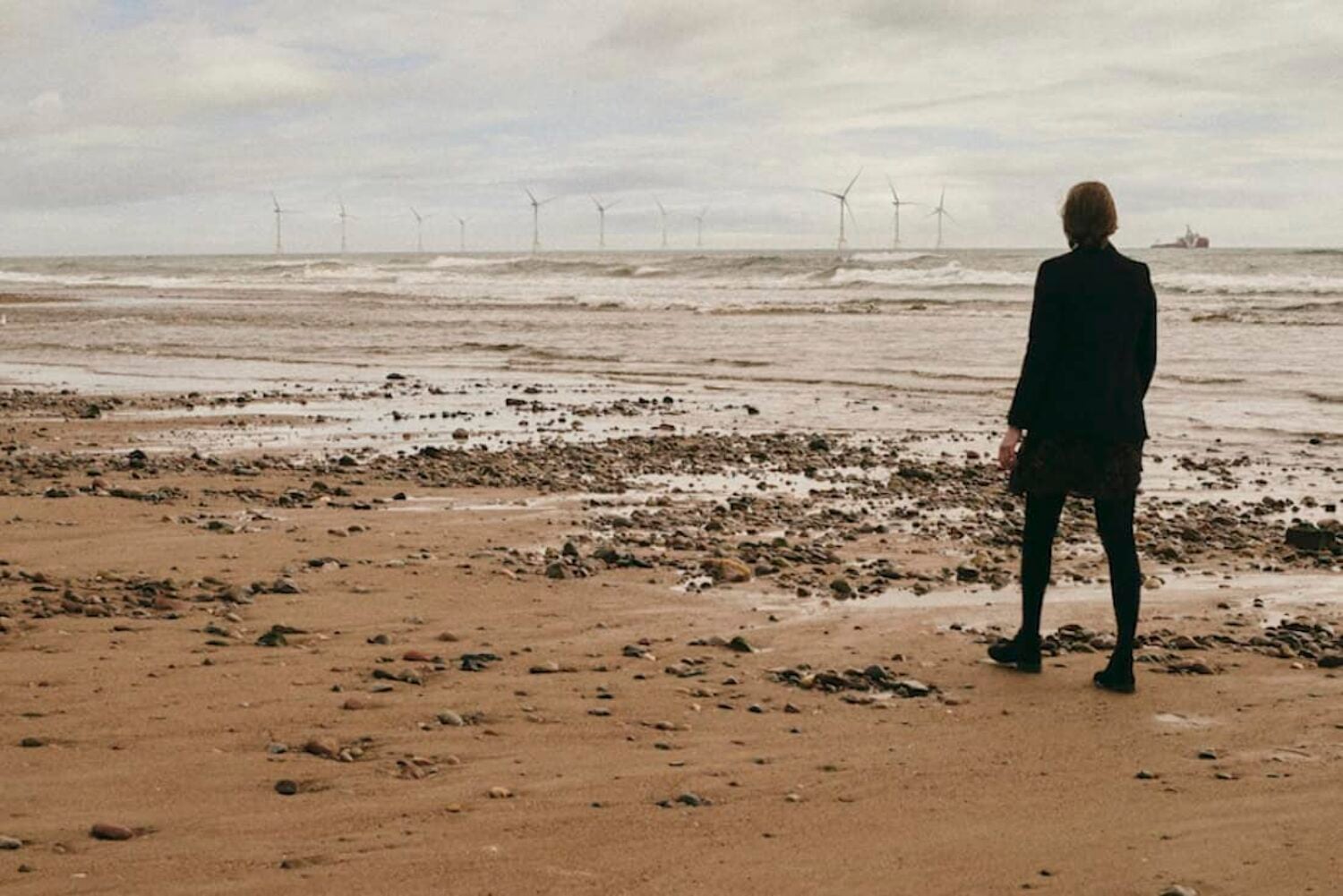
After starting out in aerospace engineering, McIntosh-Grieve now helps UK businesses seize opportunities in offshore wind
But McIntosh-Grieve’s obvious practical skills, and her enthusiasm for her work – which positively tumbles out of her as she talks – secured her a placement. After graduating with a first-class degree she joined Rolls-Royce in 2010 as a graduate trainee. Working on new ways of making compressor airfoils (key components of a gas turbine engine) she won rapid promotion to advanced manufacturing engineer, and soon embraced her ‘fixer’ role.
A round of redundancies unsettled the working atmosphere, though, and while her own job was never at risk, by 2015 she’d decided to move on. Her next berth was at the University of Strathclyde’s Advanced Forming Research Centre, one of the High Value Manufacturing Catapult. (The catapults – there are nine in total – are part of Innovate UK’s government-backed initiative to provide the sort of cutting-edge R&D facilities that can help British business recover its knack for innovation.)
The work itself played to her enthusiasm for robust, hands-on practicality, involving “hot metal forging. Lots of bashing big bits of metal, basically.” And if that sounds a little … basic, she’s quick to point out it had applications in everything from aerospace and civil nuclear power to medical technologies. So quite sophisticated bashing, then.
Within a month, McIntosh-Grieve was promoted to team lead. “I’d never led people before, and here I was leading people with a lot more experience than me. So that was a steep learning curve, let’s put it like that.”
These businesses really do have the appetite, the tenacity, to make things happen. That’s what gets me out of bed in the morning
In any case, learn she did, and she now harnesses that learning by acting as a STEM ambassador, regularly speaking in schools, offering the sort of female role model that was largely lacking for her as a young woman. Meanwhile, she progressed with growing confidence, until within a few years she’d risen to be chief technologist on its future of forging programme, today FutureForge.
Then in 2020, she made the leap to renewables. Why? The immediate trigger was personal: her partner lived and worked in Aberdeen, home to a wide range of energy activity, both in the traditional oil and gas sector, and the fast-emerging renewables one. Increasingly, the former, as it starts to wind down, is helping provide the recruits needed to power the growth of the latter.
Initiatives like the North Sea Transition Deal are helping to ease the passage for workers from one sector to another, as is a training programme initiated by the Engineering Construction Industry Training Board.
For McIntosh-Grieve, both the new and old energy sectors had their appeal. “I explored both – but then the role came up in the Offshore Wind Growth Partnership, and I thought it looked really interesting’”. Managed by another catapult – the Offshore Renewable Energy (ORE) one – the partnership helps British companies exploit the many and varied opportunities in the sector’s supply chain.
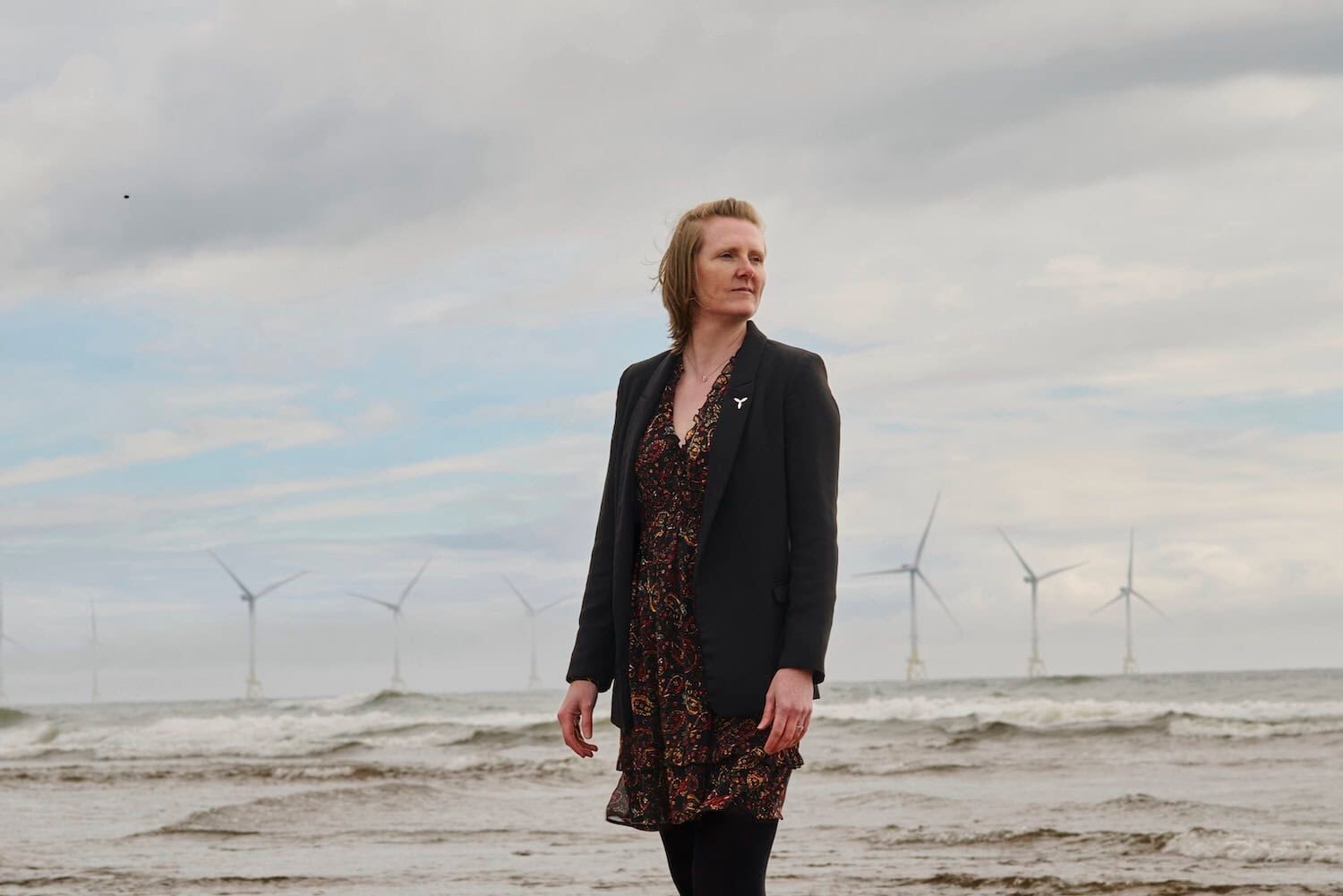
‘Those who work with or for me can bring their full self to work in whatever way that means, because everyone’s got something to offer here’
As head of programme delivery, she helps those outside it learn how to break in, and those already within it with issues like cost-competitiveness and capabilities, so they can really compete at national and international level. “The ones I most enjoy working with are the family-owned businesses,” says McIntosh-Grieve. “Because the UK has so many of these that are doing phenomenal work, and they just need a little bit of help [to break through].”
Her face shines with pride as she enthuses about businesses she’s supported that have gone on to “do amazing things, growing their companies three, four, five times over. These businesses really do have the appetite, the tenacity, the get-up-and-go to make things happen. That’s what gets me out of bed in the morning. I get quite passionate about manufacturing in the UK.” Confounding expectations, again, then – in this case, on behalf of British business’s potential to compete on the world stage.
It’s a stage that’s growing bigger all the time, as even traditional energy centres diversify into renewables. Take Houston, Texas, arguably the beating heart of Big Oil, but now increasingly a hub for low-carbon startups. Initiatives like its Renewable Energy Alliance Houston are seeking to harness the experience of Texas’s oil and gas sector to boost the region’s new energy potential.
Everyone’s got something to offer here. When people meet each other with care and compassion and empathy, that’s where the good stuff happens
Such programmes emphasise that you don’t have to be a dyed-in-the-wool green activist to embrace its opportunities. For her part, McIntosh-Grieve is quick to admit that she’s not a dedicated environmentalist, “but I’m interested in technology, and how to apply it in different ways. And the more I learned about the sector, the more I realised just how important it will be to the future energy system of the UK. It sparked my curiosity, and [my interest in it] snowballed.”
The work appealed to her strengths on the technical front, but ORE Catapult appealed in other ways too. As a gay woman in engineering, she’d met in the past with some “unfortunate” reactions when she came out, but her decision to be completely open about herself was vindicated at the interview. “I remember saying: ‘I’m planning to get married, and my wife and I are going to live in Aberdeenshire’, and they were just like: ‘Oh great! When’s the wedding?’. It was the first time I really felt I could bring my whole self to work.”
It’s something she feels passionate about beyond issues of sexuality, trying to ensure that “those who work with or for me can bring their full self to work in whatever way that means, because everyone’s got something to offer here. When people meet each other with care and compassion and empathy, that’s where the good stuff happens.”
Skill swaps
Who’s moving into renewables – and why it matters
According to the International Renewable Energy Agency (IRENA), renewable energy employment worldwide is set to grow from 12.7m jobs in 2022 to 42m by 2050. That will open up opportunities for people with skills from a wide range of sectors. Among those well placed to make the transition into renewables are those with experience in the following:
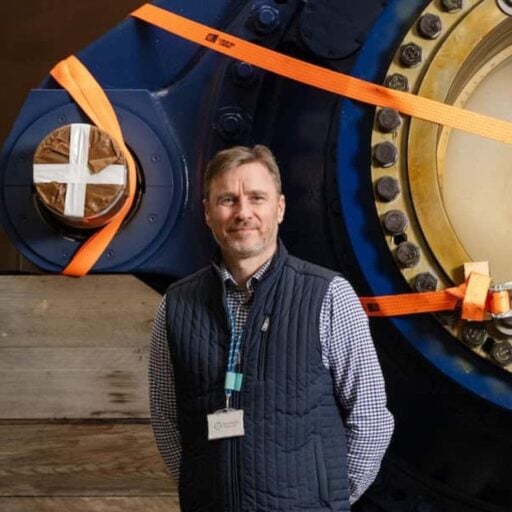
Engineering nous combined with an understandable emphasis on safety lend themselves well to renewables, as both McIntosh-Grieve and others such as James Barry (pictured left), another former Rolls-Royce employee, demonstrate.
Image: Gordon Burniston

Even before the rapid rise of electric vehicles (EVs), batteries and electronics played a key part in cars and trucks. Skilled automotive engineers are well-placed to lead the EV transition, as is happening at second life battery specialists Connected Energy. (Pictured right is Tania Saxby, head of sustainability at Connected Energy.)
Image: Sam Bush

Specialists in large-scale structures, such as major building projects, have some highly relevant skills when it comes to wind farms, as one-time tower crane operator Chris Akehurst (pictured left) discovered.
Image: Asnaya Chou
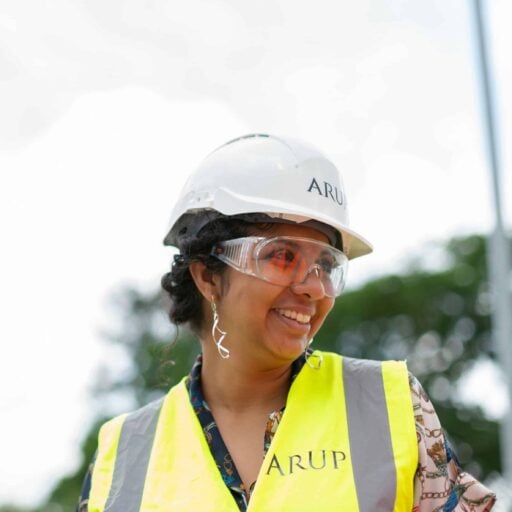
Whether in wind, solar, hydro, wave or tidal power, engineering skills – not least electric engineering – are key to the successful design and deployment of renewables.
Image: Unsplash/ThisisEngineering
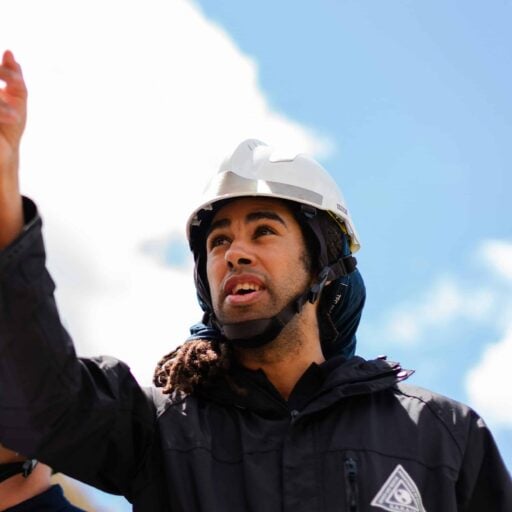
A wide range of expertise in oil and gas is transferable, according to the Renewable Energy Institute, which specialises in skills for the transition. It suggests that up to 90% of oil and gas workers already have skills relevant to green energy roles, including those in offshore engineering, power distribution and project management.
Image: Unsplash/ThisisEngineering
Beyond such specific technical expertise, the burgeoning renewables sector will, like all rapidly growing industries, require contributions from finance, health and safety, IT and AI, sales and marketing and, of course, sustainability specialists. Such is the speed and scale of the sector’s growth, that pretty much any skillset will be relevant – and, indeed, much needed.
Main photography: Callum Chapman
Search
RECENT PRESS RELEASES
Related Post