EU races to finalise trade deal as Trump lifts auto tariff to 25%
May 5, 2026
President Donald Trump announced on 1 May that he intended to raise US tariffs on European car and truck imports from 15% to 25%, accusing the EU of failing to comply with July 2025’s Turnberry Agreement. Trump said that tariffs would take effect the following week, highlighting that US-made vehicles from European OEMs would remain wholly exempt—an attempt to incentivise further investments into onshore production.
The EU pushed back immediately on the threats; in statements made to the Associated Press, a European Commission spokesman rejected any claim of non-compliance, stating the bloc was “implementing commitments in line with standard legislative practice”. The spokesperson also warned that the bloc would “keep our options open to protect EU interests” if the US acted inconsistently with the terms of the deal.
Response from policy makers followed a similar tune. The EU Parliament’s Trade Committee Chair, Bernd Lange, said: “Trump’s plan to impose 25% tariffs on EU cars is unacceptable […] While the EU delivers, the US side keeps breaking its commitments.” He also noted that the European Parliament and Council negotiations to finalise the bloc’s side of the agreement—which requires lowering EU duties on US industrial goods—were still in progress, with a June completion date previously expected.
Under pressure from the tariff threat, EU member states and Parliament representatives convened emergency negotiations on 6 May, with German Chancellor Friedrich Merz striking a more concessionary tone than some of his peers. Talking to ARD, he urged a swift conclusion: “The Americans have it finalised and the Europeans haven’t—and that’s why I hope we can reach an agreement as quickly as possible.”
The compliance dispute is not the result of lawmakers dragging their heels but a consequence of specific circumstances. The EU Parliament twice paused legislation implementing its side of the Turnberry Agreement; first after Trump threatened new tariffs on European countries that declined to back his proposed acquisition of Greenland, and again after the US Supreme Court struck down the legal authority underpinning Trump’s broader tariff regime in February, raising doubts about whether the deal’s US side remained intact.
The court ruling left Trump operating under a 10% general trade barrier while his administration pursued replacement authorities under Section 232 of the Trade Expansion Act of 1962—the national security provision used to justify the 25% auto-specific rate now being threatened. That legal basis remains subject to challenge, which some of the US’ would-be trading partners appear to be banking on. Cato Institute trade analyst Scott Lincicome told AP: “These trade deals are vaporware. They all rely on handshakes and winks and hopes that Trump doesn’t get mad about something.”
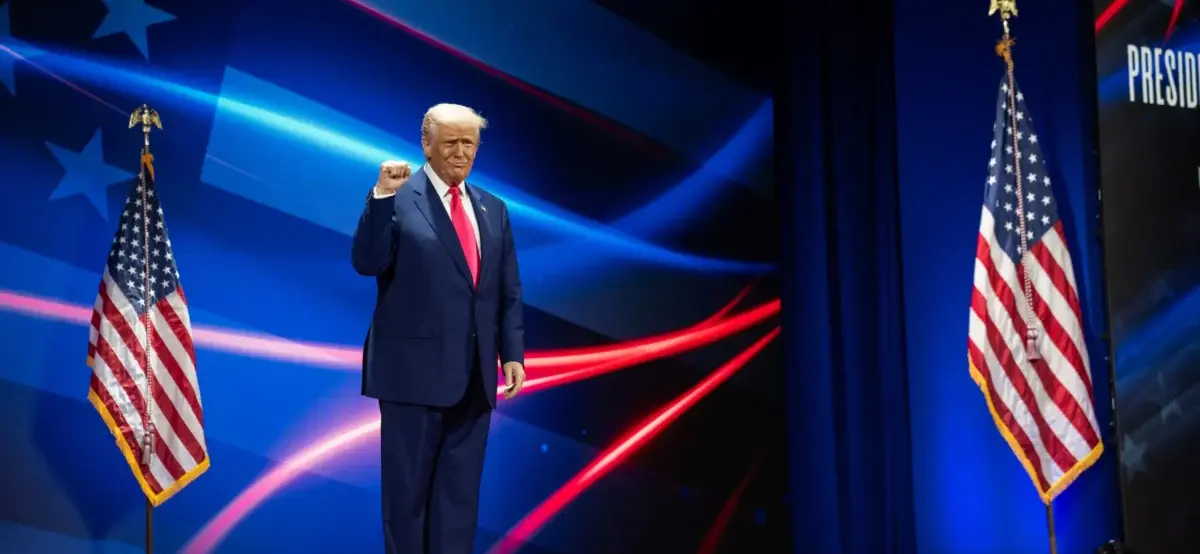
However, the Turnberry deal was never only about cars. Trump has used the tariff threat to signal his displeasure with European allies more broadly: over their refusal to participate in US-Israeli actions against Iran, their resistance to his Greenland ambitions, and what the administration characterises as their continued exploitation of asymmetric trade access—in other words, the so-called ‘trade deficit’. The automotive sector has been the lever of choice precisely because of its status as Europe’s most export-dependent industry and Germany’s most politically visible one.
According to the European Automobile Manufacturers’ Association, the US accounted for 22% of all vehicle exports from Europe during 2024—750,000 units worth €38.9bn (US$45.5bn)—making it the industry’s second-largest market after the UK. Bernstein Research estimates that an additional 10% in duties would cost German automakers alone approximately €2.6bn in operating profit in 2026. Volkswagen Group, which includes Audi and Porsche, absorbed a €4bn tariff hit in 2025; Porsche and Audi are among the most acutely exposed given the absence of US manufacturing facilities. The former trades on its ‘Made in Germany’ status, while the latter scrapped plans to build an onshore plant in January 2026 due to tariffs.
There does not appear to be a great deal of appetite from industry on either side of the Atlantic about a hike to 25%. The VDA, Germany’s automotive lobby, urged both sides to honour the existing deal. Meanwhile, Autos Drive America, which represents the US operations of foreign OEMs, warned the tariff hike would “threaten the progress that has already been made to open EU markets and grow the US auto industry”.
The escalation lands on an industry already operating on the brink, with little to no capacity for additional disruptions. At the time of writing, Europe’s automakers are simultaneously managing Chinese competition that continues to build market share in continental markets; energy and logistics costs that have been elevated by the effective closure of the Strait of Hormuz—another consequence of US foreign policy—and a transition to electric vehicles that requires billions of euros in sustained annual investments.
For non-US automakers, the sheer uncertainty wrought by the tariffs is as problematic as the added costs they bring. Decisions on where to build vehicles, which markets to target, and how to price models generally involve planning horizons spanning upwards of five years—periods across which a 10-percentage-point tariff swing can transform a profitable export corridor into an unviable one.
Ford, General Motors, and Stellantis all operate primarily in the US and are therefore more insulated from the direct tariff hit, but each relies on European-sourced components and has European operations exposed to retaliatory measures. The EU has indicated it retains the option of triggering safeguard provisions within the Turnberry framework, which could include counter-measures on US exports.
Search
RECENT PRESS RELEASES
Related Post