Hormuz shock pushes governments into energy emergency mode
May 9, 2026
The International Energy Agency has described the Hormuz crisis as the largest disruption in the history of global oil supply. Under normal conditions, roughly 20% of the world’s oil passes through the Strait of Hormuz, but the war has severely disrupted shipping routes and constrained oil flows through the strategic waterway.
Global oil supplies fell by more than 10 million barrels per day in March, pushing oil prices to around $120 per barrel. Prices for refined fuels such as diesel and jet fuel climbed even higher.
1 View gallery
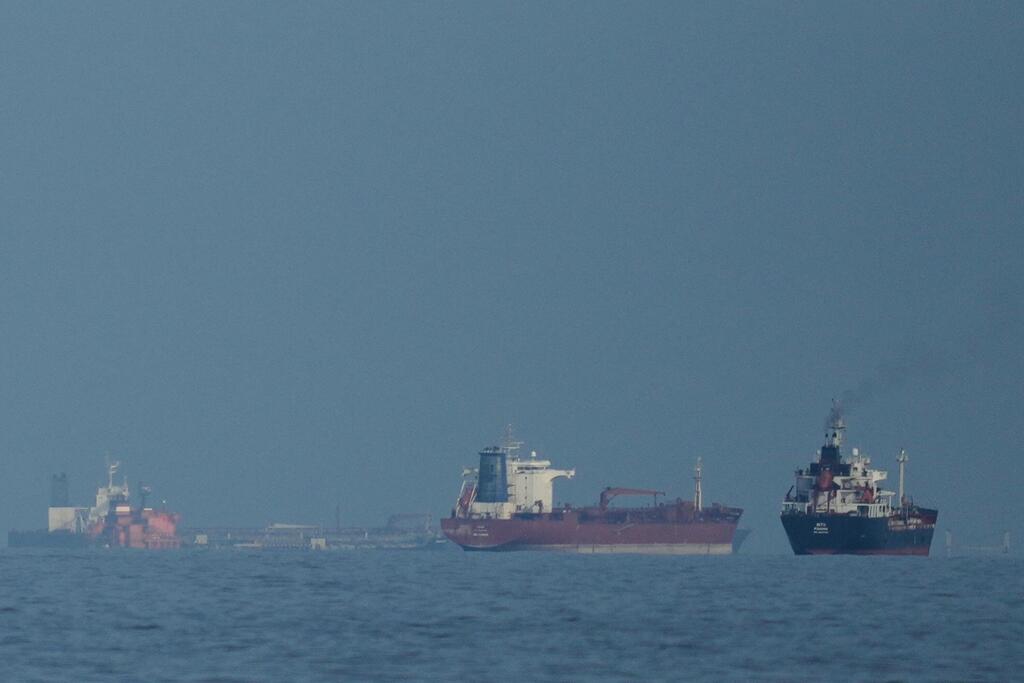
Tankers and cargo ships stranded in the Strait of Hormuz, March 2026
(AP Photo/Altaf Qadri)
Governments around the world were left with little choice but to introduce emergency measures aimed at reducing fuel consumption and protecting consumers. Energy experts believe the disruption could accelerate the global transition away from fossil fuels and strengthen investment in renewable energy, even as many countries simultaneously introduced fuel subsidies to cushion the economic impact.
The IEA has recommended a range of measures for governments and businesses to reduce demand and mitigate the “oil shock.” Among the proposals: encouraging remote work and reducing commuting, which accounts for between 5% and 30% of vehicle use. Road transport alone represents about 45% of global oil demand. According to the agency, if the average employee worked from home three days a week, personal oil consumption could fall by as much as 20%.
Several countries have already adopted such policies. Indonesia now requires public-sector employees to work remotely on Fridays, while Myanmar mandates remote work on Wednesdays. Pakistan and Philippines have introduced four-day workweeks for government employees, while Sri Lanka, Peru, and Bangladesh have shortened school weeks or expanded distance learning.
Governments are also attempting to reduce fuel consumption through transportation policies. Lowering highway speed limits by at least 10 kilometers per hour can reduce fuel consumption by 5% to 10% per driver, according to the IEA. Such measures could lower national oil demand for private vehicles by between 1% and 6%.
Related articles:
Pakistan has already reduced speed limits on expressways and national highways. Speed limits for light vehicles on expressways were cut from 120 km/h to 100 km/h, while heavy vehicles were reduced from 110 km/h to 90 km/h. On national highways, limits for light vehicles were lowered from 100 km/h to 80 km/h, and for heavy vehicles from 80 km/h to 65 km/h.
Perhaps the most significant policy shift has been the push toward public transportation. In many countries, short urban trips of less than 30 kilometers account for up to half of private vehicle fuel consumption.
To encourage commuters to shift away from private cars, Lithuania cut local train fares by 50%, the Philippines introduced free bus travel for students and workers in selected cities, and France revived subsidized leasing programs for electric vehicles aimed at lower-income drivers. Chile has also offered financial assistance to taxi drivers purchasing electric vehicles.
Several governments have imposed restrictions on energy consumption in buildings. Thailand, Bangladesh, and Cambodia have introduced or encouraged limits on air-conditioning use in government offices. Jordan has banned air conditioning in government offices entirely, while South Korea imposed driving restrictions on public-sector employees. Jordan and Pakistan have also restricted international travel by government officials.
The United Kingdom has accelerated approval processes for solar energy projects, electric vehicle charging stations, and green home-heating programs.
Alongside regulatory measures, governments have launched public campaigns encouraging voluntary reductions in energy consumption. Australia introduced an “Every Little Helps” campaign aimed at reducing fuel use, while Egypt asked citizens to reduce lighting and shorten shop opening hours on weekends. Governments in Mozambique, Ethiopia, and Vietnam have issued similar appeals.
At the same time, some governments have adopted environmentally harmful policies to soften the economic blow. Singapore increased tax rebates and financial assistance for households, China subsidized fuel for taxi drivers, South Korea expanded food vouchers and support programs for young people, Greece capped fuel prices and subsidized gasoline and diesel, while Norway reduced fuel taxes.
The Hormuz crisis is therefore producing conflicting effects. On one hand, it is accelerating the transition toward renewable energy and energy independence. On the other, it is creating political and economic pressures that may delay parts of that transition.
Still, the surge in oil and gas prices has made alternative energy sources such as solar and wind power significantly more competitive relative to fossil fuels. Governments increasingly recognize that energy security depends on domestic production rather than reliance on unstable geopolitical regions.
Taking advantage of the gap
In Israel, the impact of the crisis has so far been relatively limited.
Ron Eifer believes the crisis could ultimately strengthen Israel’s clean-energy sector.
“This is further proof that Israel must strengthen its energy independence by reducing reliance on oil,” Eifer told Calcalist. “The world is experiencing the war with Iran as an energy war. Oil prices have crossed $120 per barrel, and natural gas prices are also rising because liquefied natural gas from Qatar passes through the Strait of Hormuz.”
According to Eifer, countries across Asia, including Japan, South Korea, Malaysia, India, and China, are deeply concerned about fuel shortages because of their dependence on Gulf energy supplies.
“Israel is relatively stable because of the way its energy economy is managed,” he said. “Our natural gas is produced locally and does not depend on global markets. In terms of electricity, we have not yet felt the crisis and likely will not.”
Fuel prices in Israel are rising, but less sharply than elsewhere because Israeli fuel prices are already among the highest in the world due to heavy taxation intended to reflect environmental costs.
Eifer argues that the volatility in global energy markets strengthens the strategic importance of renewable energy as part of Israel’s national security doctrine.
“We saw after the Russia-Ukraine war how Europe accelerated renewable energy development,” he said. “Now Asia is facing a similar realization. Countries understand they cannot remain vulnerable to geopolitical conflicts.”
He also believes Israel is well positioned to become a global leader in electric transportation.
“The gap between fuel costs in Israel, among the highest in the world, and electricity prices, which remain relatively cheap, is enormous,” he said. “That makes switching to electric vehicles economically attractive. We believe Israel should accelerate the transition to electric transportation, including electrifying heavy truck fleets.”
Search
RECENT PRESS RELEASES
Related Post