Hyundai IONIQ 9 2026 Review: The three-row EV most families have been waiting for
May 14, 2026
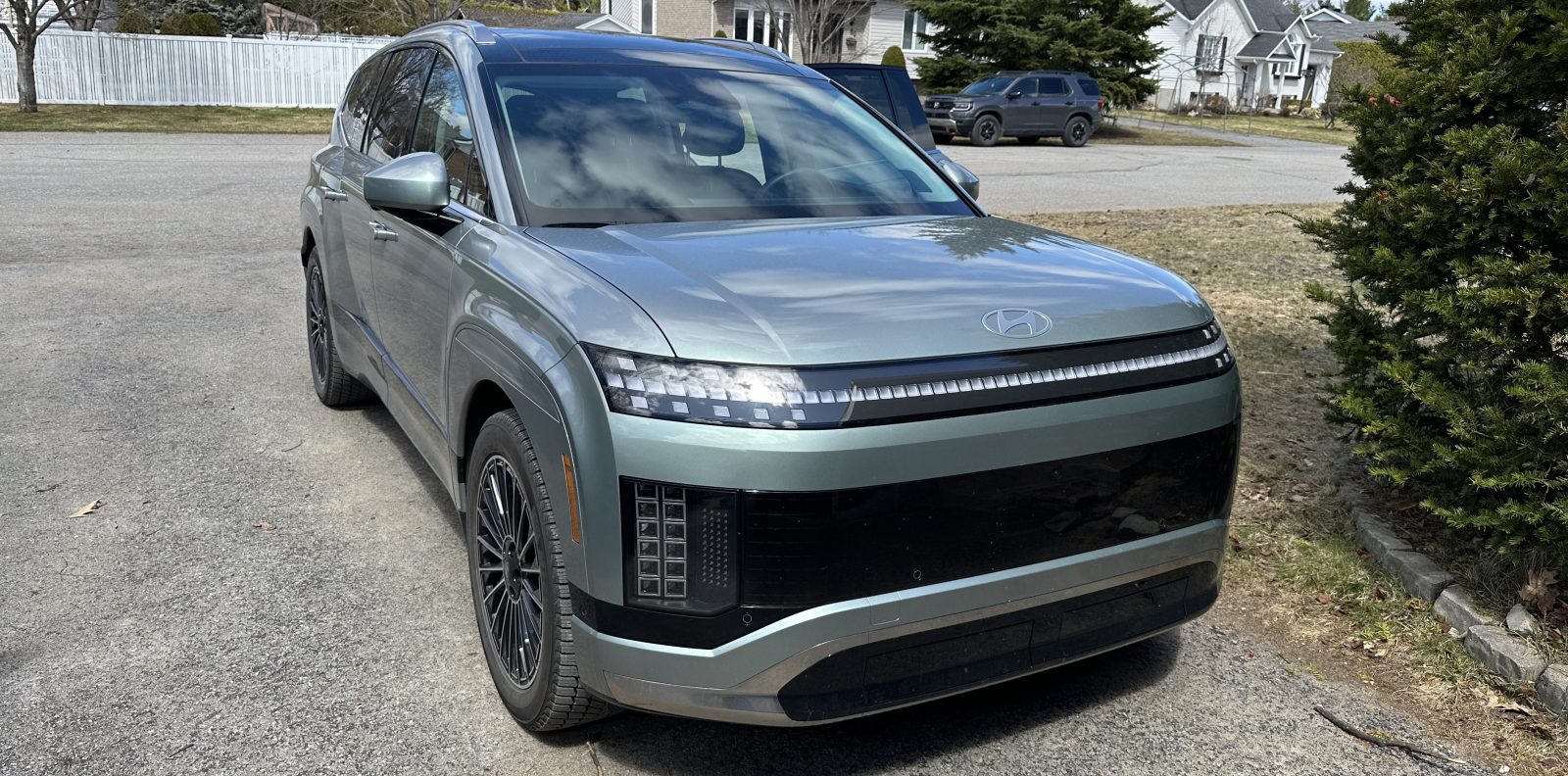
I drove the IONIQ 9 for more than 600 km across a mix of highway and city driving, and I enjoyed the package Hyundai has put together. The E-GMP platform, the cabin space, and the seat quality are all class-leading or close to it. A few software-layer gaps keep it from being perfect, but for a family that covers distance, the IONIQ 9 is one of the most complete three-row EVs on the market today.
Here is the full review and Electrek EV score for the Hyundai IONIQ 9 2026:
The 2026 Hyundai IONIQ 9 is a three-row electric SUV built for families who want to be able to drive long distances effortlessly. It seats six or seven, starts at $58,955 USD / $59,999 CAD, and tops out at $76,490 USD / $81,499 CAD before destination fees.
The Good: class-leading 800 V fast charging (10–80% in 24 minutes at a 350 kW station), a generous 110 kWh battery with 311–335 miles (500-539km) of EPA range depending on trim, a spacious and well-executed three-row cabin, excellent seats at every row, 100 W USB-C ports for every passenger, a 1.5 kW / 110 V outlet in the trunk, solid ADAS included on every trim at no subscription cost, and IIHS TOP SAFETY PICK+ for 2025.
Advertisement – scroll for more content
The Less Good: audio relies on Bluetooth only, no integrated streaming platform; navigation requires manual charging-stop selection; one-pedal driving resets to level 3 at every startup and on every reverse engagement; the companion app is functional but slow; and V2H (vehicle-to-home) is hardware-ready but not yet activated in North America.
The Verdict: one of the most capable road-trip EVs at this price. If your family covers distance, the IONIQ 9 is worth a serious look.
-
Engineering:
8.2 / 10
-
Electric Performance & Charging:
16 / 20
-
Ergonomics, Cabin & Storage:
17 / 20
-
Driving Experience:
12.5 / 15
-
Driver Assistance Systems:
6.8 / 10
-
Extra:
2.5 / 5
-
Value:
8.5 / 10
-
Fitness for Purpose:
4.75 / 5
-
Safety:
5 / 5
Total score:
81.25 / 100
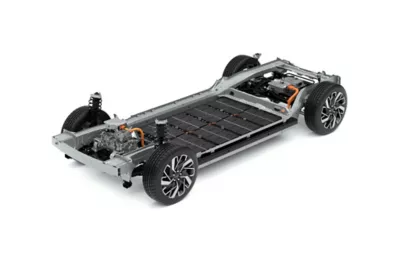
The IONIQ 9 is built on Hyundai’s 800 V E-GMP platform — the same architecture that underpins the IONIQ 5 and 6, and that continues to give Hyundai’s lineup a meaningful edge over most American and European rivals with its fast-charging capabilities and efficiency. The 110.3 kWh battery is an NMC (nickel-manganese-cobalt) lithium-ion pack, floor-mounted in the skateboard layout typical of the E-GMP family. Hyundai has not published the exact module or cell count for the IONIQ 9 specifically. The pack powers permanent magnet motors at both axles in AWD variants.
The Ioniq 9 is equipped with a NACS charging port, following the standardization agreed upon by the industry and that Hyundai agreed to adopt in late 2023
One thing worth noting: not all fast chargers will deliver the IONIQ 9’s full charging performance. The 800 V architecture can accept up to ~237 kW at a native 800 V station (10–80% in 24 minutes). At a 400 V station, which includes most Tesla Superchargers, the IONIQ 9 uses its drive motor and inverter as a built-in boost converter to step the incoming 400 V up to the 800 V the battery requires.
This is the same approach Hyundai uses across the E-GMP family. It works, but it caps peak power at roughly 126 kW on a Supercharger, stretching that same 10–80% session to approximately 40 minutes. For the best charging stops, you need to find a charging station capable of outputting native 800V, like any 350kW station or an ABB 180 kW, like we find up here using the Electric Circuit network. Modification of the existing charging station to NACS is starting; however, keep a CCS to NACS adapter close by, as you will probably need it to access the full charging potential.
On the bidirectional front, the IONIQ 9 can ship with Vehicle-to-Load (V2L) capability, delivering 1.5 kW of power through a 110V outlet in the trunk, letting you run gear off the battery anywhere you park.
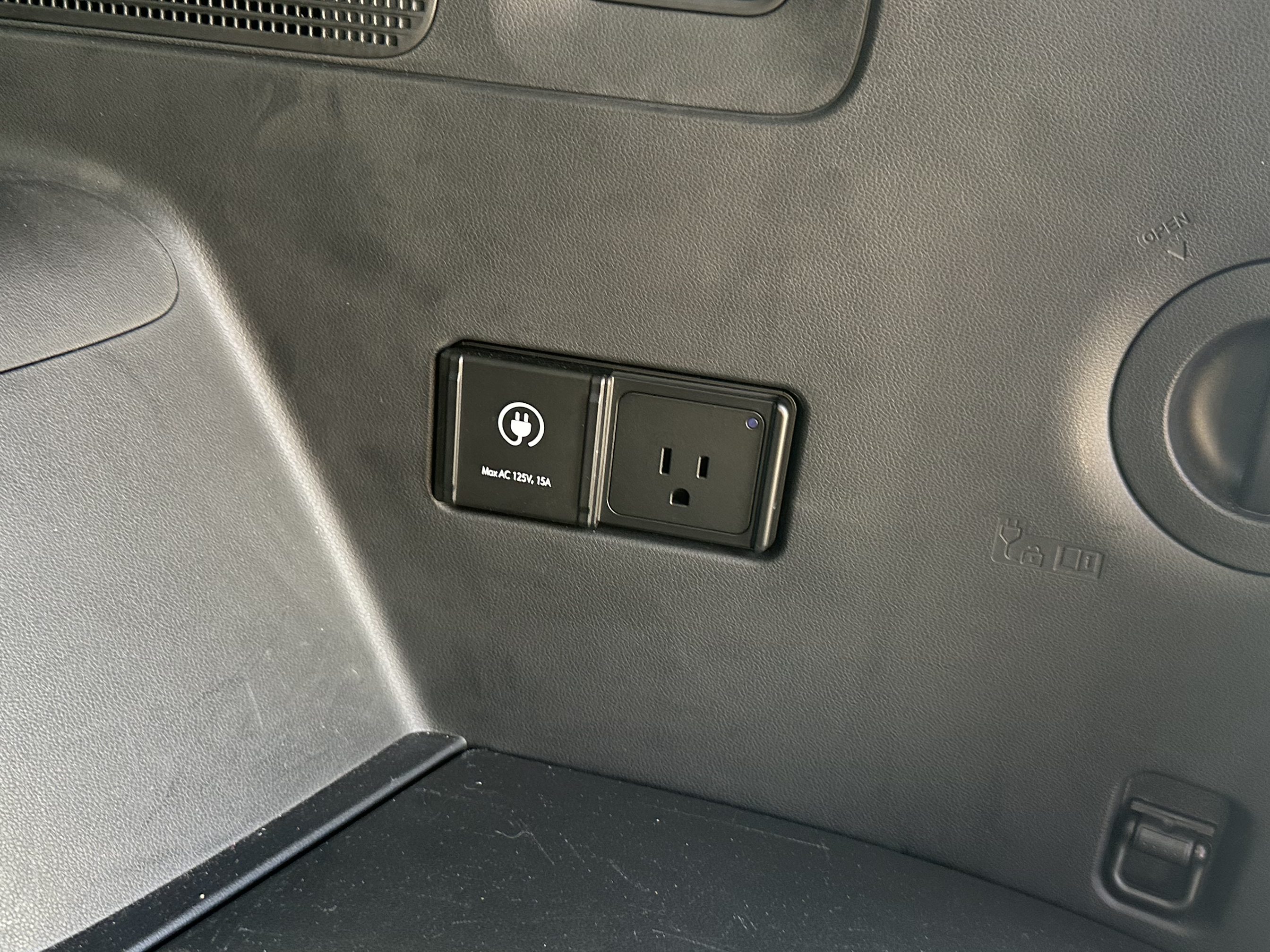
Vehicle-to-Home (V2H) is hardware-ready in the car but not yet available in North America — Hyundai has committed to rolling it out “in the near term,” likely following the same Wallbox Quasar 2 path already live for the Kia EV9 in California.
This puts the IONIQ 9 behind rivals like GM’s Vistiq and Lyriq, which already support V2H, via the GM Energy V2H Bundle, but Hyundai is heading in the right direction.
The cells used in the Ioniq 9 battery pack allow for 2C fast charging up to about 70% SOC, which results in the decent charging time advertised. We are far from the 5C or even 10C charging battery available from BYD and others in China, but compared to what we have in the North American market, it’s pretty good. The 800 V architecture limits the number of charging stations capable of delivering this power, but fortunately, the industry is moving this way, and more and more are being added every week.
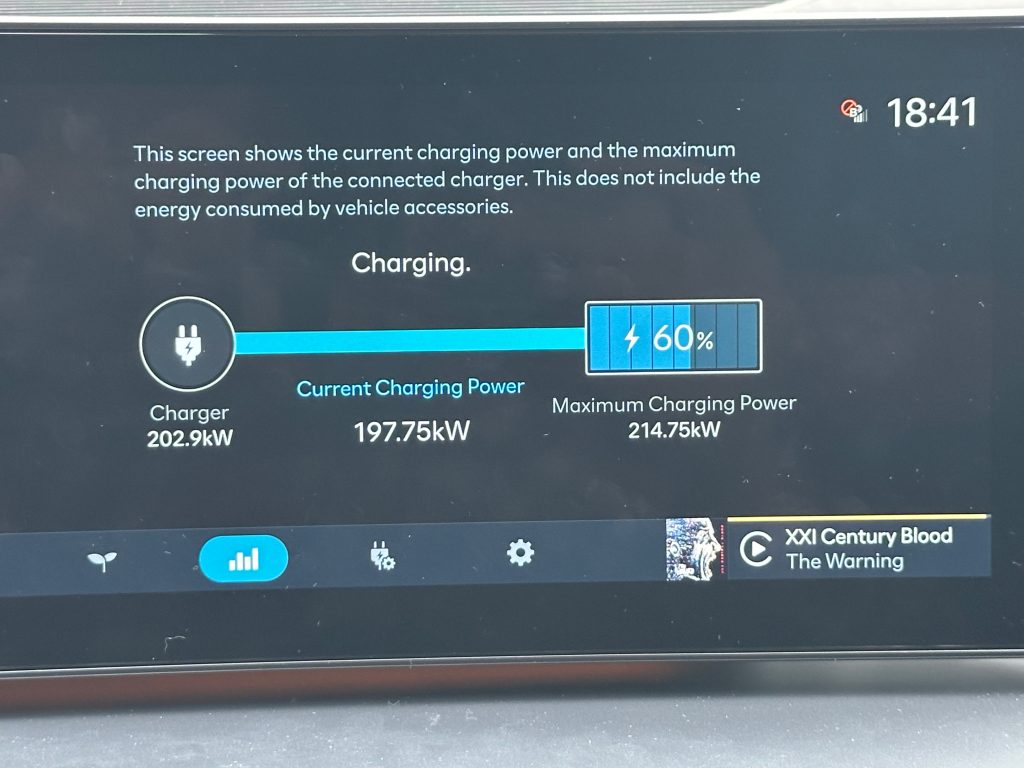
We can also count on the Supercharger V4, which is finally supporting native 800V (up to 1000V), and installation frequency is picking up. During my test, the IONIQ 9 reached a peak of nearly 215 kW with still 197.75 kW of current draw at 60% state of charge, way better than my Cybertruck, to name one, with a very close battery pack size.
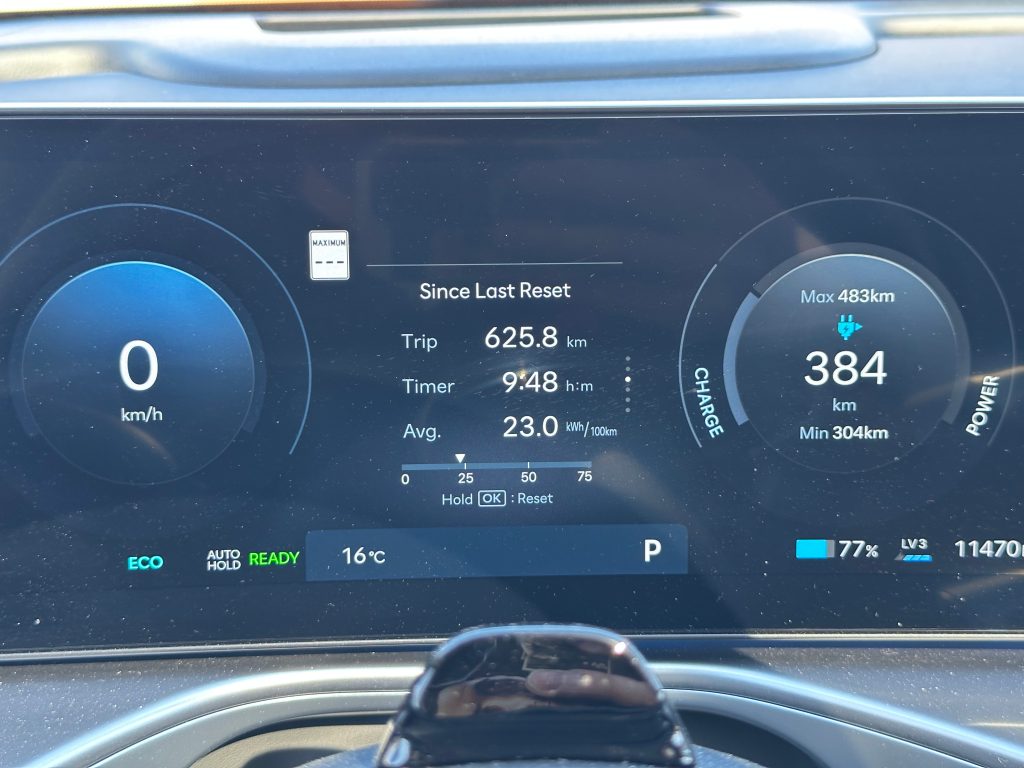
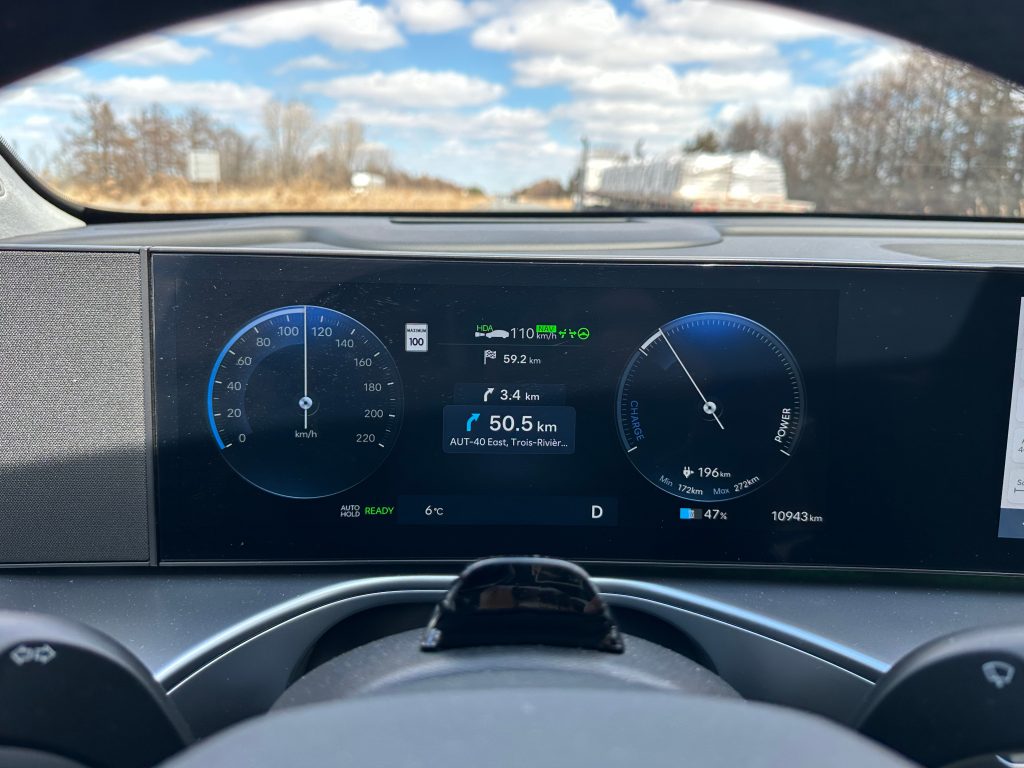
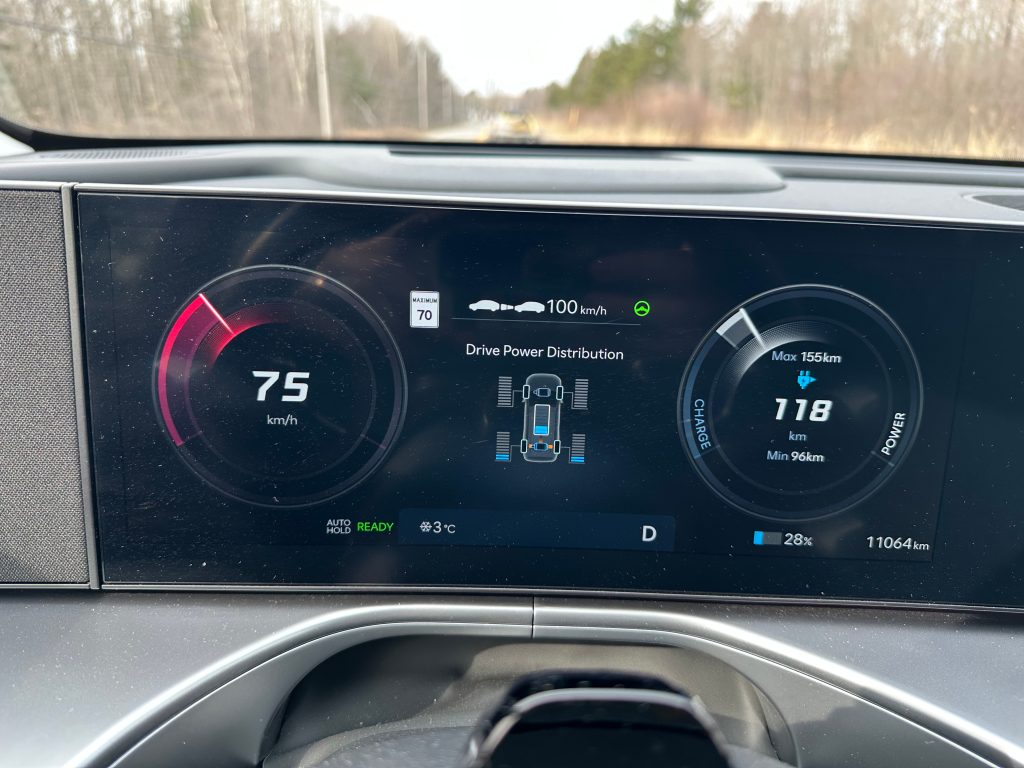
Efficiency is where there is room to grow. The EPA rates the AWD Standard configuration (SE/SEL) at 88 MPGe combined, equivalent to roughly 21.2 kWh/100 km. My own results over the total 625 km drive were slightly different, explainable with the outside temperature of just 8°C and mostly highway at roughly 110 km/h. I averaged 23.0 kWh/100 km. On a separate run with heavier traffic averaging 75 km/h and no climate control, I pulled 18.1 kWh/100 km, which is evidence that the powertrain is capable of genuine efficiency when conditions cooperate. The difference between the EPA test-cycle figure and my real-world spring highway run is not alarming, but bringing the highway number consistently below 20 kWh/100 km should be an achievable target for a future iteration of the vehicle.
I can attest that reaching the EPA rating of 311 miles in warm weather is doable.
Sitting behind the wheel of the IONIQ 9, the first impression is of two connected large screens flanking a wide steering wheel.
The general layout of the interior is clean, except for the steering wheel and all the hardware it carries. Some will like that, others, like me, would prefer a more consistent, clean driving cockpit. There are too many stalks, buttons, and paddles for my taste, carrying more hardware than it needs to. I still don’t understand why the lights require their own stalk, when they are automatic, and most would never change the lights’ settings while driving, except for the high beam.
Same goes for the “Regen Paddles”, the settings should be in the driving mode menu on the UI, I really don’t think anyone will switch the regen braking intensity while driving, or often enough for it to require its own selecting system attached to the steering wheel. My ideal system is a single stalk that handles wipers and high beam, with everything else set in a drive mode.
The same goes for the start-stop button; in an EV, it’s not necessary. Just press the brake pedal to start the car, and it will go to sleep when parked and nobody is in the vehicle.
My last pet peeve about buttons is the physical button on the left side of the dashboard for adjusting display brightness; on a modern car with a big display, that belongs as a setting in the UI, just as it does on your phone.
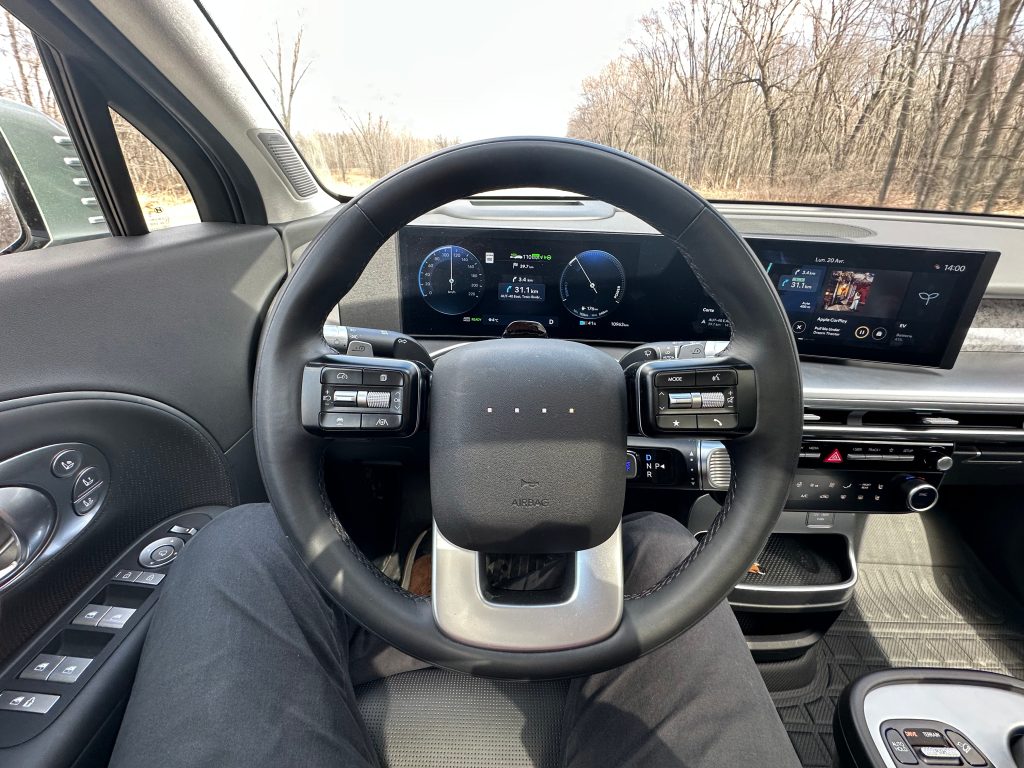
The center screen positioned directly behind the steering wheel is a touch too large as some information are hidden at certain steering wheel heights. However, the HUD, available in the Calligraphy trim, helps a lot in mitigating this with projected speed, navigation cues, and lane-keeping arrows cleanly onto the windshield.
The one catch is that the HUD can be completely invisible when wearing polarized glasses, like my sunglasses.
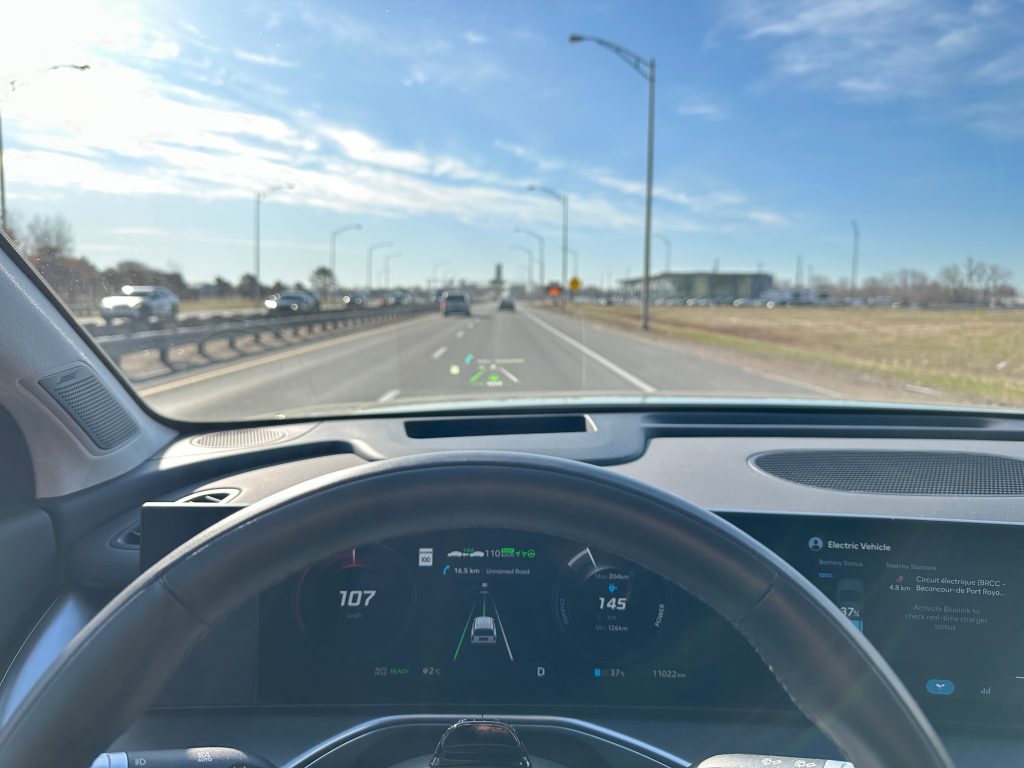
I would have loved for the driver profiles to be linked to the steering wheel and seat position. However, the seat position can be saved with a dedicated button on the door, with two memory slots only. But the steering wheel position cannot be saved at all.
That said, I really liked the onboard space and the roomy feel it brings. It is well-suited even for tall people. And the seats are absolutely amazing (Caligraphy trim). There are so many adjustments possible, I do think anyone can set it precisely to their liking. Even the second-row captain chairs allow more adjustment than most driver seats, with the ability to deploy a leg support and recline the seat. The recline range alone is remarkable.
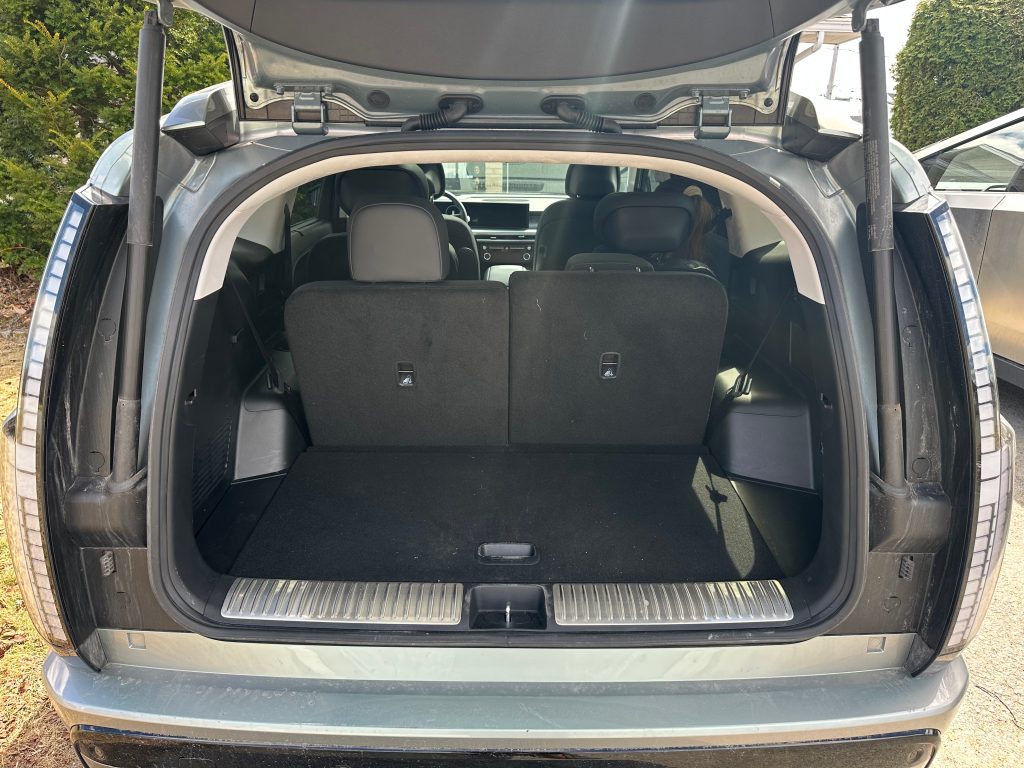
I was also able to sit in the third row without feeling compressed, as long as the second row was pushed reasonably forward. Onboard space, across all three rows, feels generous for the segment.
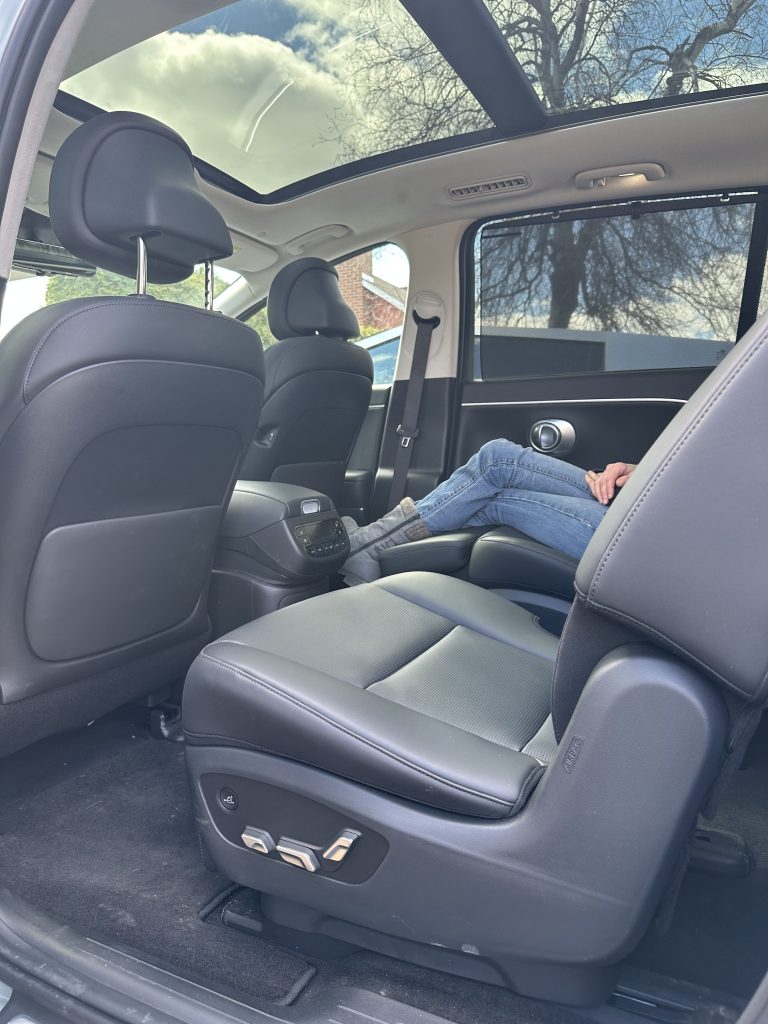
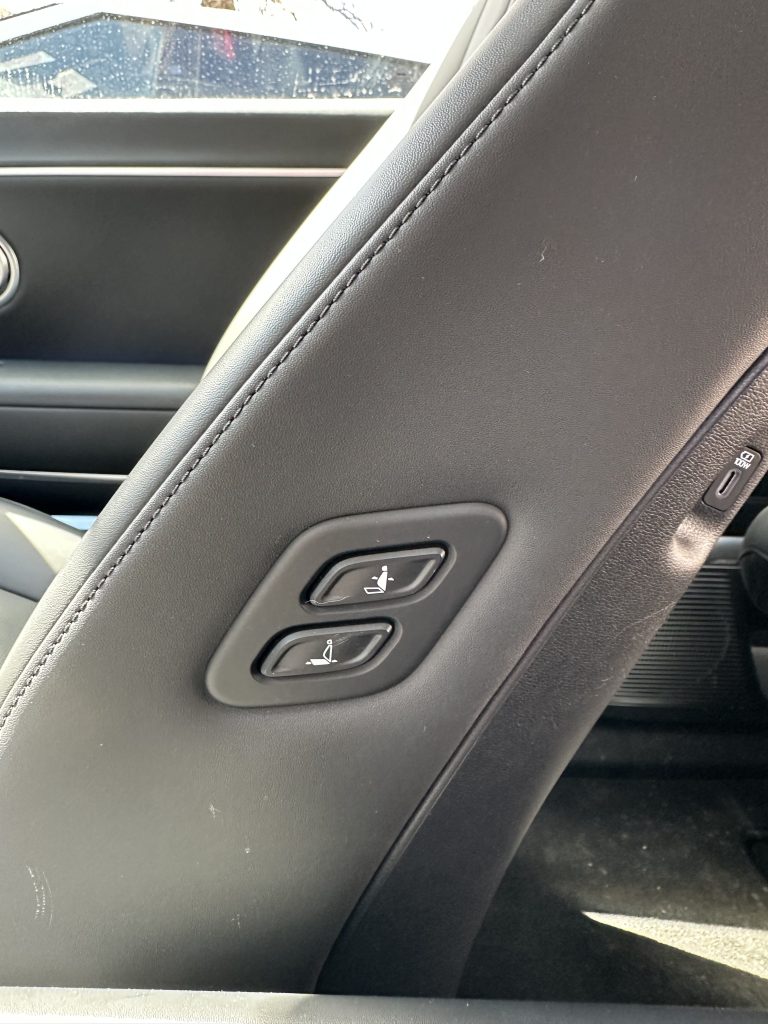
Speaking of the seats, the driver can move the front passenger seat using a dedicated button on the passenger seat’s left bolster, facing outward, within easy reach of the driver. The same goes for the second and third rows; they can be folded and unfolded from the driver’s seat using the UI or by dedicated buttons in the trunk.
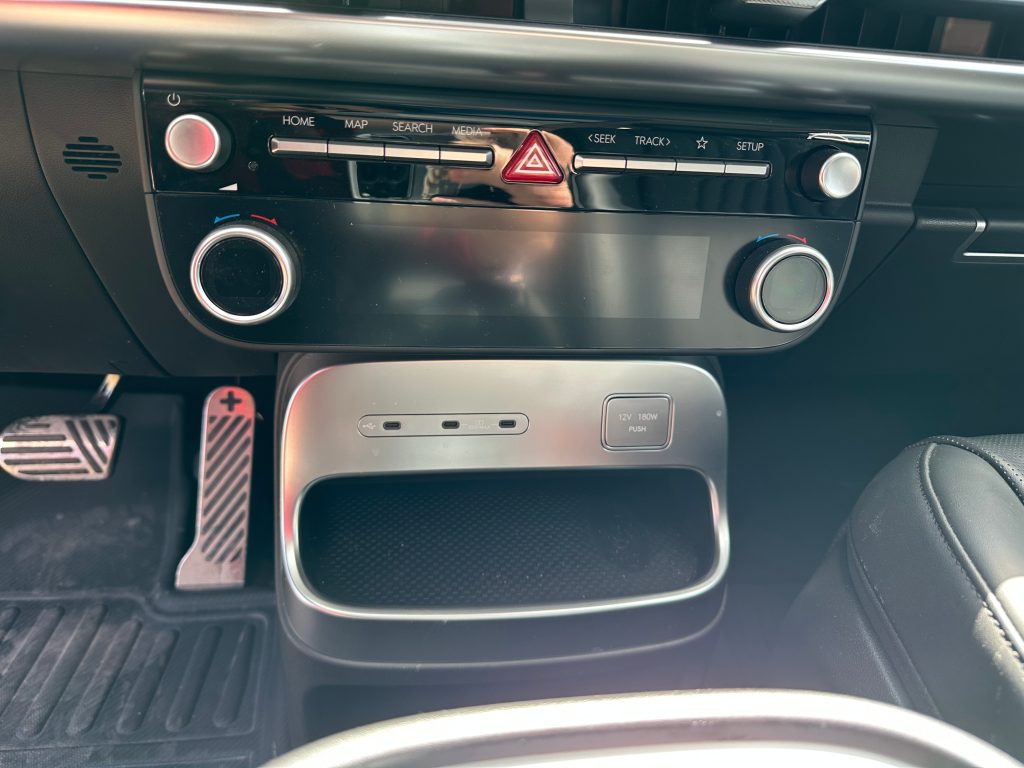
Climate control buttons are well placed for those who use them, and there is some space to empty your pockets, with many 100W USB-C outlets and a standard 12V 15A outlet.
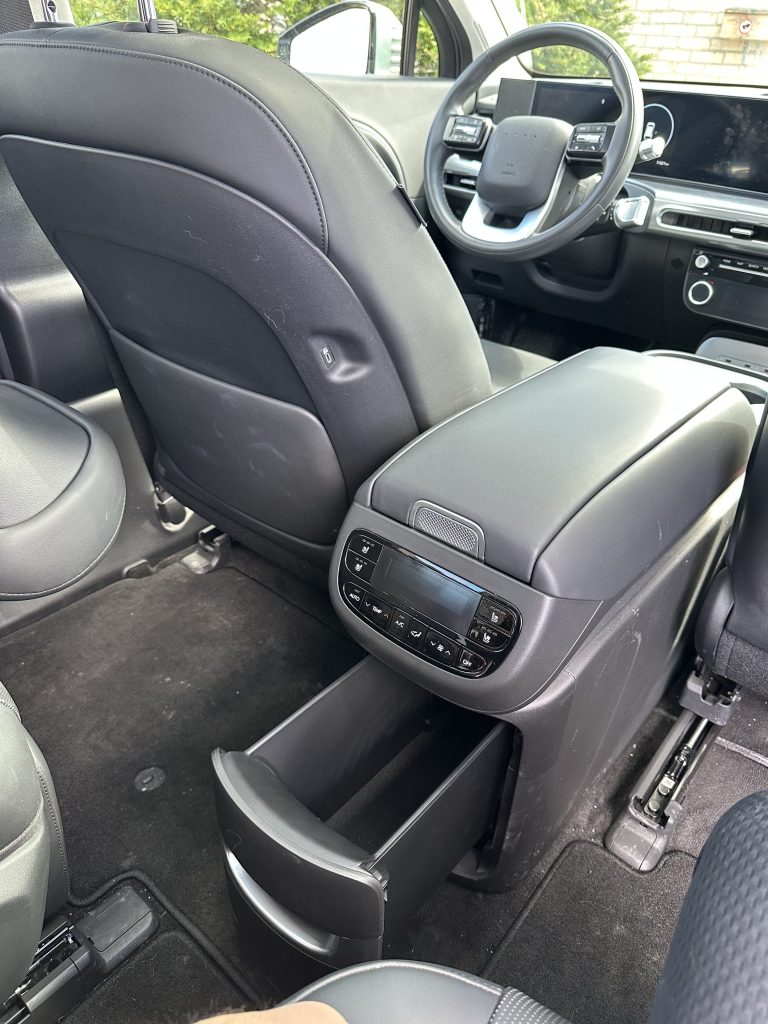
The front middle console is on a rail and can move forward or backward, ideal to allow storing space at the feet between the driver and passenger when no one is present in the second row.
The IONIQ 9 runs Hyundai Motor Group’s proprietary ccNC (Connected Car Navigation Cockpit) infotainment platform. Hyundai built ccNC in-house, and the IONIQ 9 is one of its flagship deployments. The successor, Pleos Connect, will be based on Android Automotive OS and is expected to begin rolling out on future models from 2026 onward. The IONIQ 9 sits at the end of the ccNC generation rather than the beginning of the next one, a useful piece of knowledge for techy buyers.
In day-to-day use, ccNC is basic but clean and responsive. The layout is logical, the menus are predictable, and the dual 12.3-inch displays are sharp. Moreover, wireless Apple CarPlay and Android Auto are supported, and they work flawlessly in my experience with CarPlay. The center display can be split into multiple “windows” that show, for example, the onboard navigation, energy data, and the music playing on CarPlay.
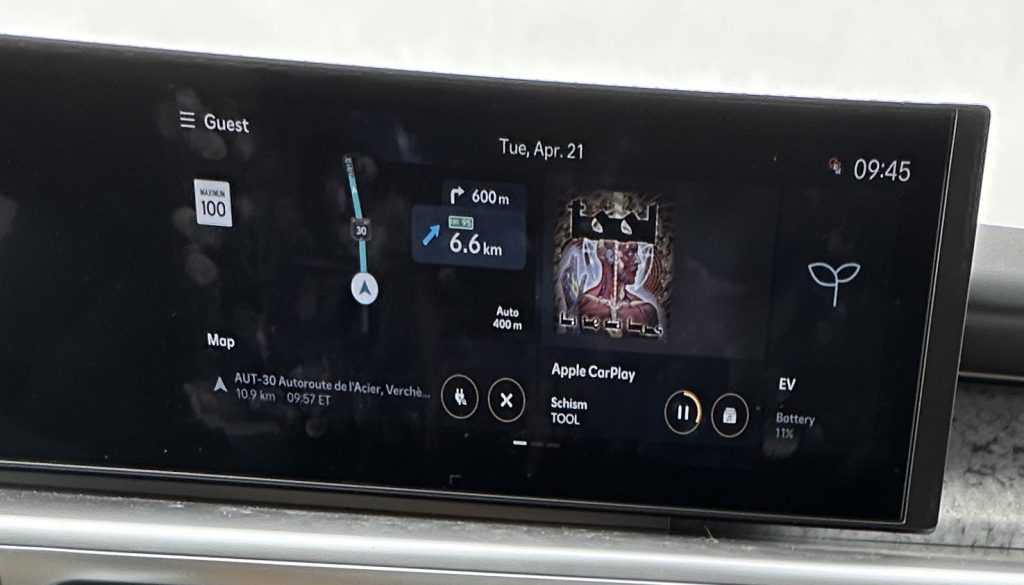
The system allows a handful of configurations, including driver mode, charging power limits for level 2 chargers, and separate charging SOC limits for level 2 and 3.
The driver mode can configure the instrument cluster, with different designs of speedometer and energy meter, which is a nice touch. I will write a bit more about the UI throughout the review, notably on the absence of a dedicated audio streaming player as well as any kind of games or video media for relaxing during a stop.
The companion app covers the essentials, state of charge, vehicle health, lock/unlock, and remote climate start, but the execution has been quite slow in my experience. Commands take roughly 20 to 25 seconds to reach the car, and there is no clear indication that something is in process, if you miss the one-time feedback notification indicating the command was confirmed. For example, tap “Climate Start” and the app shows a “request sent” banner; what it will not show you is the cabin temperature, whether the system is actually running, or when it finishes. I tested this at a few minutes’ interval, and the app showed 100% charge and 489 km of estimated range before sending the command, then 451 km on a refresh done several minutes later, with no change in vehicle state between the two. The decrease of range was a consequence of the climate system running for some time. The core functionality works, but the real-time connection to the car feels one generation behind what you’d expect in 2026.
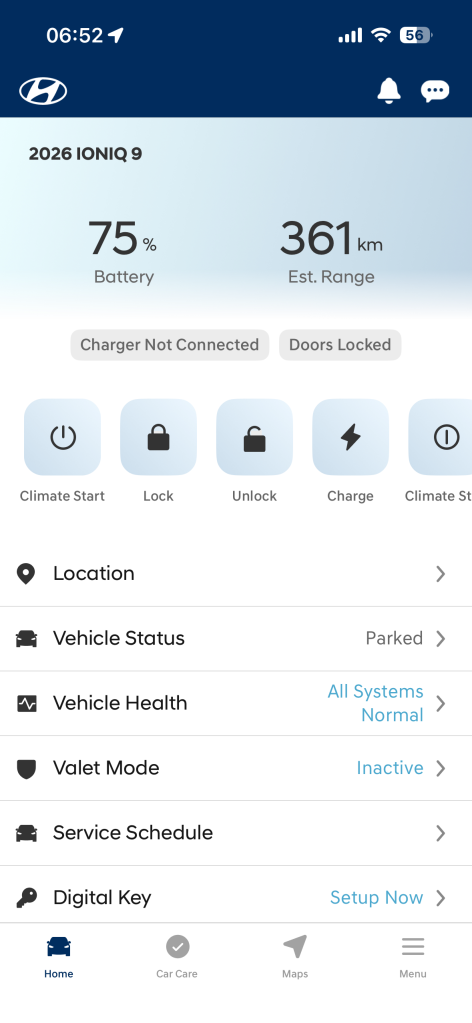
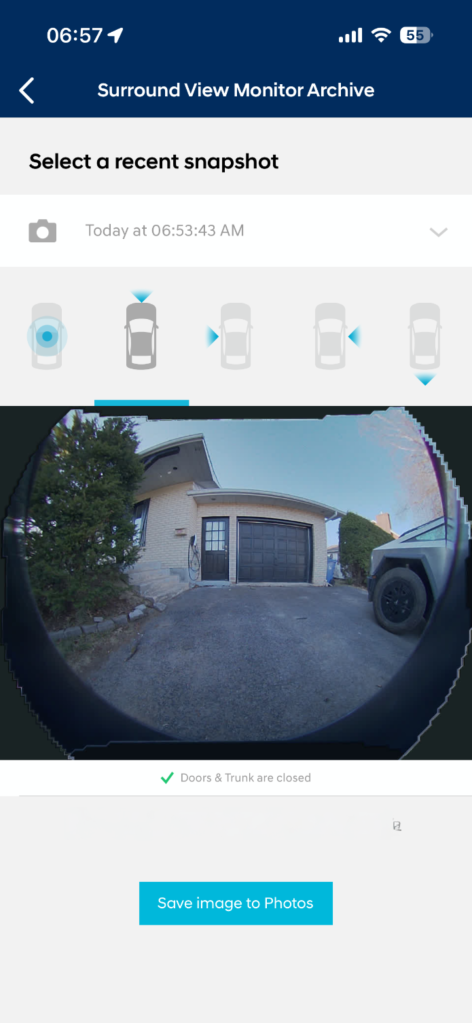
However, you can request a picture from the vehicle camera, its position, the battery health and other useful information, making it a generally good companion app. And it’s free.
Hyundai gets the power situation right. Every seat gets its own 100 W USB-C port, even on the third row— the center console area adds a 12V/180W outlet on top of three USB-C ports, and the rear of the car has a dedicated 110V/15A household outlet alongside the 2nd/3rd row seat-fold buttons. That 1.5 kW outlet in the trunk is a genuine utility feature: plug in a small appliance, a power tool, or a laptop while camping or at a worksite. This is an area where the IONIQ 9 is more thoughtful than most competitors; unfortunately, it’s not available on every trim.
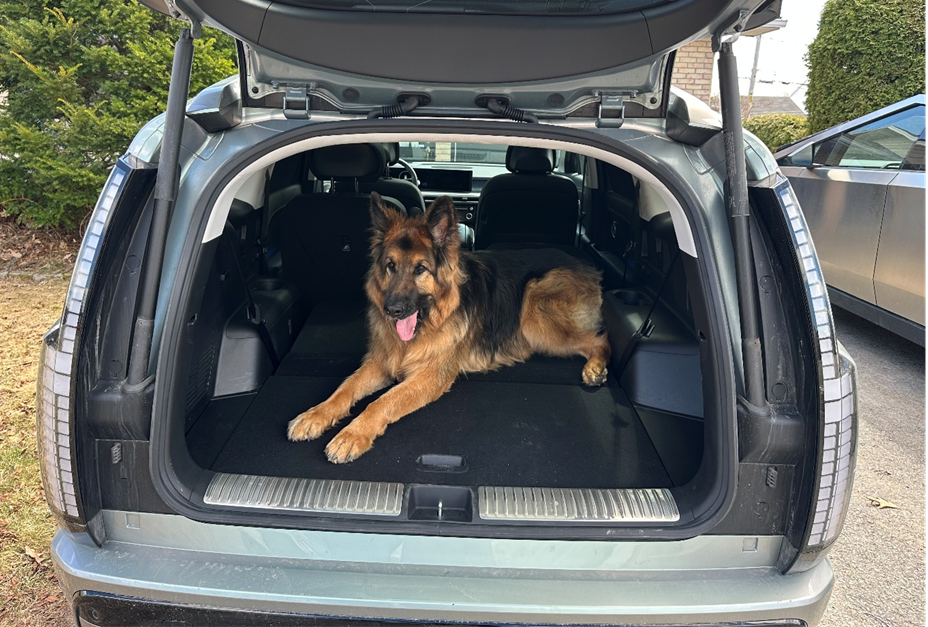
Storage throughout the cabin is generous and well thought out. The trunk is large enough to comfortably fit a large dog; mine made itself right at home. The frunk is small by EV standards, but it is functional. Hyundai’s choice to include it at all is appreciated; too many EV programs treat the front of the car like an engine bay rather than moving components to more suitable positions and allowing more useful storage space for users.
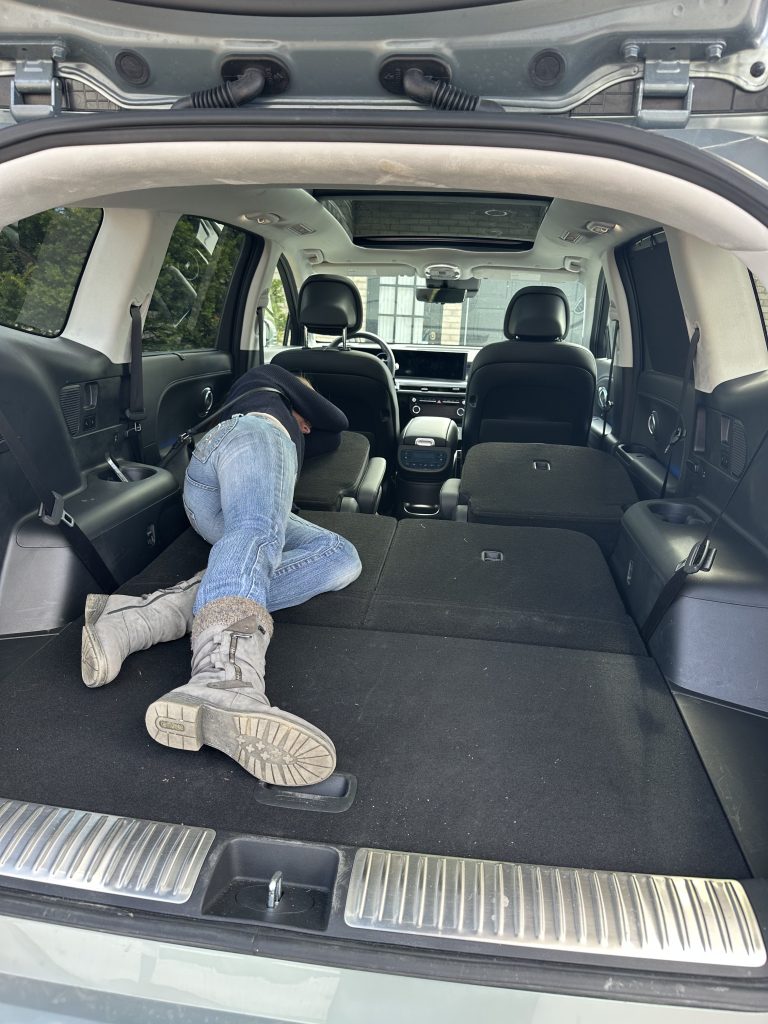
Not a surprise given the vehicle size, but it is possible to sleep in it, rather comfortably with a small mattress; the space is there.
The IONIQ 9 is, first and foremost, a refined cruiser. Ride quality is very good, with great bump isolation, precise steering, and quiet enough for long-distance travel to be a genuinely relaxed experience. Handling is responsive for a vehicle of this weight and size, with a planted feel on the road thanks to the skateboard architecture of the powertrain, which results in a relatively low center of gravity.
Four driving modes are available — Eco, Normal, Sport, and My Drive. I kept it in My Drive, which I configured essentially as Sport with a comfort-weighted steering tune. The regenerative braking system offers four levels, and level 4 is where one-pedal driving is activated.
However, selecting regenerative braking is quite frustrating at times, as the Level 4 cannot be set as the default. Every time you start the car, it reverts to level 3, requiring a manual bump-up at the start of each drive. More disruptive, engaging reverse caps regen to a maximum of level 3, even if you had level 4 active. The result is that the car begins to creep when you lift off the brake in reverse, which is counterintuitive and potentially hazardous after one-pedal-only forward driving.
The simplest fix would be to tie regen level to the drive mode (for example : My Drive = level 1 to 4, Sport = level 1, Eco = level 4, Normal = level 2). This would eliminate the daily manual adjustment entirely, for those wanting to use the one-pedal-driving feature.
Apart from that frustration, the modes work well for their purpose with different throttle sensitivity, steering heaviness and power distribution between the two axles (for the AWD model).
In terms of capabilities, the Ioniq 9 can tow up to 3500lbs (RWD) or 5000lbs (AWD), depending on the trim. Pretty decent for a family SUV weighing itself between 5150lbs and 6000lbs.
The handling is enhanced for the Calligraphy trim, with huge 285/45 R21 tires, which felt great, and the S & SE trim is fitted with more common 255/60 R19 tires, sacrificing handling for a bit more range, from 311 miles (500 km) to 320 miles (515 km). The RWD trim will get the best efficiency, thanks to a lighter powertrain, with 335 miles (539 km) of range.
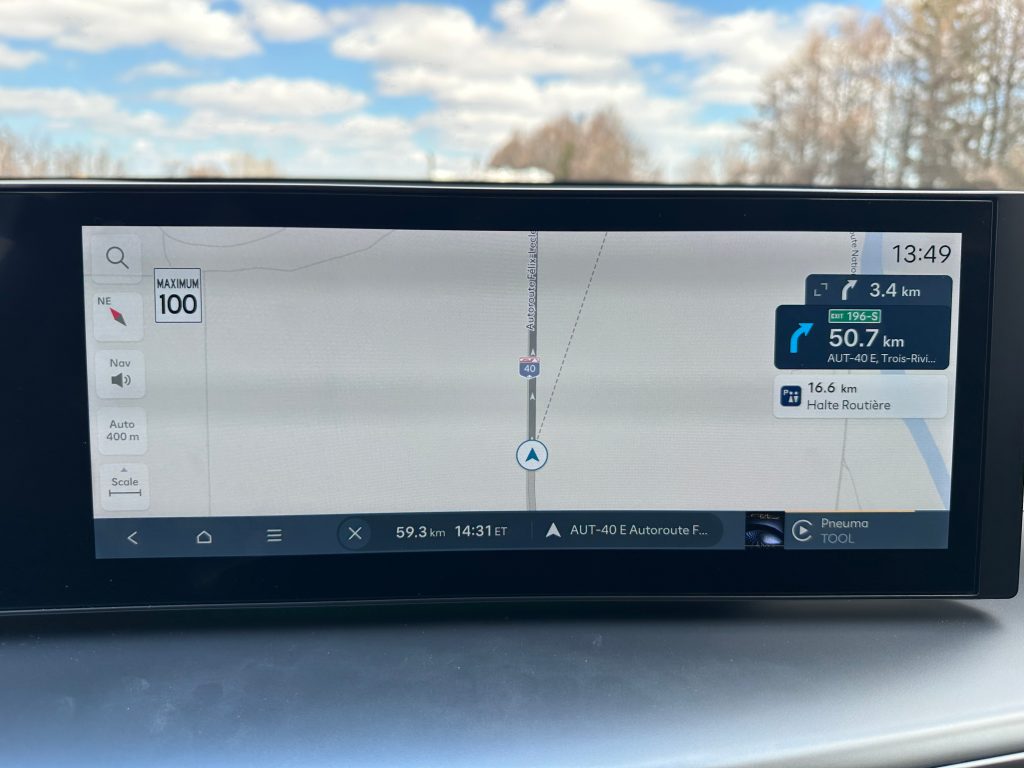
With these ranges, the good charging speed, and the onboard space and comfort, this vehicle is meant to be road-tripped. You can easily cross the country with it, and you’ll feel fine, I’m very confident about that. The only drawback is the mandatory use of the onboard navigation for battery preconditioning when navigating to a fast charger. You can’t use the Android Auto or Apple CarPlay navigation if you want to experience the optimized charging session.
The onboard navigation isn’t bad and actually works pretty well. Though, I would have liked to see a better implementation of the auto routing through charging stations when navigating too far from the actual available range, something EV early adopters are used to by now. And showing the planned battery state of charge at the destination would be useful information for the driver. The foundation is here and a few added small features could make the onboard navigation system the best driver companion. Hopefully, this will be corrected with their next system.
Following the topic of road trip, I need to talk about the sound system. Unfortunately, the audio quality does not match the rest of the driving experience. There is no onboard audio player other than FM Radio and Sirius XM, with their awful compression, resulting in sounds lacking dimensions; the system relies entirely on a Bluetooth connection to the occupant’s phone. Yes, with Apple CarPlay and Android Auto supported, it is easy to listen to your favorite music, but only with the compressed quality of the Bluetooth connectivity, resulting in average sound quality, even with the Bose sound system of the Calligraphy trim. For a vehicle that is this easy to use and this comfortable, it is unfortunate it’s not shipping with an integrated streaming platform.
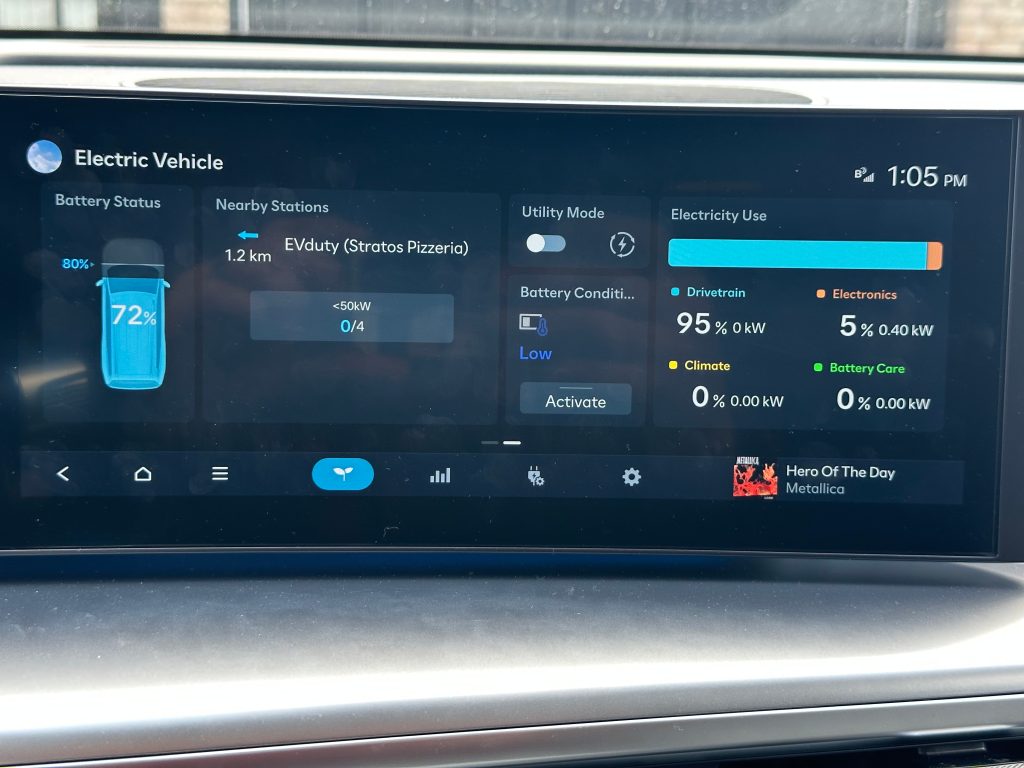
Unrelated to the road-tripping experience, as a driver and a nerd, I guess, I liked the possibility of showing the main system’s instantaneous power draw directly on the screen. You can see the Powertrain power draw, the electronics, the HVAC, and the battery thermal system, as well as the percentage of energy consumption for each of those for the last drive. With this, I could check the power consumption of the HVAC system and realize it is most of the time less than the electronics of the vehicle (UI, sounds, cell charger, etc.), thanks to the heat pump, which does a pretty good job!
To power its driver assistance and safety system, the Ioniq 9 is equipped with the following hardware :
- Front View Camera
- Front Radar
- Front Corner Radar (x2)
- Rear Corner Radar (x2)
- Front/Corner/Side Ultrasonic Sensors (x6)
- Rear/Corner/Side Ultrasonic Sensors (x6)
- Surround/Rear/Blind View Monitor Cameras (x4)
- Digital Rear View Mirror Camera
- In-Cabin Camera (Driver Monitoring System)
- Ultrasonic Rear Occupant Alert Sensors
The hardware list is complete, and you will note the absence of Lidar, with Hyundai choosing the approach of the fusion of camera and radar. This is a hardware suite that has great potential, however the ADAS system in the Ioniq 9 is just that, an Advanced Driver Assistance System, don’t expect any self driving, that’s not the goal.
In practice, the IONIQ 9’s ADAS sits closer to Tesla Autopilot 1 from 2014 to 2017, than to GM’s Super Cruise or Tesla FSD, and that’s a good thing for an included system with every trim, without any subscription required.
On clear highways with well-marked lanes, it does a competent job of following the lane and maintaining the target speed or following the vehicle ahead, and the driver can relax and take their hands off the wheel, mostly. A driver attention system will periodically remind you to either grab the steering wheel or look at the road, based on the surrounding conditions.
The system will not change lanes automatically or suggest an exit; however, you can trigger that yourself with the turn signal, which worked well in my experience.
When lane markings fade or disappear, the system continues without throwing an error, but there is a catch: it quietly stops steering, a kind of silent failure that requires constant attention. An audible sound or tactile feedback when the steering assist gives up would be a nice feature.
The hardware suite allows multiple safety features like forward collision avoidance, blind-spot collision avoidance, rear cross-traffic avoidance, and also allows for blind-spot monitoring, displaying the blind-spot on the driver’s screen using one of the cameras, when the turn signal is engaged.
All in all, since it is included in every trim, it is a decent ADAS, useful on the highway.
There are no easter eggs, hidden modes, or fun extras to discover. No clever party trick, no over-the-air gimmick to delight a passenger waiting during a charging session.
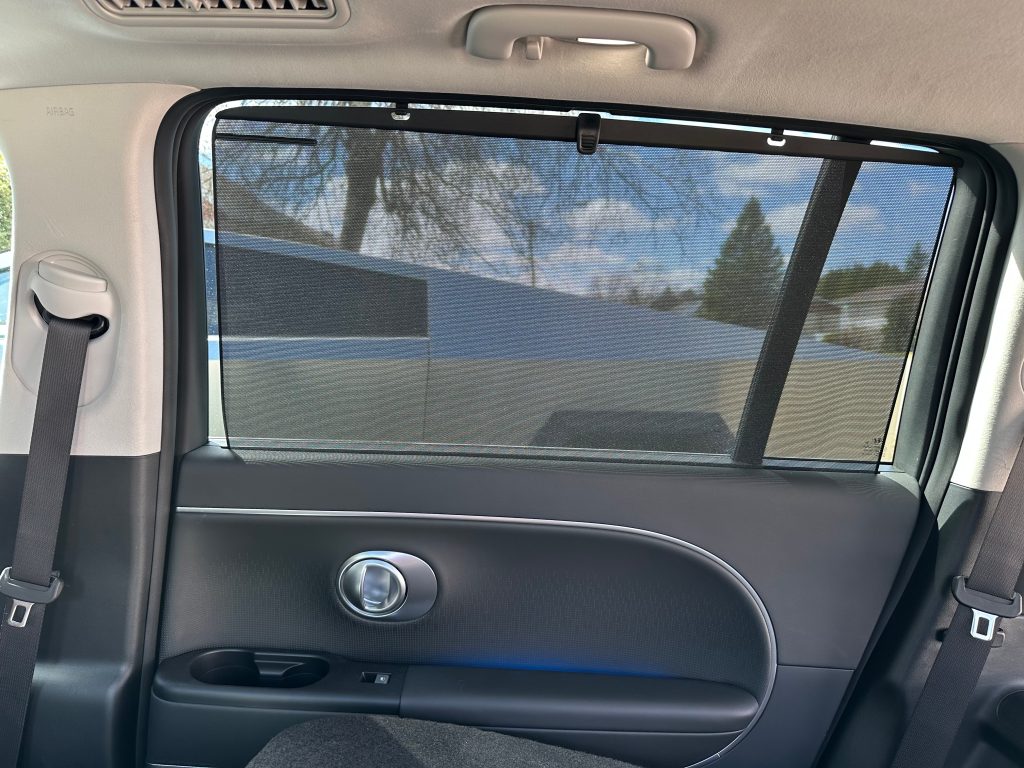
However, it offers some clever features for everyday use, such as an integrated, drawstring sunshade in the rear doors that covers the rear windows and a slidable center console for greater convenience and space.
The IONIQ 9’s pricing is competitive for what you get. In the US, the line-up starts from $58,955 for the base S RWD to $76,490 for the top Calligraphy Design AWD. In Canada, pricing spans from $59,999 CAD for the Essential RWD to $81,499 CAD for the AWD+ Ultimate Calligraphy package.
Since I had the top-of-the-line trim as a test driver, some features I enjoyed and added to the comfort won’t be included on the base trim. However, the standard inclusions are strong: 100 W USB-C ports at every seat, a frunk, generous interior storage, a great battery, a good ADAS, and a well-appointed three-row cabin.
Improved seats are available with the luxury package, and the Caligraphy brings those amazing seats upgrade as well as the HUD. As for the V2L feature, it is available from the Luxury package and up, unfortunately.
As for the ownership cost, Hyundai still mandates an annual visit (every 8,000 miles or 12 months, whichever comes first), which feels conservative given how little actually needs doing. A typical service amounts to a tire rotation, a brake inspection, and a software/recall check, which could be done OTA in 2026. Cabin air filter at ~15,000 miles and a brake fluid check further down are the main consumables.
The IONIQ 9’s purpose is obvious: it is a three-row family vehicle for people who cover distance. And at that job, it is very good. The combination of a large battery, good charging performance, a genuinely comfortable ride at all three rows, and functional ADAS makes highway driving a genuinely low-stress experience. Add a solid towing capacity on the AWD trim and you have a near-perfect multifunction family vehicle.
The IONIQ 9 earned IIHS 2025 TOP SAFETY PICK+, the highest designation available, and that applied to all trims of the vehicle, thanks to the inclusion of the suite of sensors beginning with the base trim.
It received “Good” ratings across every tested category: small overlap front, moderate overlap front, updated side, pedestrian front crash prevention, and headlights. It is worth noting that some tests were conducted on the 2024 Kia EV9, which shares the same E-GMP platform; the ratings carry over.
I like the Ioniq 9. It’s a good, capable, and comfortable vehicle. The E-GMP platform is adequate at those price points; it is one of the best charging times you will get. The handling and comfort are well-tuned, with my only complaint being that the throttle response is erratic at times, even in sport mode. But hey, it’s not a sports car. Then, like nearly all other EVs, some of the driver’s screen is obscured by the steering wheel, which annoys me. My driving position may be the cause, so this might not impact you. Fortunately, this trim included the HUD, which I appreciated.
One navigational friction point I see on most EVs from legacy manufacturers, the system does not automatically route charging stops based on your preferences. You see the map, you see chargers nearby, and you select. It is not difficult, but it is a manual step that systems like ABRP or some competitors handle automatically, and I’d like to see that integrated in every EV. It is such a convenience not having to pay attention to where you’re going to charge, and the industry has been doing this for more than a decade now. I think it’s time to relegate manual selection to the past.
Overall, Hyundai did a good job with the Ioniq 9. If I needed a 3-row vehicle, I’d definitely consider it.


Search
RECENT PRESS RELEASES
Related Post