Is AI Really Ruining the Environment? Experts Weigh In on How Dire the Situation Actually Is
April 21, 2026
For better or worse, artificial intelligence (AI) is inescapable. Depending on who you ask, it’s either the best technological development of our time or part of a dystopian future where robots are taking our jobs and running the show. But while everyone’s arguing about the rise of the machines, those machines are buzzing away in AI data centers, processing our queries and potentially doing some serious harm to the environment.
And the number of data centers is increasing rapidly. In 2021, there were approximately 8,000 worldwide. Just five years later, that number has jumped to more than 12,000, and there’s no slowdown in sight. These centers are massive, ranging in size from 100,000 square feet to millions of square feet. (The largest in the U.S., located in Nevada, is whopping 7.75 million square feet.) With that immense size comes immense processing power—and substantial energy consumption, pollution and resource depletion, says John Oppermann, executive director of the Earth Day Initiative.
So how concerned should we be? And what could AI do to our planet if left unchecked? To find out, Reader’s Digest spoke with Oppermann, as well as Noah M. Kenney, founder of tech advisory firm Digital 520, and Benjamin R. Hayes, PhD, director of the Watershed Sciences and Engineering Program at Bucknell University. Read on to get the lowdown on the upswing in AI data centers and how your next ChatGPT conversation could affect the environment.
Get Reader’s Digest’s Read Up newsletter for more tech, travel, humor, cleaning and fun facts all week long.
What goes on in these data centers, exactly?

This is where your AI buddy “thinks” of the answer it’s going to spit back at you in 3 seconds or less, as well as where it’s trained to do that. When you ask ChatGPT, Claude or another AI tool a question, or a company engages in a more complex data-processing task, “your words leave your phone or computer as tiny packets of data and travel throughout the internet,” Kenney explains. “Next, those packets of data arrive at a data center, which is a giant warehouse full of computers stacked in rows.”
Inside the data center, your question heads to a special chip called a GPU, which is like a super calculator that solves millions of math problems at once. The AI breaks your question into small pieces, called tokens, then guesses the next words, based on patterns it learned from huge amounts of text. “It is a bit like the suggested word on your phone, but much smarter,” Kenney says. “Those words then travel across the internet to your screen.” Of course, each step of this process takes just milliseconds.
The only problem? When those chips work, they get really hot. “Imagine rubbing your hands together fast,” Kenney says. “Now picture doing that a billion times a second, which is what a GPU does when it answers your question.” If chips get too hot, they break. To prevent this, data centers pump cool water through pipes near the chips—and we’re talking lots and lots of water. You can guess where we’re going with this.
What are the environmental impacts of AI?
Yep, water usage is a huge problem—but it’s not the only one. Here’s how using AI sets off a domino effect of serious environmental issues.
Water use
To cool those chips, it takes anywhere from 500,000 gallons of water per day for average-sized data centers to several million gallons per day for newer and larger data centers with more powerful AI, according to the New York Times. To put that in perspective, we asked ChatGPT what that might look like in terms we could visualize. Its answer? Five million gallons of water is the equivalent of 80 million 8-ounce water bottles—and remember, that’s the amount of water being used at one facility per day. “Electronics must remain cool 24/7, 365 [days a year],” Hayes says. “Otherwise, computer chips and motherboards will literally melt within minutes.”
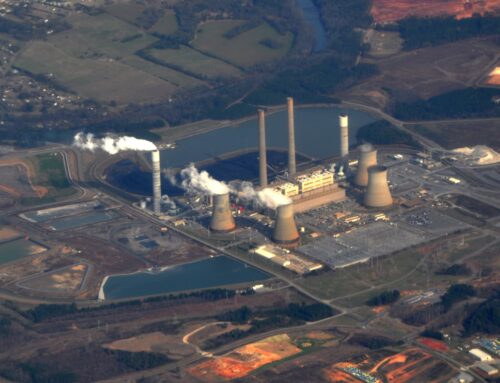
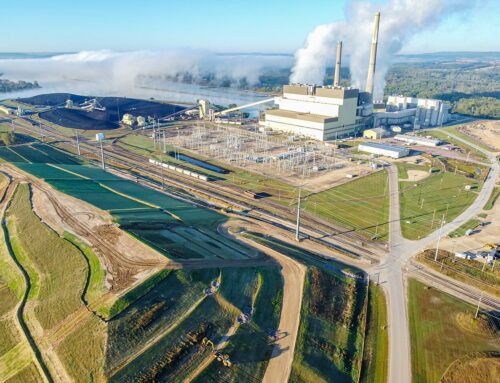
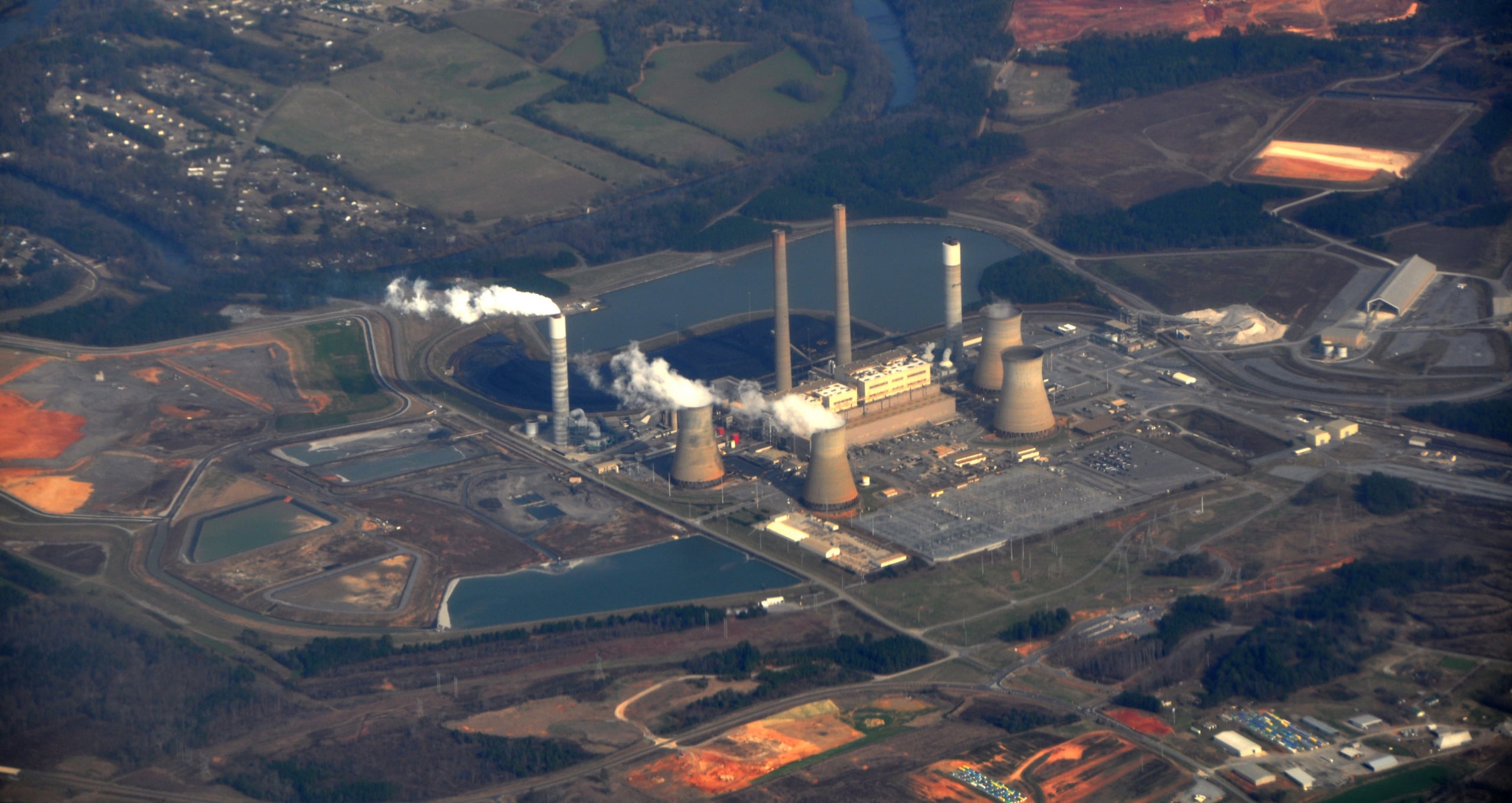
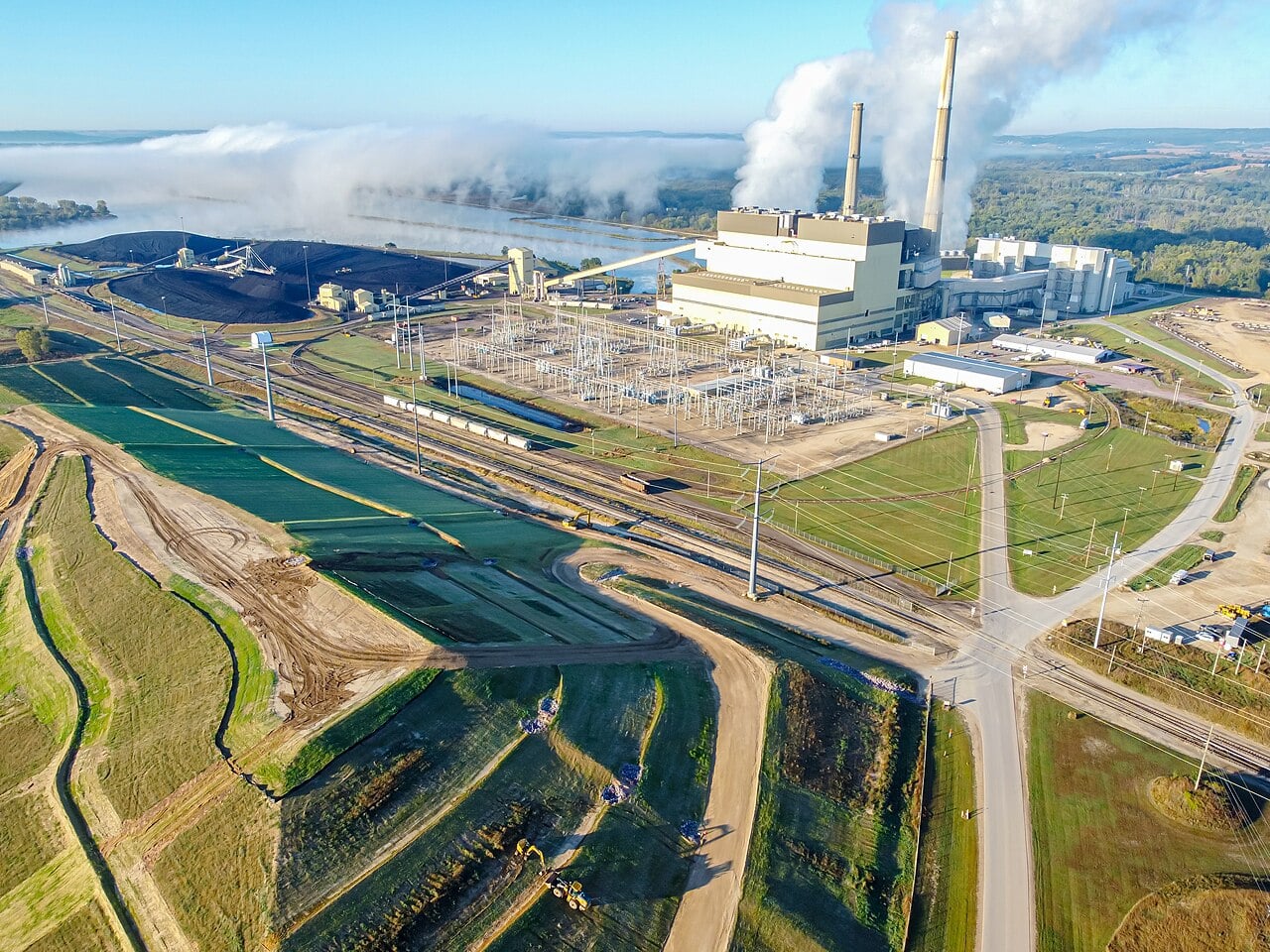
Large amounts of water are also required indirectly to produce the electricity needed to operate data centers. “Data centers require a massive amount of electricity,” Hayes explains. “They typically need to be located near power plants that already are drawing the largest amounts of water from the environment and then have their own high-volume needs.”
Data centers’ water usage can also impact an area’s animal life. A 2026 study published in the journal Water Biology and Security found that fossil fuel–powered data centers can make local water supplies too warm and unsafe for native marine life, while hydropowered data centers can cut off access to spawning areas for fish if new dams are built or old dams are removed. This can kill off species, ultimately reducing biodiversity and wrecking ecosystems.
Energy use and emissions

Data centers consume more than 4% of electricity in the U.S.—roughly equivalent to the amount of electricity all of Pakistan uses in a year. That figure is projected to grow by a whopping 133% by 2030. “Some of these individual data centers use twice the energy that can be generated at a single average-sized power plant,” Hayes says. “A single AI data center cluster is comparable to millions of households, or a large fraction of a state’s residential load. That’s historically unusual: Only things like aluminum smelters and massive industrial complexes have approached this scale before.”
The concern isn’t the electricity use itself: It’s the way that power is generated, which, in the U.S., tends to be from burning coal or natural gas. This emits carbon dioxide, which contributes to global warming and climate change.
Additionally, data centers’ massive backup generators, which run on diesel or gas, emit nitrous oxide fumes and particulates that negatively impact air quality, Hayes says. Any facilities next to and relying upon natural gas or coal power plants also give off tremendous amounts of greenhouse-gas emissions. How much are we talking about? According to a 2025 study published in the journal Nature Sustainability, the rate of AI growth in the U.S. would put an additional 24 million to 44 million metric tons of carbon dioxide into the atmosphere by 2030.
Noise pollution
Residents living within three-quarters of a mile from a major facility may notice a low-frequency hum or distant “roar,” Hayes says. It’s more noticeable at night (because there’s lower background noise) and in the winter, when there are no leaves to dampen the sound. In those cases, it can be heard up to 3 miles away. The sound is often described as “background highway noise” or a faint airplane idling far away.
“That low-frequency component matters because it travels farther and penetrates walls more easily, and it doesn’t fade as quickly as higher-pitched sounds,” Hayes explains.
Could we actually run out of water because of AI?
Believe it or not, that’s not out of the realm of possibility. “If the proposed number of facilities gets built along certain major rivers, then indeed it is possible to reduce river and groundwater levels in places, for certain times of the year such as August to October in the mid-Atlantic and northeastern United States,” Hayes says.
Some areas of the U.S., including the American Southwest, have been facing water crises in recent years, and measures have been put in place to reduce residential and commercial use of water. But, Opperman notes, “adding the huge water needs of AI data centers to this existing problem runs the risk of some communities having less water than they need. The demand will simply outstrip the supply. We can wind up in a dire situation where we are using more water than we have.”
Now, may have heard OpenAI CEO Sam Altman’s recent—and now infamous—claim that an average ChatGPT query uses just about 0.000085 gallons of water, or “roughly one 15th of a teaspoon.” That may be technically true, but that figure is incredibly misleading. It reflects only the direct operational water use for cooling the server when processing a query—and excludes the massive upfront training costs, power generation, and water and hardware supply chains. “As an analogy, Altman’s number is like saying that one car ride uses just an ounce of gas from the tank,” Kenney says. “It ignores all the gas required to produce the car, make the road or dig up the oil.” Plus, there’s the fact that no one ever asks a chatbot just one question.
Are there other options that use less water and energy?
At this point, there aren’t any alternatives to data centers that use less water and energy. “The hope is the ongoing engineering efforts to make more efficient chips that generate less heat and new technologies to cool them at the motherboard will significantly reduce the water and power consumption,” Hayes says. “But even as they improve, demand for AI will likely continue to increase, and these demands will offset savings in power and water efficiency.”
As of 2024, nuclear power supplied around 20% of electricity for U.S. data centers. They may play an even larger role in the future, as AI companies plan to open or reopen new nuclear plants in the United States—including Three Mile Island in Pennsylvania, which had a partial meltdown in 1979.
While nuclear power is emission-free, it’s not without its risks … of the occasional disastrous nuclear meltdown. Solar power is also out as a reliable option, since they don’t work at night, on winter evenings or during cloudy stretches.
How many AI centers are in the U.S.—and where are they?

Currently, there are approximately 5,400 AI data centers in the U.S.—the most in any country of the world, by far. (Fun fact: Germany’s next, with just over 500 data centers.) However, it’s important to keep in mind that this is an estimate, because there is no federal registration requirement for data centers, and the owners of some data centers don’t disclose their locations for security purposes and/or to have an edge on the competition.
While there are AI data centers scattered throughout the country, one-third can be found in three states: Virginia, Texas and California. More specifically, northern Virginia and Dallas are the main data-center hubs, as are Chicago and Phoenix. These locations will likely remain key to AI data infrastructure, since half of the data centers currently being built in the U.S. are part of preexisting large clusters, according to a report from the International Energy Agency (IEA).
Are we living in a real-life version of The Lorax?
It sure feels like it! “I think that people see great financial potential in the ever-increasing use of AI, and it is causing us to ignore a lot of warning signs,” Oppermann says. “The environmental impact caused by rushing into using AI and its requisite energy and water needs runs a risk of depleting the ecosystems we rely on to maintain our quality of life.”
For now, it’s hard to say what the future might look like and the role AI will play, but it’s important to think a few steps ahead, especially in terms of the potential environmental impact. “Some of the risks we do not even understand yet, but other risks we very much understand but are seemingly willing to plow ahead anyway,” Oppermann notes. “We have to decide what we value and what kind of future we want for ourselves.”
Some communities are actually pushing back on the development of data centers in their areas—and winning. “If people speak up and decide what they value and what they think is right and fight for it, this is not all a foregone conclusion,” Oppermann says. “We have the capacity to decide what we want for the future, not just helplessly stumble into it.”
About the experts
|
Why trust us
At Reader’s Digest, we’re committed to producing high-quality content by writers with expertise and experience in their field in consultation with relevant, qualified experts. We rely on reputable primary sources, including government and professional organizations and academic institutions as well as our writers’ personal experiences where appropriate. For this piece on AI and the environment, Elizabeth Yuko, PhD, tapped her experience as a professor, bioethicist and longtime journalist who often covers history and knowledge for Reader’s Digest. We verify all facts and data, back them with credible sourcing and revisit them over time to ensure they remain accurate and up to date. Read more about our team, our contributors and our editorial policies.
Sources:
- John Oppermann, executive director of the Earth Day Initiative; email interview, April 15, 2026
- Noah M. Kenney, founder and principal consultant at Digital 520; email interview, April 19, 2026
- Benjamin R. Hayes, PhD, director of the Watershed Sciences and Engineering Program at Bucknell University; email interview, April 16, 2026
- Pew Research Center: “What we know about energy use at U.S. data centers amid the AI boom”
- Time: “Data Centers Are Lousy for the Planet. Should We Move Them to Space?”
- New York Times: “Their Water Taps Ran Dry When Meta Built Next Door”
- Water Biology and Security: “Data centers: an emerging threat to freshwater biodiversity in the United States”
- Nature Sustainability: “Environmental impact and net-zero pathways for sustainable artificial intelligence servers in the USA”
- Cargoson: “Number of Data Centers by Country (November 2025)”
- Brookings: “The Future of Data Centers”
- International Energy Agency: “Energy and AI”
- Regional Plan Association: “The Rise of Data Centers in the Grid”
- Data Centre Magazine: “Top 10: Biggest Data Centres”
- Sam Altman: “The Gentle Singularity”
- Communications of the ACM: “Making AI Less ‘Thirsty’: Uncovering and Addressing the Secret Water Footprint of AI Models”
- Insights: “From Cloud to Cup: How Much Water Does Your ChatGPT Drink?”
Search
RECENT PRESS RELEASES
Related Post