Opinion: Georgia’s high gas prices make used EVs worth a look
May 15, 2026
Used electric vehicle prices are falling as more off-lease models hit the market.

A motorist sits in a Tesla Model 3 at a Tesla charging station Friday, March 13, 2026, in Lakewood, Colo., in Denver. (David Zalubowski/AP)
By Chris Teague – Cox Automotive
22 minutes ago
Gas prices rise and fall, but with the average gallon of unleaded hovering around $4 in Georgia and $4.50 nationally, some drivers may be wondering whether it’s time to go electric.
New electric vehicles still cost noticeably more than comparable gas models, but the used EV market holds some of the best deals around. Let’s take a closer look at how pricing has changed and consider whether a used EV could be the right move for you.
The average new EV transaction price was more than $54,500 in March, well above the $49,275 average for gas vehicles. Used EVs were significantly cheaper, with an average listing price of $34,653. While listing prices and actual transactions are two different things, it’s clear that used electric models offer a substantial discount compared with their new counterparts.

Chris Teague is an editor for Kelley Blue Book and Autotrader. He’s a nationally syndicated radio host and has covered the automotive industry since 2016 as a writer and analyst. (Photo courtesy of Cox Automotive)
That trend has led to lower inventory on dealers’ lots, but supply levels haven’t dipped low enough to slow the decline in average listing prices. Used car lots held used EVs for an average of 31 days in March, moving vehicles much faster than the month before.
Off-lease models add supply
Cox Automotive data shows record new EV sales in 2023 and 2024, with a large portion of those sales driven by leases with shorter terms, usually three years or less. Many lessees choose to return those vehicles rather than buy them at the end of the lease term, driving up the number of used models available for sale and pushing down listing prices.
Battery fears weigh on values
Another significant factor keeping used EVs more affordable is buyers’ wariness about their longevity. Battery replacements can indeed be an enormous expense, sometimes costing thousands of dollars, but EV batteries last a lot longer than most people think. Federal law requires that automakers cover EV batteries for at least eight years or 100,000 miles.
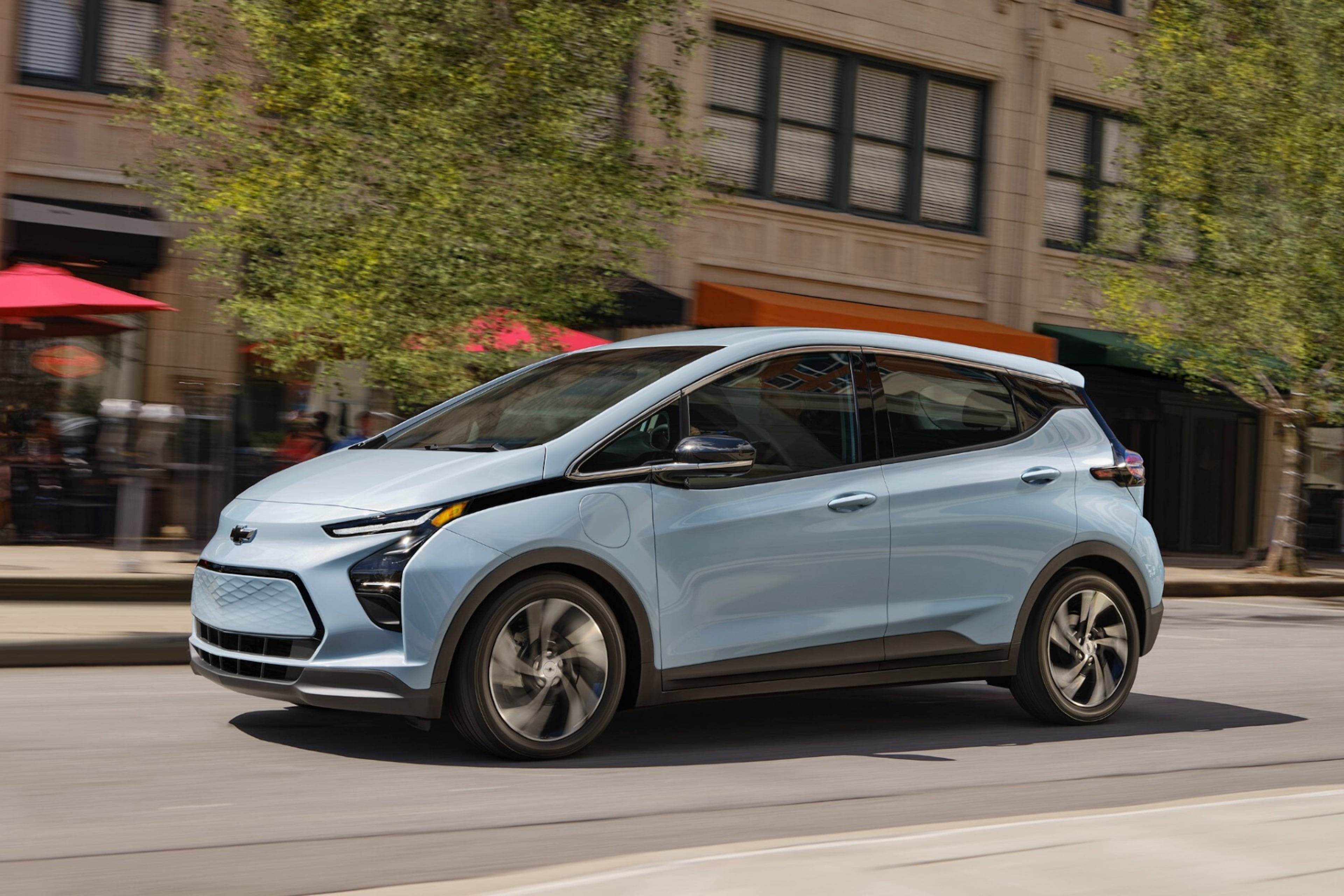
This photo provided by Chevrolet shows the 2023 Bolt EV. A used Bolt EV is an ideal choice for a low-cost electric vehicle for everyday driving around town. (Courtesy of General Motors via AP)
Finally, the constant march of technological advancements has helped drive down used EV prices at a surprising rate. Every year, new battery and heat pump developments, updated infotainment tech, and more efficient electric motors make older electric models feel obsolete, even when they remain perfectly fine for everyday use. That could mean deep savings if you’re not concerned with having the latest features, range, and tech in your EV.
Equity matters when trading in
“Spend money to make money” isn’t typically good advice when it comes to saving on fuel costs. New electric vehicles are more expensive than comparable gas models, and that’s before accounting for losses on trade-in values and other costs that come with buying a new car. That said, used EVs can be the exception to that rule — in the right situations.
With used electric vehicle listing prices more than 6% lower in March than a year earlier, the timing could be right for some buyers to make the leap from a gas vehicle. That means some buyers, because the math doesn’t work out for everyone.
People who carry negative equity in their current vehicles — owing more than the car is worth — are unlikely to realize much in savings in the transition. The same applies to hybrid and plug-in hybrid owners, who are already on the lower end of fuel consumption averages.
You should still take your time and do your own research, even if moving to a used EV seems to work out on paper. Make sure you understand the value of your current vehicle and carefully consider the additional costs that come with trading it in and buying a different vehicle. Dealer trade-in offers are rarely as generous as the amount you’d get in a private sale, but the hassles of selling to an individual can outweigh the financial benefits for some people.
Home charging changes the math
It’s also a good idea to factor in the cost of installing a home charger when doing the math. Georgia Power and some electric membership cooperatives in the state offer rebates and incentives, but a Level 2 home EV charger can cost several thousand dollars, depending on your existing electrical setup.
While many people can get away with using public chargers, especially if their employers offer them, it can be a real hassle to own an EV without the ability to charge at home. It might not be an immediate deal-breaker for you, but it’s something to think about if you live in an apartment complex or other shared housing where it’s impossible to install a home charger.
Fuel savings aren’t guaranteed
Taking the leap from a gas-guzzling car to a used EV can be a good decision if you’re willing to take the time to understand your financial situation completely. If you have equity in your current vehicle and feel that you’re spending too much on fuel, shop around and get a feel for pre-owned EV prices in your area. Rushing into a vehicle purchase is never a good idea, even if the fuel savings seem to add up on paper.
Chris Teague is an editor for Kelley Blue Book and Autotrader. He is a nationally syndicated radio host and has covered the automotive industry since 2016 as a writer and analyst.
The Steering Column is a weekly consumer auto column from Cox Automotive. Cox Automotive and The Atlanta Journal-Constitution are owned by parent company, Atlanta-based Cox Enterprises.
Search
RECENT PRESS RELEASES
Related Post