Samsung’s Taylor fab nears production as Tesla adds third chip order
April 23, 2026
Musk confirms Samsung will produce upgraded AI4+ self-driving chip
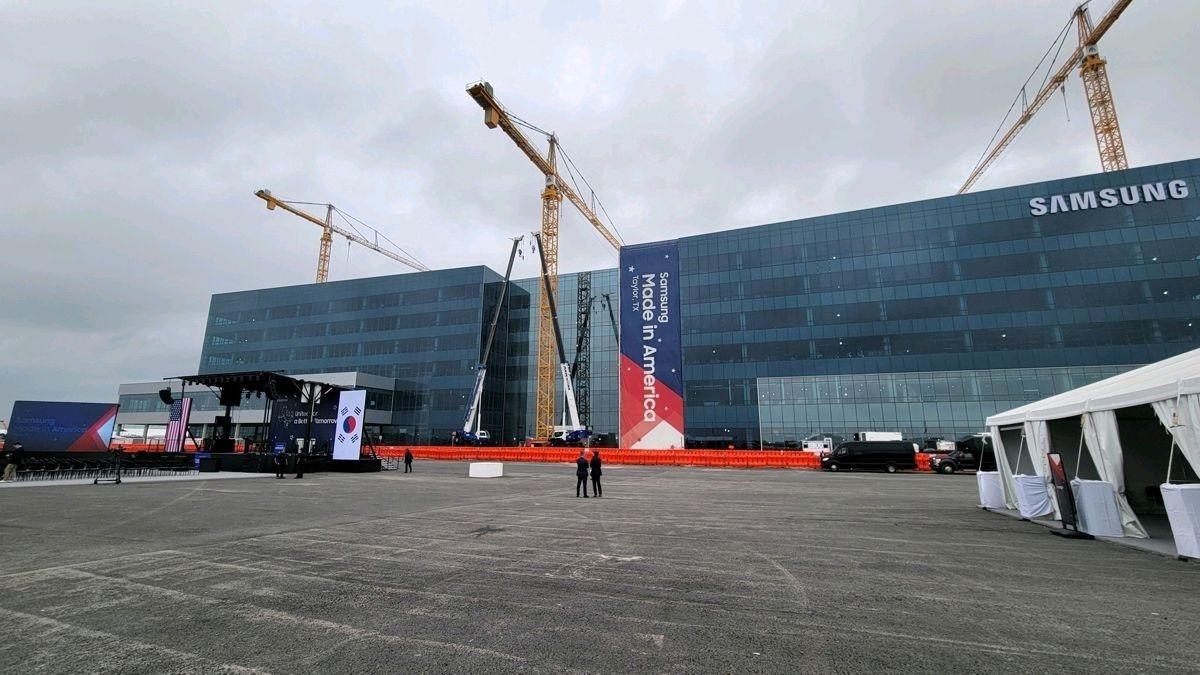
Samsung Electronics is holding an equipment move-in ceremony at its Taylor, Texas, contract chip plant on Friday, formally installing the chipmaking machines that will begin producing silicon for Tesla and other customers later this year.
The event closes a nearly two-year delay on the $37 billion facility Samsung broke ground on in late 2022, and it lands the same week Tesla CEO Elon Musk confirmed a third Samsung-built chip in the Korean foundry’s Tesla pipeline.
The Taylor plant is the physical stage for Samsung’s bet that it can reenter the top tier of contract chipmaking, the business of manufacturing chips designed by other companies. Tesla’s orders, worth 22.76 trillion won ($15.4 billion) under a contract signed in July 2025, already cover the AI5 and next-generation AI6 that will run Tesla’s self-driving software and its Optimus humanoid robot.
Samsung foundry chief Han Jin-man is expected to attend the ceremony alongside executives from chipmaking equipment suppliers ASML and Lam Research.
The chip Musk added to that list this week, referred to internally as AI4+ or AI4.1, is an upgraded version of the AI4 currently running in Tesla vehicles, with more memory, wider bandwidth and higher compute. Speaking on Tesla’s first-quarter earnings call on Wednesday, Musk said Samsung is revising the design for production around mid-2027.
“Samsung is doing a revision on the chip,” he told analysts, framing AI4+ as a bridge that lets Tesla keep its existing production lines running while the far more powerful AI5, which completed its final design on April 15, is routed first to the Optimus robot and to Tesla’s AI data centers. The AI5 is roughly five to 10 times faster than the current AI4 setup, making it overengineered for cars in the near term.
“It may make sense to transition to AI5 for vehicles at some point, but it’s not urgent right now,” Musk said. “If AI4 hardware becomes too outdated, it could end up being the only reason to keep factories running.”
All three Tesla chips will be manufactured on Samsung’s 2-nanometer gate-all-around process, the company’s most advanced chipmaking technology, at the Taylor fab. Samsung shares AI5 production with Taiwan’s TSMC, the world’s largest contract chipmaker, but will produce AI6 exclusively.
The commercial stakes sit inside Samsung’s loss-making foundry division, which local reports estimate has posted roughly 1 trillion won in quarterly losses since 2022. According to industry sources, the company has internally pulled forward its break-even target to the fourth quarter of this year from a prior 2027 goal. Whether that target holds depends largely on how quickly Taylor can ramp up yield, or the share of usable chips from each wafer. Industry estimates put Samsung’s 2nm yield at 50 to 60 percent, still short of TSMC’s reported 80 to 90 percent.
mjh@heraldcorp.com
Search
RECENT PRESS RELEASES
Related Post