Solar power and women’s power: Sustaining livelihoods in the Amazon
April 19, 2026
 Members of the Association of Progressive Women in Puerto Limón, a group that raises chickens as a sustainable livelihood model. © Fílmamazonia / WWF
In Colombia’s rainforest, solar technology supported by WWF is helping women’s associations flourish as they grow their incomes, autonomy and sense of community.
The sun rises early in Putumayo, colouring the sky and ushering in the day’s heat. Work begins early too – communities carve out a living in the Amazon’s morning light while macaws and hummingbirds fly overhead, and anteaters roam in search of breakfast.
Tucked alongside the weaving Putumayo River is Puerto Limón, a small town where the days are peaceful and the people are hardworking. Miriam Meza Cortés has lived there for 60 years – her parents brought her as an infant in search of a better life.
“Those who come don’t want to leave,” she says. “It’s a town that has grown little by little, and its people fall more in love with it every day.”
Over the years, Putumayo has shaped who she is and who she strives to be. “This land instilled values in me, a sense of service and a drive to succeed. I identify as an Afro-descendant woman, and that is also part of my story and my strength.”
In the Colombian Amazon, women are historically guardians of nature and leaders of community production systems. Today, Meza Cortés is one of them – uplifting fellow women with sustainable livelihoods, all while harnessing renewable energy.
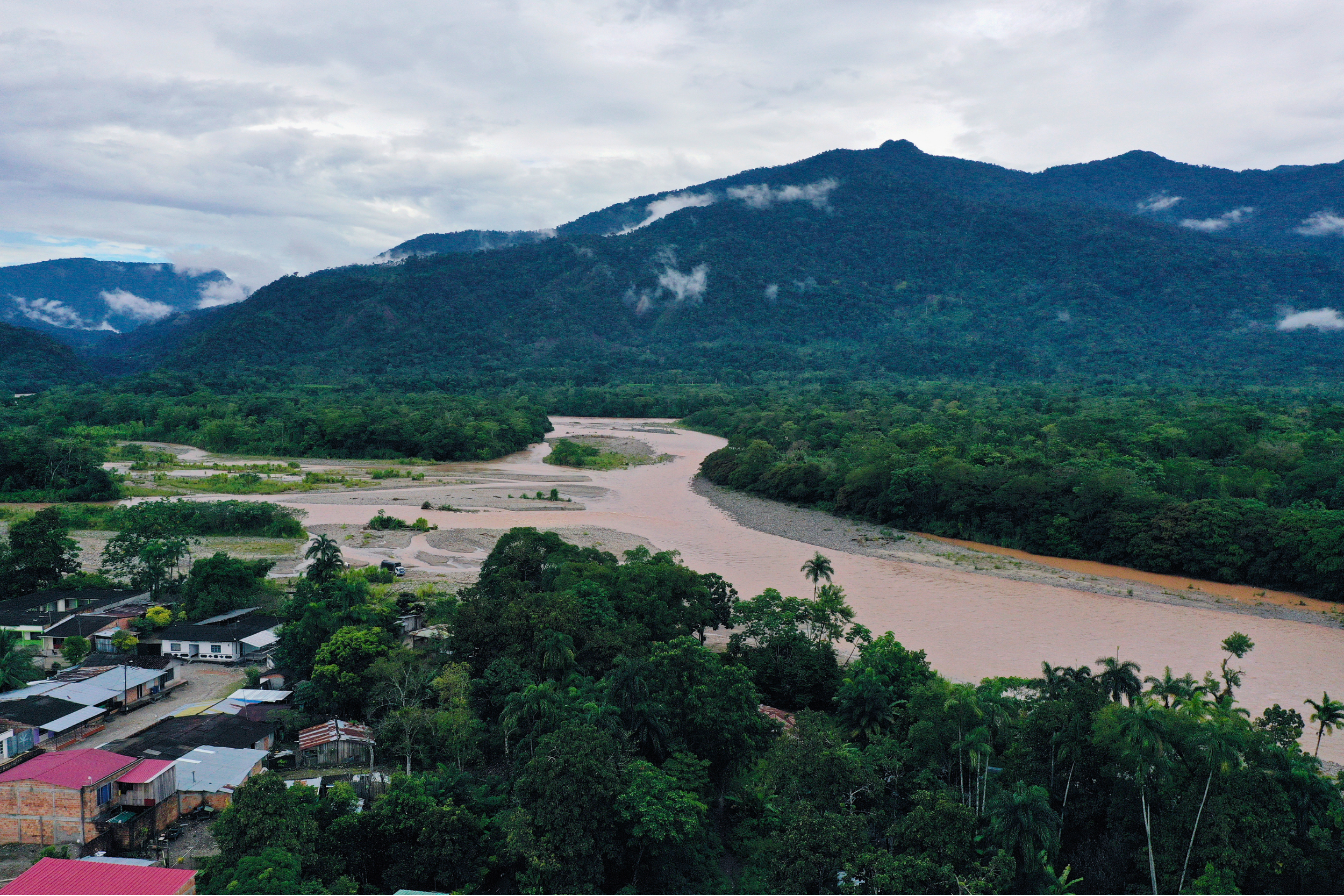 Puerto Limón, a small but growing town in Putumayo, Colombia. © Fílmamazonia / WWF
Livelihoods by women, for women
Meza Cortés is the founder and legal representative of the Association of Progressive Women, an organization by and for the women of Puerto Limón. For over three decades, they have united and organized to secure better work opportunities.
“The association has changed our lives. It has allowed us to improve financially, but also to grow as people: in values, in camaraderie, in solidarity,” she explained. “Many of us have been able to raise our children, even providing them with university education. It has given us dignity and stability.”
By raising and selling chickens, Meza Cortés and her “progresistas” receive income and independence, as well as a sense of community. Each member takes responsibility for her own product, but when it’s time for selling and harvesting, they come together. Meanwhile, Meza Cortés takes the lead on meetings and administrative tasks.
“What we wanted was simple, but very important: to improve our quality of life,” she said. “It was a necessity, but also a dream.”
This dream, made into reality, grants her purpose. “For me, the association is the most important thing I’ve ever done. I love it deeply. I’m proud to have founded it and to see it grow.”
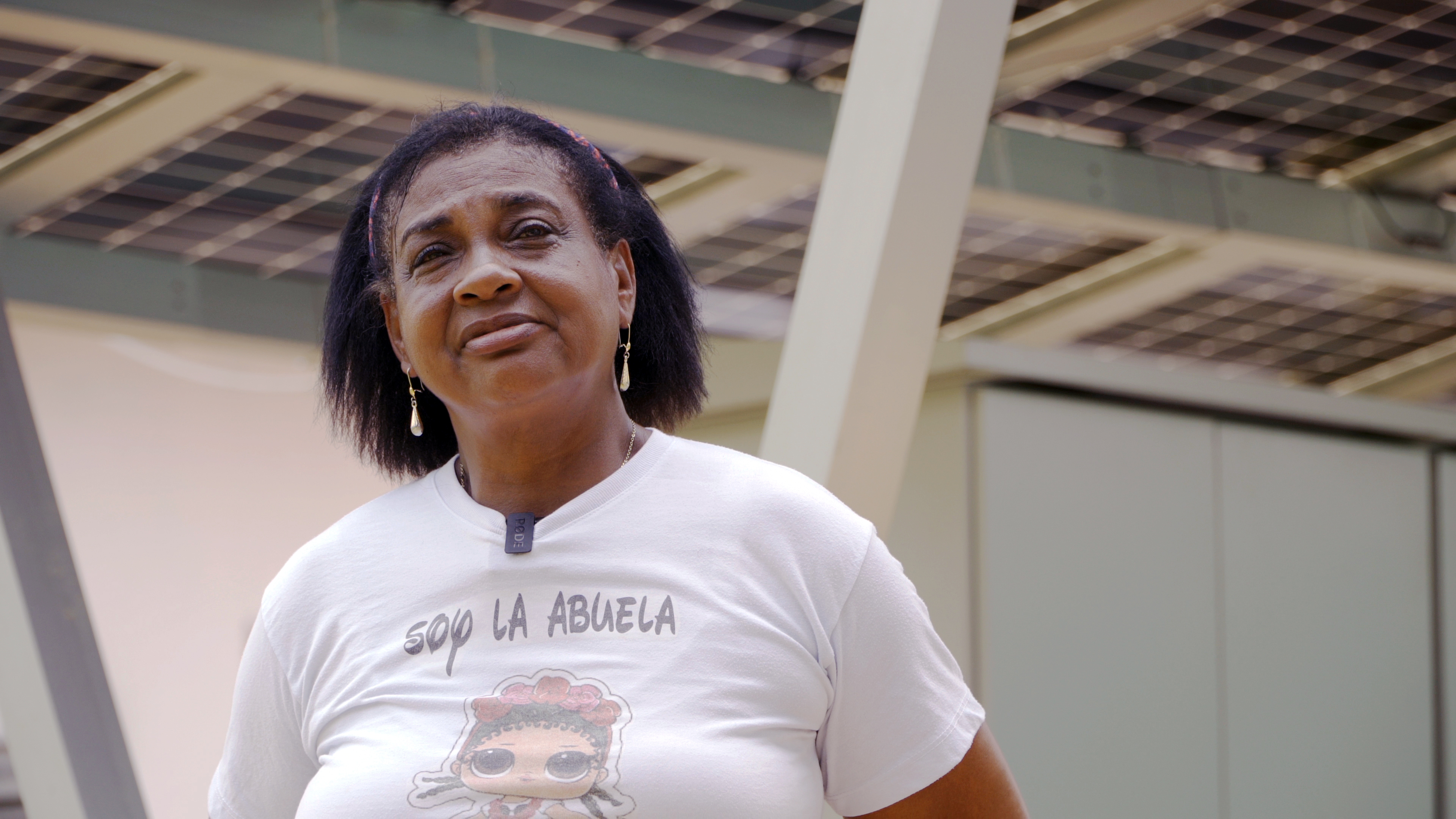 Miriam Meza Cortés, 63, founder and legal representative of the Association for Progressive Women. © Fílmamazonia / WWF
But the journey hasn’t been easy. Over the years, the progresistas faced an existential threat to their livelihoods: blackouts. Electrical grid failures happened frequently and unpredictably with devastating consequences. The chickens need stable temperatures and ventilation to survive, and no electricity means no heat from lamps or air from fans. Within a few hours, the chickens’ lives are at risk – and with them, weeks of work.
But with WWF’s help, a new solution is keeping these women and their flocks afloat: solar power.
Brighter prospects with solar power
The arrival of a solar photovoltaic system last month has changed everything. “It’s been a blessing. A gift from God,” said Meza Cortés.
“Now, with solar panels, we have stability. We save money, protect the product and work with greater peace of mind. Plus, it’s clean energy that also helps the environment,” she explained.
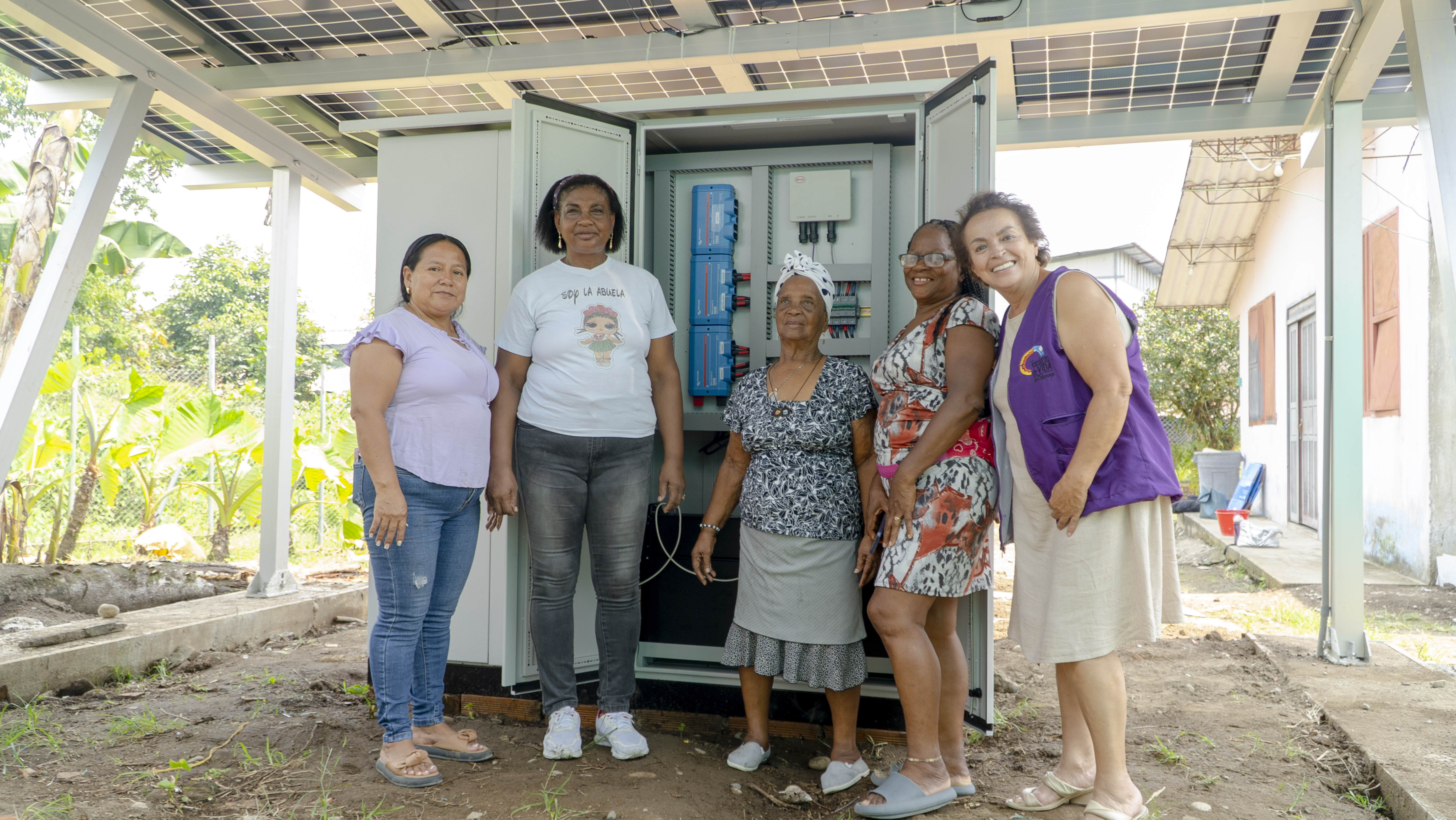
The solar installation’s appeal is its dependability. To guarantee its quality and effectiveness, WWF-Colombia collaborated with the organization’s global Energizing Communities and Conservation (ECCo) programme for technical support. With decades of solar experience, ECCo designed an installation catered to the association’s needs, including an online monitoring system for regularly checking the system’s health. The progresistas can now continue their livelihoods without interruption – with the ECCo team just a call away.
A few kilometers away in Puerto Caicedo, another solar project is brightening the prospects of women. For 11 years, El Progreso Association of Women Fish Farmers and Agricultural Producers (ASOPAEP) has raised tilapia and cachama fish without any access to electricity.
“We’ve been dreaming about this project for a long time,” says Stella Ruiz, ASOPAEP’s legal representative. Before, there was no power to run equipment, refrigerate products or light up workspaces in the evening. But with solar, they can expand business operations far beyond their past limitations.
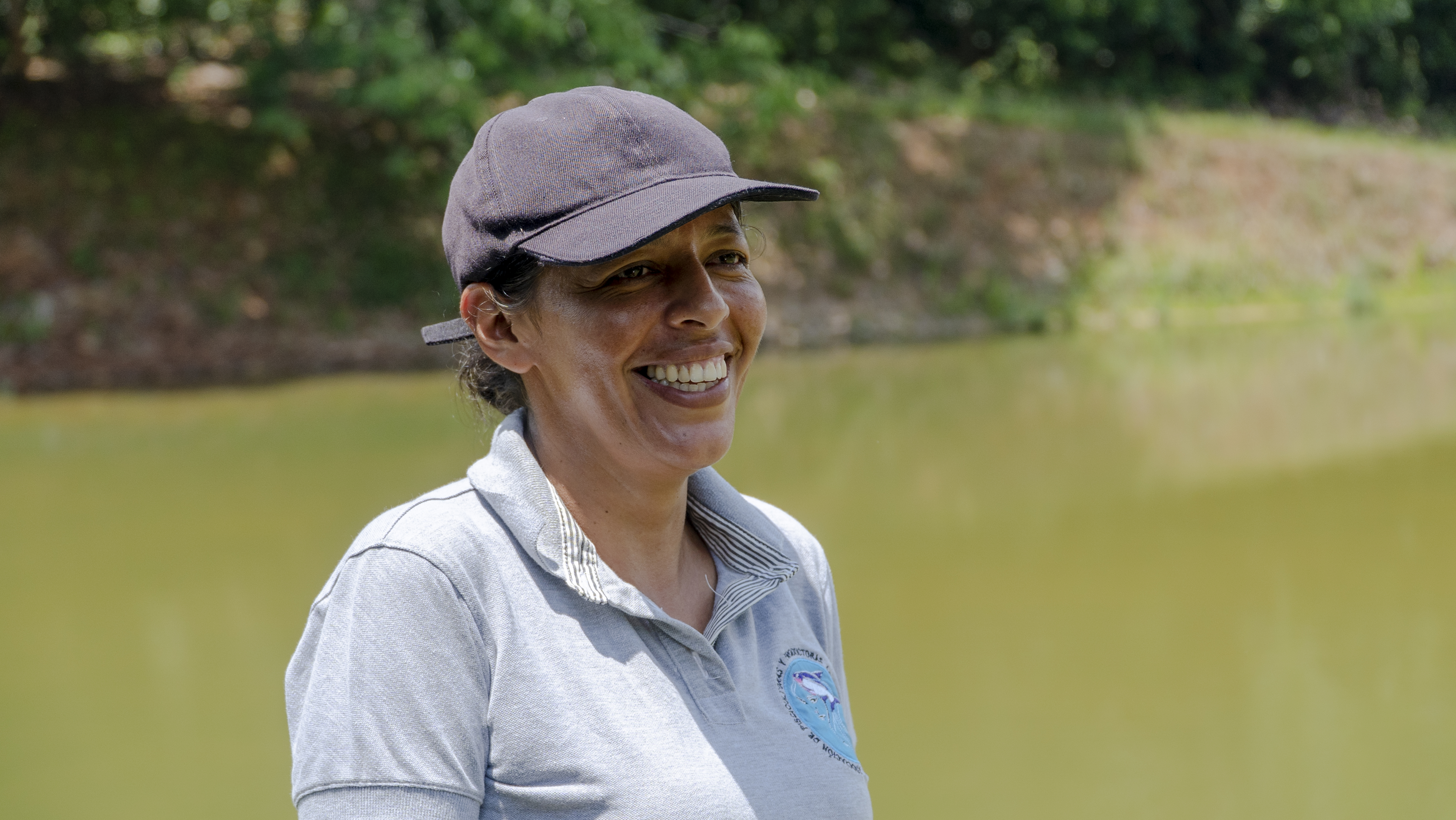 Stella Ruiz, legal representative of El Progreso Association of Women Fish Farmers and Agricultural Producers (ASOPAEP) in Puerto Caicedo. © Fílmamazonia / WWF
“Thanks to the solar panels, we can power the pond aerators, which oxygenate the water at key times…This is very important because with more fish in the same space, greater oxygenation is needed to ensure their well-being.”
Using pond aerators, the association now manages two ponds for fish-raising, making steady progress towards their goal of four total ponds. But for Stella, this achievement means more than a better income.
“This project represents not only an economic improvement, but also a process of learning, organization and empowerment as women. It is proof that, when we work together, we can turn dreams into reality.”
Solar technology is power – it’s power that runs lights and machines, but it’s also power for women to define their futures. Meza Cortés and Ruiz choose to carry on a legacy of female leaders protecting their environment and communities, now energized by the sun.
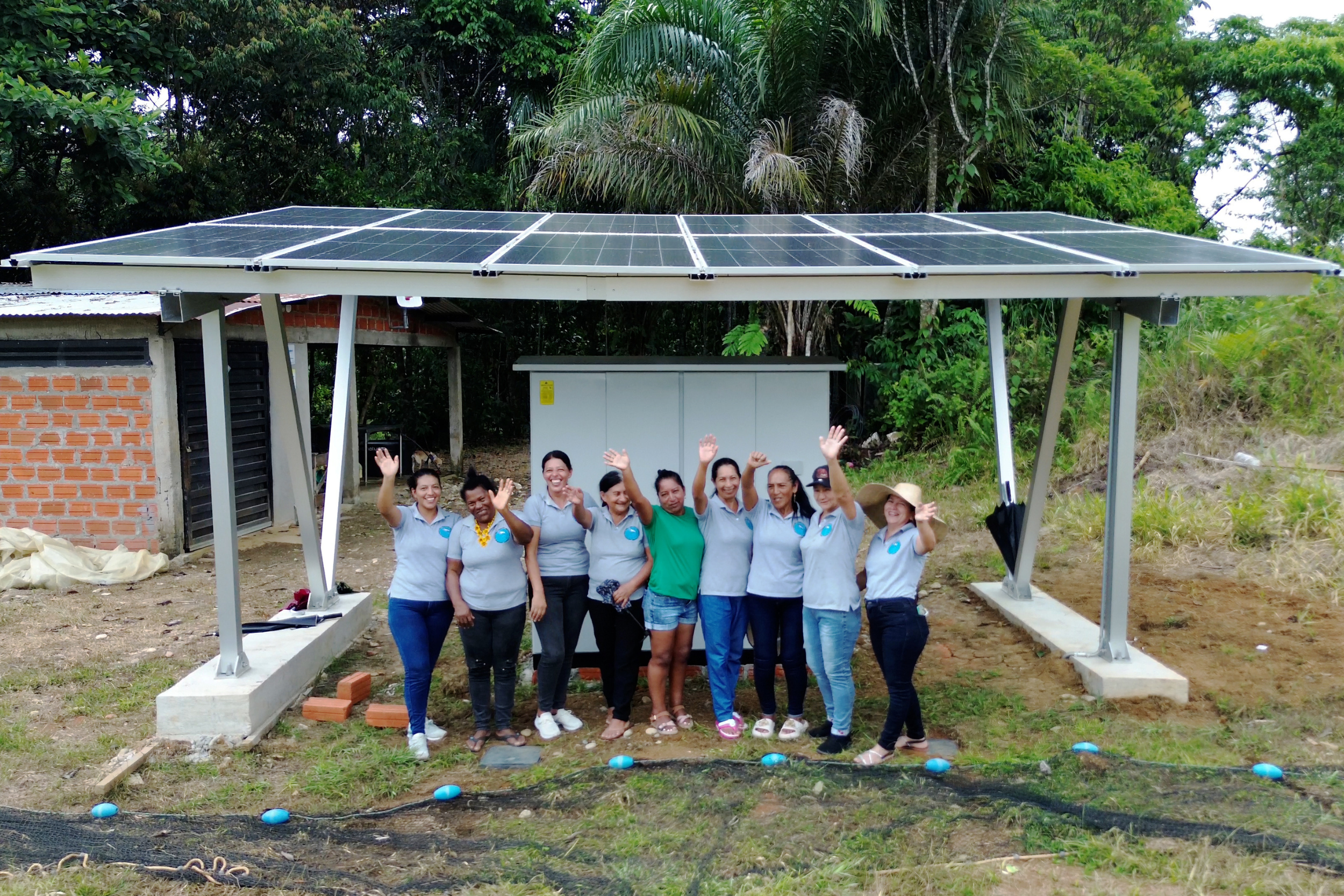 Members of ASOPAEP under their new solar installation. © Fílmamazonia / WWF
Solar installations supporting women’s associations in Putumayo were generously funded by the Mott Foundation and coordinated with the Tejedoras de Vida Alliance. Read more about WWF’s Energizing Communities and Conservation (ECCo) programme, which has brought technical support to solar projects across Latin America, Africa and Asia and beyond.
Discover more
Women’s solar education brightens homes and education
Quiet currents of change in the Sunderbans
Elephants, energy and football in the forest
Search
RECENT PRESS RELEASES
Related Post