SpaceX IPO Lines Up $230 Billion Windfall For Peter Thiel And Other Musk Backers
June 12, 2026
In 2008, just days before one of SpaceX’s early rocket launches failed to reach orbit, Peter Thiel’s fund wrote the first institutional check into the nascent, six-year-old startup.
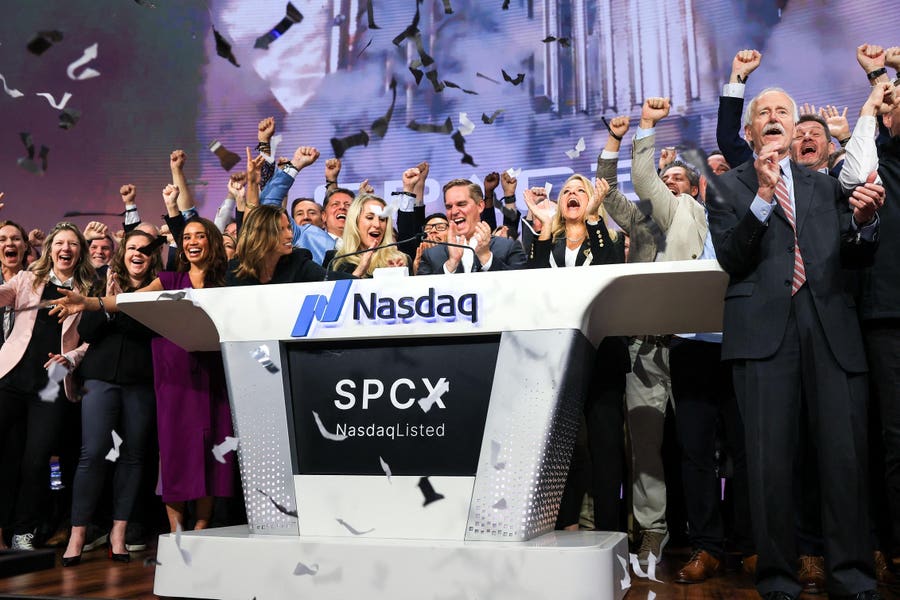
Now, as Elon Musk’s rocket and AI company goes public today at a nearly $2 trillion valuation, the fund’s stake is worth a staggering $67 billion — making that first check, and the additional $600 million Founders Fund invested over the following decade, into one of the most lucrative in venture capital history.
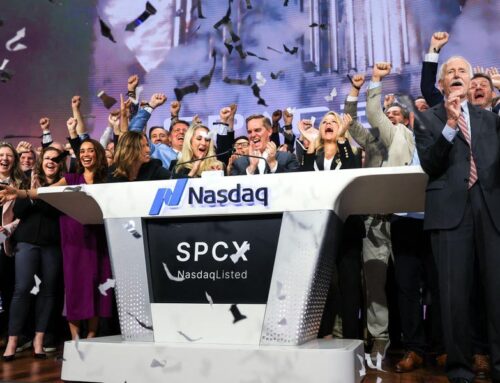
The company started trading just before noon E.T., with an opening price of $150, which is the figure Forbes used for all of the stakes in this story. It soon popped up about 20% in the first few minutes of trading. As the largest single shareholder, the IPO has now minted Musk as the world’s first trillionaire. Thousands of his employees are now millionaires and the fortunes of many of his billionaire colleagues and investors have soared.
That doesn’t mean everyone can cash out immediately. Most companies going public put restrictions on insiders and investors from selling shares for at least six months to avoid painful share price slides from major shareholders dumping stock — a problem for previous tech IPOs like Facebook, where shares slumped 31% below the opening price in the 12 months after its listing, according to data from bank Truist.
To prevent that, SpaceX has imposed a complicated “lockup period” that will allow limited sales for some shareholders. Those restrictions lift in December for everyone but Musk and “certain significant investors,” who will have to wait until June 2027. Those investors have not been identified but are likely to include some of his early venture capital backers.
Among VCs, Founders Fund has one of the largest known stakes. It has been listed for years as one of the top shareholders along with Musk and Google in corporate filings, but it fell below the 5% disclosure requirement shortly before SpaceX published its S1 prospectus. Thiel’s fund now holds a 3.5% stake, according to sources familiar with the financing. Thiel is ranked at No. 5 on the 2026 Forbes Midas List of the best venture capital investors.
“I think the core lesson that everyone has learned is never bet against Elon, it’s just a bad idea,” Founders Fund partner Trae Stephens said in an interview with Bloomberg earlier in June. “I think getting the opportunity for people to see liquidity that they’ve been hanging on to for 18 plus years is a tremendous opportunity to see some of those gains, and also reinvest.”
That holding is only rivaled by the investment firm of billionaire Antonio Gracias, a close friend and business associate of Musk. Gracias’ Valor Equity Partners holds a 3.7% stake in SpaceX. The Chicago, Illinois-based investor is also a board member of the space launch company, and Valor’s holdings, spread across dozens of funds and companies, are listed in the prospectus filed with the SEC. At the IPO pricing of $150 per share, Valor’s stake is worth over $71 billion. Gracias is ranked No. 32 on Midas.
Then there’s San Mateo, California-based fund DFJ Growth, which was spun out from Draper Fisher Jurvetson and first invested in SpaceX in 2009. DFJ Growth now holds a stake worth at least $33 billion after investing over $800 million, according to sources familiar with the matter. DFJ Growth cofounder Randy Glein, No. 23 on Midas, is also a board director of SpaceX.
Even investors who joined relatively late into SpaceX’s 24-year journey are now sitting on massive gains. Shaun Maguire (No. 22 on Midas) led Sequoia’s first investment into the company in 2019 before it first launched Starlink satellites, now SpaceX’s primary money-maker. In total, Sequoia invested over $1 billion into SpaceX, and $800 million into Musk’s X and xAI, and after the merger of the three companies holds around 1.5% of SpaceX’s shares, according to sources familiar with the firm. Sequoia’s stake is now worth over $29 billion. (The Information previously reported on Founders Fund’s and Sequoia Capital’s stakes in SpaceX.)
Musk’s corporate shell game — where xAI acquired social network X (formerly Twitter) for $33 billion in March 2025, and then merged with SpaceX at a $1.25 trillion valuation — means Andreessen Horowitz would win big too, thanks its stakes across all three now-merged companies.
A16z first invested in SpaceX when it led a $750 million round at a $137 billion valuation in January 2023. But with its merged stakes from X and xAI, it now owns around $11 billion of SpaceX stock, according to sources familiar with the matter. That total could also balloon thanks to a16z’s large stake in coding startup Cursor, which SpaceX offered to acquire for $60 billion in April. That deal needs to close this year or Musk’s company will have to pay a $10 billion break-up fee.
Founders Fund, DFJ Growth, Sequoia and a16z all declined to comment publicly on their stakes. Valor Equity Partners did not respond to a request for comment.
Other long-term Musk associates also stand to reap a huge return from the float. Former Founders Fund investor Justin Fishner-Wolfson told Bloomberg in April that his 137 Ventures fund had built a stake of over 1% in SpaceX after investing in rounds dating back to 2011, and buying shares from SpaceX’s tender offers. That stake could be worth over $19 billion, according to sources familiar with the matter.
Billionaire Luke Nosek, another former Founders Fund partner and SpaceX board member, is said to have invested over $1 billion into SpaceX from his Gigafund since 2017, according to the fund’s website. The value of Gigafund’s current SpaceX holding was not disclosed, but could be worth tens of billions of dollars at its IPO price. Nosek is ranked No. 18 on Midas.
Another little known fund, Dubai-based Vy Capital, held a $1 billion stake in SpaceX as of late 2023, according to the Wall Street Journal. It has also made major investments in X and xAI. Vy Capital’s team has worked directly on Musk’s projects, with former Vy managing director Pablo Mendoza now the head of finance at xAI. That stake could also now be worth tens of billions.
137 Ventures declined to comment. Gigafund and Vy Capital did not respond to a request for comment.
The size of the windfalls lined up for these investors stands to dwarf some of the all-time best investments from the world’s top venture funds. Sequoia Capital invested in Airbnb’s seed and Series A and when the holiday rental platform went public in 2020 the fund held a $12 billion stake. That wasn’t just a banner deal for the storied Silicon Valley fund, which had also backed Google, Nvidia and WhatsApp — it was one of the biggest for all venture funds at the time. Now that’s been eclipsed by its SpaceX investments.
The only comparable returns are investments made by SoftBank, and South African media company Naspers. SoftBank invested $20 million into Chinese ecommerce platform Alibaba in 2020. At the time of its listing in 2014, its stake was worth around $60 billion. Sales of Alibaba stock over the next decade helped SoftBank’s founder Masa Son weather huge losses from Vision Fund’s tech bets like WeWork, and fuel new investment in OpenAI. South African media group Naspers made a similar bet on another early Chinese internet giant, Tencent. The WeChat creator listed in 2004 for just $1 billion but now Nasper’s stake is worth over $119 billion.
Venture capitalists like Thiel won’t be the only potential winners from the SpaceX IPO. A long tail of investors of different stripes ranging from Google, mutual fund giant Fidelity and hedge fund billionaire Daniel Sundheim’s D1 fund all reportedly hold billion-dollar-plus stakes in SpaceX.
The lockup period means that many of these investors won’t be able to sell any of their stakes for up to a year. In that time, SpaceX’s $1.75 trillion valuation could face a painful reality test. Musk’s bankers set a price upfront for the initial public offering, which will be the world’s largest, rather than with a typical float, where the price investors are willing to pay is tested during the investment roadshow. That valuation is nearly double where SpaceX was priced only six months ago.
It’s a surprising jump given just how deep SpaceX is in the red. Musk’s company posted a $4.94 billion loss last year on revenues of $18.67 billion after the space launch and satellite internet business was merged with Musk’s artificial intelligence and social media business.
Other blockbuster IPOs for big tech companies that were far from profitability didn’t go so well in their first year as a public company. Uber, for instance, fell below the listing price on its first day trading in 2019, and traded down as much as 68% in its first 12 months. The ride-sharing company’s stock price recovered after it began posting quarterly profits, including its first annual net profit in 2023. It now trades at a $140.6 billion market cap.
Investment analysts at Morningstar claim that SpaceX should be valued closer to its last tender offer of around $780 billion but Musk has a knack for gravity-defying valuations even when public. His electric car company Tesla currently trades with an astronomical market cap of $1.2 trillion. That’s based on a price-to-earnings ratio of around 185. Rival automakers like Ford trade around eight times future earnings, while the average for all the stocks in the S&P 500 is around 26.
To support his vision for SpaceX, it’s clear he’s looking to the same army of ordinary investors that supported Tesla. Around 30% of the $75 billion in shares that will be traded on Friday have been set aside for retail investors.
More from Forbes
Search
RECENT PRESS RELEASES
Related Post