The Best Way to Invest in the SpaceX IPO Is Hiding in Plain Sight
June 1, 2026
In anticipation of its initial public offering (IPO) on June 12, SpaceX filed its initial registration statement (Form S-1) with the Securities and Exchange Commission on May 20. The report gave investors never-before-seen access to SpaceX’s inner workings, including its long-term growth plans, customer base, and more.
SpaceX plans to list its Class A common stock on the Nasdaq and Nasdaq Texas under the ticker symbol SPCX. But there are ways to gain exposure to SpaceX besides buying the stock directly.
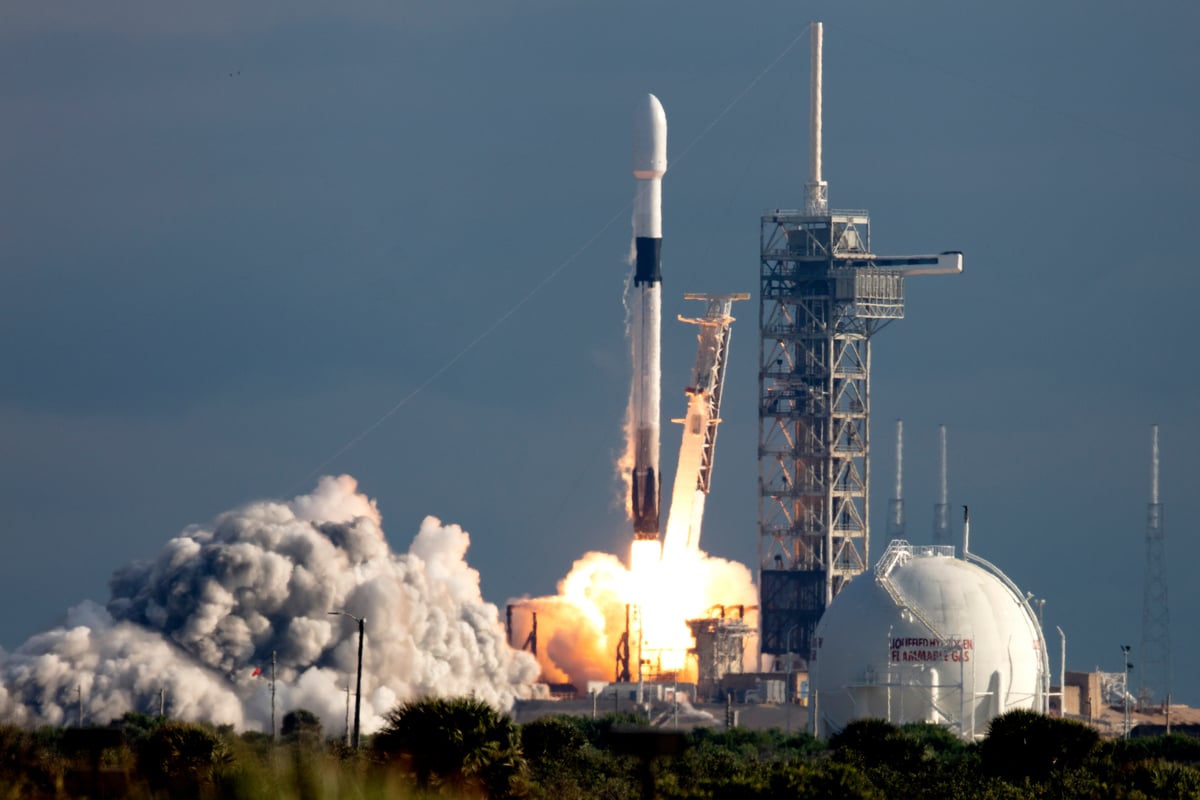
Image source: Getty Images.
SpaceX is in a league of its own
There is no company in the world like SpaceX. At the end of 2025, it operated approximately 9,600 Starlink broadband and mobile satellites in low-Earth orbit, serving millions of consumer, enterprise, and government customers. SpaceX holds a dominant share of the commercial space launch industry. SpaceX also owns xAI (developer of Grok large language models) and social media platform X (formerly Twitter), as well as 18,712 Bitcoin at a cost basis of $35,325 per coin — less than half the current value. But SpaceX generated only $18.67 billion in revenue in 2025, reporting a $2.59 billion net loss, largely due to its massive research and development budget.
If SpaceX goes public at a $1.75 trillion valuation, it won’t have a price-to-earnings ratio, since it isn’t profitable, and its valuation would be roughly 94 times sales, which is sky-high. SpaceX could underperform the S&P 500 (^GSPC +0.26%) even if it delivers impeccable results — just like Coinbase Global, Airbnb, and Snowflake, which all went public at high valuations.
Meet the new era of mega-cap IPOs
Instead of chasing SpaceX to the stars during its IPO, a better approach is to buy a low-cost S&P 500 index fund, such as the Vanguard S&P 500 ETF (VOO +0.26%).
S&P Dow Jones Indeces recently changed its rules to expedite the inclusion of mega-cap companies, which it defines as being at least as large as the 100th biggest company in the S&P Total Market Index. In the past, a company would have to go through an IPO seasoning period to prove it could meet the index’s core principles. Now, a company should be able to get in within weeks of going public, if it’s big enough. At a $1.75 trillion valuation, SpaceX would clear the new hurdle with ease and would sit just ahead of Tesla (TSLA 4.57%) and behind Broadcom as the seventh-largest company in the index. Anthropic and OpenAI would make it too, by a wide margin.
SpaceX’s index weighting won’t be based on market cap, but rather on a multiple of the float, which is the shares available for trading by the public. SpaceX plans to raise $75 billion, and the Nasdaq-100 (100 largest non-financial companies in the Nasdaq Composite) plans to weight SpaceX at three to five times that figure rather than the total company value.
These rules prevent low-cost, passively managed index funds from buying an absurd amount of SpaceX stock the second it is added to the index. For context, Tesla has a market cap of $1.66 trillion at the time of this writing, and the Vanguard S&P 500 ETF holds a staggering $27.83 billion in Tesla stock. The Vanguard Total Stock Market ETF holds even more, at $34.23 billion, and the Vanguard Growth ETF holds $11.39 billion in Tesla stock. Meaning that (theoretically) these three funds alone would need to acquire roughly the entire $75 billion SpaceX float at a $1.75 trillion valuation if the rules weren’t updated.

Vanguard S&P 500 ETF
Today’s Change
(0.26%) $1.81
Current Price
$697.30
Preparing for an evolved S&P 500
Buying and holding an S&P 500 index fund is a great way to invest in high-profile IPOs like SpaceX, which carry significant volatility risk. The position could become fairly significant as insiders sell stock, the float grows, and index funds and ETFs buy more SpaceX. Investors can take a similar approach with Anthropic and OpenAI.
The S&P 500 has essentially become a mega-cap growth index given the sheer size of the largest U.S. companies. The tech sector alone, along with Alphabet, Amazon, Tesla, and Meta Platforms, accounts for 51% of the index. Adding SpaceX, Anthropic, and OpenAI will make the S&P 500 even more top-heavy as some of the world’s most valuable private companies go public.
Investors should expect the index to become more volatile as a handful of companies drive its returns, many of which are closely related to similar themes such as cloud computing and artificial intelligence.
Search
RECENT PRESS RELEASES
Related Post