‘Too soon’ to see NC’s effects from a NextEra-Dominion deal
June 1, 2026

As part of a potential coupling of two regionally powerful electric utilities, a proposed agreement between Virginia-based Dominion Energy and Florida-based NextEra Energy includes a small corner of North Carolina territory in the state’s northeast. But Dominion’s main attributes lie over the border to the north, with its access to a slew of data centers in Virginia as well as what will be the nation’s largest offshore wind energy operation off Hampton Roads.
NextEra Energy, already the nation’s largest electric utility by market value, announced last month that it had reached a $67 billion, all-stock deal with Richmond-based Dominion Energy to essentially absorb its business.
“It’s too soon to tell if this will be overall good thing for North Carolina,” Senior Public Relations Specialist Jeremy Ashton at Duke University’s Nicholas Institute for Energy, Environment and Sustainability, told Coastal Review in a recent interview. “There are several reasons to think that it might be.” But, he added, the opposite may also be true.
As the regulatory process plays out, including securing approval from the North Carolina Utilities Commission, the details and consequent ramifications of the massive deal will become more evident.
“The combined company will be more than 80% regulated, serve approximately 10 million utility customer accounts across Florida, Virginia, North Carolina and South Carolina and own 110 gigawatts (GW) of generation across a broad mix of energy sources,” the companies said in a joint press release on May 18.
With a market value of about $190 billion, NextEra’s marriage to Dominion, which is valued at about $59.4 billion, would become the “world’s largest regulated electric utility,” according to the release, allowing the business to “drive affordability in the long term by leveraging scale and … efficiencies as the company makes smart investments on behalf of its customers to meet growing power demand.”
The agreement still requires approval from the companies’ shareholders as well as federal and state regulators.
“We have not received any filing,” Lucy Edmondson, chief counsel with the public staff at the North Carolina Utilities Commission, told Coastal Review in late May.
Once it is filed, she explained, the commission would issue a procedural order that issues a docket number. At that, the details of the process moving forward would be publicly available online to view in the docket. By law, the cost-benefit to customers would be investigated, and the commission typically would schedule public hearings.
Although Edmondson said that there is no legal requirement on how long the process should take, the companies said in their announcement that they expect the transaction to close in a year to 18 months.
Ashton, with the Nicholas Institute, agreed that when scale is increased in utility industries, gains in efficiency can follow. For instance, the ability to streamline processes across a larger scale can lead to operational efficiencies, he said, and those can lead to cost savings for customers.
“So, with the larger scale, it’s certainly possible that the merged NextEra-Dominion entity could put more investment into modernizing the grid and developing clean energy sources,” he said. “NextEra has a really well-established track record of building out utility-scale renewable energy. With a greater capital base, potentially lower borrowing costs, and with more influence over their supply chains, you could have some dividends that come from that.”
On the other hand, Ashton said, negative consequences could be lying in wait down the road.
“When scale increases, you also risk having utility policies and approaches that are less appropriate for a particular small service territory,” he said. “In the case of Dominion, just being the northeastern part of North Carolina, this is going to become a relatively small piece of a much larger puzzle with the merger.”
In other words, Ashton elaborated, being a little fish in a big pond could decrease opportunities to innovate development of infrastructure tailored to the local environment or limit creation of programming that responds to those particular customers.
Dominion Energy North Carolina currently provides electricity to about 130,000 customers in much of the northeastern area of the state, including parts of Dare, Pasquotank, Currituck, Hertford, Pitt and Washington counties, among others.
As part of the proposal, $2.25 billion in bill credits would be spread, after the deal closes, over two years to Dominion Energy customers in Virginia, North Carolina and South Carolina, according to the announcement.
The newly reorganized power provider would also fund an additional $10 million annually in charitable support for five years in communities within the three states. And it promised to continue “robust” utility assistance programs for customers facing hardship.
Additionally, Dominion Energy would continue to operate with the same moniker, relative to each of the three states, such as “Dominion Energy North Carolina.”
But the titles at the top will change. John Ketchum, the current chief executive officer at NextEra will become chairman and CEO of the combined company, and Robert Blue, the current CEO at Dominion, will become president and CEO of regulated utilities and a member of the board of directors.
In light of industry-wide electric bill increases, critics have noted bloat in CEO salaries. According to an April 21 article in Energy & Policy Institute that analyzed CEO salaries at investor-owned electric and gas utilities, in 2025 Ketchum was paid $24.2 million, the third highest salary, and Blue was paid just over $16 million, the 10th highest.
Even absent bumps in the regulatory road, electric utilities have been in the crosshairs of public ire as consumer’s power bills continue to climb upward. Mixed in the dismay with growing costs, data centers, which are typically large facilities that can be noisy and often strain local resources such as water, are popping up in communities, sometimes without residents’ previous input or even knowledge.
Nationwide, data centers, which are critical to power the boom in artificial intelligence, or AI, have become such a huge public concern that famed citizen activist Erin Brockovich has gotten involved, creating a website, brockovichdatacenter.com, to collect reports from consumers.
Virginia has some of the highest numbers of centers in the country. Numerous public reports estimate that there are more than 600 data centers in the state, mostly in Northern Virginia. According to an Oct. 25, 2025, article in Inside Climate News, citing a report from Cushman & Wakefield, as of last June, the state had 6,247 megawatts of data centers and an additional 2,610 megawatts under construction.
The existing centers are not the only asset the Florida company will gain in the proposed utility coupling.
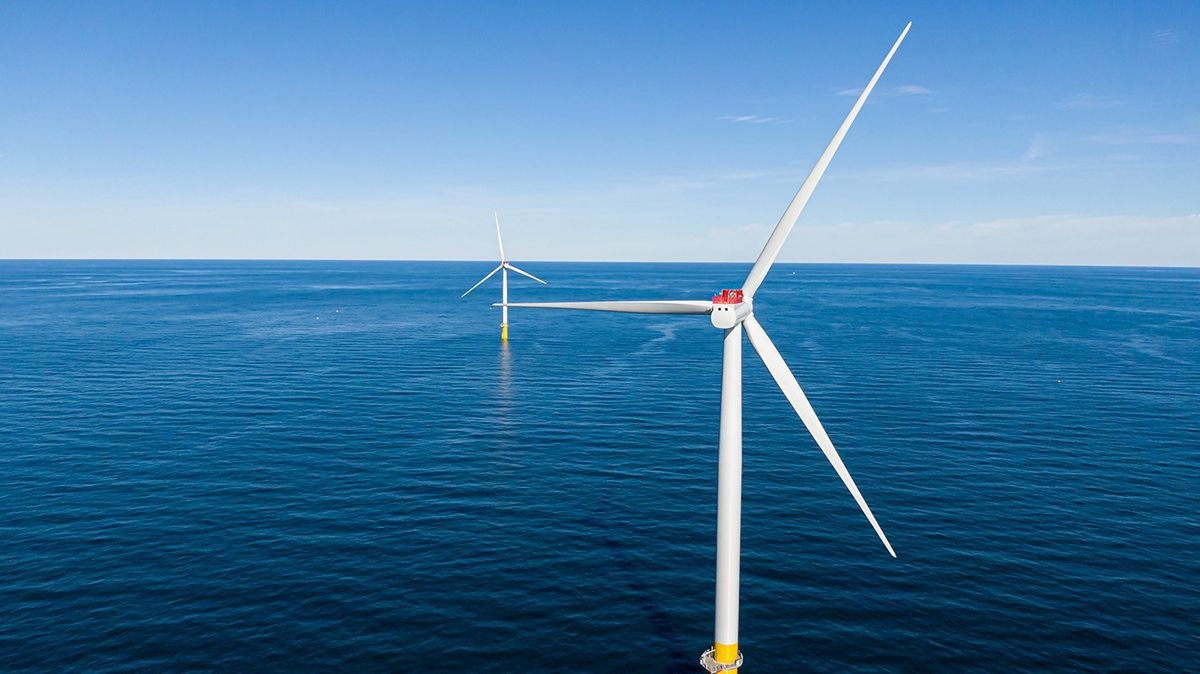
When Dominion’s Coastal Virginia Offshore Wind, aka CVOW, is completed in 2027, the 2.6 GW project will become the largest offshore wind farm in the United States. With 176 turbines, the project would generate enough energy to power as many as 660,000 homes and is expected to save customers about $3 billion in fuel savings in its first decade, according to Dominion.
While the result of NextEra’s environmental stewardship remains to be seen, Ashton said that an important point in its favor is the company’s record as an aggressive developer of renewables.
“Their integration with the supply chains for renewable energy and batteries and their capital base will allow them to build that out more aggressively than Dominion would have been able to,” he said. “And so there it is kind of a shot in the arm to big renewable and battery storage builds, which is positive for the environment.”
On the flipside, he said, large utilities tend to seek significant centralized control. For instance, NextEra has been resistant to compensating rooftop solar users in Florida for the energy it produces, and he expects that approach could carry over to North Carolina.
“It’s not dismissed those things out of hand, but it has not given many of the consumer advocates what they wanted in terms of compensation on that metering,” he said. “And it has been much more on the side of, ‘Well, the utility controls the grid, we’re responsible for this infrastructure, we don’t want to socialize those costs.’”
NextEra is also showing more of an appetite to build natural gas plants, Ashton said. Still, those types of sites take about five years to come online, where renewables can usually produce energy quicker and at less cost.
“So that’s the thing we all need to be watching, is how that actually progresses in reality in coming years,” Ashton said.
Search
RECENT PRESS RELEASES
Related Post